Paramount Pictures
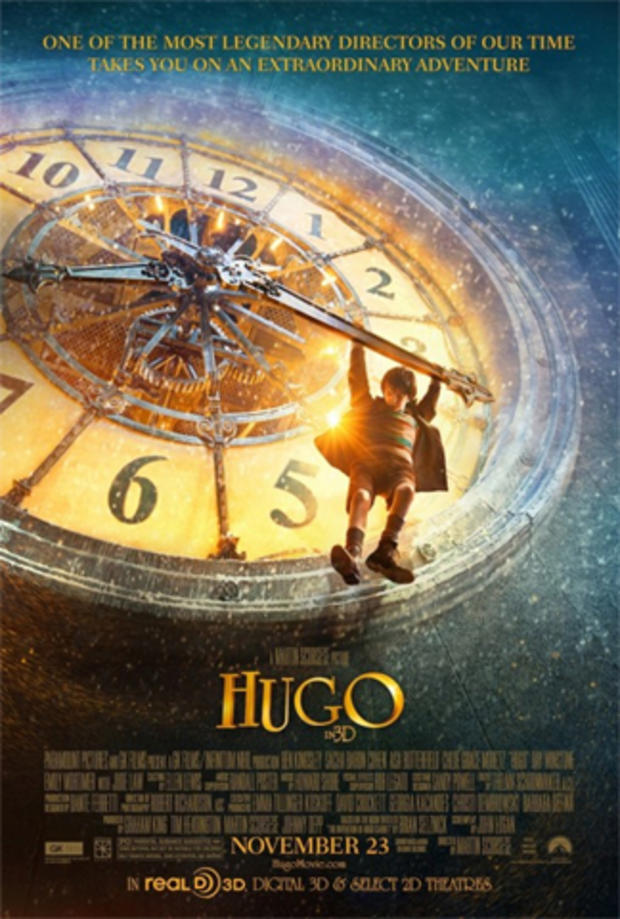
A young orphan living within a Paris train station makes a remarkable discovery in this 3-D fantasy directed by Martin Scorsese. The Paramount Pictures release was nominated for 11 Academy Awards, including Best Picture.
By CBSNews.com senior editor David Morgan
Paramount Pictures
One would not ordinarily connect "Martin Scorsese" and "children's film" in the same sentence. But then "Hugo" is only superficially a children's fantasy, starring child protagonists escaping dangerous adults in a wonderland photographed in 3-D.
Based on Brian Selznick's 2007 Caldecott Medal winner, "The Invention of Hugo Cabret," the film is a compendium of adult topics that have appeared in Scorsese's films in the past - urban isolation, a search for acceptance, redemption - as well as a particular passion of its director: remembering and preserving film history.
Paramount Pictures
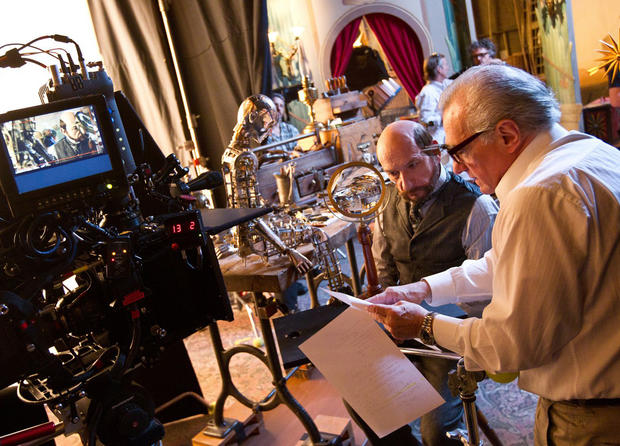
Scorsese's interest in "Hugo" was sparked by his family, who challenged the director of such brutal fare as "Taxi Driver," "Raging Bull," "GoodFellas" and "The Departed" to make a movie that his own pre-teen daughter could see.
Presented with a copy of Selznick's book, Scorsese was immediately drawn to the central character - a solitary young boy who hides within the walls of a Paris train station - and recognized a parallel to his own asthmatic childhood, when his illness had kept him staring out a window, unable to join friends outside.
Paramount Pictures
"That, I think, was the first connection" to the character, Scorsese told CBS News' Lesley Stahl. "I loved the idea of a young person who's unable to join in, 'cause of me with my asthma and that sort of thing. . . . Because of this illness, I really couldn't participate. I was always observing," like a voyeur.
It was because of Scorsese's condition that he was taken to the movies as a child, where his love of film blossomed - and that provided another personal connection to the character of Hugo.
Paramount Pictures
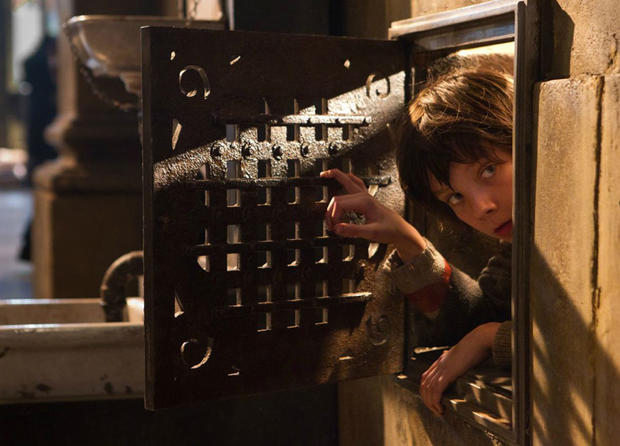
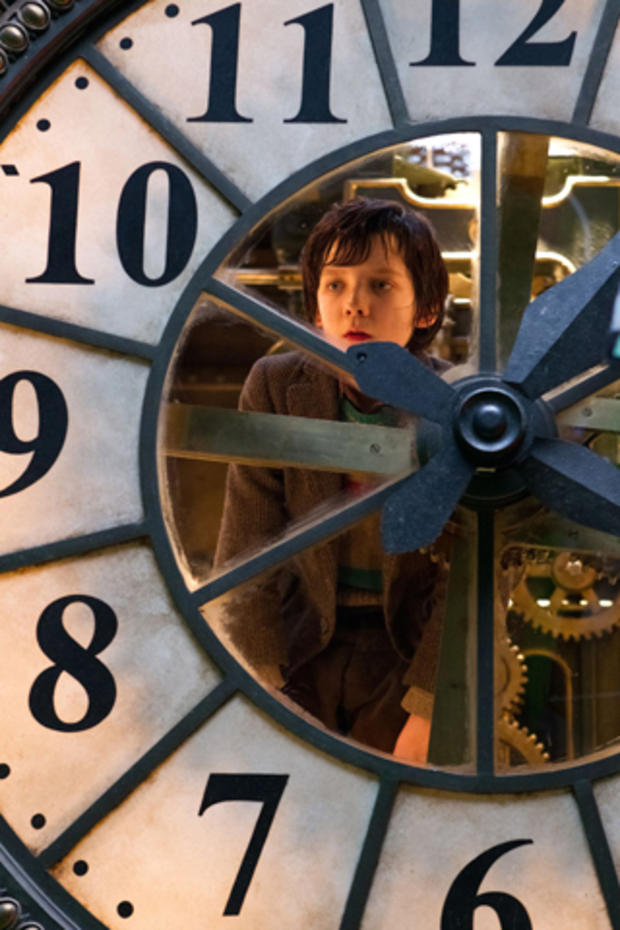
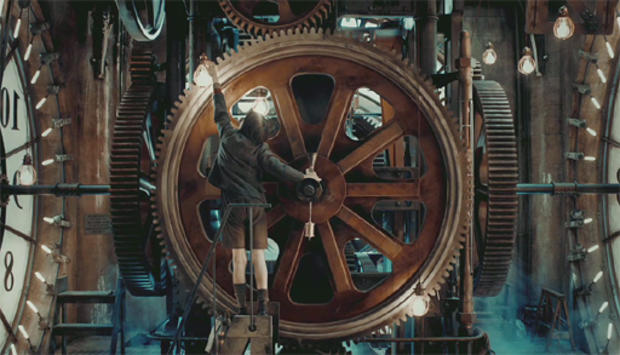
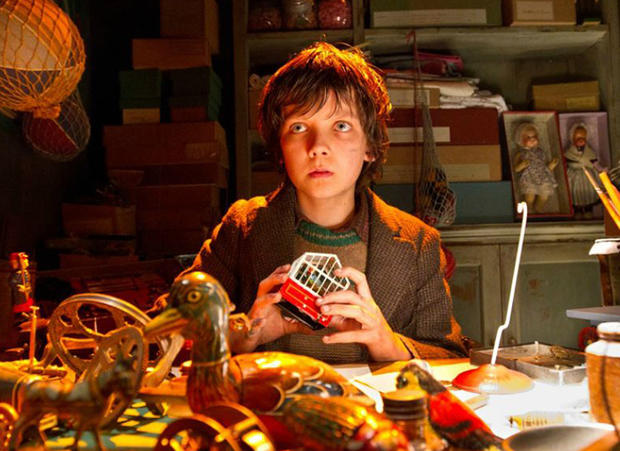
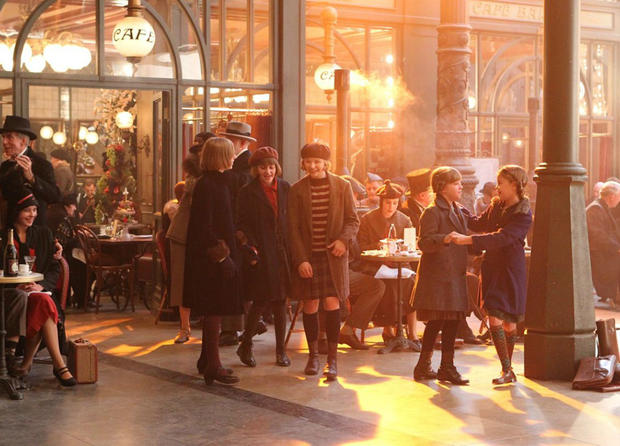
Set in Paris in the 1930s, the film tells the story of Hugo (Asa Butterfield), who tends to the clocks in a train station. As long as they continue running on time, he believes, his secret life will be safe.
Paramount Pictures
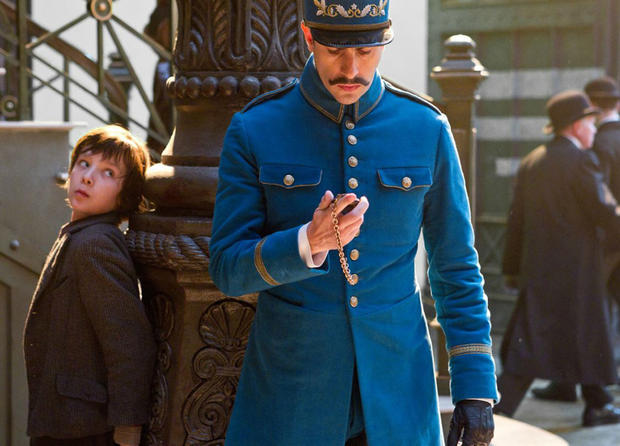
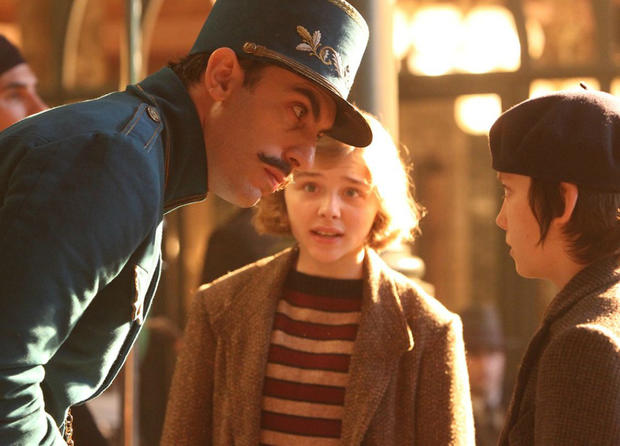
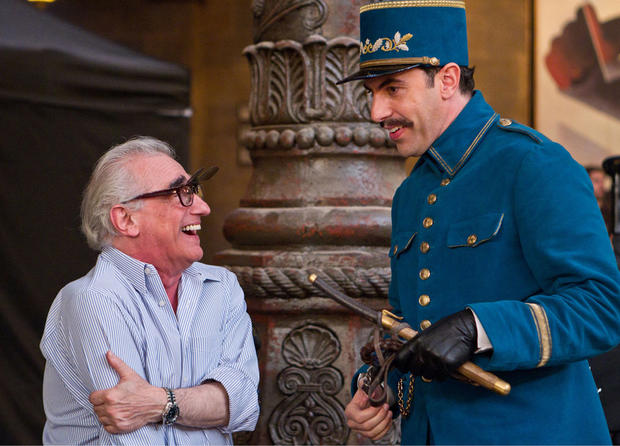
Hugo manages to remain hidden from the watchful eyes of a stationmaster (Sacha Baron Cohen), who finds sending lost children to an orphanage remuneratively pleasing.
Paramount Pictures
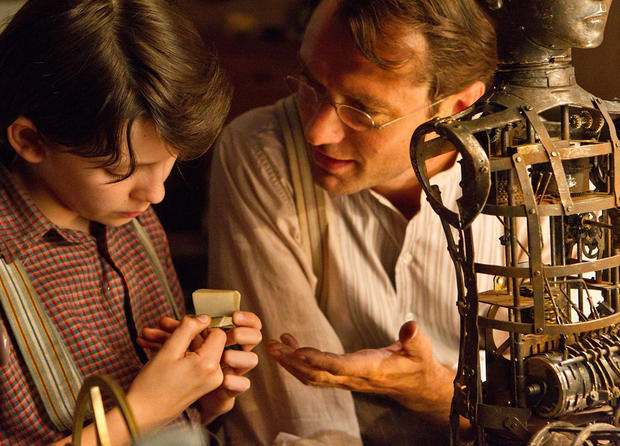
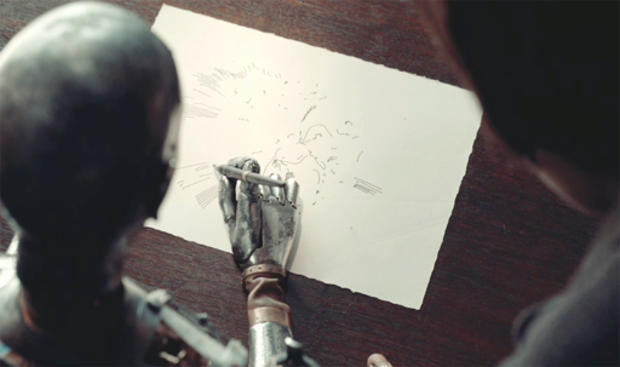
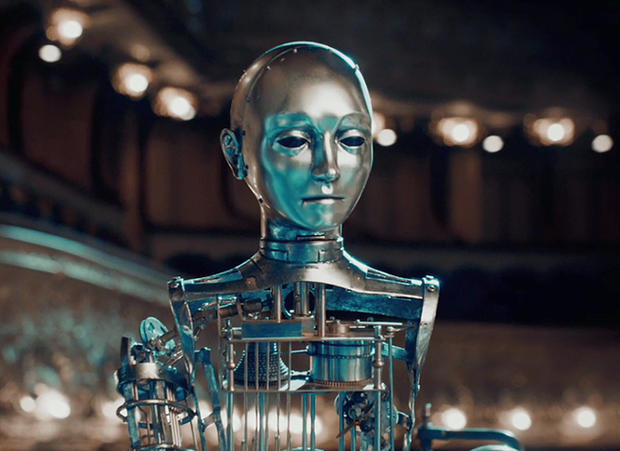
Hugo also labors to restore a non-functioning mechanical man, or automaton, that his father (Jude Law) had found in the museum where he worked.
Hugo sees fixing the automaton as a link to his now-dead father, but the machine is lacking a key to make it run.
Paramount Pictures
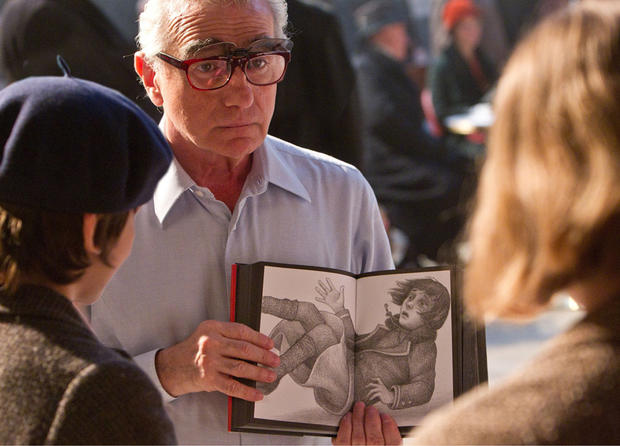
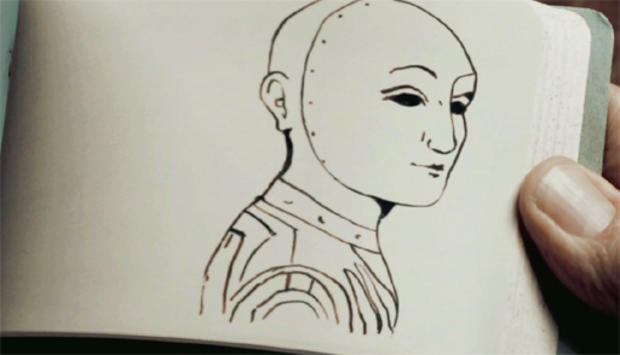
One of Hugo's most prized possessions is a flipbook made by his father of the automaton.
Paramount Pictures
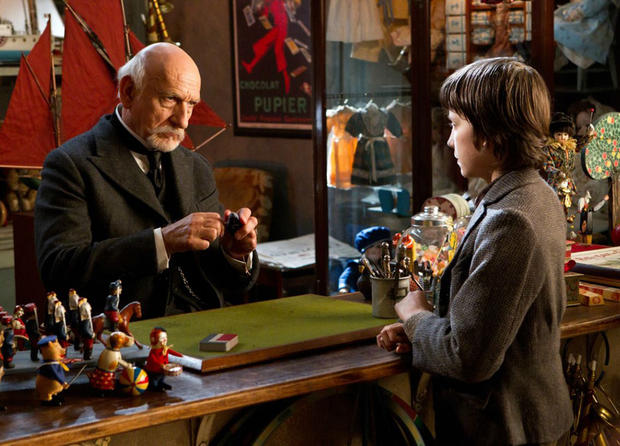
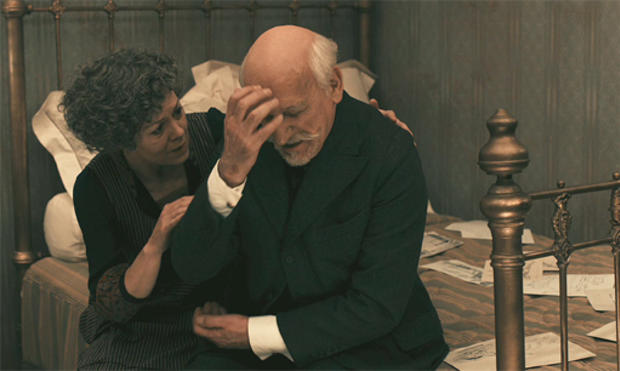
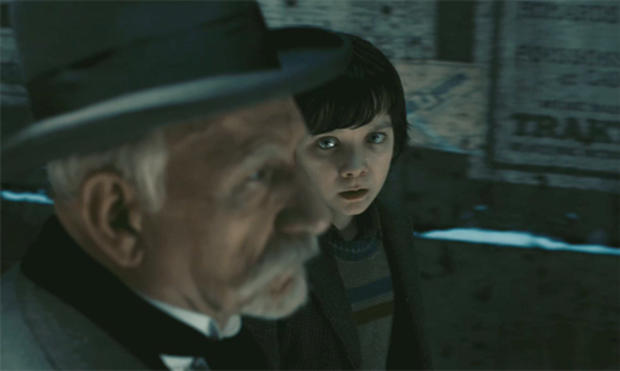
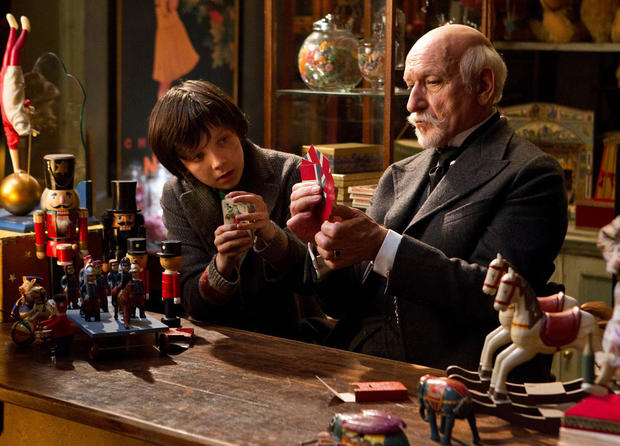
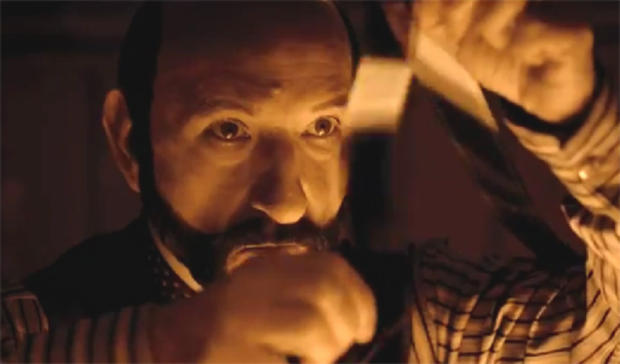
The mystery of the automaton leads Hugo to the old man running a toy shop within the train station. Why is the bitter man (Ben Kingsley) so interested in Hugo's notebook about the automaton, even going so far as to threaten to burn it?
Paramount Pictures
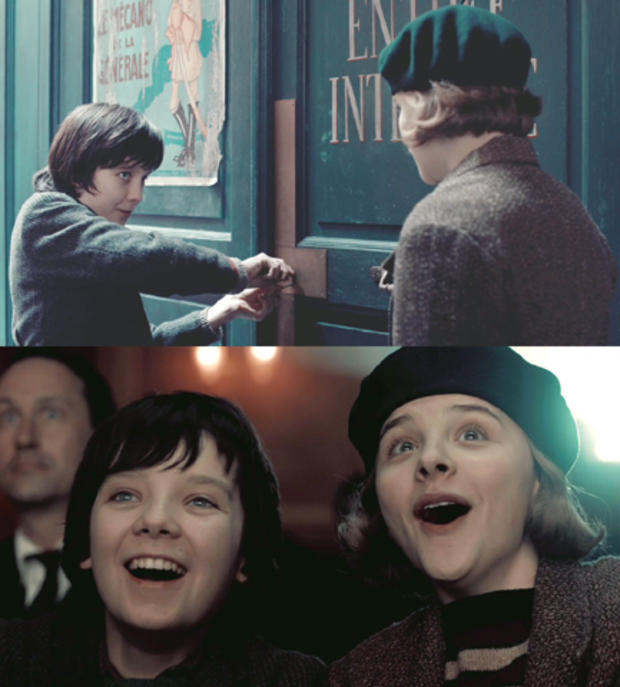
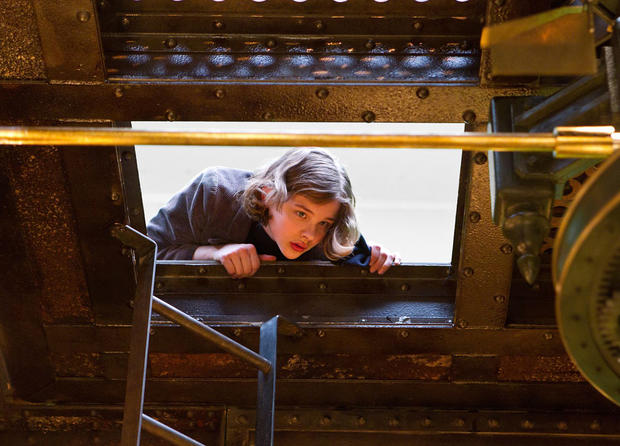
Hugo befriends the toy shop owner's granddaughter, Isabelle (Chloe Grace Moretz), and introduces her to the movies by stealth. [Note from Paramount Pictures: Don't you try this at the multiplex!]
Watching a Harold Lloyd comedy, Isabelle - who has never been allowed to the cinema - is transported into a magical world.
Paramount Pictures
It is through her eyes that we witness some of the wonders of Hugo's solitary world - and it is through isabelle that Hugo makes a remarkable discovery: The very key needed to make the automaton work.
Paramount Pictures
The secrets it reveals draw Hugo and Isabelle closer to an even larger mystery - involving her own grandfather.
Paramount Pictures
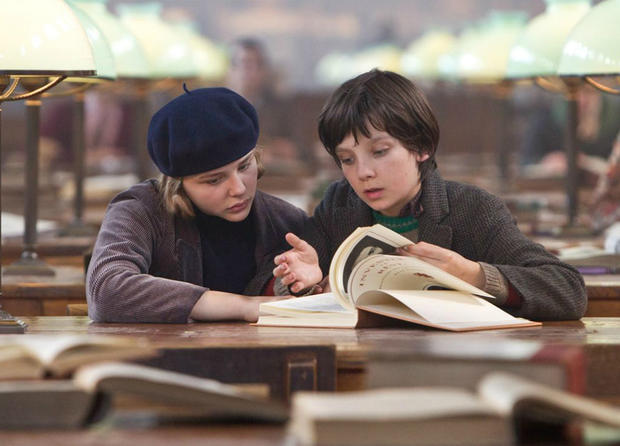
While conducting research in the library, Hugo and Isabelle discover that her grandfather, "Papa Georges," is actually the legendary film pioneer Georges Melies, who created an entire vocabulary of film narrative by directing more than 500 movies between 1896 and 1913. Sadly, he had disappeared from sight. Scholars presumed him dead, and virtually all of his films were lost.
Paramount Pictures
But Hugo's attempt to resurrect the reputation of Melies is met with tremendous anger and resentment from the old man, who wants nothing to do with his past.
It is here that Scorsese's film ceases being a "children's fantasy" and becomes a tale of aging, regret and the ravages of time, as we delve into the background of Melies, his work, and the profound impact life events can have on one's artistic expression, let alone survival.
Paramount Pictures
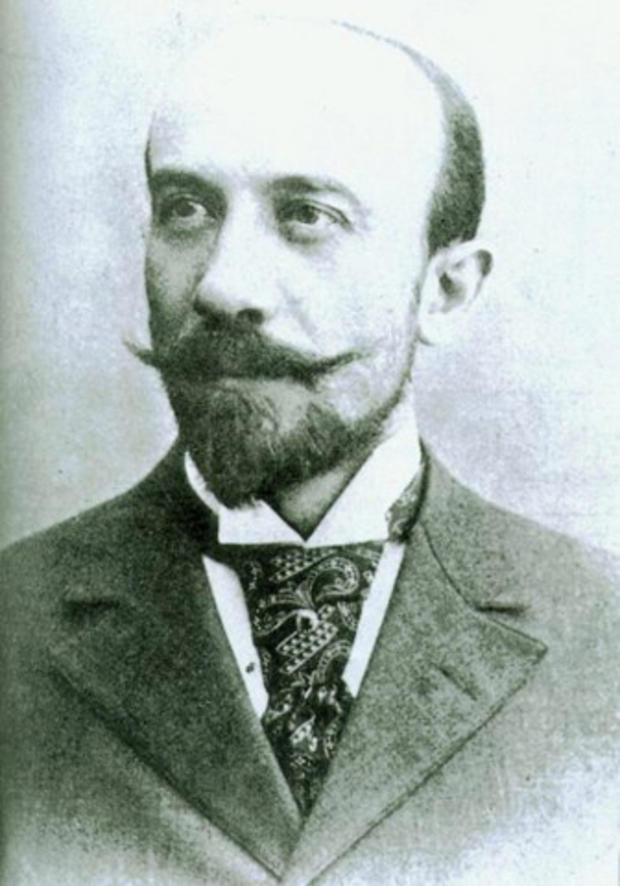
Born in 1861, Georges Melies was a stage magician and illusionist who is considered the first film artist, but whose work languished after the First World War.
Paramount Pictures
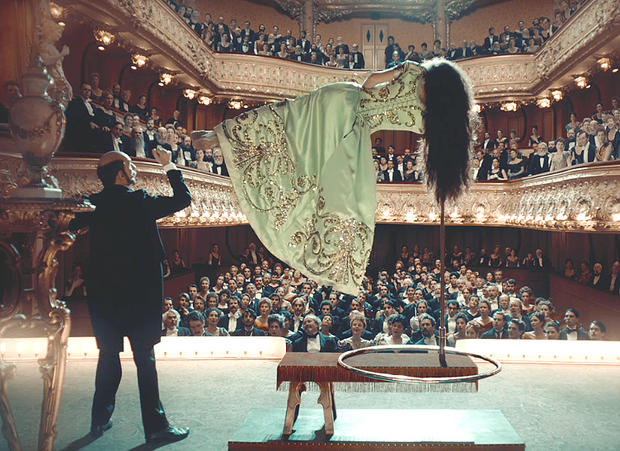
In flashback we are introduced to the young Melies and his wife, Jeanne (Helen McCrory), performing one of the stage artist's successful magic acts.
Paramount Pictures
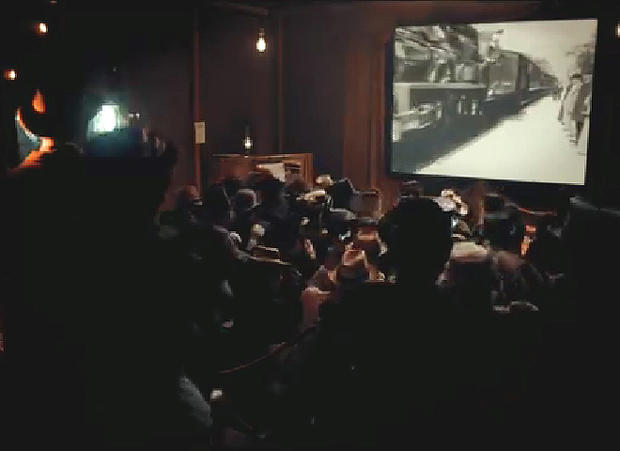
In 1895 Melies witnessed the remarkable new invention by the Lumiere Brothers - moving images projected onto a screen. The sight of a train barreling towards the camera sent the audience into a panic - and offered Melies a glimpse into the power a motion picture might have.
Paramount Pictures
Melies opened his own motion picture studio and began producing fantastical films filled with the kind of wondrous stage tricks that were his specialty, but advancing even beyond what was possible before live audiences.
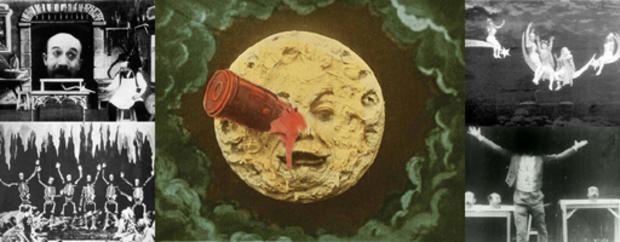
Star Films
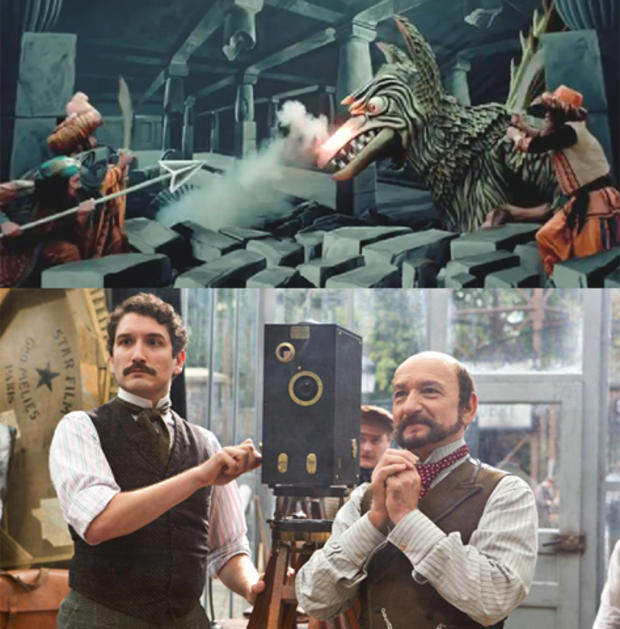
Using jump cuts, multiple exposures, models and miniatures, hand coloring, matte shots and other sleight of hand, Melies invented the field of special effects with his humorous tales of adventure.
Paramount PIctures
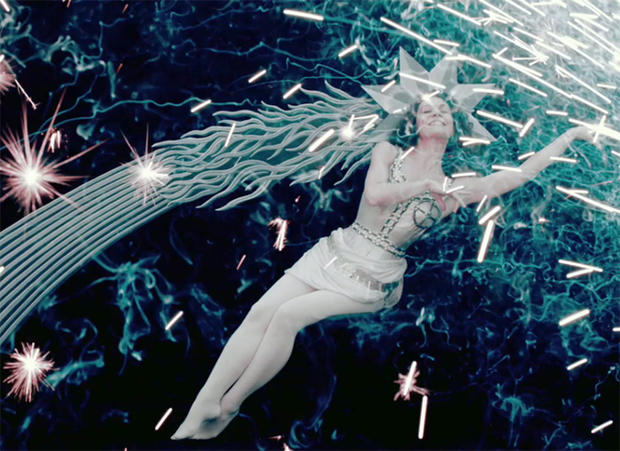
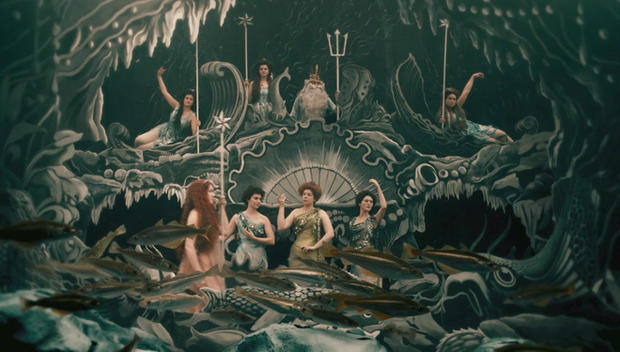
In loving recreations of Melies' studio in action, Scorsese stages the production of such films as "The Eclipse (The Courtship of the Sun and the Moon)" (1907).
Paramount Pictures
Cinematography by Oscar nominee Robert Richardson recreates the production of George Melies' early fantasies.
Paramount Pictures
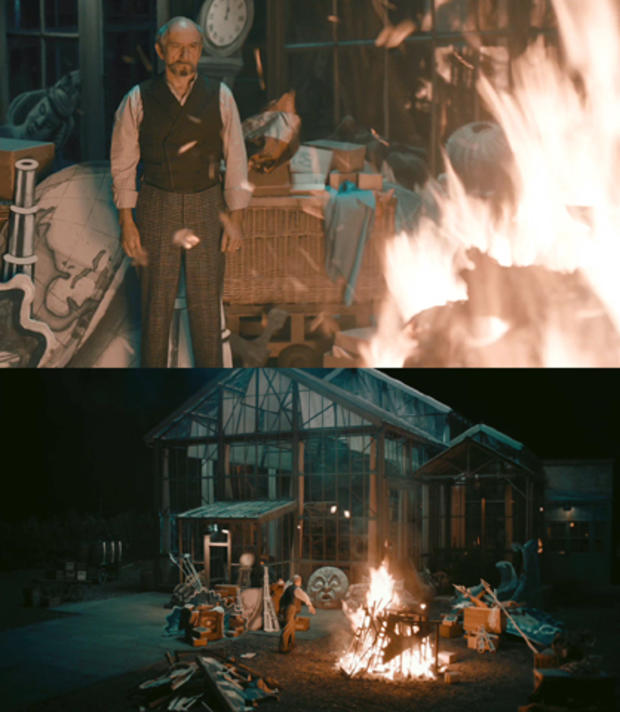
But the war ruined Melies. Most of his films were lost, or melted down for their silver content. Frustrated and defeated, Melies destroyed many of his films himself.
While the character of Hugo is fictional, many of the particulars of the narrative about Melies' life - his construction of automatons, becoming forgotten, his films lost, reduced to selling toys at a stall in Montparnasse train station - are true.
Paramount Pictures
Just as Scorsese would as a young boy witness the magic of cinema, Hugo sees the magic in a surviving Melies print and decides that others must share in that magic as well. But it will depend on whether Melies can forget the feelings of failure that have led him to turn away from the cinema, away from sharing magic with an audience.
Paramount Pictures
Scorsese's longtime editor Thelma Schoonmaker told CBS News that one of the most powerful draws for Scorsese to the story of "Hugo" was seeing a great filmmaker who had fallen into oblivion resurrected, which paralleled Scorsese's own efforts to resurrect the career of Michael Powell, the creator of such classic British films as "The Red Shoes" and "A Matter of Life and Death," and to restore the films to their original brilliant color.
"At one point we had a director in the editing room with us who was talking about 3-D. And I was saying, 'You do realize this is a distillation of all the things that Marty's done for the great masters that went before him, seeing Georges Melies brought back to the world.' And Marty turned to me and he said, 'Oh, I hadn't thought of that!' It was so deep in him that he just didn't realize it."
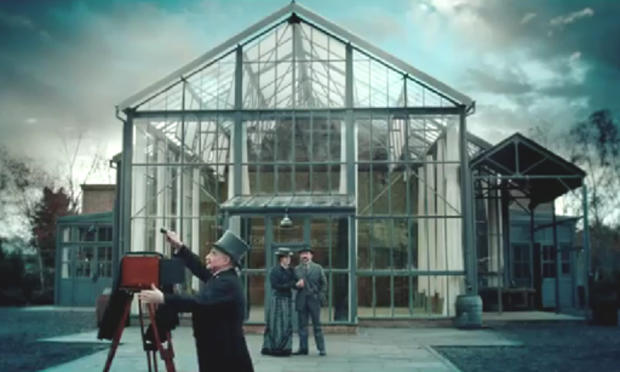
Left: Scorsese makes a cameo appearance as a photographer taking a portrait of Melies and his wife.
Paramount Pictures
"I think Marty has an ability to see into people psychologically very deeply," said Schoonmaker. "I've noticed this always about him. He understands and picks up on things that other people don't. And so I think he can punch through and draw out incredible emotion from people. You see that in all of his movies. And here, it was particularly touching because it was the old man and the young boy."
Paramount Pictures
Scorsese's choice to take on the story of "Hugo" is as much to celebrate the magic of Melies' work as it is a lesson in the importance of honoring cinema's pioneers and the value of preserving film history.
[Ironically, while "Hugo" teaches the value of preserving the fragile medium of film, it is the first feature shot by Scorsese with digital cameras, though the color palette purposefully mimics the look of the earliest color film processes.]
Paramount Pictures
"Hugo" was also Scorsese's first experience shooting in 3-D, a process he said presents actors in an entirely unique light:
"Ultimately what I learned was that it's really the actors, bringing the actors further out - in convergence, bringing them really close to the audience. I said, 'My God, it looks like a sculpture that's alive. It's moving!'
"It's like when you go see a work of art, like a giant sculpture, the David of Michelangelo. You can walk around these things and see. So why can't we go with that, in a sense, with the actors?"
Paramount Pictures
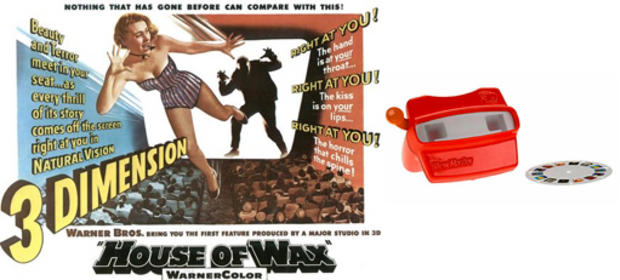
In preparing "Hugo," Scorsese showed his crew some of the earliest successful examples of 3-D films, such as "House of Wax" and Alfred Hitchcock's "Dial M for Murder." "I've always been an advocate of 3-D," he said, "except in the old days sometimes, the machines would go out of sync. And that you don't want to be around!"
Scorsese's fascination with 3-D also goes back to the ViewMaster toy stereo slide viewers: "You see this disk and these beautiful little slides, and then you put them into this little device. It's a square frame, pretty much 1:33, and it's stereoscopic. Because of the darkness around it, as a child - I'm trying to remember what the feeling was as a child - but it took you to another space and time. The depth of it was so strong and the colors were so vivid, it was a place that you could only get to in your imagination, I guess like 'Alice in Wonderland' to a certain extent."
Paramount Pictures
Ray Winstone (who appeared in "The Departed," and who played Hugo's loutish Uncle Claude) said what he enjoyed most during filming was watching Scorsese work: "It was like he was falling in love with making a film again. Watching him with 3-D, with something he'd never worked with before . . . it was like watching a kid with a new toy."
Paramount Pictures
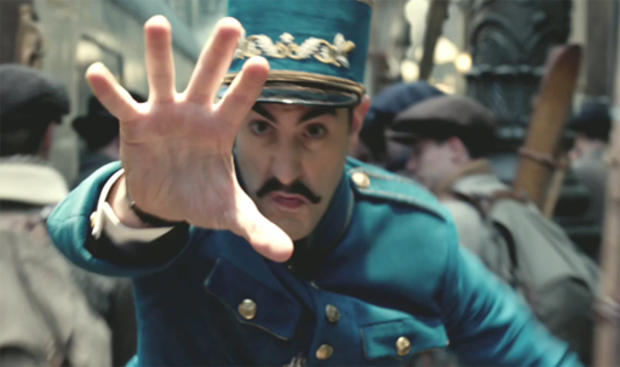
A moment of peril for Hugo with the stationmaster in pursuit.
Paramount Pictures
Production designer Dante Ferretti had previously worked with such cinema fantasists as Federico Fellini ("And the Ship Sails On"), Terry Gilliam ("The Adventures of Baron Munchausen") and Tim Burton, and has won Oscars for "Sweeney Todd" and "The Aviator."
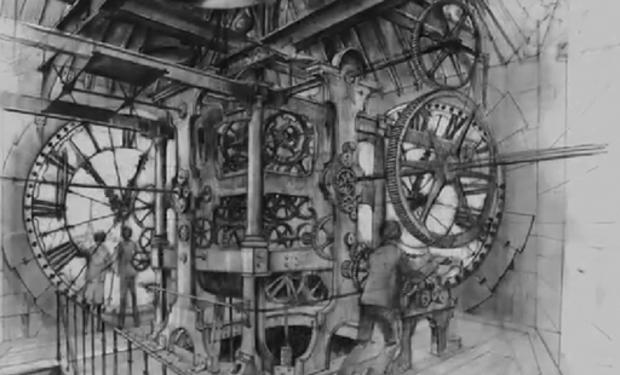
For "Hugo" (his ninth Academy Award nomination), Ferretti built the full-sized train station set with shops and cafe at Shepperton Studios in England, in addition to Melies' apartment building, the filmmaker's glass-walled studio, book shop, and a graveyard.
Left: Ferretti's design of the clockworks.
Paramount Pictures/Pixomondo/GK Films
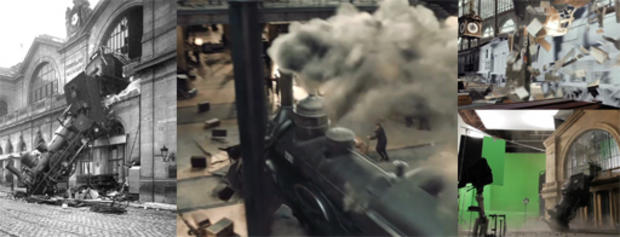
Among the 800 stereoscopic special effects shots in "Hugo," the story's most fantastical effect - a train crashing through the station - was inspired by a real-life event, when a train crashed through Gare Montparnasse on October 22, 1895 (far left). Like Melies, the special effects crew headed by Oscar-nominees Rob Legato, Joss Williams, Ben Grossmann and Alex Henning used many different tricks, from computer animated railroad cars (top right) to a miniature photographed at high speed (bottom right).
Paramount Pictures
Scorsese was convinced that Asa Butterfield was right to play Hugo. His intuition was seconded by actress Vera Farmiga (whom Scorsese had directed in "The Departed"), Butterfield's co-star in "The Boy with Striped Pajamas."
Butterfield's other credits include "Son of Rambow," "Nanny McPhee Returns," and "The Wolfman." He is set to star in the film adaptation of Orson Scott Card's "Ender's Game," with Harrison Ford and Viola Davis.
Paramount Pictures
Since debuting in the TV series "The Guardian" in 2004, Chloe Grace Moretz has built a considerable resume that includes the films "Heart of the Beholder," "The Amityville Horror," "Wicked Little Things," "The Eye," "Bolt," "(500) Days of Summer," "Kick-Ass," "Diary of a Wimpy Kid," "Let Me In," "Texas Killing Fields," and the upcoming "Dark Shadows."
Paramount Pictures
In his first major film, stage actor Ben Kingsley won the Academy Award for Best Actor for his starring role in the biography "Gandhi" (1982). He has also been nominated for performances in "Bugsy," "Sexy Beast" and "House of Sand and Fog."
Kingsley's other major films include "Betrayal," "Turtle Diary," "Maurice," "Pascali's Island," "Testimony," "Sneakers," "Dave," "Searching for Bobby Fischer," "Schindler's List," "Death and the Maiden," "Species," "Twelfth Night," "Rules of Engagement," "Oliver Twist," "BloodRayne," "Shutter Island," and "Prince of Persia: The Sands of Time."
Paramount Pictures
Following his success with the TV series "Da Ali G Show," Sacha Baron Cohen shared an Oscar nomination for Best Screenplay Adaptation for his 2006 mock-umentary, "Borat: Cultural Learnings of America for Make Benefit Glorious Nation of Kazakhstan."
Cohen's other film appearances include "Talladega Nights: The Ballad of Ricky Bobby," "Bruno," "Sweeney Todd," and the upcoming "The Dictator" and "Les Miserables."
Paramount Pictures
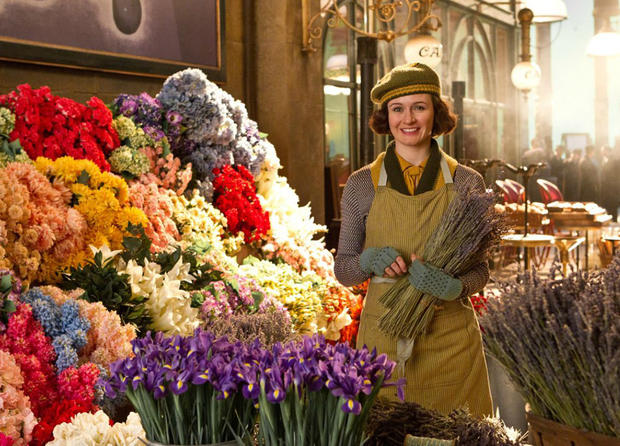
Emily Mortimer, who plays the flower stall worker Lisette (and a tentative romantic interest for the Stationmaster), appeared in Scorsese's "Shutter Island." Her other credits include "Elizabeth," "Love's Labour's Lost," "Match Point," "The Pink Panther," "Paris, je t'aime," "Lars and the Real Girl," and "City Island."
Paramount Pictures
Composer Howard Shore (a triple-Oscar winner for the "Lord of the Rings" trilogy) received an Academy Award nomination for his original score, which melodically captures the Gallic setting, as well as conjuring the heartbreaking inner life of Hugo, the exuberance of Melies' illusions, and the artist's tragic downfall.
Kevin Winter/Getty Images
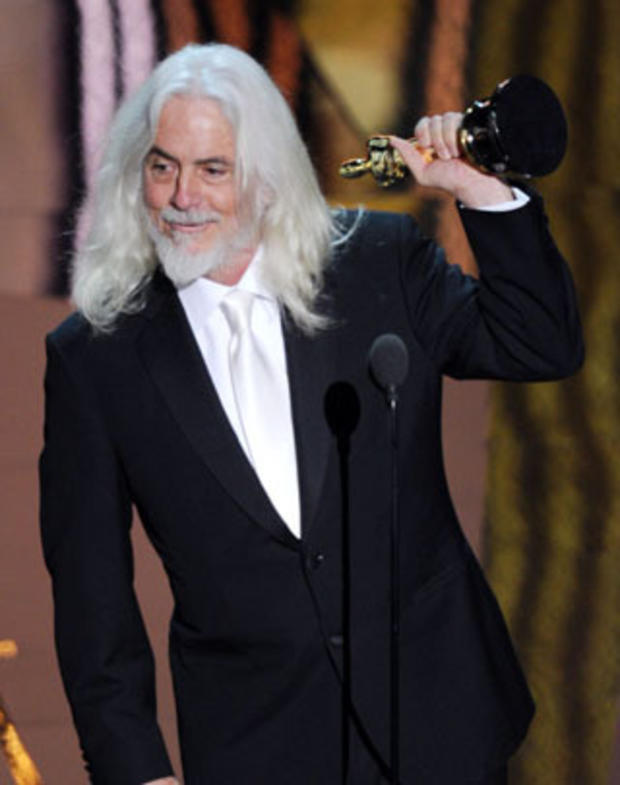
DP Robert Richardson's 3-D digital photography won the Academy Award for Best Cinematography for "Hugo," in an upset over "The Tree of Life," which had won every critics group and guild award.
"I'm elated, I didn't see this as happening," Richardson said backstage. "I have to say, personally, I love the work of Chivo [Lubezki] in 'The Tree of Life.' I also think he's well overdue, but that said, I am extraordinarily happy. I do love that man, so I would like to see that not too far in the future."
With the Kodak Theater undergoing a name change (thanks to the film company
Kevin Winter/Getty Images
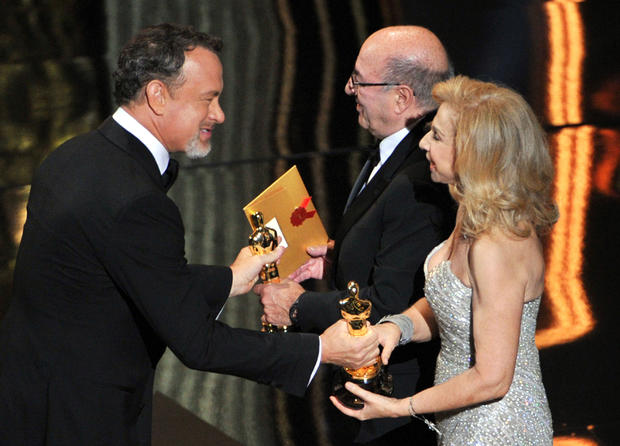
Tom Hanks presents the Oscar for Art Direction to "Hugo"'s production designer Dante Ferretti and set decorator Francesca Lo Schiavo, during the 84th Annual Academy Awards February 26, 2012 in Hollywood, California.
Lo Schiavo said her Oscar was "for Martin, and for Italy."
Kevin Winter/Getty Images
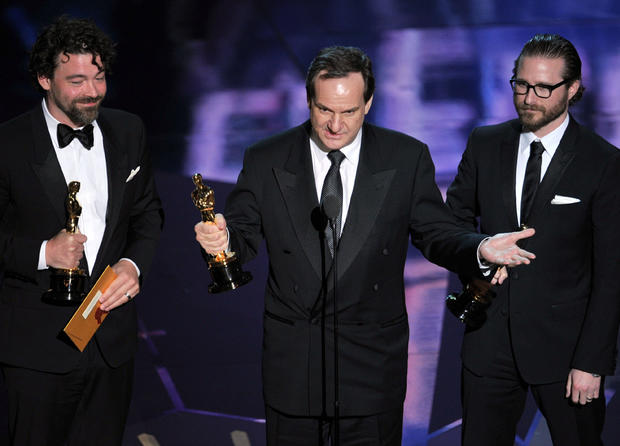
Despite industry buzz for "Transformers: Dark of the Moon" and fan buzz for "Rise of the Planet of the Apes," the Visual Effects Oscar went to the team of "Hugo."
Rob Legato (center, with Ben Grossman and Joss Williams) said, "Well, I didn't expect this. I know it's a huge thrill to be nominated, but it's awesome to win and it's really underrated!"
Kevin Winter/Getty Images
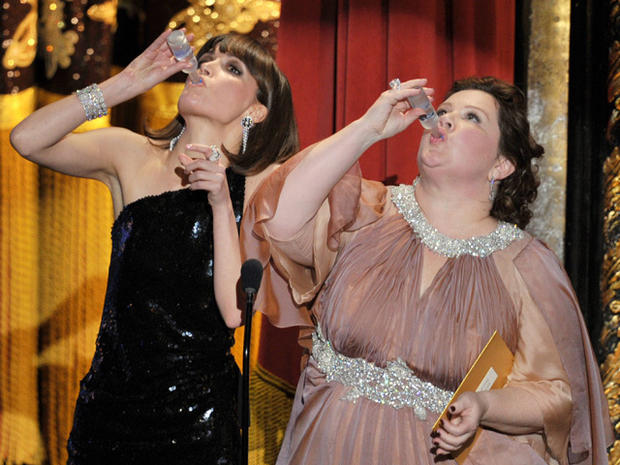
The "Martin Scorsese drinking game" was in full effect at the Academy Awards, with "Hugo" winning five Oscars, although Scorsese himself went home without a statue. Pictured: Presenters Rose Byrne and Melissa McCarthy (of "Bridesmaids") on stage.