AMPAS/Courtesy Getty Images
"A philosopher posits his conscience against opinion. To have a conscience is to be open to the world. To be faithful is to act as if time didn't exist. Wisdom would be to see life, truly see it." — "Masculin Feminin" (1966)
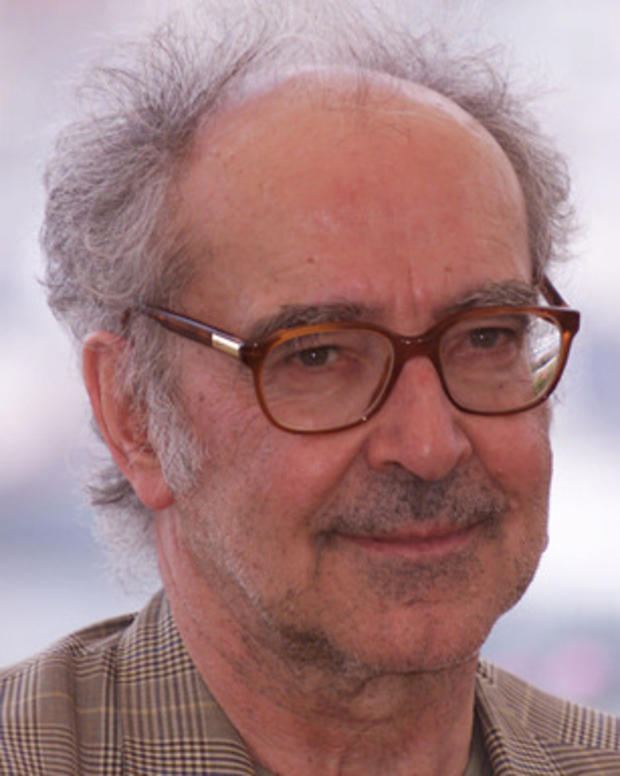
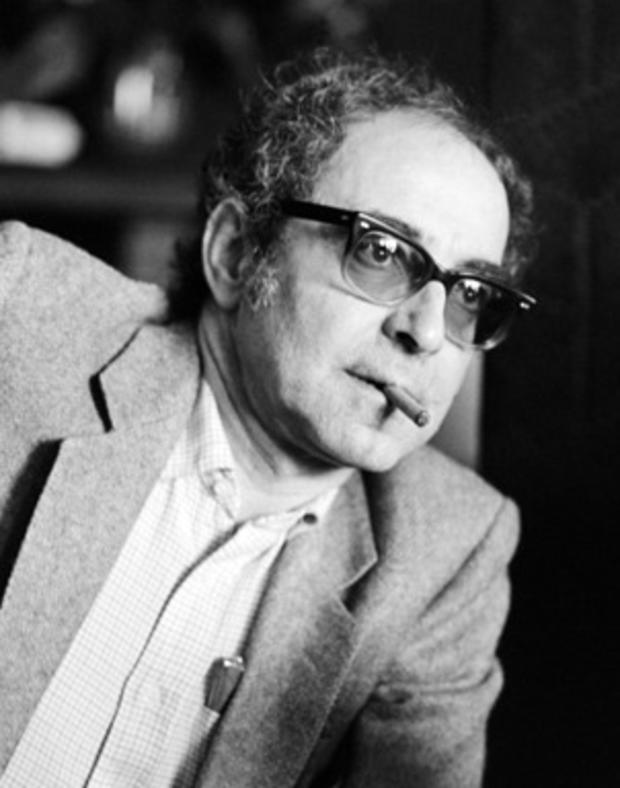
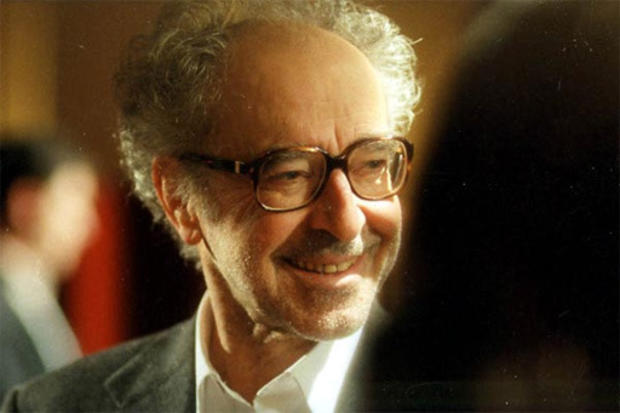
French-Swiss filmmaker Jean Luc Godard has been a lightning rod for film fans and critics since his emergence as a founding member of the New Wave movement. The Board of Governors of the Academy of Motion Picture Arts and Sciences announced it would present an Honorary Oscar to Godard, and to film historian and preservationist Kevin Brownlow, at a gala dinner on November 13, 2010.
By CBS News.com producer David Morgan
Rialto Pictures
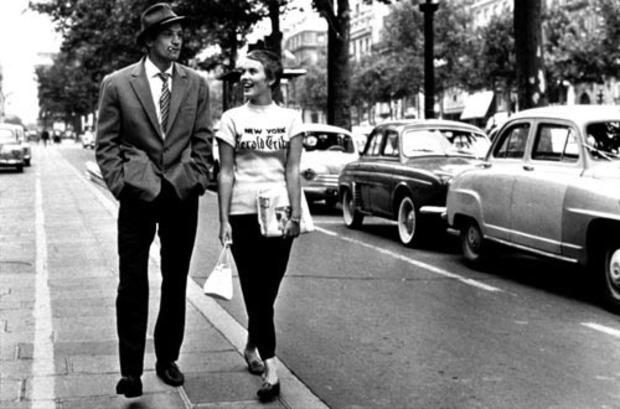
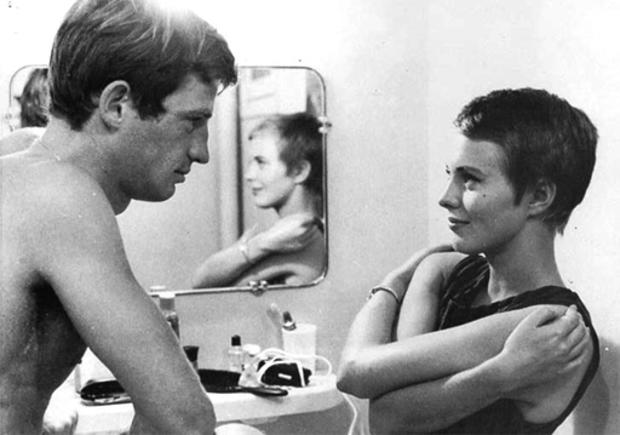
After a documentary and several shorts, Godard made his first feature, "Breathless (A Bout de Souffle)" (1960), a brisk dark comedy starring Jean-Paul Belmondo as a petty thief and Jean Seberg as an American ex-pat. It was a hybrid of Continental and Hollywood styles that paid homage to Godard's American hero Howard Hawks, while also reveling in an untethered narrative.
Rialto Pictures
As a filmmaker Godard is more blatantly political than his fellow Nouvelle Vogue director Francois Truffaut, and more esoteric than Eric Rohmer or Claude Chabrol. But Godard's emergence on the world stage with "Breathless" was a breath of fresh cinematic air.
Janus Films
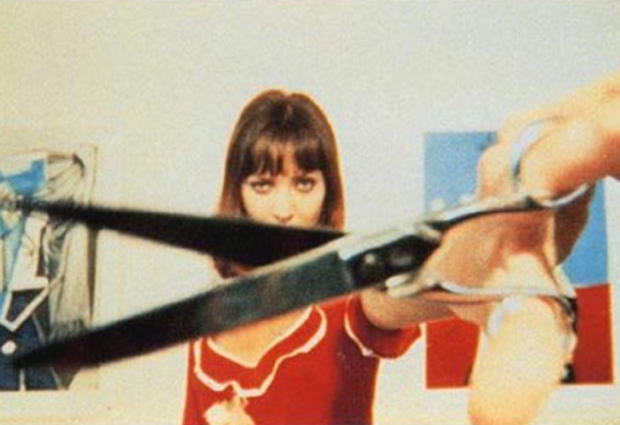
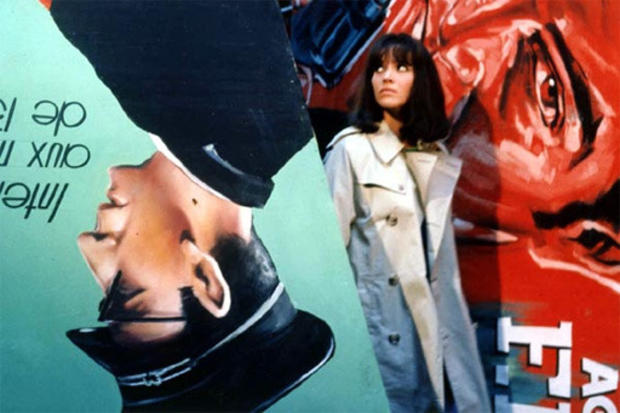
Godard's films have typically shunned traditional forms of editing, composition and music. Printed language is interpolated with sound effects. Characters remark about actions happening off-screen but never shown to us. Stylized dialogue and off-handed delivery also suggest that the actors are self-consciously aware of being in a film. (Pictured: Anna Karina in "Pierrot le fou.")
Pathe Contemporary Films
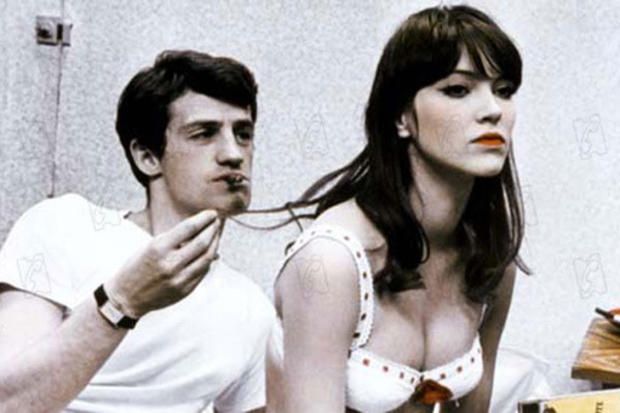
Anna Karina (who would soon become Godard's wife) played a strip artist in "A Woman is a Woman" (1961).
Union Film Distributors
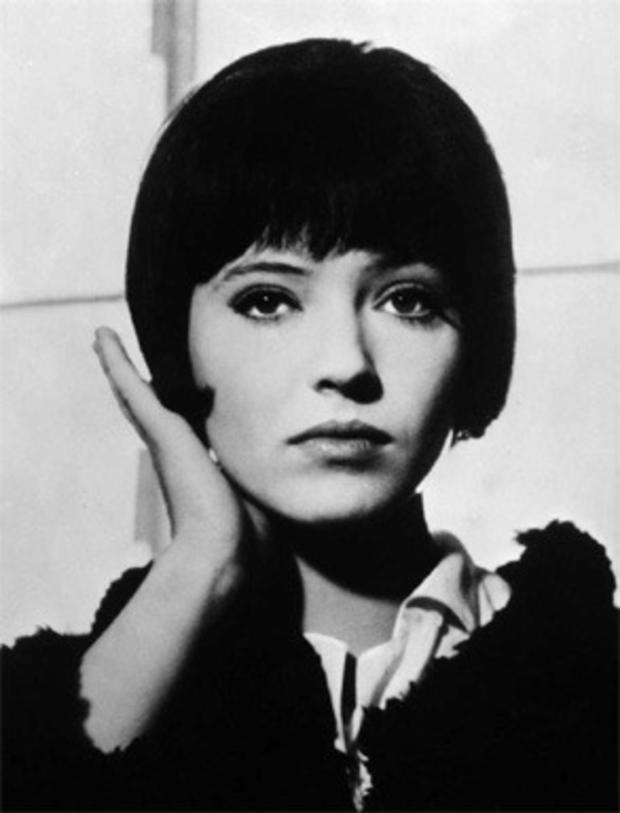
Anna Karina in "My Life to Live (Vivre Sa Vie)" (1962).
Embassy Pictures
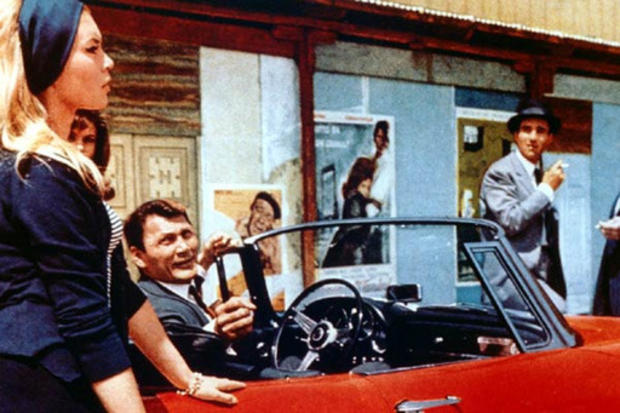
Godard had affection for some Hollywood directors, but not producers. Hired by American producer Joseph E. Levine to turn in a commercial property starring Brigitte Bardot, the most famous Continental actress in the world, Godard directed "Contempt (Le mepris)" (1963), with Jack Palance as a thinly-veiled caricature of Hollywood producers. Levine forced Godard to go back and shoot new footage of Bardot disrobed, which did make the film a commercial success (if barely).
Janus Films
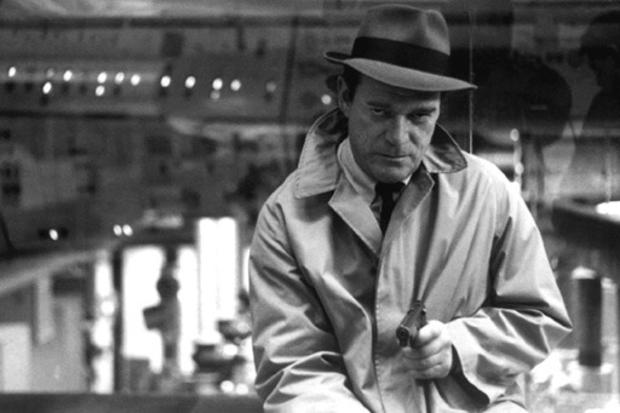
"Alphaville: A Strange Adventure of Lemmy Caution" (1965) starred Eddie Constantine in a quasi-science fiction/film noir that both honored and mocked hard-boiled detective fiction conventions.
Pathe
A self-described "Walt Disney With Blood," "Made in U.S.A." (1966) was loosely adapted from a Donald E. Westlake thriller ("The Jugger"), and as dense as Howard Hawks' "The Big Sleep." The film is radical in both form and content: Discordant music cues, sound effects and jump cuts illustrate Godard's political statements against capitalism and consumerism.
Getty Images
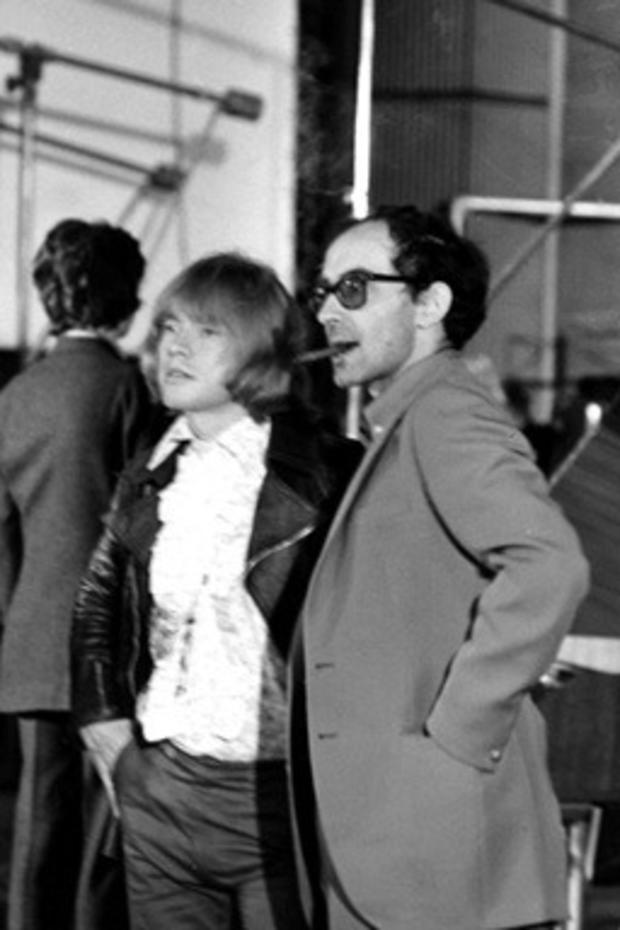
"Sympathy for the Devil" (1968) was a documentary depicting American counterculture and revolutionary movements like the Black Panthers, interwoven with film taken of the Rolling Stones recording in the studio. The producer had re-edited Godard's version, leaving the director so incensed he punched the producer in the nose in front of a London audience. (Pictured: Godard with Brian Jones.)
New Yorker Films
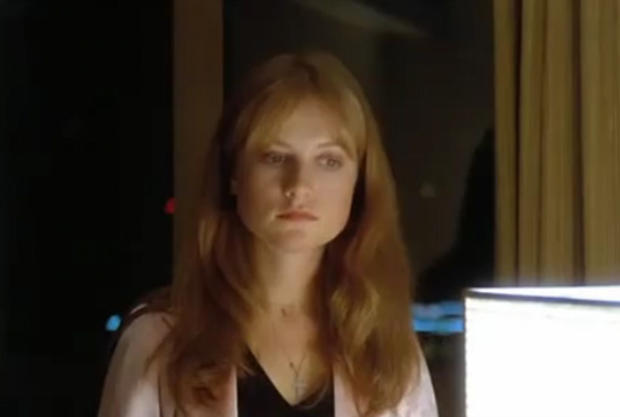
Isabelle Huppert played a prostitute in "Every Man for Himself" (1980), and later appeared in Godard's "Passion" (1983).
Dominque Faget/Ralph Gatti/AFP/Getty Images
Jean-Luc Godard at a press conference for his film "Detective", during the 38th Cannes International Film Festival, May 10, 1985. In a 2002 poll of critics by the British Film Institute for Sight + Sound, Godard ranked number three on the list of Top Ten Directors — behind Orson Welles and Alfred Hitchcock, and ahead of Jean Renoir, Stanley Kubrick and Akira Kurosawa. But Godard did not fare as well among his peers — his name did not appear when the BFI polled directors on their choices for Top Ten.
Vega Film
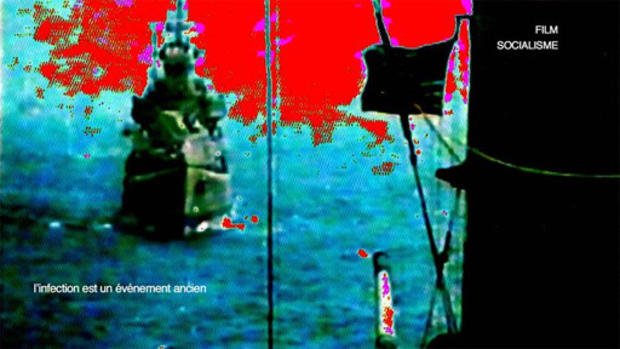
Godard's latest work, "Film Socialisme" (2010), which played the recent Cannes and New York Film Festivals, is a blend of cinematic and video effects that also features a kind of gibberish-English subtitling that magnifies the film's theme of dissonance and mis-communication.
Manhattan Pictures
"In my opinion the cinema should be more poetic," Godard told Cahiers du Cinema in 1965. "Two or three years ago I felt that everything had been done [in film]. 'Ivan the Terrible' had been made, and 'Our Daily Bread.' Make films about people, they said; but 'The Crowd' had already been made, so why remake it? I was, in a word, pessimistic. After 'Pierrot,' I no longer feel this. Yes, one must film, talk about, everything. Everything remains to be done." In the 45 years since, Godard has proven that.
Todd Wawrychuk
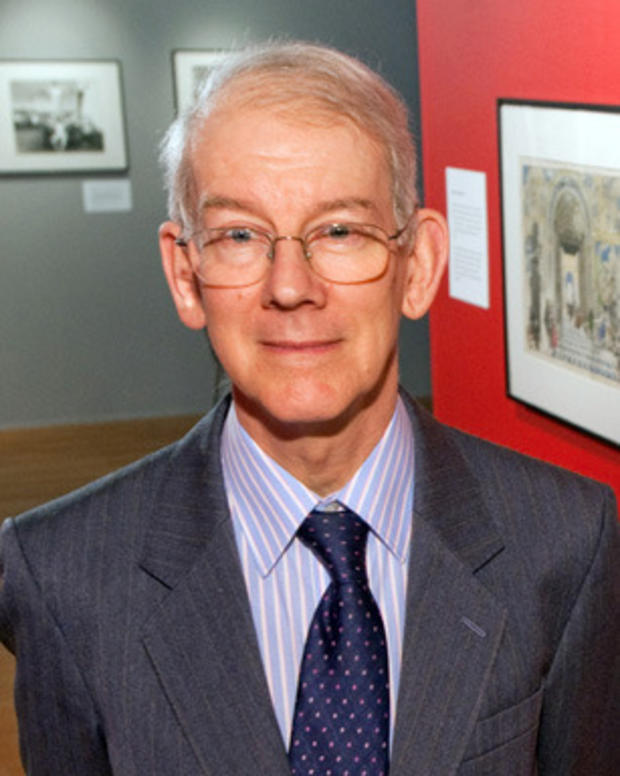
Historian, preservationist and documentary filmmaker Kevin Brownlow has been instrumental not only in educating the public about silent film but in making sure that the works of artists such as Charlie Chaplin, F.W. Murnau and Abel Gance are preserved for future generations. Among Brownlow's books are "The Parade's Gone By"; "The War, the West, and the Wilderness"; "Hollywood: The Pioneers"; "Behind the Mask of Innocence:; "David Lean"; "Mary Pickford Rediscovered"; and "In Search of Charlie Chaplin."
Zoetrope
One of Brownlow's greatest achievements was in restoring as fully as possible the epic "Napoleon" (1927) by Abel Gance. Cut over the years to a mere shadow of its original self, the French director's sweeping history had also featured sequences shot in a technically and aesthetically challenging widescreen technique dubbed Polyvision, a precursor to three-camera Cinerama. Unseen for decades (and with most of the Polyvision footage destroyed by Gance in a fit of despair), fragments of the film were restored by Brownlow, who also restored the triptych imagery of the film's final section. Brownlow has also restored Rex Ingram's "The Four Horsemen of the Apocalypse" (1921), "The Thief of Bagdad" (1924), starring Douglas Fairbanks, and F.W. Murnau's "Sunrise" (1927).
Thames Television
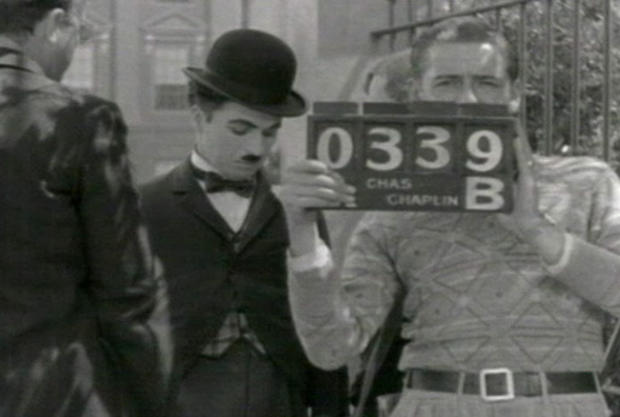
The three-part documentary "Unknown Chaplin" (1983) was a fascinating glimpse into the creative process of cinema's first great comic genius. Using previously-unseen out-takes from Chaplin's films, Brownlow and co-director David Gill showed how the Little Tramp used rehearsals, improvisation, props and tireless trial-and-error to conjure his timeless films. Other subjects of documentaries by Brownlow were Buster Keaton, Lon Chaney, Cecil B. De Mille, and Universal Studio's horror creations.
Richard Harbaugh/AMPAS
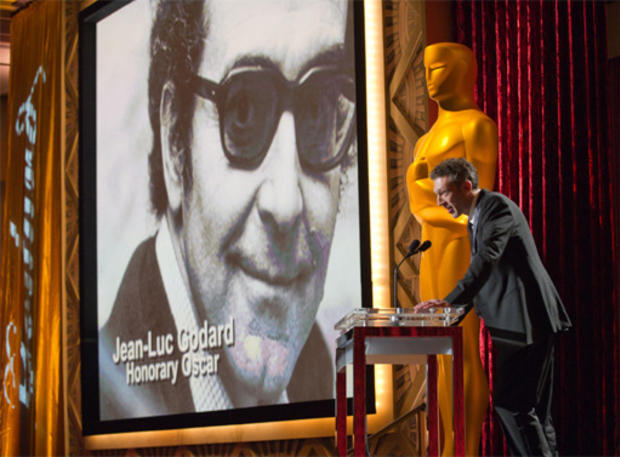
Actor Vincent Cassel speaks as part of the award presentation to Honorary Award recipient Jean-Luc Godard during the 2010 Governors Awards in the Grand Ballroom at Hollywood & Highland in Hollywood, Calif., Saturday, November 13, 2010. Godard declined to attend the event.
Todd Wawrychuk/AMPAS
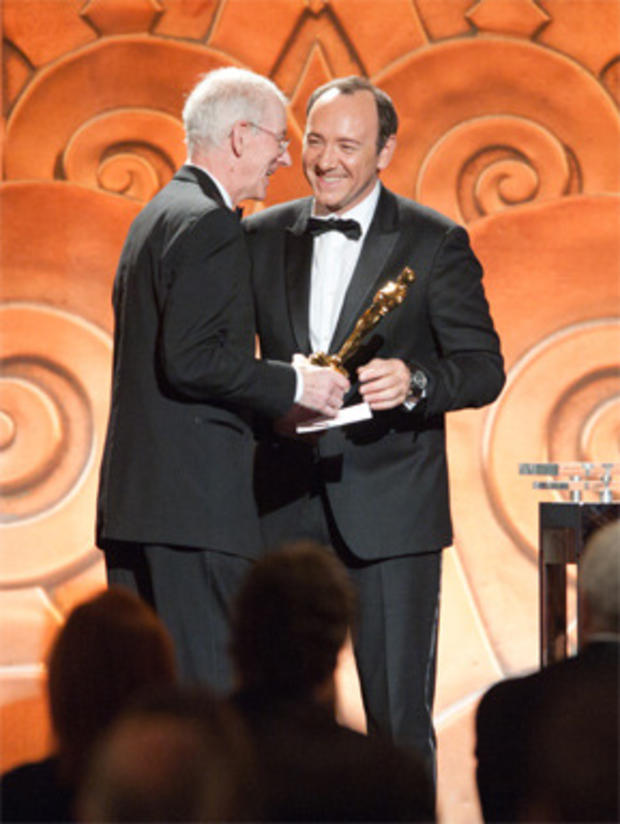
Two-time Oscar-winning actor Kevin Spacey presents the Honorary Award to recipient Kevin Brownlow during the 2010 Governors Awards in the Grand Ballroom at Hollywood & Highland in Hollywood, Calif., Saturday, November 13, 2010.
Matt Petit/AMPAS
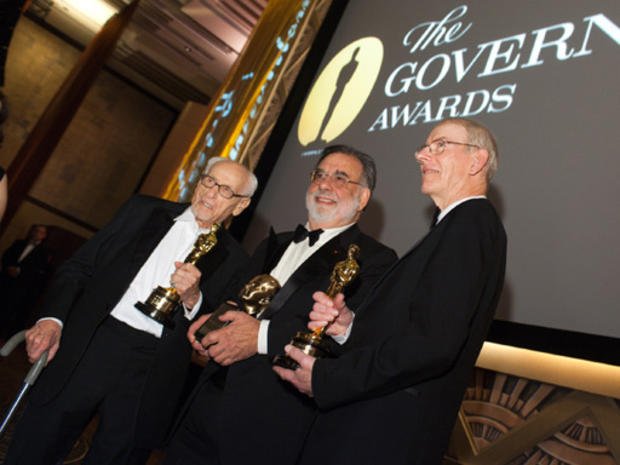
Honorary Award recipient Eli Wallach, Irving G. Thalberg Memorial Award recipient Francis Ford Coppola, and Honorary Award recipient Kevin Brownlow at the 2010 Governors Awards in the Grand Ballroom at Hollywood & Highland in Hollywood, Calif., Saturday, November 13, 2010.