Marcus Brandt/AP
In honor of National Robotics Week, April 6-14, here is a look at some recent steps forward in robot technology. From electronic soccer players to mechanical salamanders, these robots are both fun and fascinating.
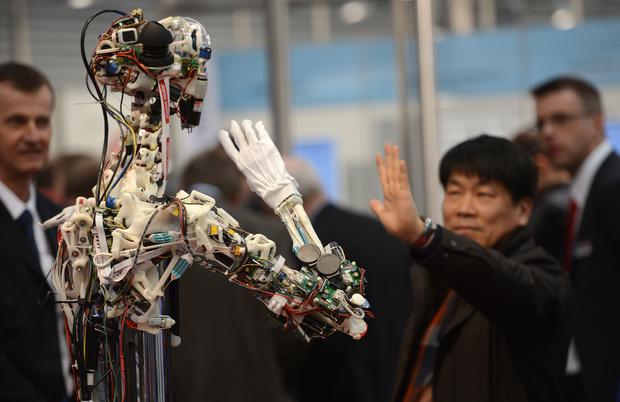
In this photo, an "OSA" (Open Source Android) robot is on display at the Maxon Motor AG booth at the Hannover fair in Germany, April 8, 2013.
Frank Augstein/AP
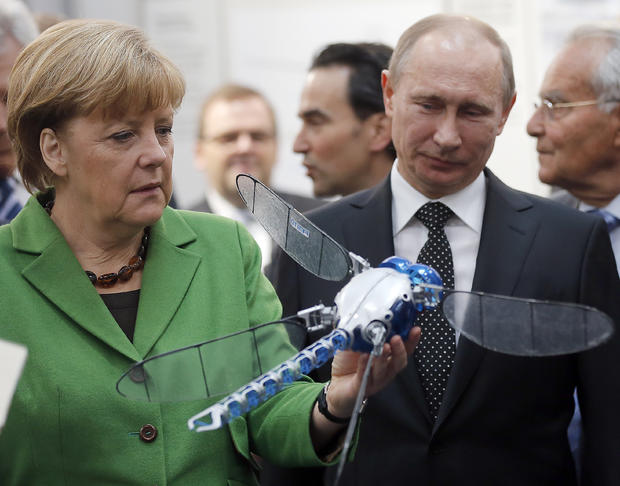
Russian President Vladimir Putin and German Chancellor Angela Merkel look at a BionicOpter, a dragonfly-shaped robot made by Festo, during the opening of the Hannover Fair in Germany, April 8, 2013.
CBS News/Boston Dynamics
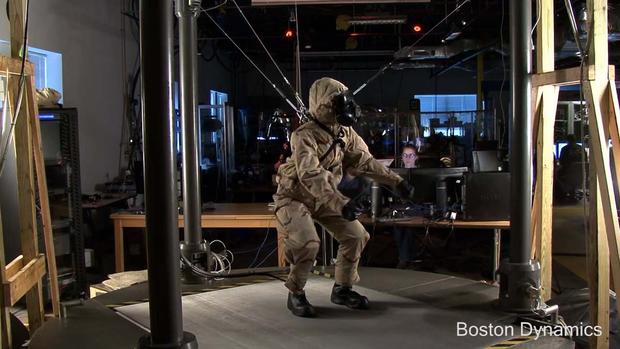
Funded by the U.S. Defense department, PETMAN is a robot designed to test chemical protection clothing for soldiers. Made to be super-realistic, this robot can even sweat and mimic temperature fluctuations like a real person.
Vahid Salemi/AP
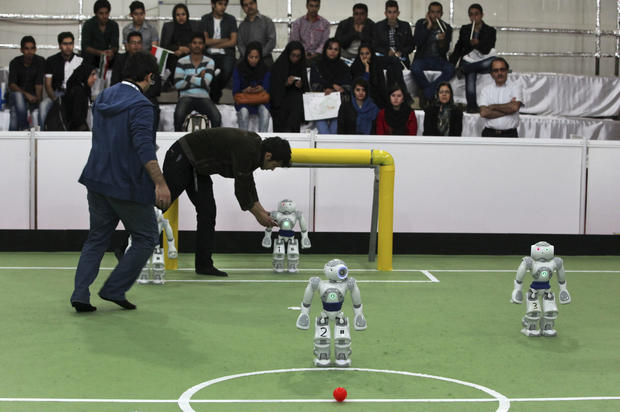
A game between robots is set up, during the international robotics competition, RoboCup Iran Open 2013, in Tehran, Iran, April 5, 2013.
Micromagic Systems
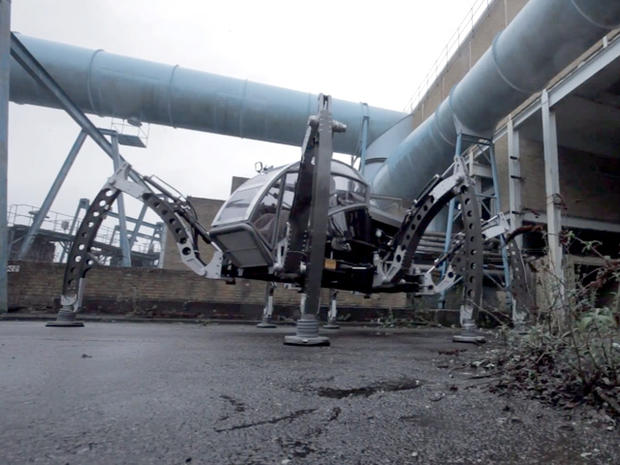
Micromagic Systems revealed Mantis, which is the biggest, all-terrain operational hexapod robot in the world.
The giant machine is 9.2 feet high, can reach within in 16.4 feet and weighs just less than two tons. The walking machine can be piloted with a real person, or even controlled remotely with Wi-Fi.
EPFL/Kostas Karakasiliotis/Biorobotics Laboratory
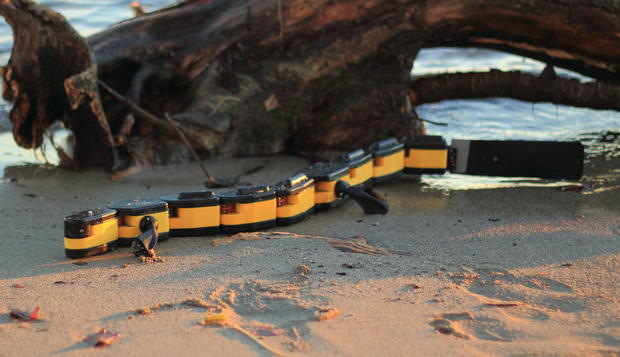
Salamandra robotica II comes from the Biorobotics Laboratory at the Ecole Polytechnique Federale de Lausanne technical university in Switzerland. Its ability to swim, crawl and walk makes it unusual in the robotics world. The amphibious robot uses a digital version of a spinal cord neural network to control its movements and it is helping researchers understand how salamanders are able to move and make the transition between water and land.
University of Massachusetts Amherst
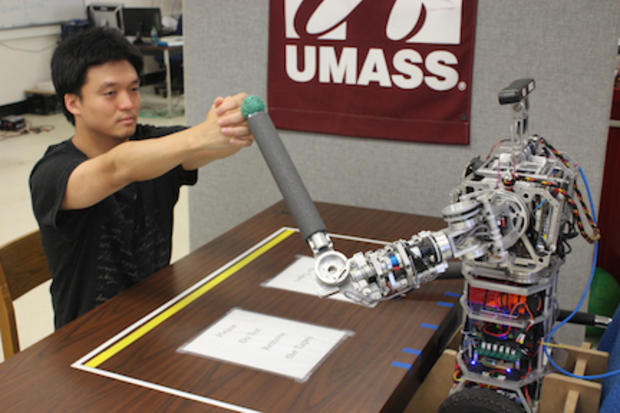
The uBot-5 is a child-size humanoid robot with arms and a computer screen through which therapists can interact with people. A speech language pathologist at the University of Massachusetts Amherst is studying the interactions of stroke patients with the robot, seen in this picture with computer science doctoral student Hee-tae Jung.
CBS News/Boston Dynamics
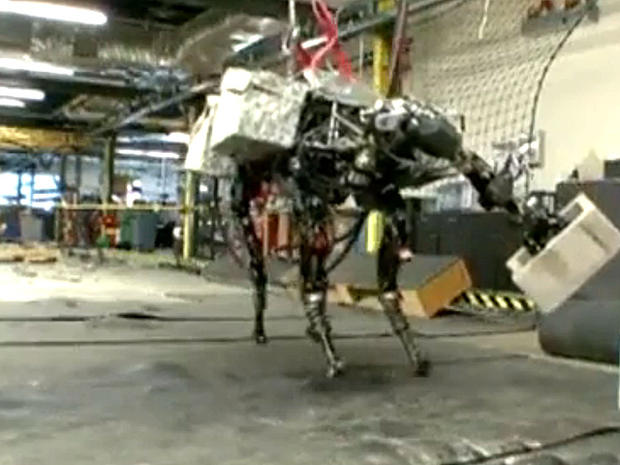
With funding from the U.S. Defense Department, Boston Dynamics' "BigDog" has been given the ability to fling heavy objects for long distances with its robotic head.