Laughlin Heritage Foundation/CIA
A new book by Los Angeles Times journalist Annie Jacobsen, "Area 51: An Uncensored History of America's Top Secret Military Base" (Little Brown), tells the story of the famous site that has spurred tales and rumors of intrigue and cover-ups.
Jacobsen dove through thousands of recently-declassified documents to reveal what happened in the 1940s, '50s and '60s at the government-restricted area near Groom Lake, Nevada. She also interviewed a number of military veterans who worked there at the time. They were doing amazing things.
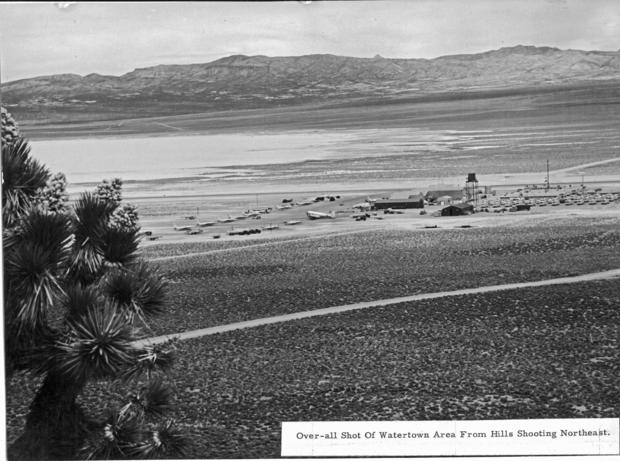
This slideshow features several photos from her book. Jacobsen writes of the picture at left, "A rare perspective on Area 51 looking northeast in 1955. The triangular mountain peak (just right of center in the far distance) is Tikaboo Peak, the single remaining location from where the curious can catch a faraway glimpse of Area 51."
Collection of Richard S. Leghorn/Army Air Forces
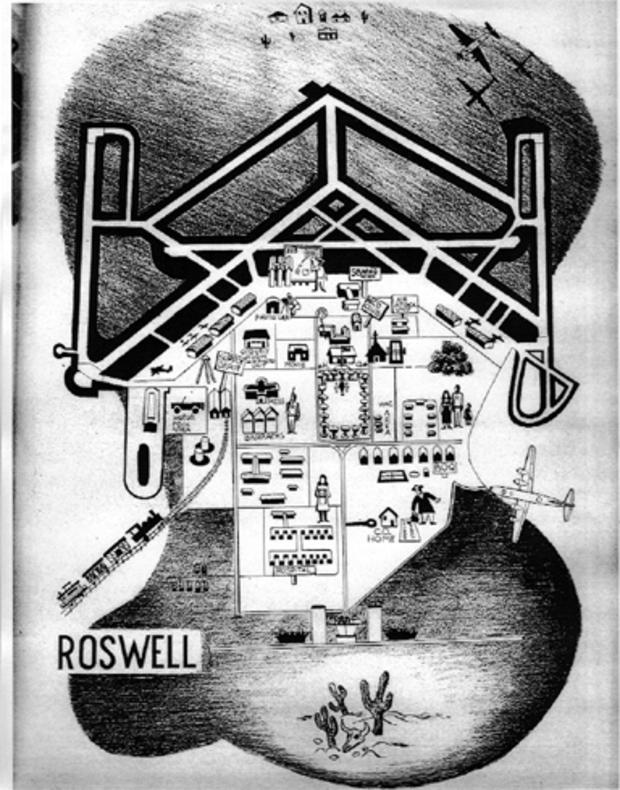
"The Operation Crossroads 1946 commemorative yearbook depicts the Roswell Army Air Base as the military facility from which the opening shot in the Cold War was fired," Jacobsen writes in "Area 51: An Uncensored History of America's Top Secret Military Base."
Special Collections, University of Nevada - Reno
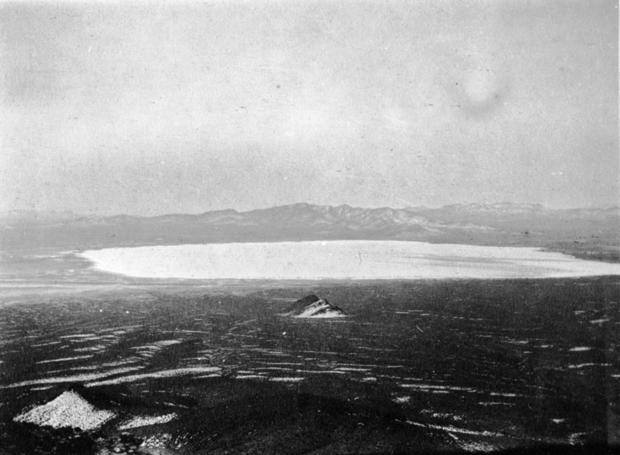
"Groom Lake, Nev., in 1917. Once little more than a dry lake bed in the southern Nevada desert, what is now known as Area 51 has become the most secretive military facility in the world."
Collection of Roadrunners Internationale
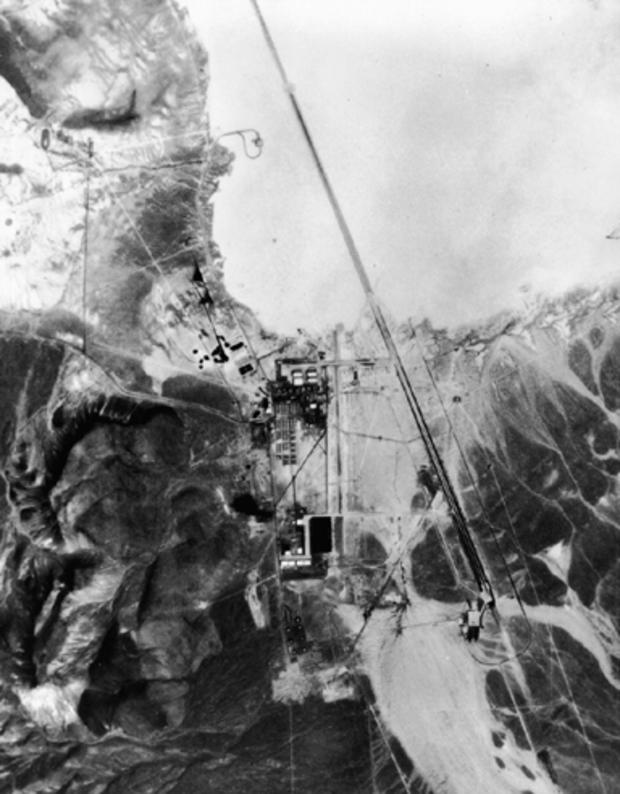
Jacobsen writes, "Area 51 as seen from the air, circa 1964. This rare photograph has never been published before."
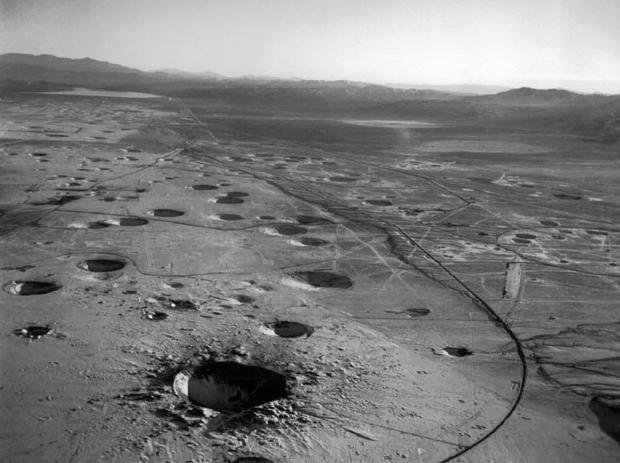
National Nuclear Security Administration
"Yucca Flat, which spans several areas at the Nevada Test Site, is one of the most bombed-out places on Earth," writes Jacobsen. "In this photo taken during the winter months from a helicopter above Area 10, the Sedan Crater can be seen in the forefront. A 104-kiloton bomb was buried at a depth of 635 feet, and its detonation produced a crater 1,280 feet wide and a 320 feet deep, moving 12 million tons of radioactive dirt in an instant and creating a hole that can be seen from space."
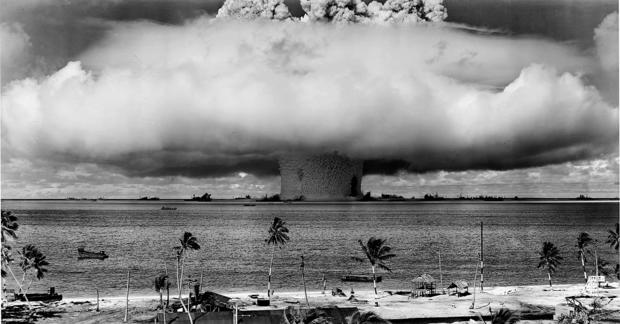
Library of Congress
Jacobsen's book reads, "The Baker bomb at Operation Crossroads, July 25, 1946, was 21 kilotons, one and a half times more powerful than the bomb dropped on Hiroshima. Baker's underwater fireball produced a 'chimney' of radioactive water 6,000 feet tall and 2,000 feet wide."
The author also notes that Stalin had spies at the event.
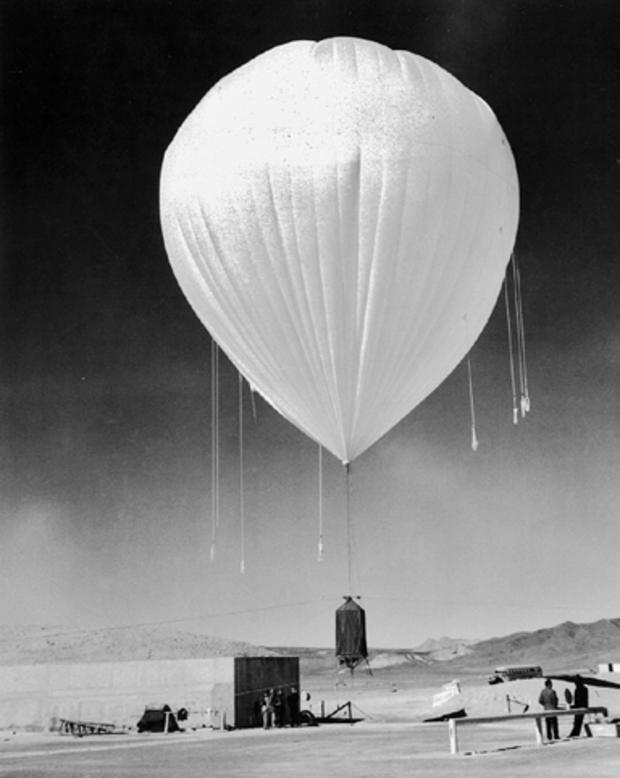
Collection of Alfred O'Donnell/National Nuclear Security Administration
According to Jacobsen, "The black device attached to this balloon in Area 9 of the Nevada Test Site is a 74-kiloton atomic bomb code-named Hood, the largest atmospheric nuclear weapon ever exploded in the United States. Standing on a ladder minutes before this photograph was taken on July 5, 1957, Al O'Donnell put the final touches on the bomb's firing system. Area 51 is over the hill to the right of the device."
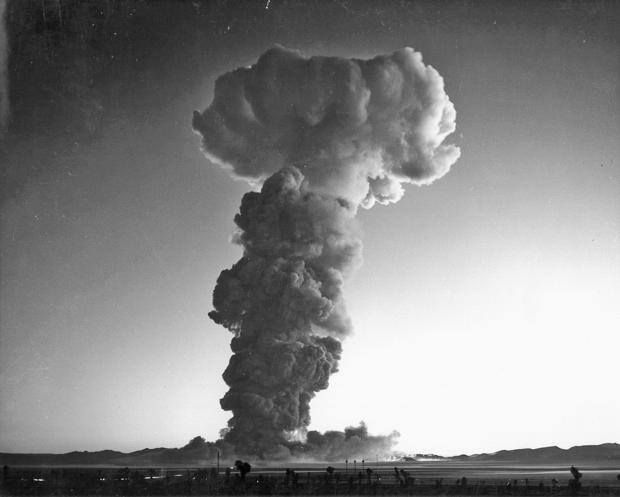
National Nuclear Security Administration
Jacobsen writes, "A column of radioactive smoke rises from the Hood bomb. To the right of the mushroom stem the landscape can be seen on fire. Approximately one hour after the bomb went off, security guard Richard Mingus drove through ground zero to set up a guard post at the Area 51 guard gate, directly over the burning hills."
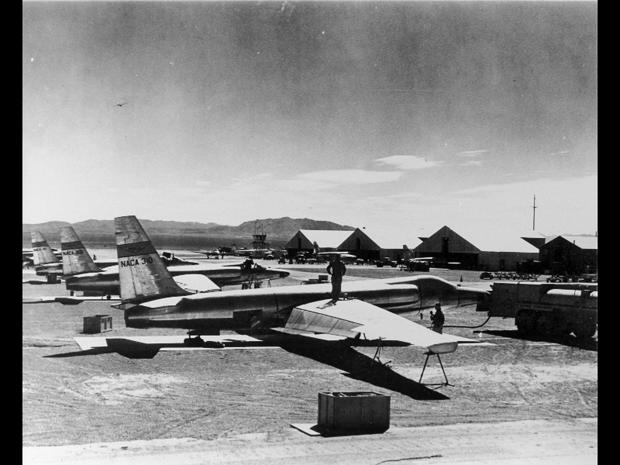
Laughlin Heritage Foundation/CIA
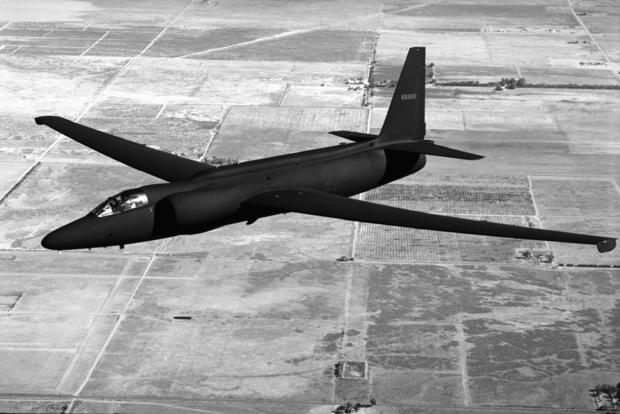
"Early U-2 (spy planes) on the flight line at Area 51 in 1956, a worker standing on a wing," Jacobsen writes in "Area 51."
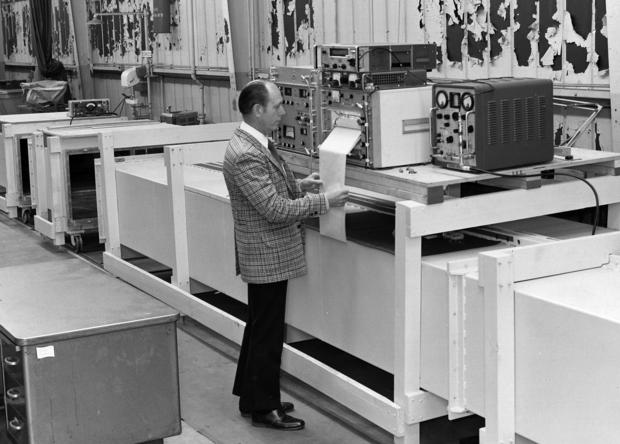
Collection of Edward Lovick/Lockeed Martin
Jacobsen writes, "Ed Lovick, at Skunk Works in the mid-1960s, with the waveguide, as he works to reduce the radar cross section for the A-12 (aircraft) to meet the CIA's demands."
The Archangel-12 (A-12) spy plane, intended to replace the U-2, was designed so as to reduce its radar cross section an astonishing 90 percent. Proof-of-concept tests were conducted at Area 51 beginning in 1959, with full-scale mockups built and elevated onto 50-foot pylons to test their radar-evasion effectiveness.
In 1960 the CIA authorized construction of twelve planes, capable of reaching Mach 3.2 (or .57 miles per second), with a range of 4,120 nautical miles and capable of reaching an altitude of 97,000 feet. The A-12 was code-named Oxcart.
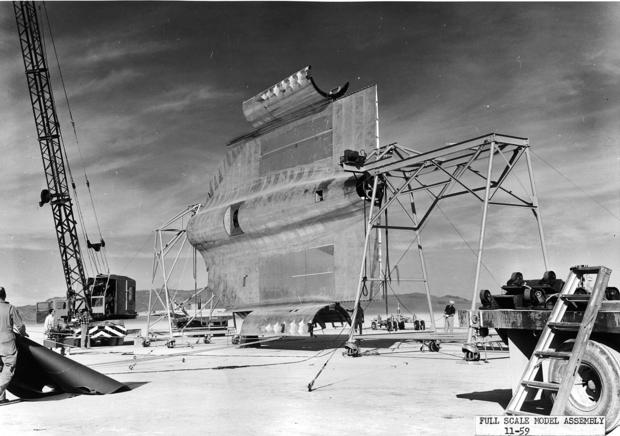
Collection of Roadrunners Internationale/CIA
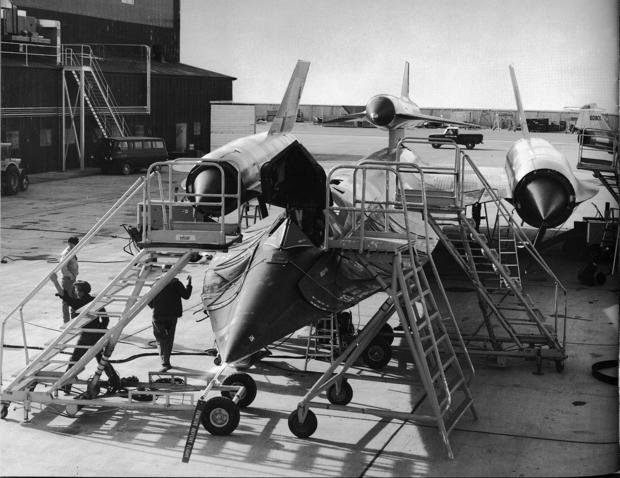
"A full-scale mock-up of the Oxcart being assembled at area 51 in 1959, even before the CIA contract was officially secured," Jacobsen says of this photo in her book, "Area 51."
She continues: "The facility had been deserted after nuclear fallout shuttered the place in the summer of 1957. These Lockheed Skunk Workers were among the earliest returnees."
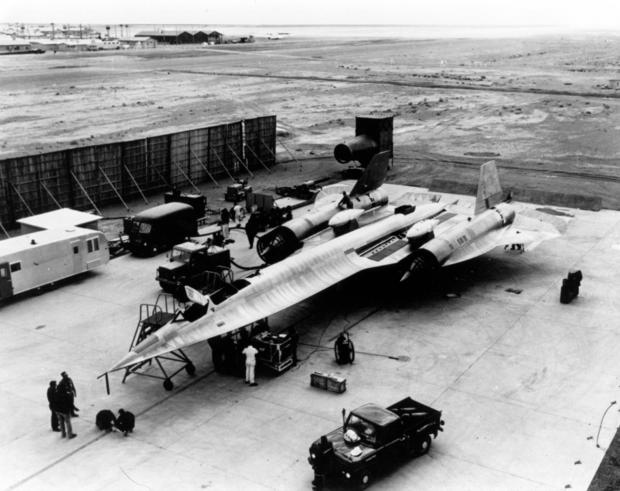
Lockheed Martin
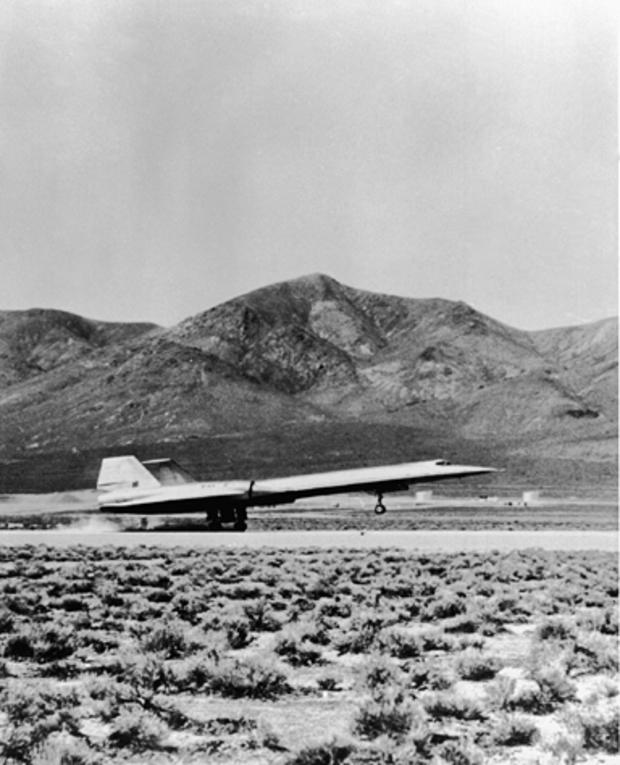
According to Jacobsen this photo depicts an A-12 Oxcart hidden behind a barrier at Area 51.
She writes, "It took 2,400 Lockheed Skunk Works machinists and mechanics to get a fleet of 15 ready for the CIA. Visible on either side of the aircraft are the uniquely adjustable inlet cones that regulated airflow and allowed the CIA spy plane to cruise in the afterburner and reach peak speeds of Mach 3.29 by May 1965."
CIA
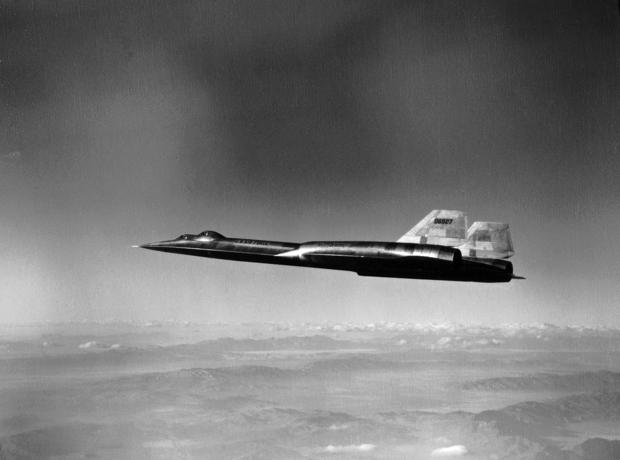
"The A-12 trainer during a test flight," Jacobsen writes in "Area 51." "Note two canopies, one for the instructor pilot and another for the trainee. The A-12 trainer aircraft could not reach the upper Mach numbers; CIA pilots experienced that remarkable feat on their own."
Collection of Lockheed Martin
"This CIA project code-named Tagboard," Jacobsen writes in "Area 51," "was an Oxcart with a Mach 3 drone on its back, circa 1965. To avoid confusion with the A-12, the mothership was designated M-21 (as in 'mother') and the drone was designated D-21 (as in 'daughter')."
U.S. Air Force/Steve Huckvale
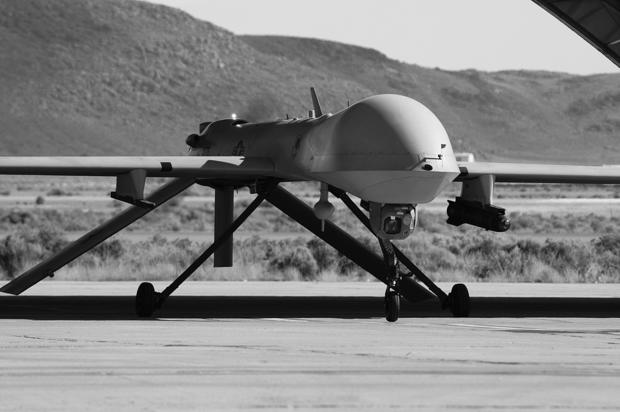
A Predator drone on the tarmac at Creech Air Force Base in Clark County, Nev., June 2008, according to Jacobsen. She writes, "Located just 30 minutes south of Area 51, the airstrip here was formerly called Indian Springs. It is where atomic sampling pilots once trained to fly through mushroom clouds; where Dr. Edward Teller, 'father of the H-bomb,' used to land before atomic bomb tests; and where Bob Lazar says he was taken and interrogated after getting caught trespassing on Groom Lake Road."
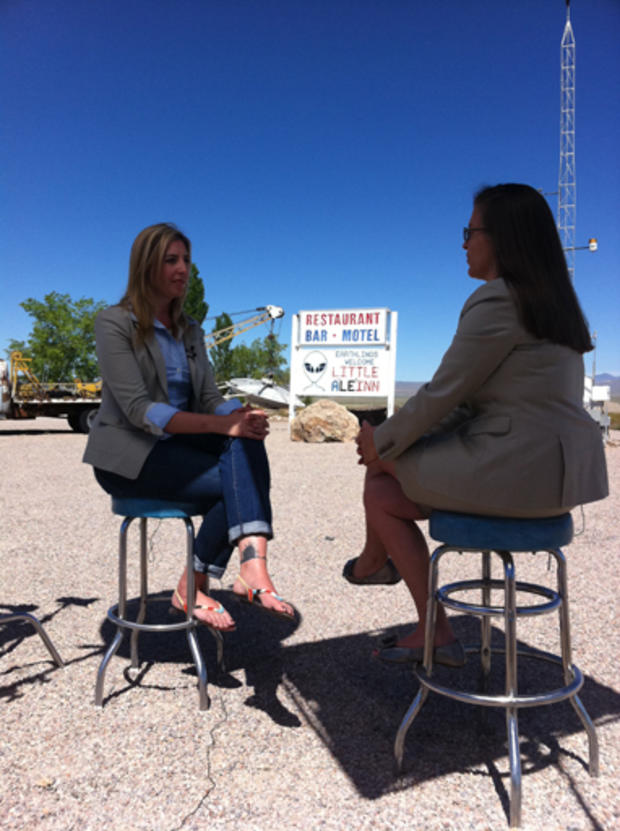
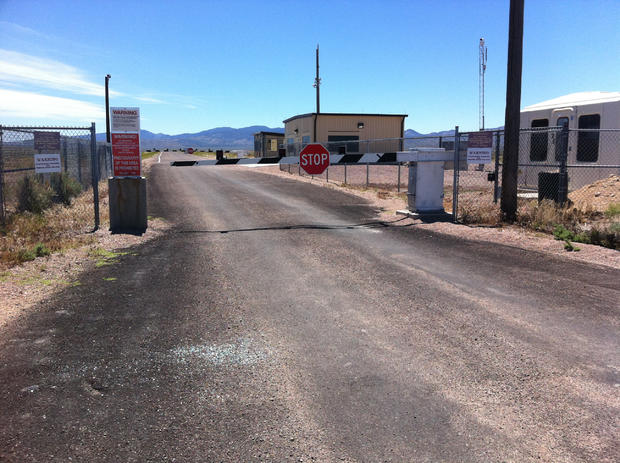
To get close to Area 51, it's an eight-mile drive from Rachel, Nev., down a dirt road. Groom Lake (where Area 51 is located) is approximately 20 miles west of the guarded gate.
.jpg#)