Anne Peslier/ANSMET
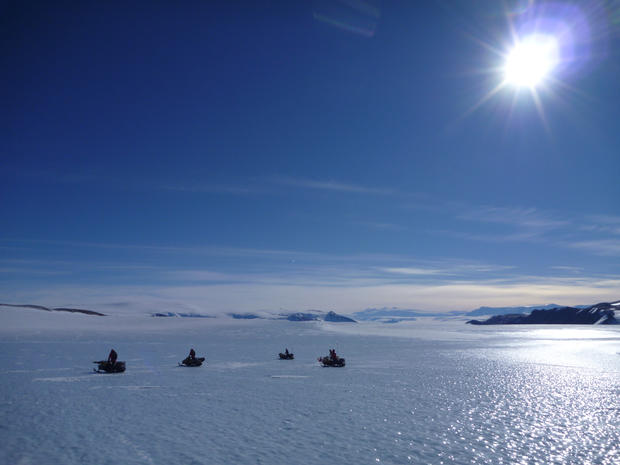
Team members in the Antarctic Search for Meteorites (ANSMET) program traverse the polar ice sheets in search of fragments of rock that have fallen from the sky. Since the program began almost four decades ago, the Antarctic missions have brought back more than 20,000 meteorites, and the program has loaned thousands of samples to researchers all over the world who are trying to make discoveries about the evolution of planets and stars.
Phil Bland, Curtin University, Perth, Australia
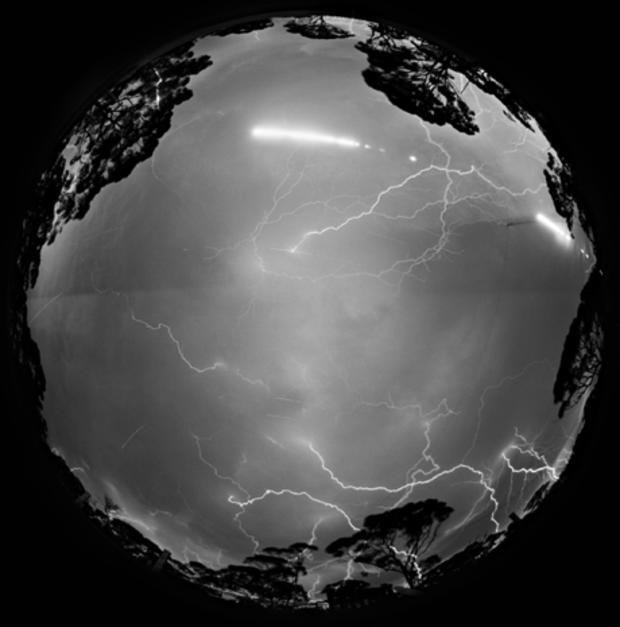
Thousands of meteors enter the Earth's atmosphere every year, but most are small enough to burn up before striking the ground, thus becoming meteorites. Shooting stars and fireballs may offer a brief glimpse before burning out.
Left: A time-exposure image of the Australian night sky showing a meteor trail, taken by Phil Bland, as part of the Desert Fireball Network project.
AP Photo/Nasha Gazeta
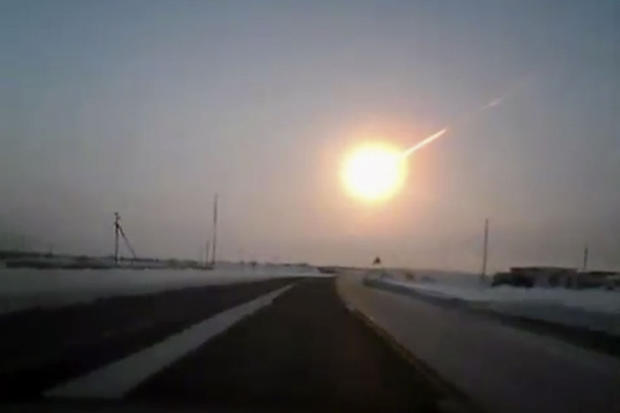
But thousands of meteorites do strike the Earth's surface. One of the biggest recent displays was a meteorite (captured here by a dashboard camera) above the Chelyabinsk region in Russia, Friday, Feb. 15, 2013. The meteorite streaked across the sky and exploded, causing serious damage and reportedly injuring around 1,200 people -- many hurt by shattered glass.
AP Photo/Chelyabinsk.ru
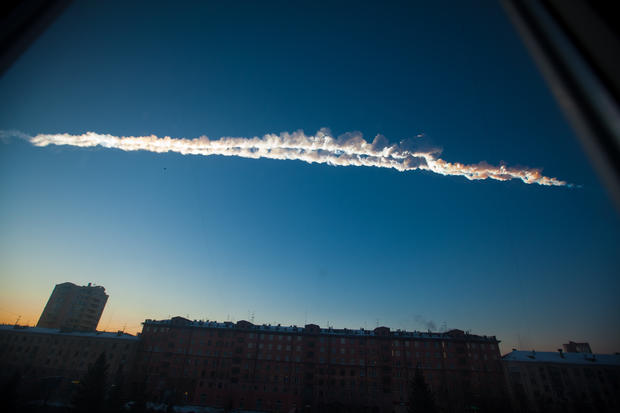
A meteorite contrail is seen over Chelyabinsk, Russia, on Friday, Feb. 15, 2013.
NASA estimated the Russian meteorite to be 55 feet in size, with an estimated mass of between 7,000 and 10,000 tons.
Anne Peslier/ANSMET
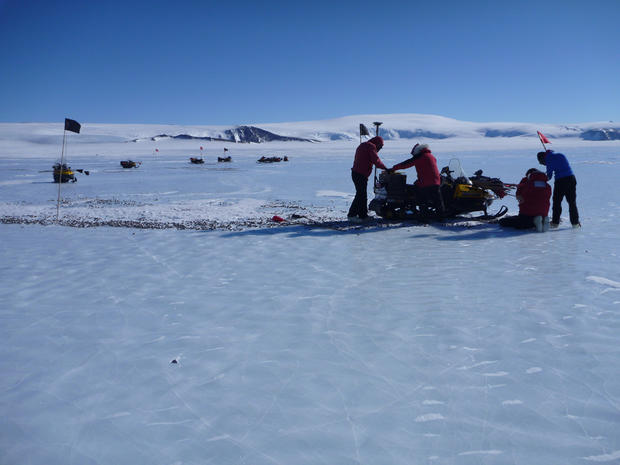
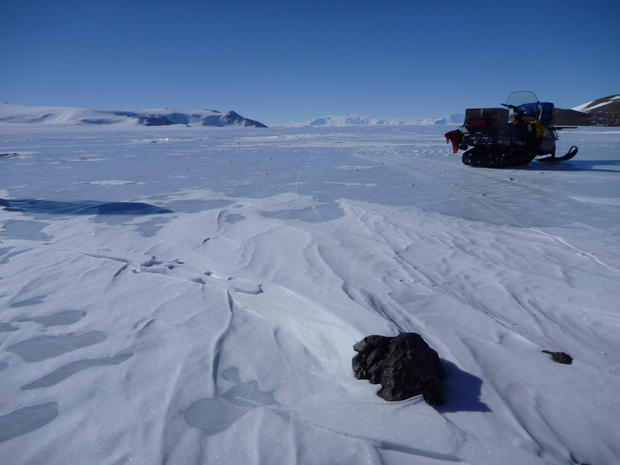
Although meteorites fall across the globe in random patterns, the East Antarctic ice sheet is an ideal background for meteorite recovery, given the starkness of the environment.
Anne Peslier/ANSMET
The Antarctic Search for Meteorites, led by Case Western Reserve University professor Ralph Harvey, conducts annual, six-week expeditions to the continent.
Antarctic Search for Meteorites (ANSMET)
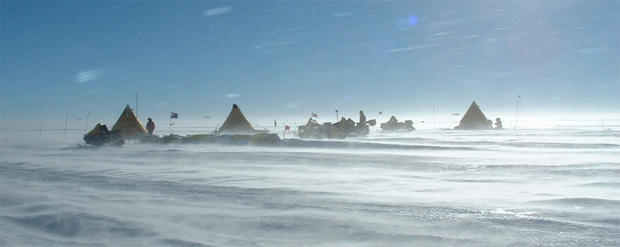
A tent site is set up by ANSMET team members, who have traveled from McMurdo Station.
Anne Peslier/ANSMET
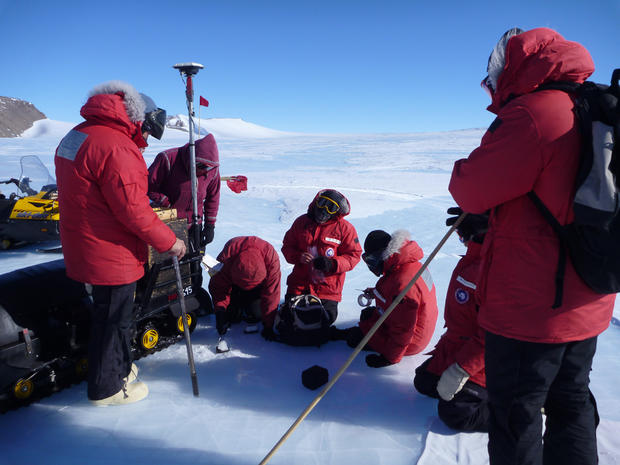
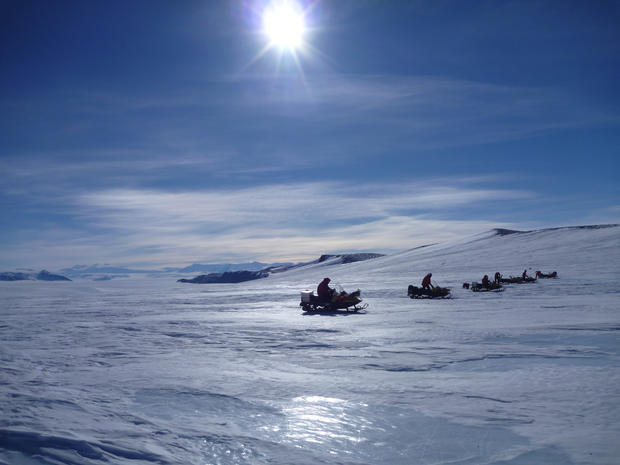
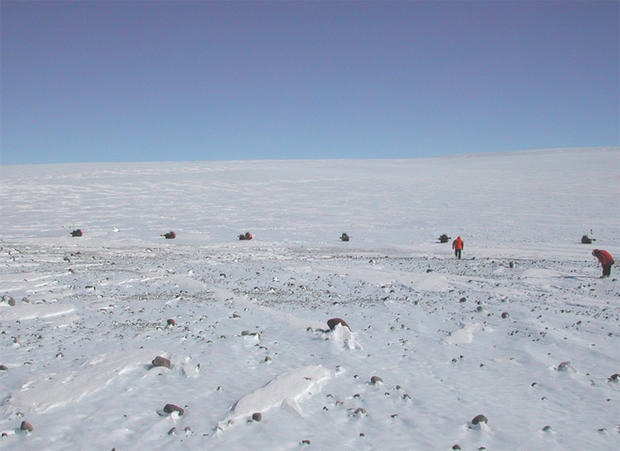
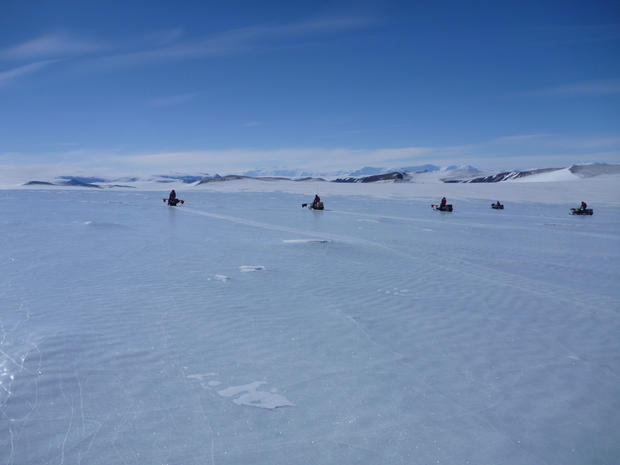
ANSMET teams -- comprised of scientist and volunteers -- search for potential sites of meteorite falls, then conduct more systematic searches in groups by snowmobile, slowly driving over ice fields to spot specimens.
Anne Peslier/ANSMET
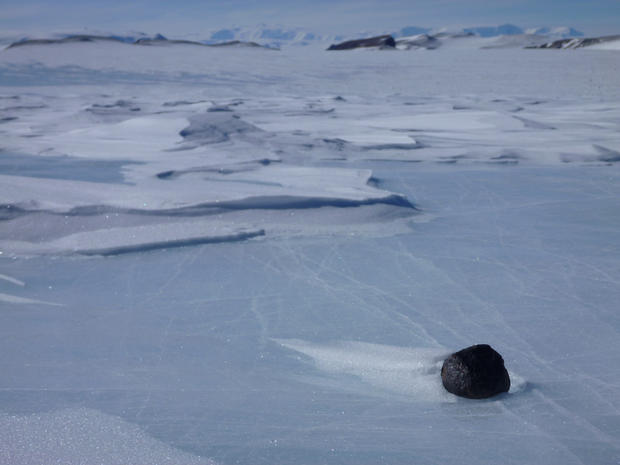
Any blackened rocks that fell from the sky are easily spotted on this "desert of ice."
Anne Peslier/ANSMET
Glacial ice shifts also stir up specimens that have been trapped in the ice over time.
Antarctic Search for Meteorites (ANSMET)
Professor Harvey says meteorites in Antarctica are better preserved in the frigid landscape.
Antarctic Search for Meteorites (ANSMET)
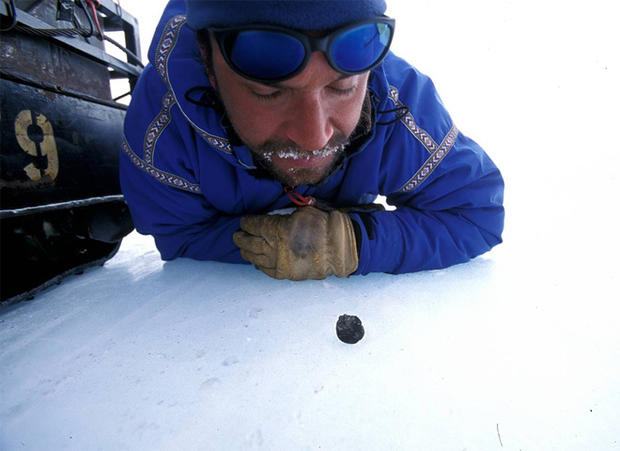
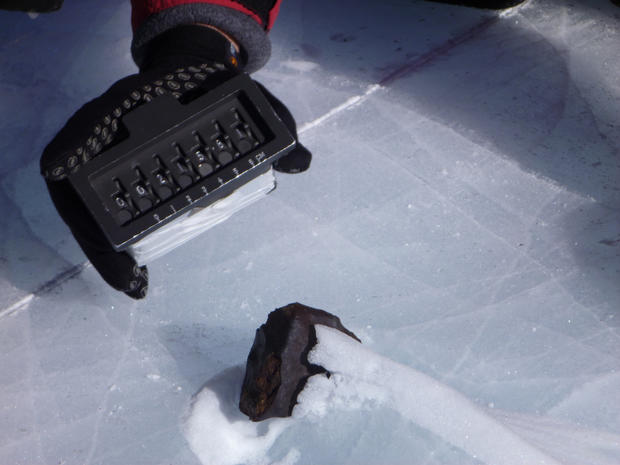
A find.
Anne Peslier/ANSMET
About 80-85 percent of specimens recovered by ANSMET are ordinary chondrites.
Anne Peslier/ANSMET
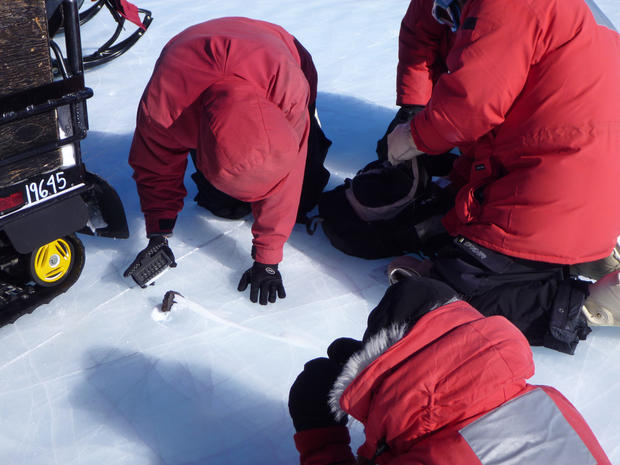
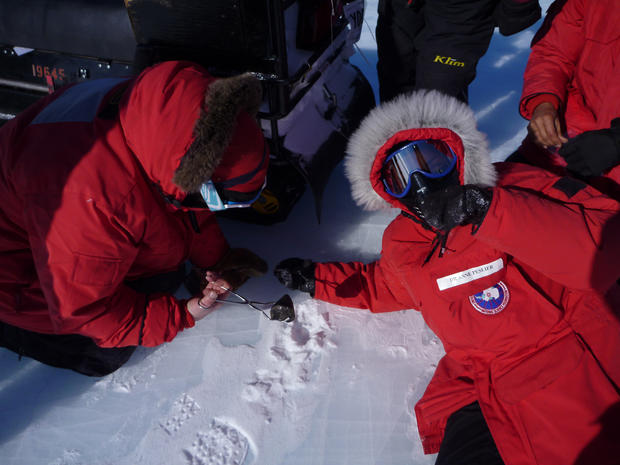
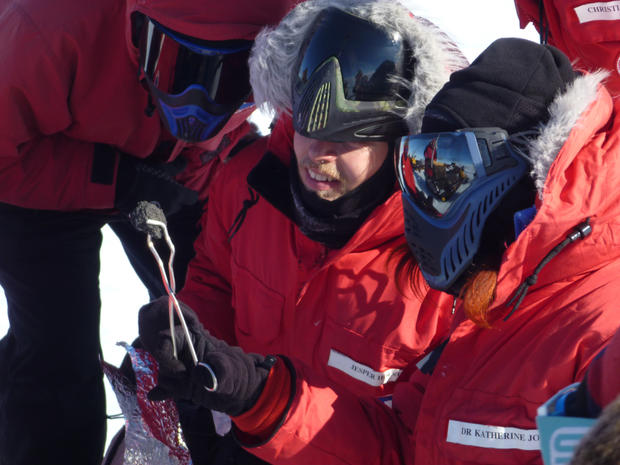
When a sample is found, it is assigned an ID number, its position is established by GPS, and a photo is taken. Distinguishing features are also noted.
Anne Peslier/ANSMET
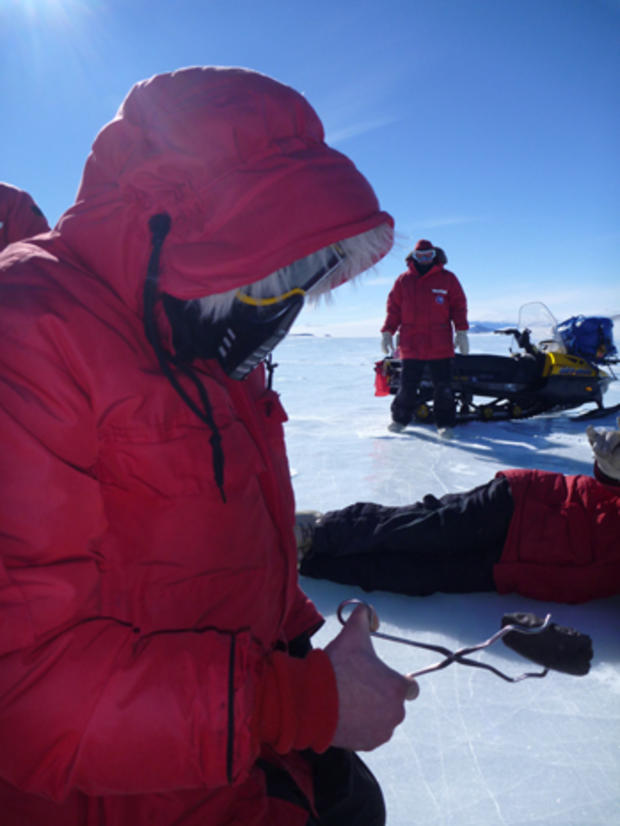
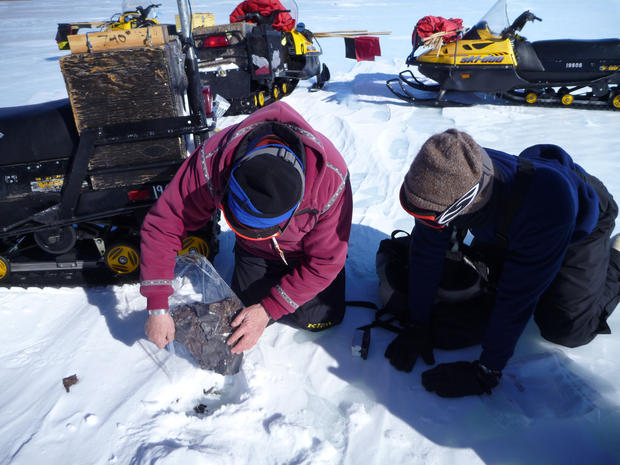
The sample is enclosed inside a sterile teflon bag, to avoid biological contamination.
Anne Peslier/ANSMET
"There are meteorites we've collected in Antarctica, where they're so young we can't measure that age," Harvey told CBS News' Rita Braver. "There's others that we found that fell several million years ago. And there's everything in-between. The average seems to be about 25-30,000 years."
Anne Peslier/ANSMET
After each field season, all recovered specimens are shipped (frozen) to the Antarctic Meteorite laboratory at NASA
Anne Peslier/ANSMET
The Antarctic Meteorite Newsletter reported that specimens collected during ANSMET's search of the Miller Range last year brought the total number of specimens recovered from the continent to 20,000.
Anne Peslier/ANSMET
"This is an Easter egg hunt unlike any Easter egg hunt anywhere," Harvey said.
NASA
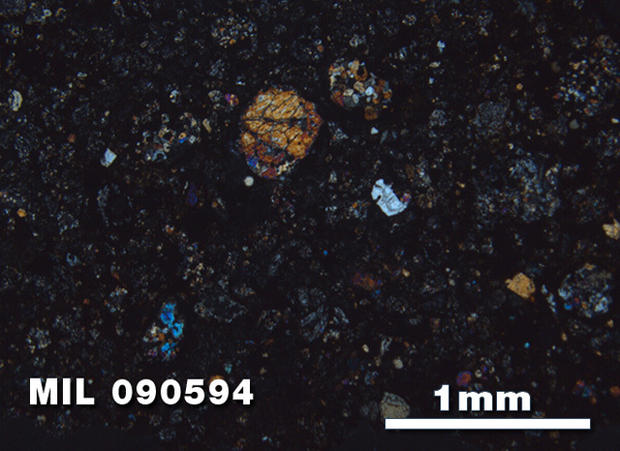
A meteorite sample recovered from the Miller Range in Antarctica, photographed in cross-polarized light at 2.5X magnification.
Smithsonian Institution/Department of Mineral Sciences
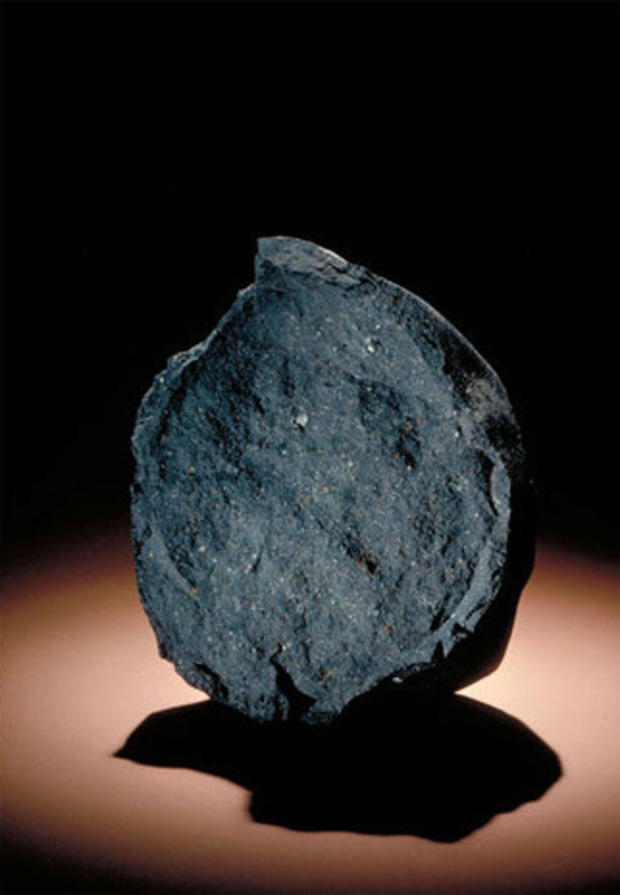
Among the extraterrestrial specimens preserved at the Smithsonian Institution's Department of Mineral Sciences is the Murchison meteorite, which fell near Murchison, Victoria, Australia, on September 28, 1969, weighs about 100 kilograms. In addition to chondrites, the specimen was also found to contain amino acids -- the basic components of life.
Smithsonian Institution/Department of Mineral Sciences
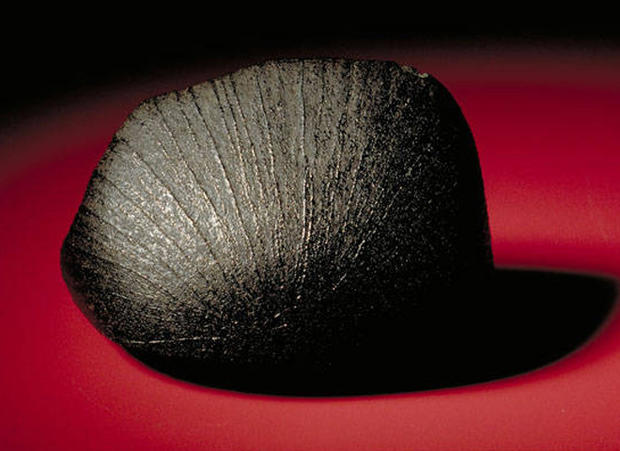
The Lafayette meteorite -- which was discovered in a collection at Perdue University in 1931, its origins unknown -- has been classified as a Nakhlite, part of a group of Martian meteorites, due to its elemental and isotopic compositions similar to that of rocks analyzed by Mars probes.
Smithsonian Institution/Department of Mineral Sciences
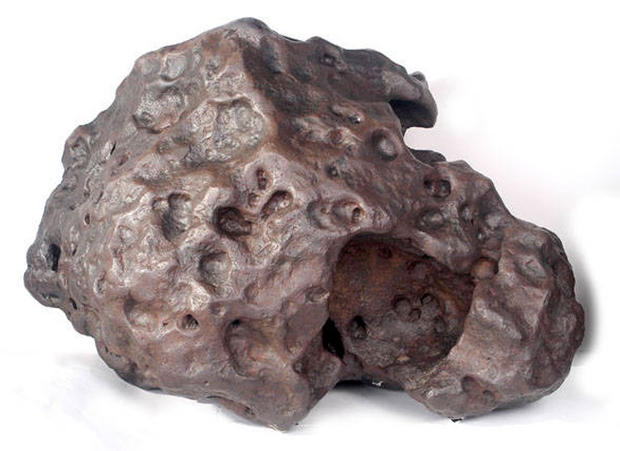
The Goose Lake specimen -- an iron meteorite -- was found at Goose Lake, California in 1938. It is currently on display at the National Museum of Natural History.