AP Photo/Rick Bowmer
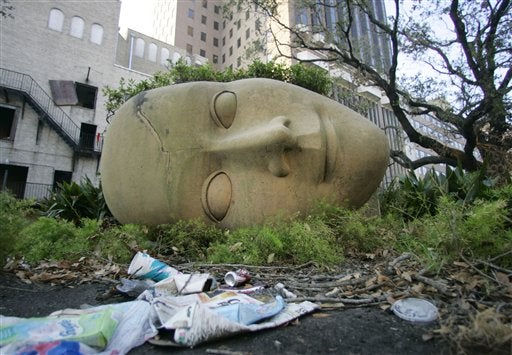
A sculpture lays on its side among downtown buildings littered from debris of Hurricane Katrina in New Orleans on Sept. 13, 2005.
AP Photo/Rick Bowmer
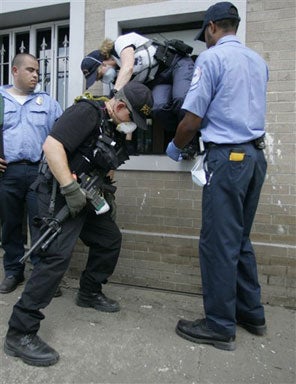
Unidentified members of a rescue task force from Illinois exit a business in downtown New Orleans on Sept. 13, 2005. The group was searching for people inside businesses that were looted. The search is part of a process that will get downtown operating again.
GETTY IMAGES/Joe Raedle
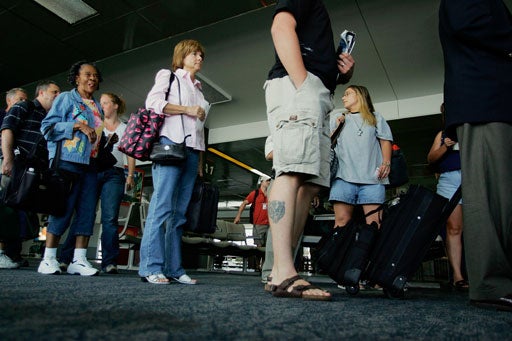
Passengers wait in line to board the first flight out of Louis Armstrong New Orleans International Airport on Sept. 13, 2005, in New Orleans. Northwest Airlines, followed by Delta Air Lines, operated the first flights from their hubs in Memphis and Atlanta, respectively, more than two weeks after Katrina devastated the Gulf Coast.
GETTY IMAGES/Marianne Todd
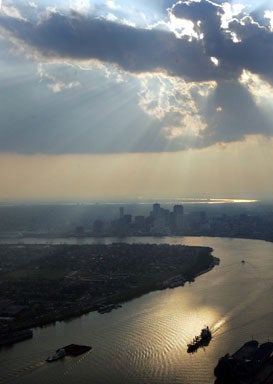
The sun sets over downtown New Orleans Sept. 12, 2005. President George W. Bush, on a tour of devastated New Orleans, rejected charges that the government was slow to respond to Hurricane Katrina because the nation's military was over-extended in Iraq and denied a race component to the Katrina response.
AP Photo/Paul Sancya
A bull stands in floodwaters south of Port Sulphur, La., on Sept. 12, 2005. Plaquemines Parish, a rural region southeast of New Orleans, was swamped by Hurricane Katrina, with many homes being completely washed away.
GETTY IMAGES/Marianne Todd
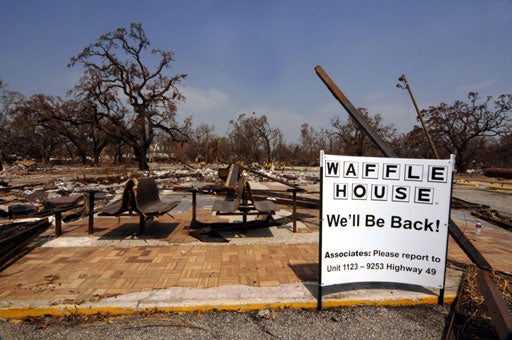
Signs of hope dot the destroyed landscape in Biloxi, Miss., Sept. 12, 2005. Mississippians, with communities and cities completely wiped out by Katrina, are already moving debris and making plans to rebuild.
GETTY IMAGES/Spencer Platt
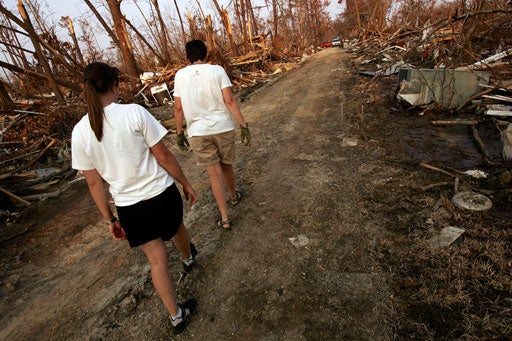
On Sept. 12, 2005, Michelle Lapuyads, left, and her sister Jennifer Faust walk along a street in Waveland, Miss., looking for remains of their parents' home, which was destroyed by Hurricane Katrina. Thousands of residents of the Gulf Coast are still without electricity or access to basic amenities after Katrina swept through the area two weeks ago.
GETTY IMAGES/Marianne Todd
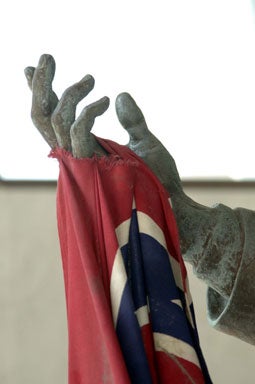
The hand on a statue of Jefferson Davis in the Jefferson Davis Libarary holds the confederate flag, blown there by the winds of Katrina, Sept. 12, 2005, in Biloxi, Miss. The historic grounds withstood the strength of Hurricane Camille in 1969, the worst recorded hurricane to hit the Mississippi Gulf Coast, but buckled under the strength of Katrina.
GETTY IMAGES/Spencer Platt
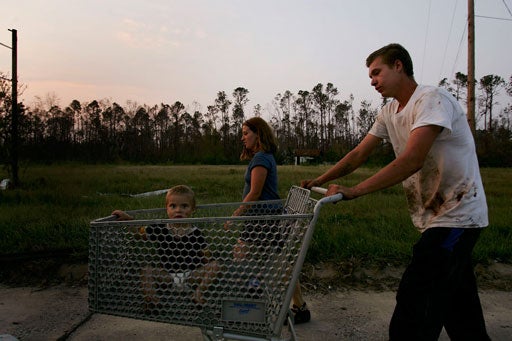
Amanda Hudson and Robert Corkern walk along the highway with Hudson's 2-year-old child, Willie, on Sept. 12, 2005, in Waveland, Miss. The couple, who have lost their homes, were making their way back from a disaster relief station and returning to an abandoned store they are sharing with others.
GETTY IMAGES/Spencer Platt
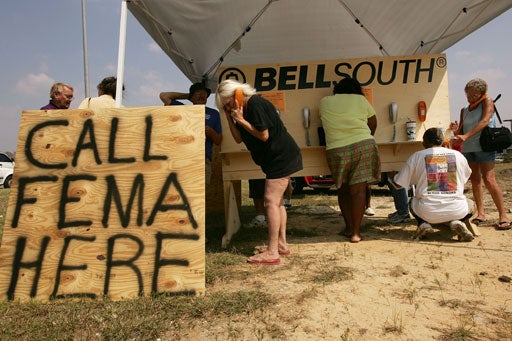
People in Gulfport, Miss., use phones at a mobile phone center to call FEMA on Sept. 12, 2005.
GETTY IMAGES/Spencer Platt
A Vietnamese woman, employed in the shrimp fishing trade, picks through shrimp that will not likely go to market on Sept. 12, 2005, in Biloxi, Miss. The Vietnamese community, which comprises the majority of shrimp fisherman, was hit particularly hard by the storm due to a loss of markets and the ban on selling of shrimp from polluted Gulf waters.
GETTY IMAGES/Lawrence Jenkins
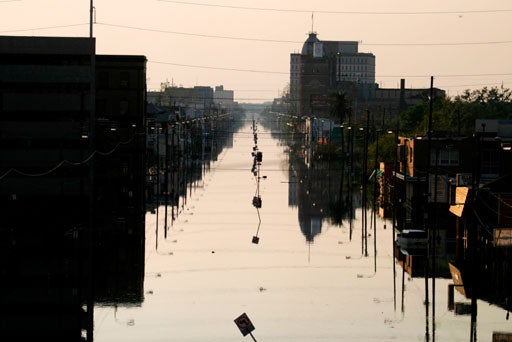
Several major streets in New Orleans remain flooded on Sept. 10, 2005, 13 days after Hurricane Katrina swallowed the city.