AP Photo
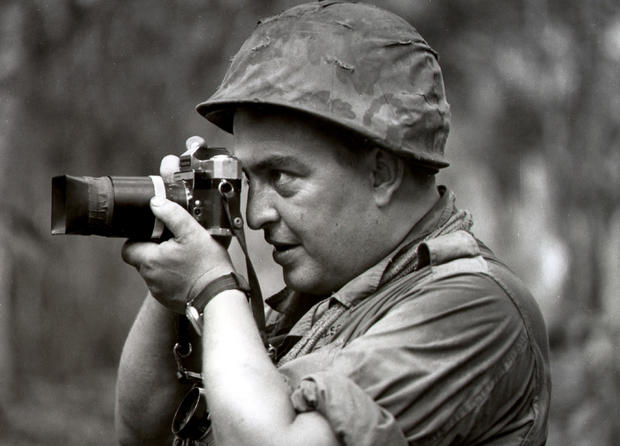
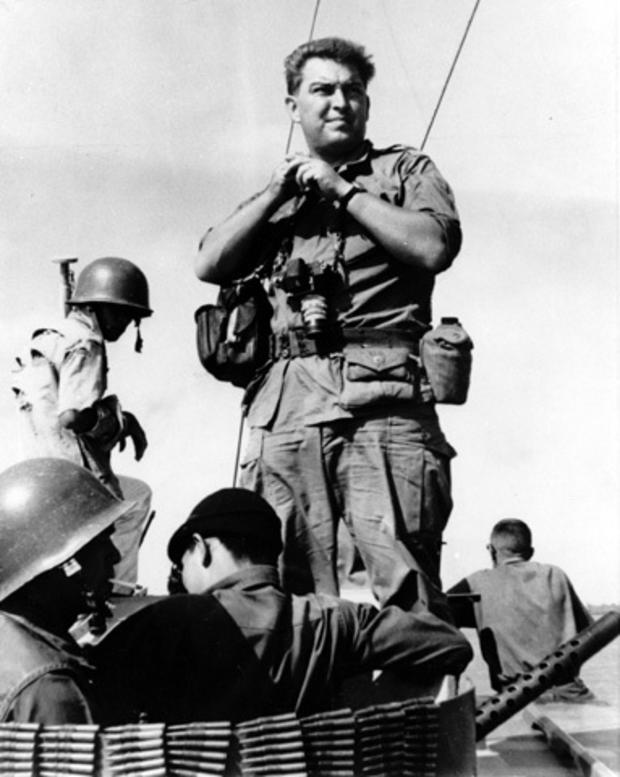
Associated Press photographer Horst Faas is seen in Vietnam in 1967. Faas, a prize-winning combat photographer who carved out new standards for covering war with a camera and became one of the world's legendary photojournalists in nearly half a century with The Associated Press, died Thursday, May 10, 2012. He was 79.
A native of Germany who joined the U.S.-based news cooperative there in 1956, Faas photographed wars, revolutions, the Olympic Games and events in-between. But he was best known for covering Vietnam, where he was severely wounded in 1967 and won four major photo awards, including the first of his two Pulitzers.
AP Photo/Horst Faas
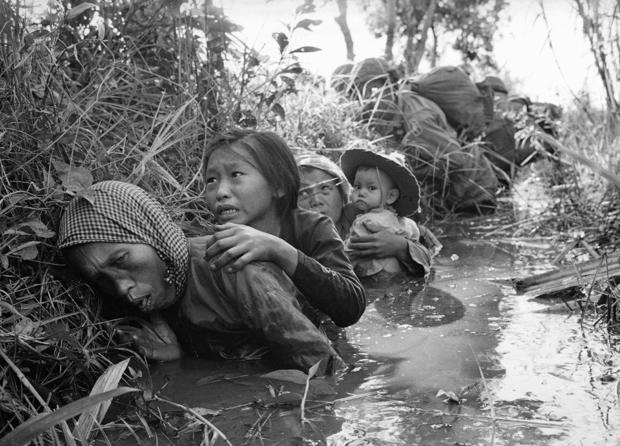
In this Jan. 1, 1966 file photo taken by Associated Press photographer Horst Faas, women and children crouch in a muddy canal as they take cover from intense Viet Cong fire at Bao Trai, about 20 miles west of Saigon, Vietnam.
AP Photo/Horst Faas
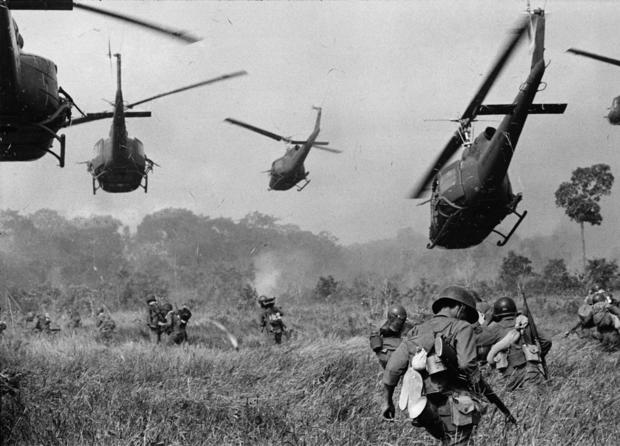
Hovering U.S. Army helicopters pour machine gun fire into the tree line to cover the advance of South Vietnamese ground troops in an attack on a Viet Cong camp 18 miles north of Tay Ninh, Vietnam, northwest of Saigon near the Cambodian border, March 1965.
As chief of photo operations for The Associated Press in Saigon for a decade beginning in 1962, Horst Faas didn't just cover the fighting — he also recruited and trained new talent from among foreign and Vietnamese freelancers. The result was "Horst's army" of young photographers, who fanned out with Faas-supplied cameras and film and stern orders to "come back with good pictures."
He and his editors chose the best and put together a steady flow of telling photos — South Vietnam's soldiers fighting and its civilians struggling to survive amid the maelstrom.
AP Photo/Horst Faas
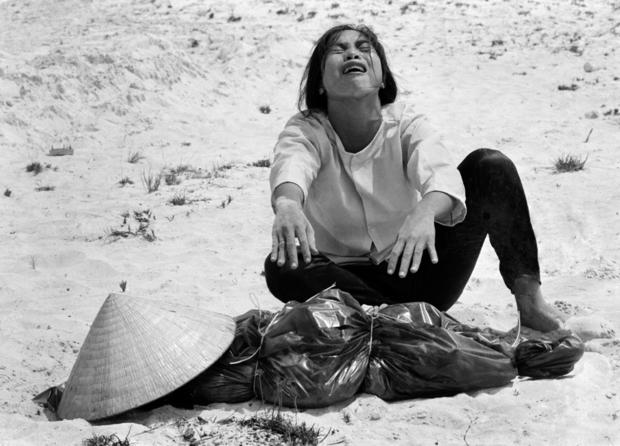
In this April 1969 file photo shot by Associated Press photographer Horst Faas, a South Vietnamese woman mourns over the body of her husband, found with 47 others in a mass grave near Hue, Vietnam.
"Horst was one of the great talents of our age, a brave photographer and a courageous editor who brought forth some of the most searing images of this century," said AP Executive Editor Kathleen Carroll.
AP Photo/Horst Faas
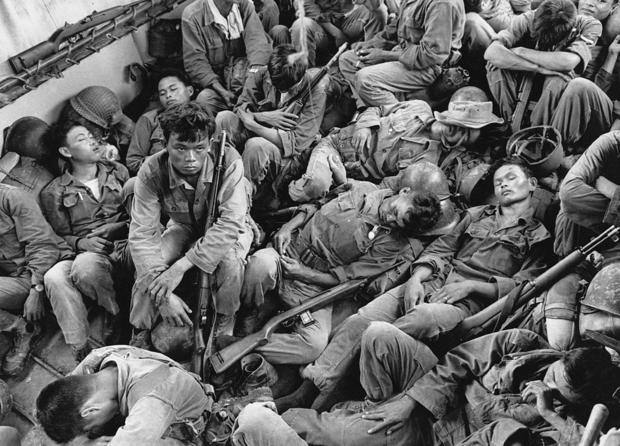
South Vietnamese government troops from the 2nd Battalion of the 36th Infantry sleep in a U.S. Navy troop carrier on their way back to the Provincial capital of Ca Mau, Vietnam, Aug. 1962.
AP Photo/Horst Faas
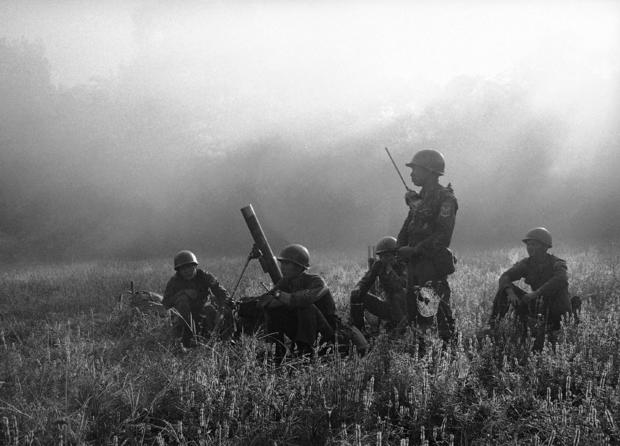
As the day breaks in the jungle area of Binh Gia, 40 miles east of Saigon on Sept. 1, 1964, paratroopers of the 1st Battalion Airborne Brigade are silhouetted at a mortar position they have manned through the night against possible night Viet Cong attack.
AP Photo/Horst Faas
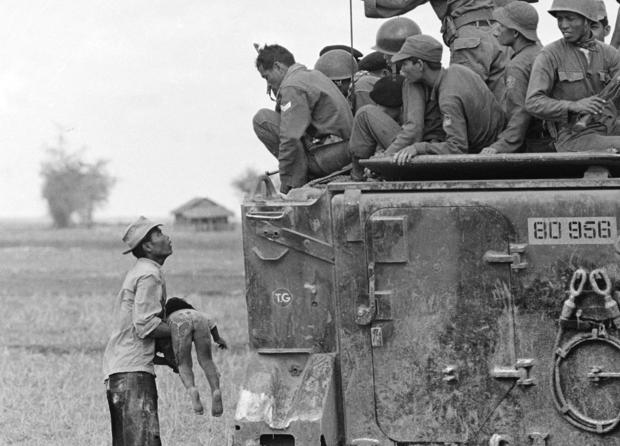
One of several images by Associated Press photographer Horst Faas which earned him the first of two Pulitzer Prizes: A father holds the body of his child as South Vietnamese Army Rangers look down from their armored vehicle, March 19, 1964. The child was killed as government forces pursued guerrillas into a village near the Cambodian border.
AP Photo/Horst Faas
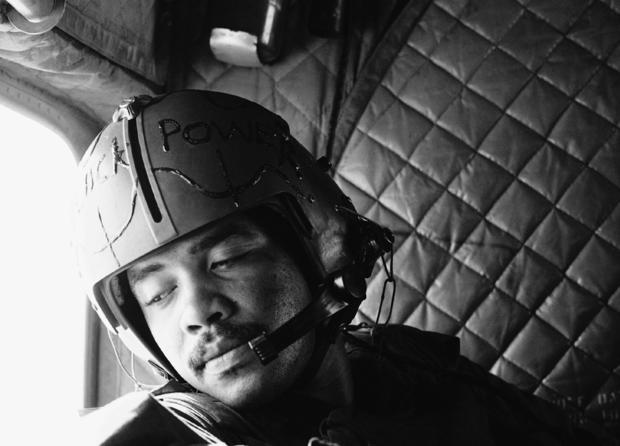
Sergeant G. Sanders from Detroit looks from the window of his Chinook helicopter during a resupply mission, April 24, 1969. Sanders is a door gunner of a helicopter unit of the 1st Cavalry Division operating in War Zone C. Across his helmet he was written "Black Power."
AP Photo/Horst Faas
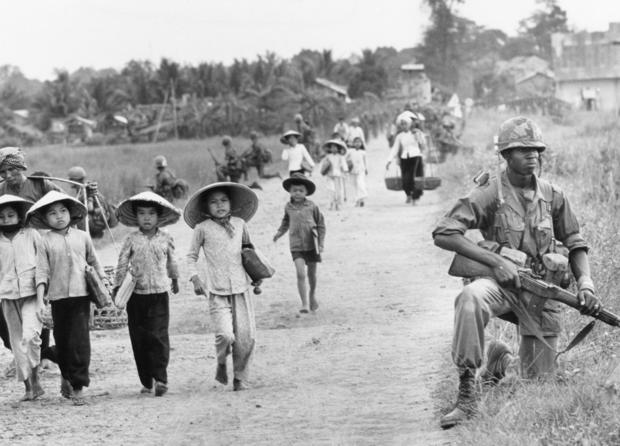
A U.S. 1st Division soldier guards Route 7 as Vietnamese women and school children return home to the village of Xuan Dien from Ben Cat, Vietnam, December 1965.
AP Photo/Horst Faas
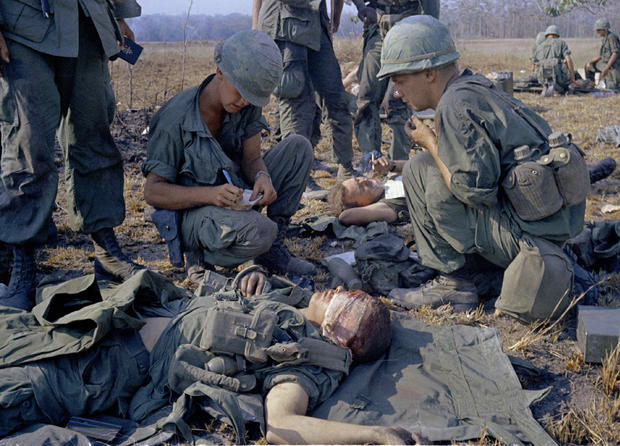
Wounded U.S. soldiers are treated on a battlefield in Vietnam in this April 2, 1967 file photo.
AP Photo/Horst Faas
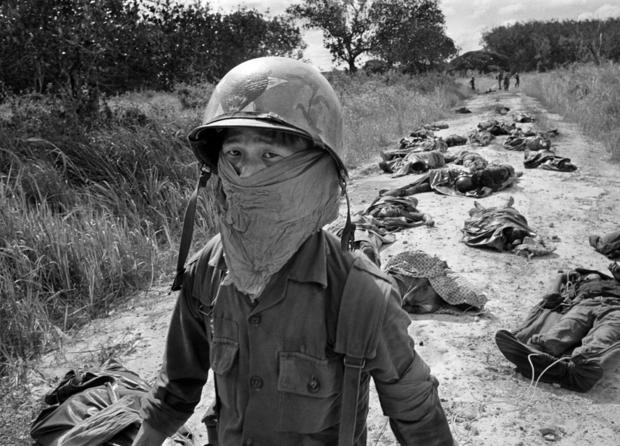
A Vietnamese litter bearer wears a face mask to keep out the smell as he passes the bodies of U.S. and Vietnamese soldiers killed in fighting against the Viet Cong at the Michelin rubber plantation, about 45 miles northeast of Saigon, Nov. 27, 1965.
AP Photo/Horst Faas
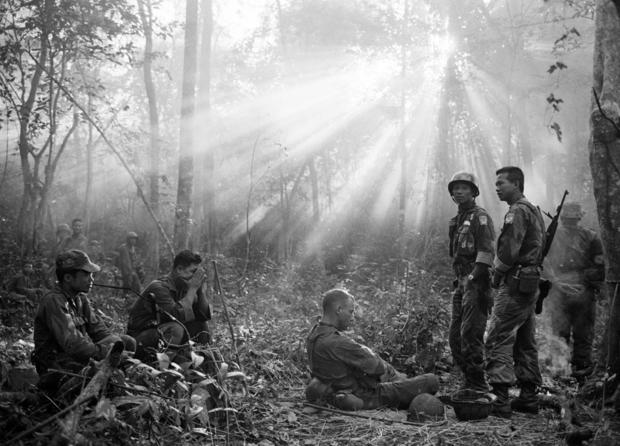
The sun breaks through dense jungle foliage around the embattled town of Binh Gia, 40 miles east of Saigon, as South Vietnamese troops, joined by U.S. advisers, rest after a cold, damp and tense night of waiting in an ambush position for a Viet Cong attack that didn't come, January 1965.
AP Photo
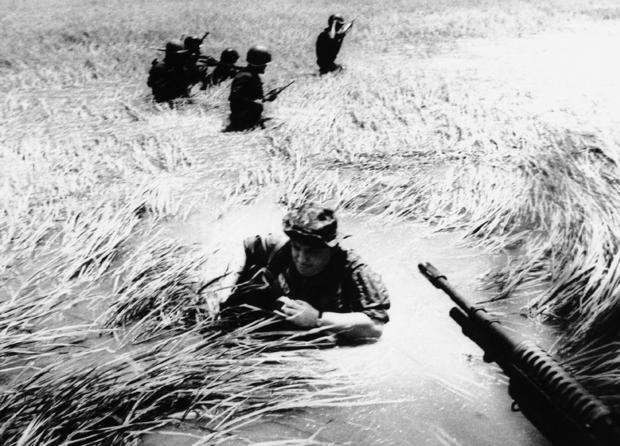
Associated Press photographer Horst Faas tries to get back on a U.S. helicopter after a day out with Vietnamese rangers in a flooded plain of reeds, May 11, 1965.
Faas was a brilliant planner, able to score journalistic scoops by anticipating "not just what happens next but what happens after that," as one colleague put it.
Faas' Vietnam coverage earned him the Overseas Press Club's Robert Capa Award and his first Pulitzer in 1965. Receiving the honors in New York, he said his mission was to "record the suffering, the emotions and the sacrifices of both Americans and Vietnamese in ... this little bloodstained country so far away."
AP Photo
Associated Press photographer Horst Faas is shown in this undated file photo in Ca Mau, Vietnam.
Burly but agile, Faas spent much time in the field and on Dec. 6, 1967, was wounded in the legs by a rocket-propelled grenade at Bu Dop, in South Vietnam's Central Highlands. He might have bled to death had not a young U.S. Army medic managed to stem the flow. Meeting Faas two decades later, the medic recalled the encounter, saying, "You were so gray I thought you were a goner."
On crutches and confined to the bureau, Faas was unable to cover the February 1968 Tet Offensive, but directed AP photo operations like a general deploying troops against the enemy.
AP Photo/Horst Faas
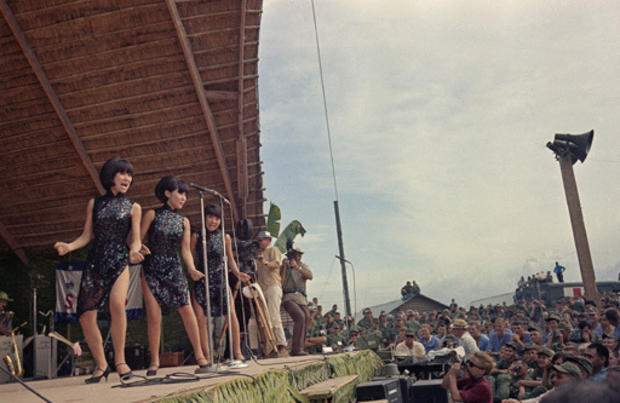
The Korean Kittens, a singing group, appear on stage at Cu Chi, Vietnam, during the Bob Hope Christmas show, to entertain U.S. troops of the 25th Infantry Division in this undated photo.
AP Photo/Horst Faas
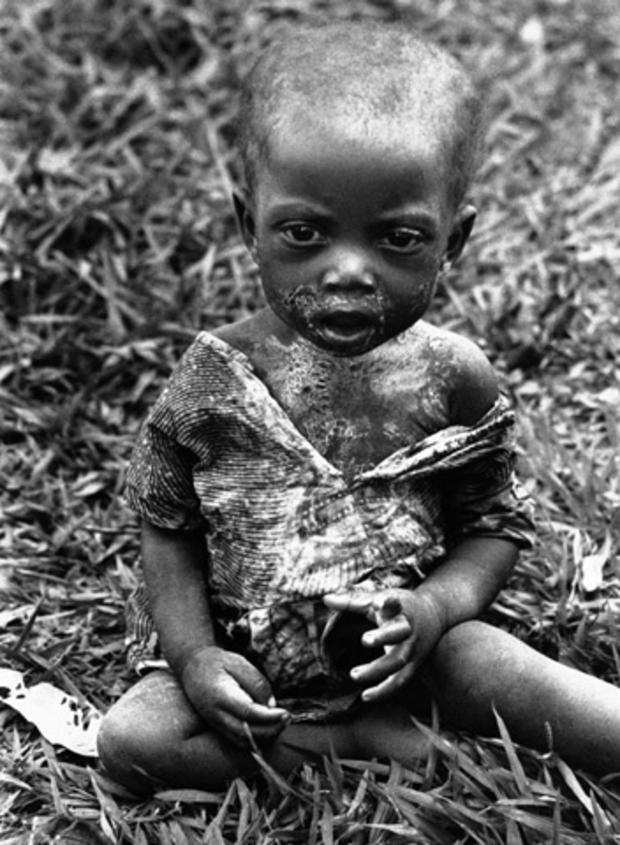
A sick and hungry Baluba child is photographed at the Miabi Hospital in South Kasai, Congo, Jan. 26, 1961.
AP Photo/Horst Faas, Michel Laurent
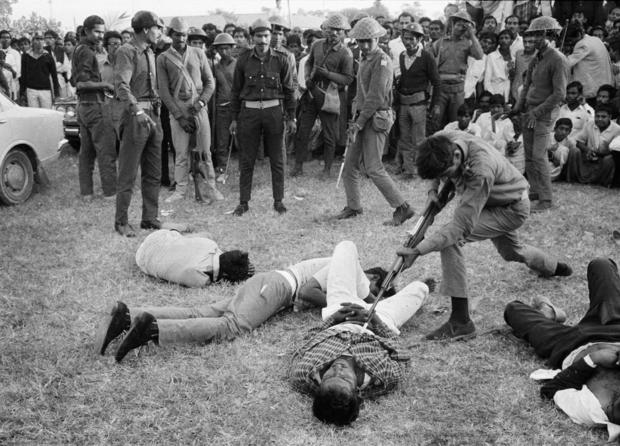
Faas left Saigon in 1970 to become AP's roving photographer for Asia, based in Singapore, ranging widely on assignments. In 1972 he won a second Pulitzer Prize, along with Michel Laurent, for gripping pictures of torture and executions in Bangladesh.
At left: This image shot by Associated Press photographers Horst Faas and Michel Laurent - part of Pulitzer prize-winning series - shows newly independent Bangladesh guerrillas in Dacca use bayonets to torture and kill four men suspected of collaborating with Pakistani militiamen who had been accused of murder, rape and looting during months of civil war, Dec. 18, 1971.
Laurent later became the last journalist killed in the Vietnam War, two days before the fall of Saigon on April 30, 1975, while working for the French Gamma photo agency.
AP Photo/Horst Faas
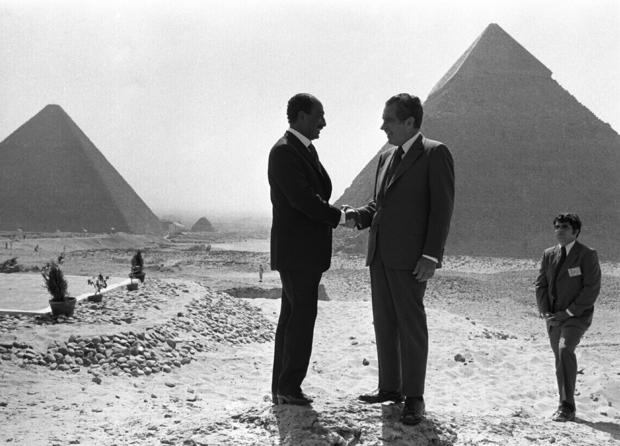
In this June 14, 1974 file photo taken by Associated Press photographer Horst Faas, Presidents Anwar Sadat and Richard Nixon shake hands as they pose in front of the pyramids at Giza, near Cairo.
AP Photo/Horst Faas
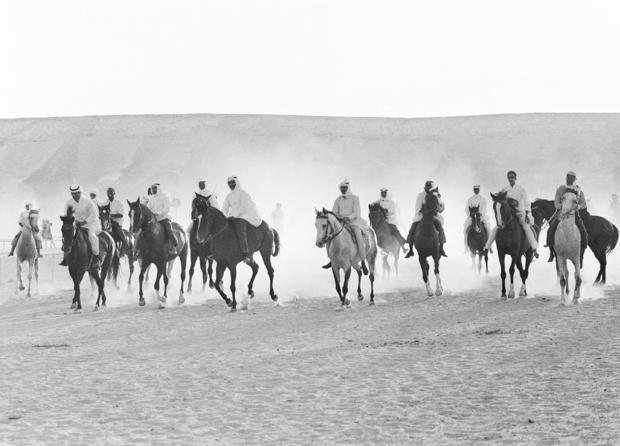
Sheiks and stableboys gallop horses of the ruler of Bahrain around the desert course near the Emir's palace in Awali, Bahrain in November 1971.
AP Photo/Horst Faas
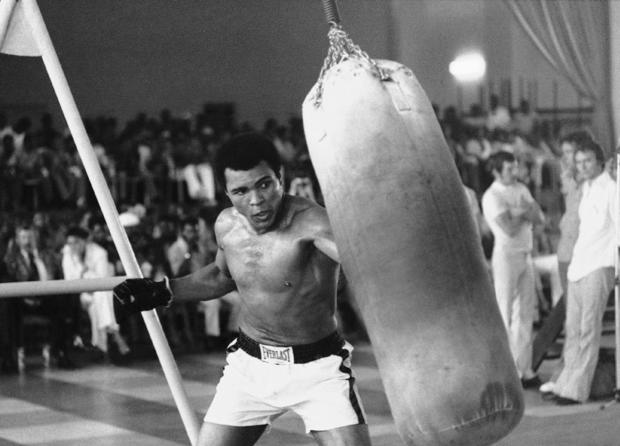
In this October 1974 file photo taken by Horst Faas, Muhammad Ali works out before his bout against George Foreman in Zaire.
AP Photo/Laurent Rebours
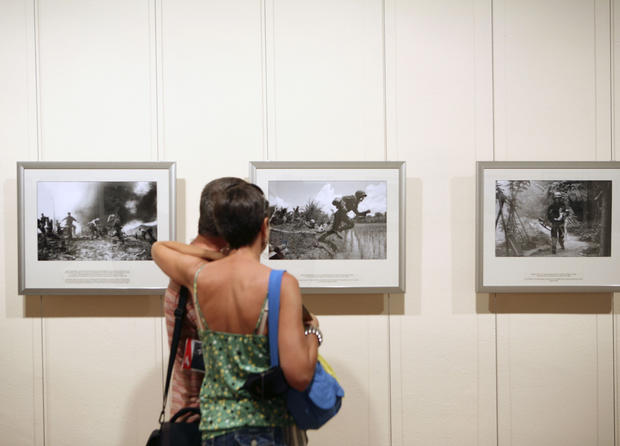
Visitors view a retrospective of images by former Associated Press senior photo editor Horst Faas, at the Couvent des Minimes in Perpignan, France, during the Visa pour l'Image, the 20th International Festival of Photojournalism in September 2008.
By CBSNews.com senior editor David Morgan
The Associated Press contributed to this report.