Nick Tomecek/AP/Florida Daily News
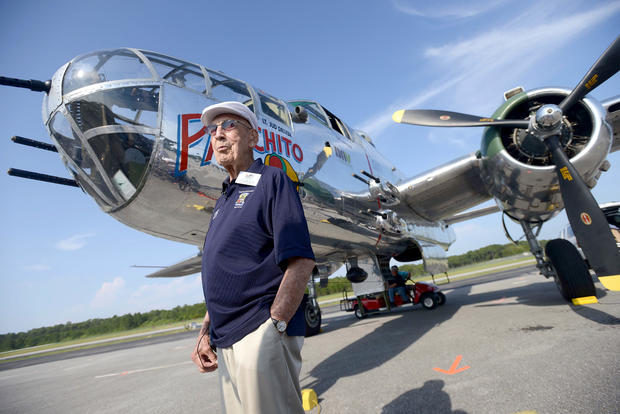
Doolittle Raider Lt. Col. Dick Cole stands in front of a B-25 at the Destin Airport in Destin, Fla., before a flight as part of the Doolittle Raider 71st Anniversary Reunion, April 16, 2013. Cole was Lt. Col. Jimmy Doolittle's co-pilot during the raid.
The Doolittle Raiders launched the first American attack on Tokyo during WWII on April 18, 1942. Eighty men took off in 16 B-25 bombers. Eleven were killed or captured and 13 more died later in the war. This is the last year that the surviving members of the Doolittle Raiders will participate in a public reunion.
U.S. Air Force
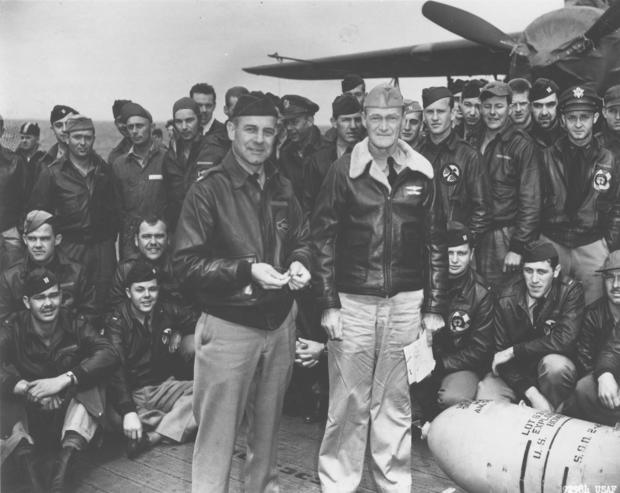
In this photo, Lt. Col. Jimmy Doolittle accepts a medal from the skipper of the USS Hornet, Capt. Marc A. Mitscher. The medal, once given to a U.S. Navy officer by the Japanese, was wired to a 500-pound bomb for return to Japan "with interest."
Nick Tomecek/AP/Florida Daily News
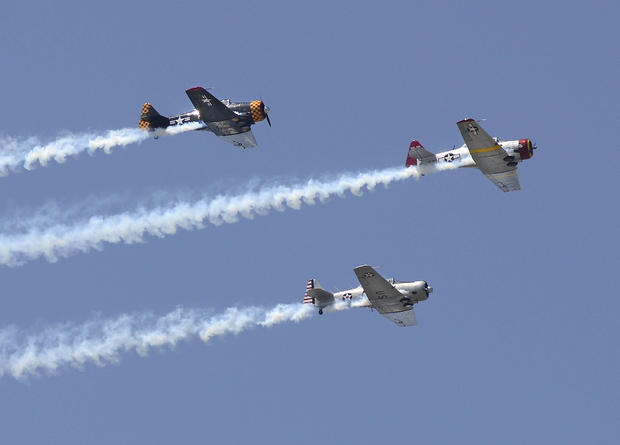
World War II-era planes fly over Northwest Florida during the Parade of Heroes on Eglin Parkway in Fort Walton Beach, Fla., April 20, 2013.
The parade was part of the Doolittle Raider 71st Anniversary Reunion.
U.S. Air Force
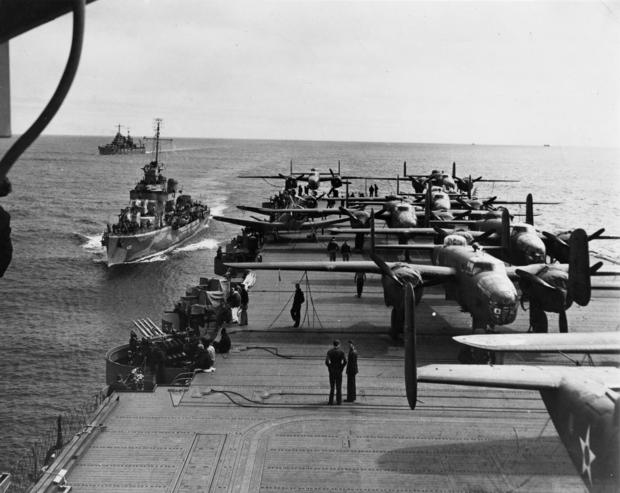
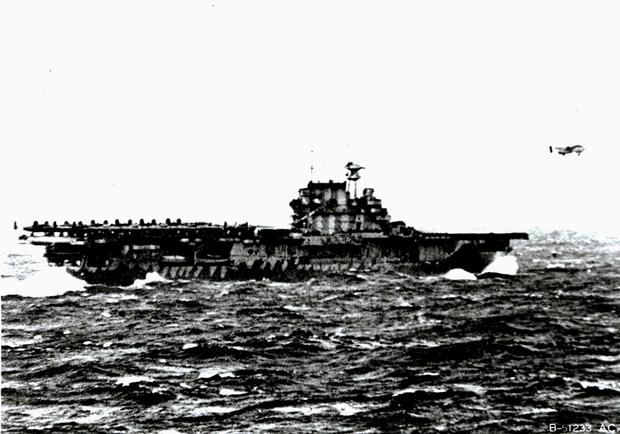
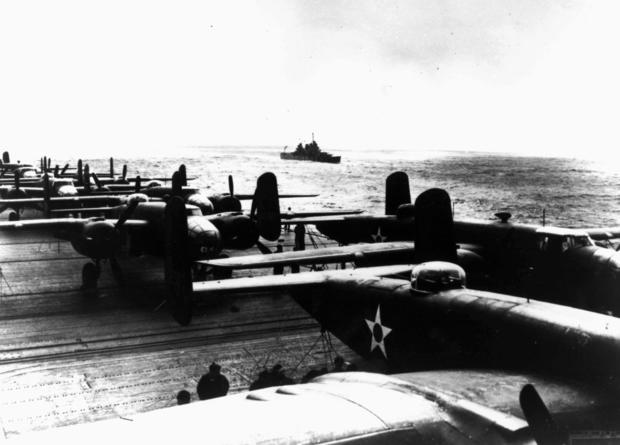
The aircraft carrier Hornet had 16 AAF B-25s on deck, ready for the Tokyo Raid.
Nick Tomecek/AP/Florida Daily News
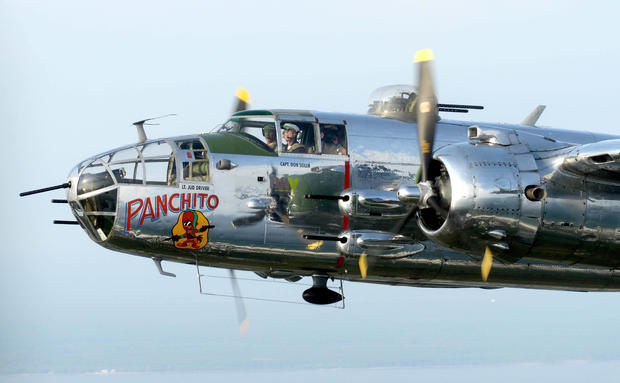
Doolittle Raider Lt. Col. Dick Cole flies a B-25 in the skies over Destin, Fla., during a flight as part of the Doolittle Raider 71st Anniversary Reunion, April 16, 2013.
The Doolittle Tokyo Raid was a notable attack on the Japanese during World War II using B-25s. The B-25 pilots trained to take off from an aircraft carrier, which the plane was not designed to do.
U.S. Air Force
The aircraft carrier Hornet had 16 AAF B-25s on deck, ready for the Tokyo Raid.
Nick Tomecek/AP/Northwest Florida Daily News
A line of people wait to have various items signed by three members of the Doolittle Raid on Tokyo at the Air Force Armament Museum on Eglin Air Force Base, April 17, 2013.
U.S. Air Force
The aircraft carrier Hornet had 16 AAF B-25s on deck, ready for the Tokyo Raid.
U.S. Air Force/28th Bomb Wing Historian's Office
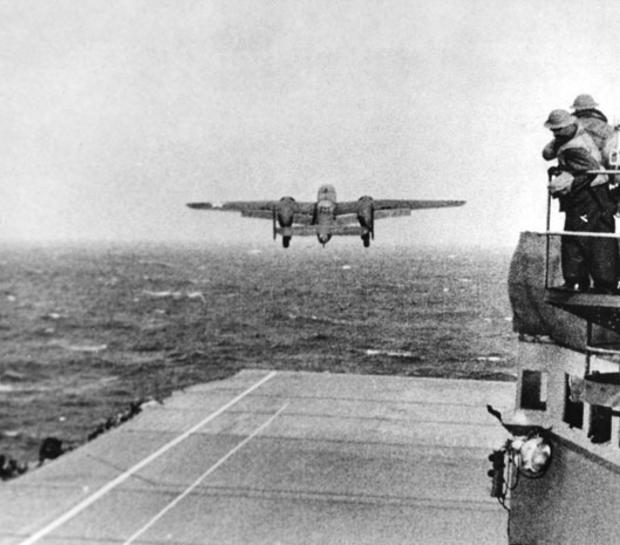
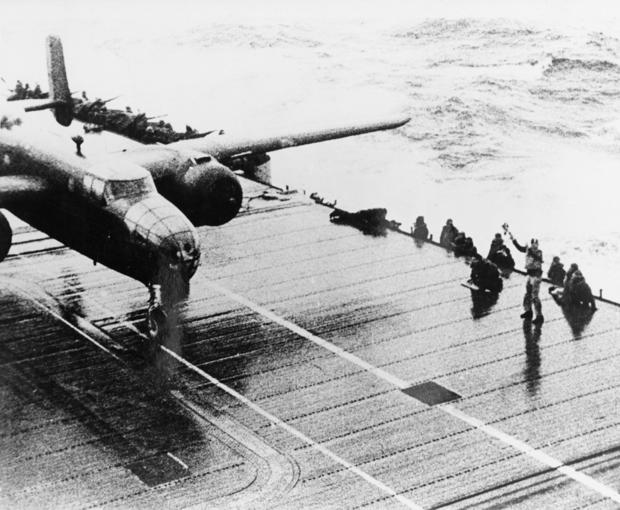
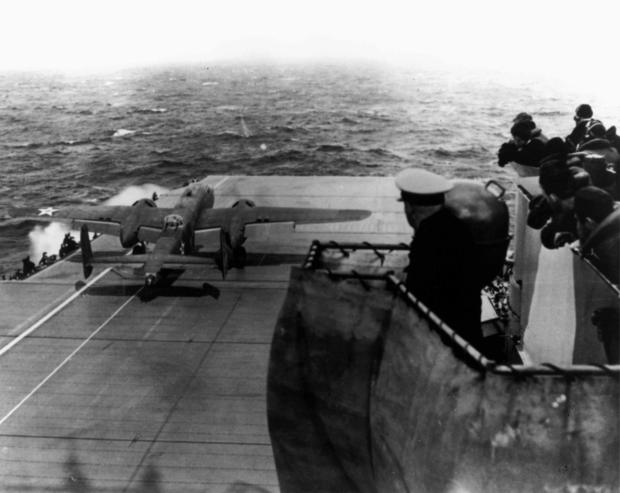
Lt. Col. Jimmy Doolittle takes off in his B-25 from the deck of the USS Hornet. This is the only time U.S. Army Air Forces -- or, after 1947, U.S. Air Force -- bombers ever took off from an aircraft carrier. After the raid, Lt. Col. Doolittle was immediately promoted to brigadier general, thus skipping the grade of colonel, and received the Congressional Medal of Honor.
U.S. Air Force
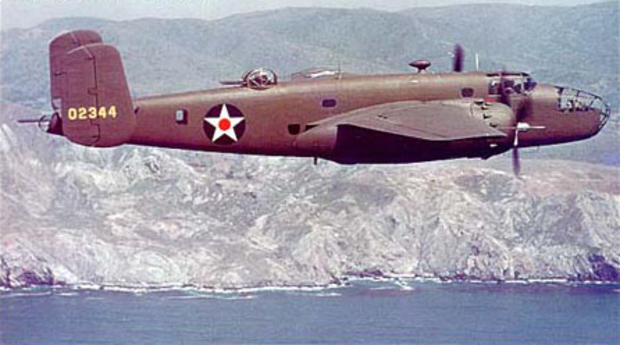
A North American B-25B in flight. The B-25B was converted from a B-25D to B-25B configuration for the 10th Anniversary of the Tokyo Raid.
Nick Tomecek/AP/Northwest Florida Daily News
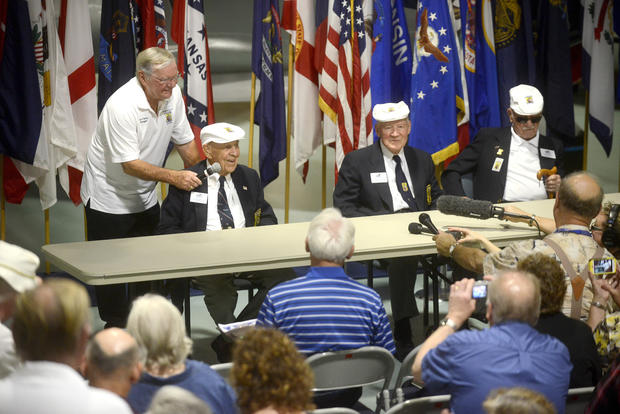
Doolittle Raiders (from left) Lt. Col. Dick Cole, Staff Sgt. David Thatcher and Lt. Col. Edward Saylor answer questions about the Doolittle Tokyo Raid during a press conference at the Air Force Armament Museum on Eglin Air Force Base, April 17, 2013.
U.S. Air Force
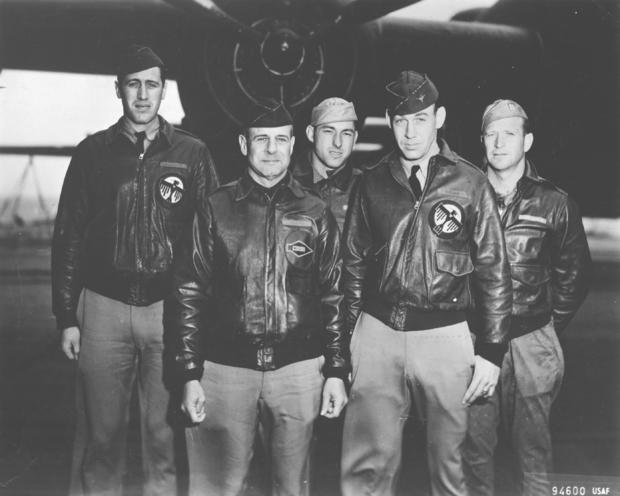
Crew No. 1 (Plane #40-2344, target Tokyo) 34th Bombardment Squadron: Lt. Col. James H. Doolittle, pilot; Lt. Richard E. Cole, copilot; Lt. Henry A. Potter, navigator; SSgt. Fred A. Braemer, bombardier; SSgt. Paul J. Leonard, flight engineer/gunner.
Mark Kulaw/AP/Northwest Florida Daily News
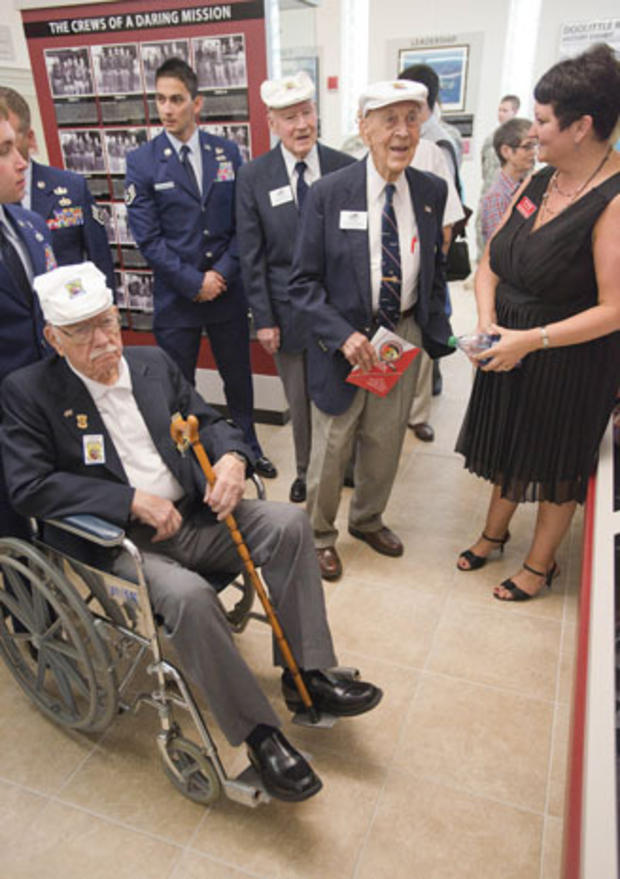
Doolittle Raiders, in white caps, left to right, Edward J. Saylor, David J. Thatcher and Richard E. Cole view the new Doolittle Raiders exhibit with facilities coordinator Mia Checkley at Northwest Florida State College in Niceville, Fla., April 17, 2013.
Nick Tomecek/AP/Northwest Florida Daily News
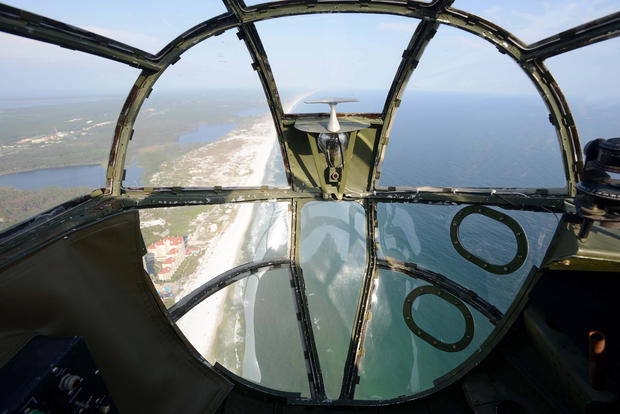
The nose of a B-25 is illuminated by the scenery of Northwest Florida during a recent flight as part of the Doolittle Raider 71st Anniversary Reunion in Destin, Fla., April 16, 2013.
U.S. Air Force
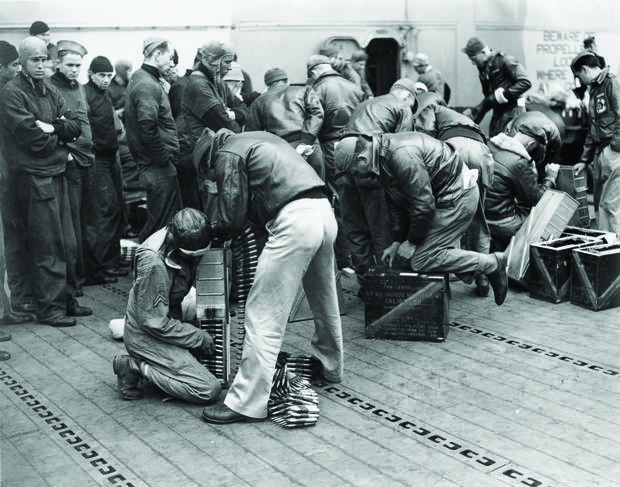
Navy personnel watch as AAF personnel load .50-cal. ammunition into ammo trays prior to takeoff from the Hornet.
Nick Tomecek/AP/Northwest Florida Daily News
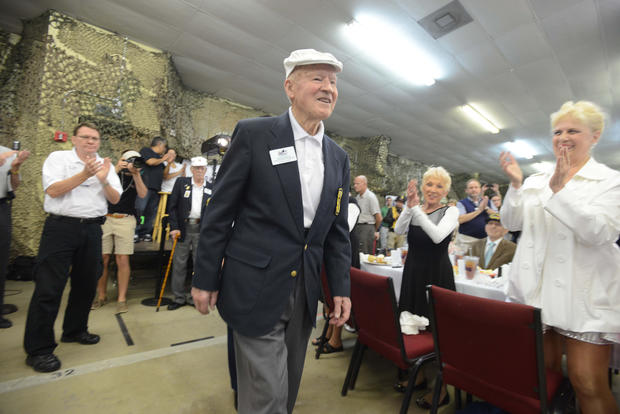
Doolittle Raider Staff Sgt. David Thatcher is welcomed with a standing ovation at a luncheon for the Doolittle Raiders, their family members and other veterans at the Bull C.H. Rigdon Fairgrounds in Fort Walton Beach, Fla., April 19, 2013.
U.S. Air Force/28th Bomb Wing Historian's Office
B-25 Mitchell bombers are tethered to the deck of the USS Hornet for their long trek from California to Tokyo. The bombers were modified to make them as light as possible, and the tail guns were replaced with black painted broom handles to deter enemy fighters but decrease take-off weight. Later, newly promoted Brig. Gen James Doolittle, who led the raid, said the broom handles were surprisingly effective at deterring Japanese fighters.
Nick Tomecek/AP/Northwest Florida Daily News
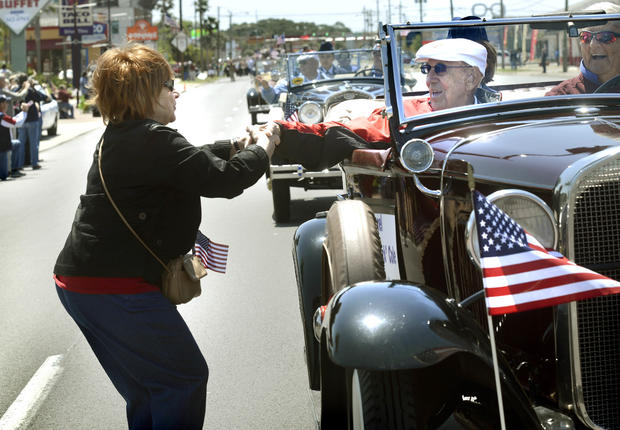
Sheila Otlin of Columbia, Md., shakes Doolittle Raider Lt. Col. Dick Cole's hand during the Parade of Heroes on Eglin Parkway in Fort Walton Beach, Fla., April 20, 2013.
Nick Tomecek/AP/Northwest Florida Daily News
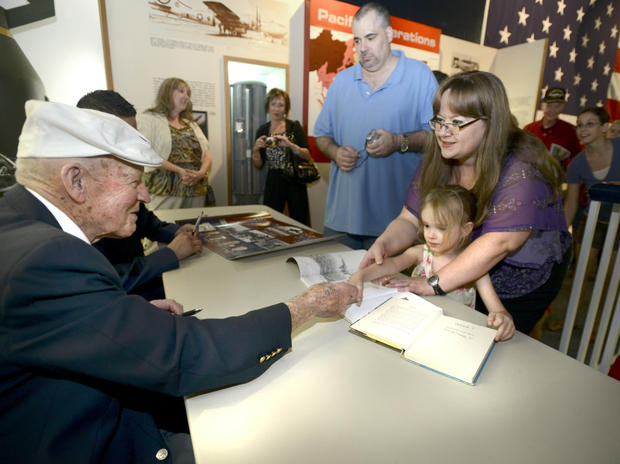
Doolittle Raider Staff Sgt. David Thatcher, left, shakes hands with Alexis Edwards, 5, and her mother Michelle Edwards and father Brian Edwards, back, during an autograph session at the Air Force Armament Museum on Eglin Air Force Base, April 17, 2013.
Nick Tomecek/AP/Northwest Florida Daily News
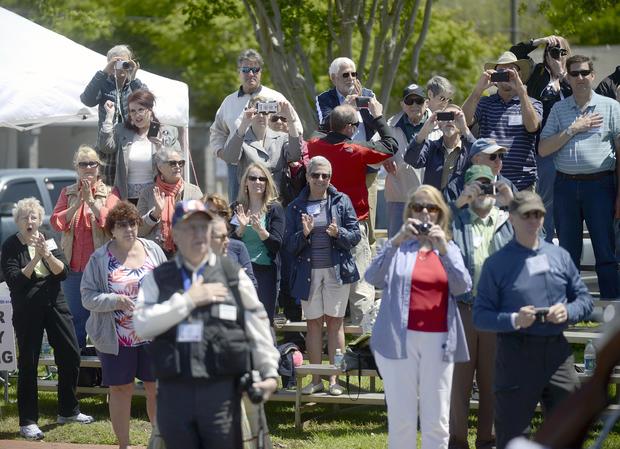
A crowd of people cheer for the Doolittle Raiders and other war veterans during the Parade of Heroes on Eglin Parkway in Fort Walton Beach, Fla., April 20, 2013.
The parade was part of the Doolittle Raider 71st Anniversary Reunion.
U.S. Air Force/28th Bomb Wing Historian's Office
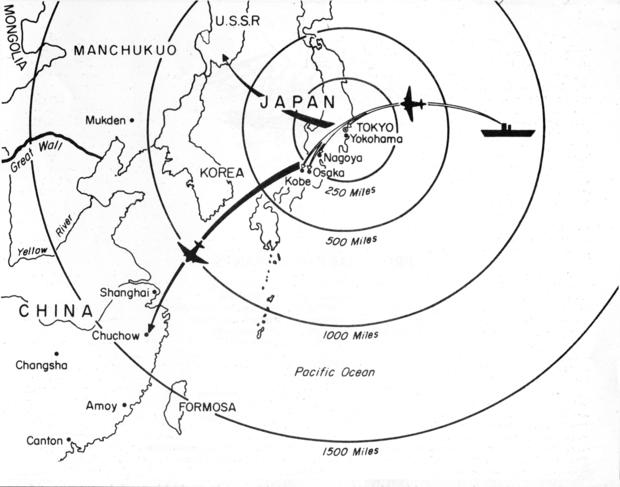
A modified B-25 Mitchell bomber takes off for Tokyo about 170 miles short of its planned takeoff point after being spotted by an enemy ship. The bombers hit their targets and then crash landed in various places as they tried to get away. None of the bombers were shot down by fighters or enemy aircraft fire.
U.S. Air Force
Map showing Doolittle Raid targets and landing fields.