Wilfredo Lee/AP
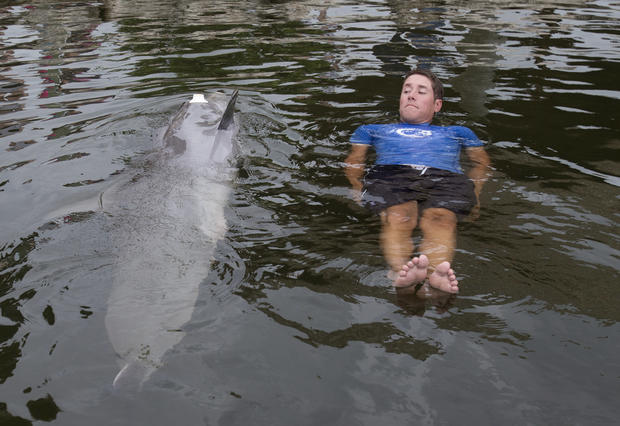
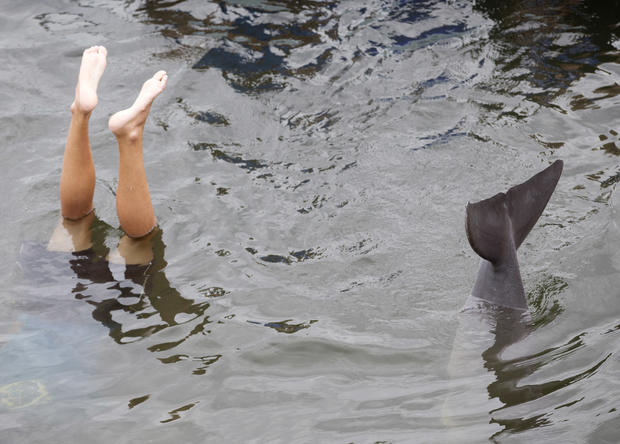
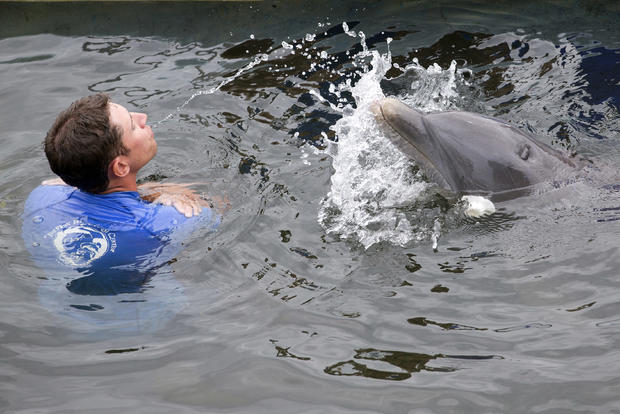
A blindfolded Atlantic bottlenose dolphin named Tanner copies the behavior of trainer Wade Davey, right, during a demonstration at the Dolphin Research Center on Grassy Key in Marathon, Fla., July. 3, 2013.
Dolphins may be known for their intelligence and playful behavior. But turns out they can also switch on other senses to figure out a problem, just like humans. A new study indicates that when one of their senses is blocked, they can make decisions to use other senses to mimic a human's movements.
All photos from taken at the Dolphin Research Center on Grassy Key in Marathon, Fla., July. 3, 2013
Wilfredo Lee/AP
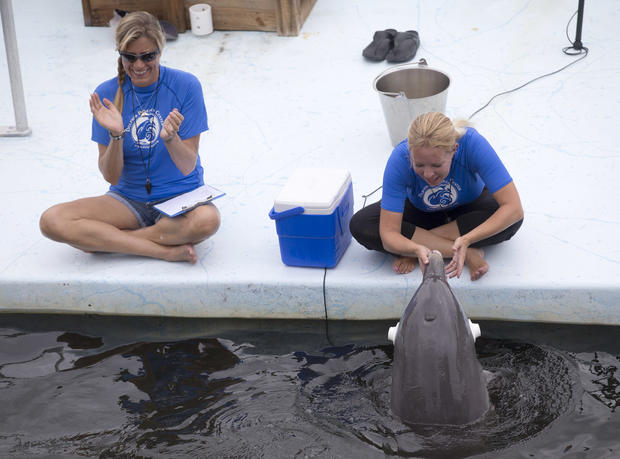
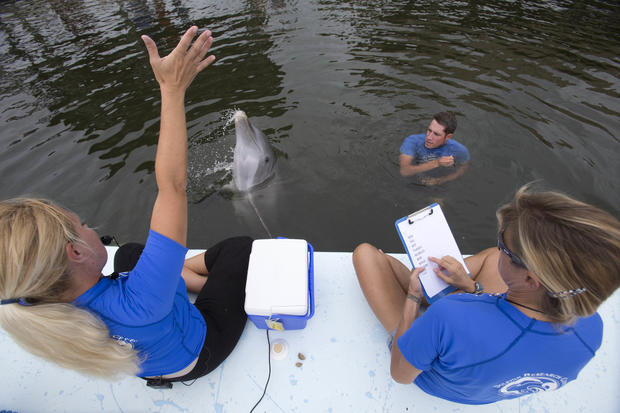
Research assistant Jane Hecksher, left, claps as Emily Guarino, right, Administrative Director of Research, rewards an Atlantic bottlenose dolphin named Tanner after he copied a behavior while blindfolded.
Wilfredo Lee/AP
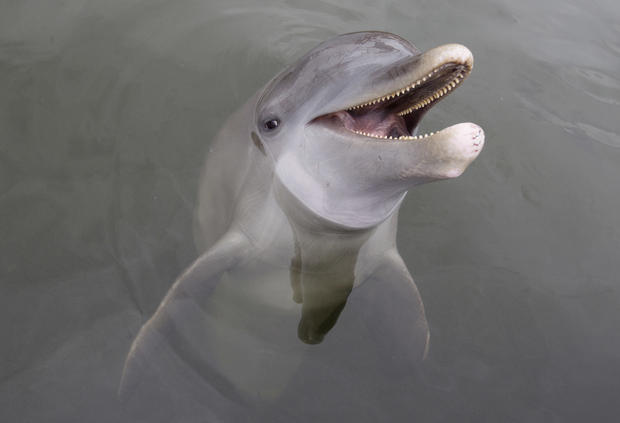
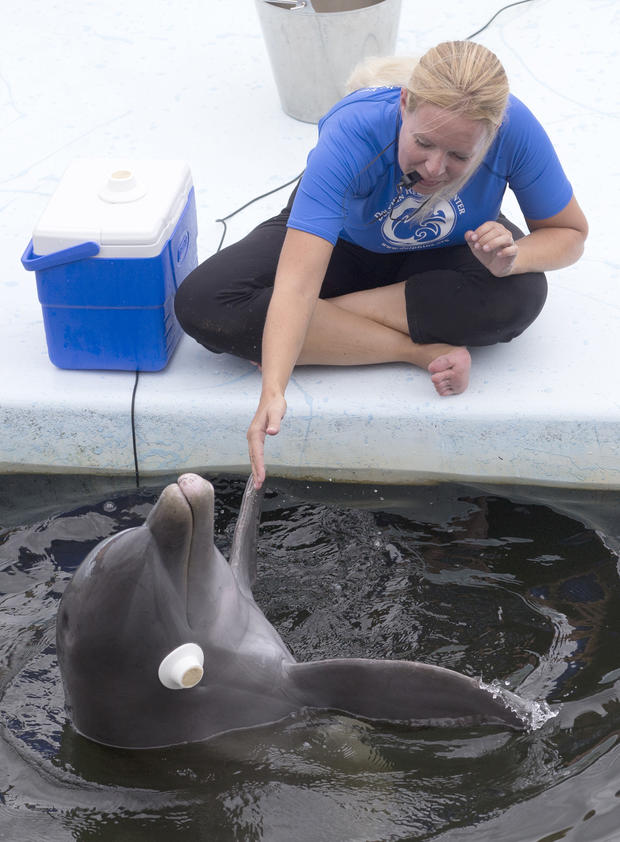
Atlantic bottlenose dolphin "Tanner" is shown during a demonstration.
Wilfredo Lee/AP
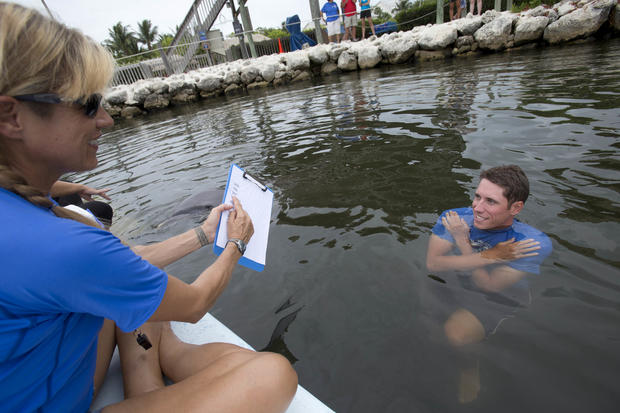
Research assistant Jane Hecksher, left, shows trainer Wade Davey, right, the behavior she wants him to perform to see if an Atlantic bottlenose dolphin named Tanner can copy the behavior while blindfolded.
Wilfredo Lee/AP
Emily Guarino, left, Administrative Director of Research, congratulates an Atlantic bottlenose dolphin named Tanner after he copied a behavior by trainer Wade Davey, right rear, while blindfolded, as research assistant Jane Hecksher, right foreground, looks on during a demonstration.
Wilfredo Lee/AP
Guarino congratulates an Atlantic bottlenose dolphin named Tanner after he copied a behavior while blindfolded during a demonstration.
Wilfredo Lee/AP
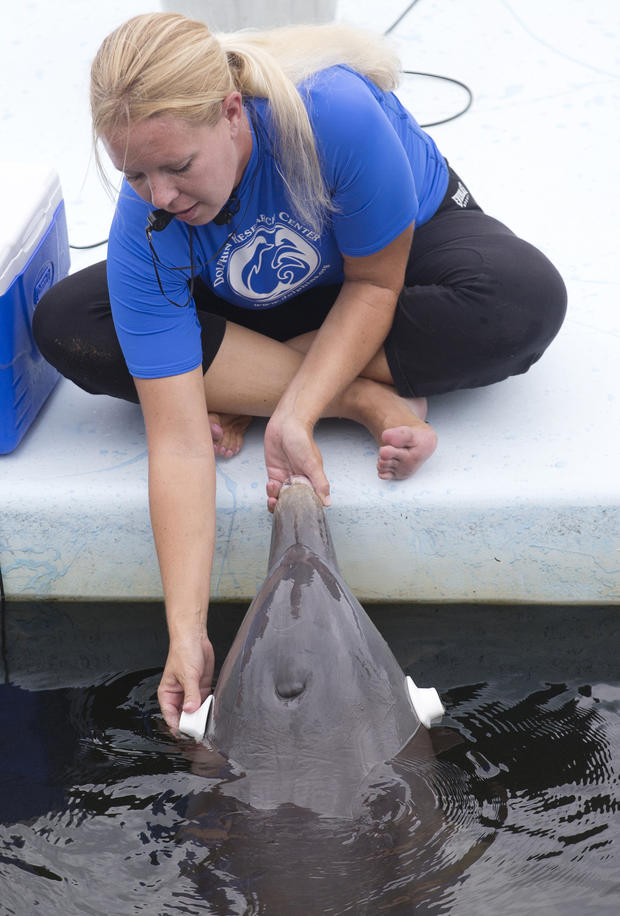
Guarino puts eyecups on an Atlantic bottlenose dolphin named Tanner, to blindfold him during a demonstration.
Wilfredo Lee/AP
A blindfolded Atlantic bottlenose dolphin named Tanner copies the behavior of trainer Wade Davey.
Wilfredo Lee/AP
A blindfolded Atlantic bottlenose dolphin named Tanner copies the behavior of trainer Wade Davey.