United States Holocaust Memorial Museum, courtesy of Colonel Alexander Zabin
The Dachau concentration camp opened on March 22, 1933. It was the first SS-run camp for "political prisoners" under Hitler's regime and became a model for the many SS prison camps that followed. Located in southern Germany, Dachau remained open until 1945 when it was liberated by U.S. troops. Approximately 200,000 people were detained during these years and an estimated 41,500 died.
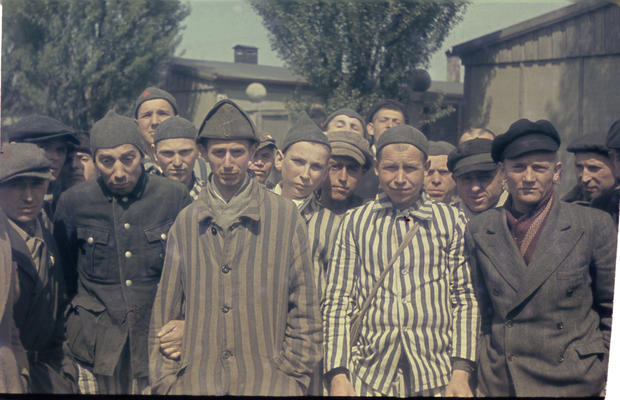
This group portrait of former political prisoners in the newly-liberated Dachau concentration camp was taken by Colonel Alexander Zabin, an American soldier from Long Island, New York who visited Dachau in mid-May 1945.
Eric Schwab/AFP/Getty Images
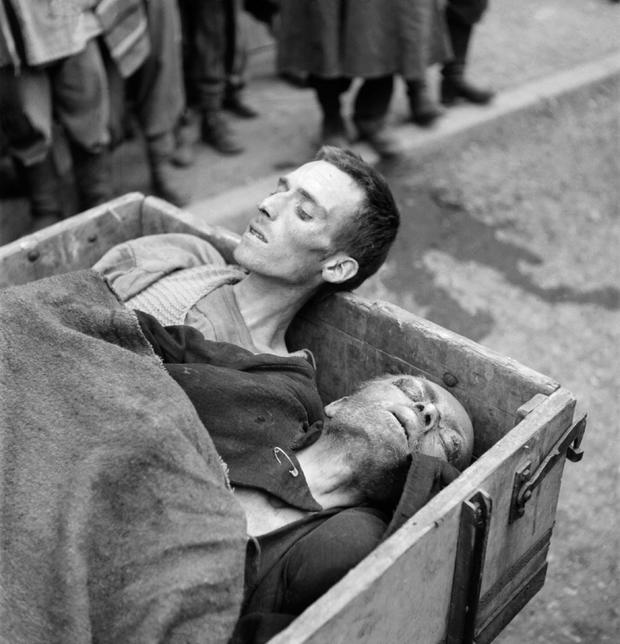
Two dead prisoners are taken away in a cart after Dachau was liberated by U.S. troops, May 1945.
Soldiers arrived to find surviving prisoners, as well as a number of unburied bodies left by the fleeing SS.
United States Holocaust Memorial Museum, courtesy of Colonel Alexander Zabin
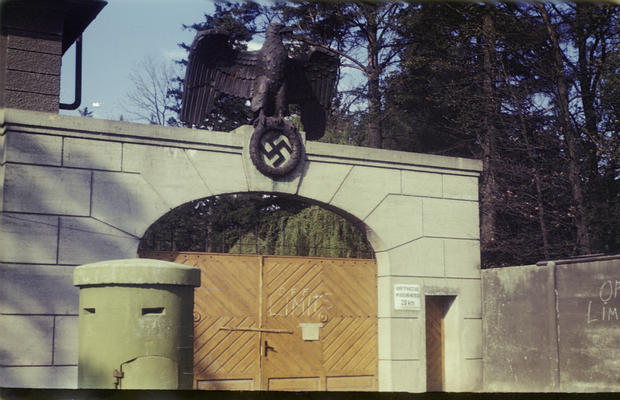
View of the entrance to the Dachau concentration camp with the Prussian eagle perched on top, May 1945.
Eric Schwab/AFP/Getty Images
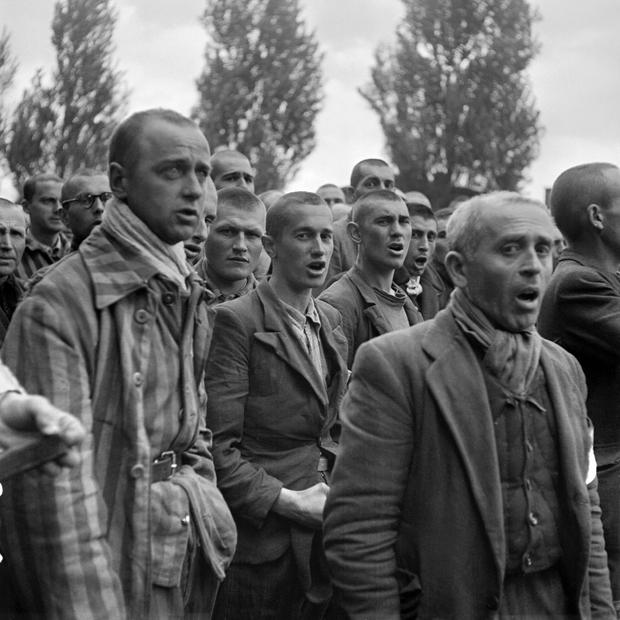
French prisoners sing the national anthem, "La Marseillaise," upon the liberation of the Nazi concentration camp of Dachau, near Munich, by Allied troops, April 18, 1945.
United States Holocaust Memorial Museum, courtesy of National Archives and Records Administration, College Park
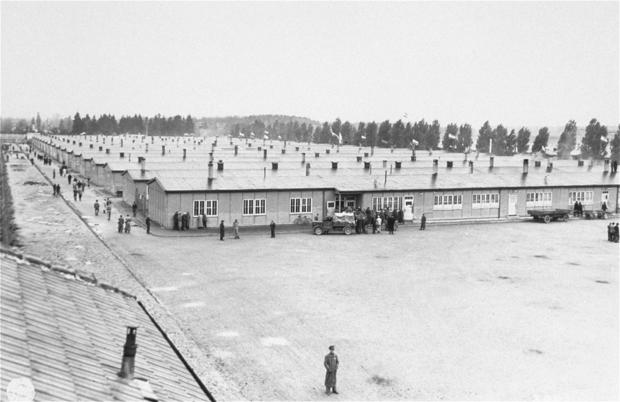
Prisoners' barracks in the Dachau concentration camp, May 3, 1945.
Dachau was primarily a facility for high-level political prisoners and the camp included compounds for special prisoners, including those that the Nazis had an interest in detaining but did not treat as usual prisoners.
United States Holocaust Memorial Museum, Courtesy of National Archives and Records Administration, College Park
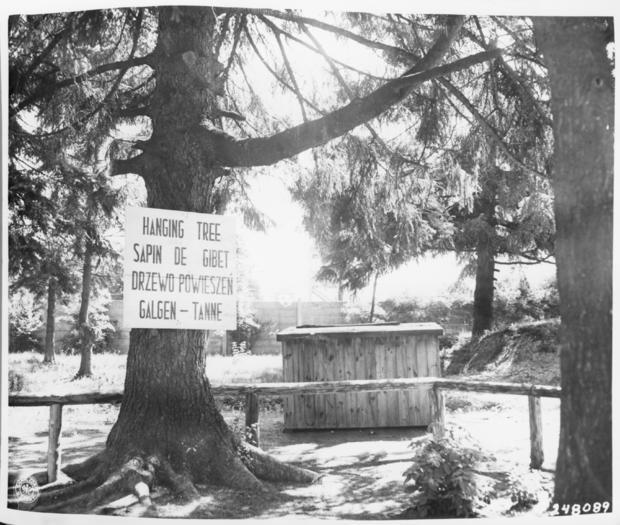
View of a tree in the Dachau concentration camp, located near the crematorium, where prisoners were hanged. A sign in four languages identifying how it was used is posted on the tree, July 1, 1945.
Prisoners could be sentenced to execution for reasons including planning an escape, passing intelligence outside the camp or gathering weapons. The killings were often carried out in front of assembled prisoners.
United States Holocaust Memorial Museum, Holocaust, Dachau, courtesy of Colonel Alexander Zabin
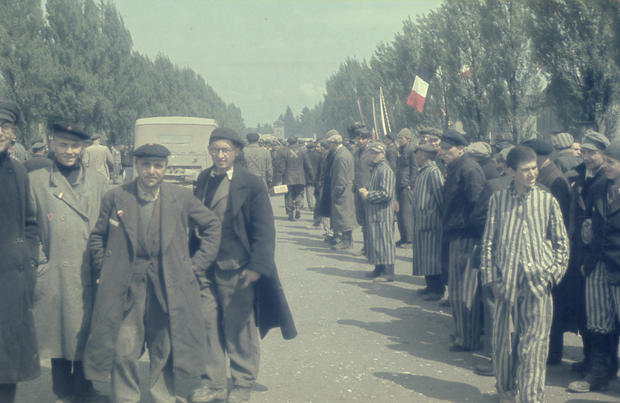
Former prisoners assemble on the main street in the newly liberated Dachau concentration camp, May 1945.
United States Holocaust Memorial Museum, courtesy of National Archives and Records Administration, College Park
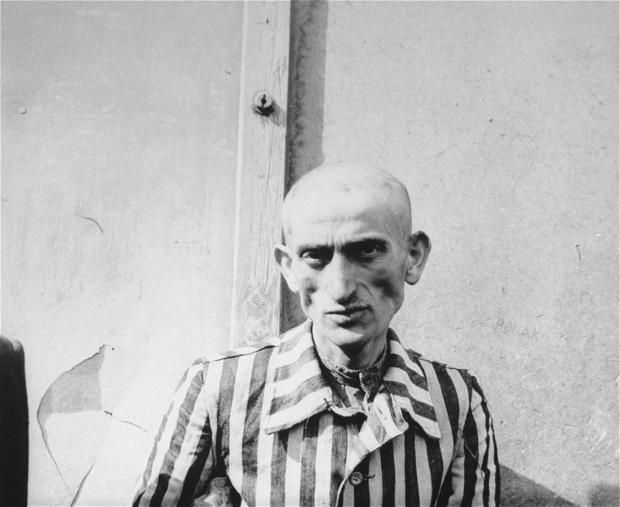
A survivor in Dachau on the day of liberation.
After liberation, prisoners who had the strength to leave were released after passing medical exams and others were eventually relocated to displaced persons camps after receiving refugee status.
United States Holocaust Memorial Museum, courtesy of National Archives and Records Administration, College Park
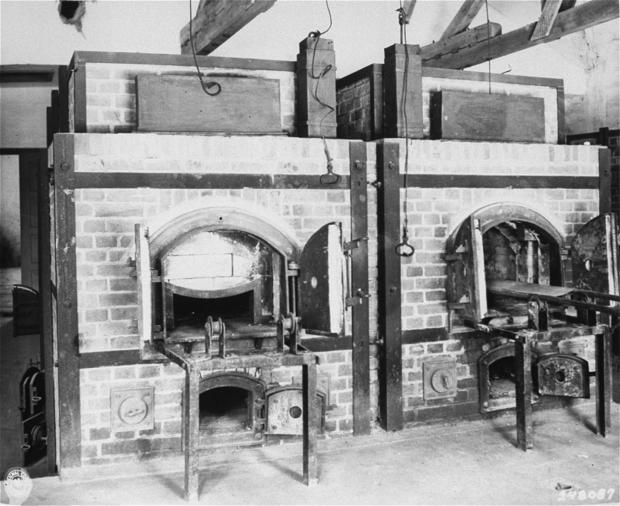
Two ovens inside the crematorium at the Dachau concentration camp.
Eric Schwab/AFP/Getty Images
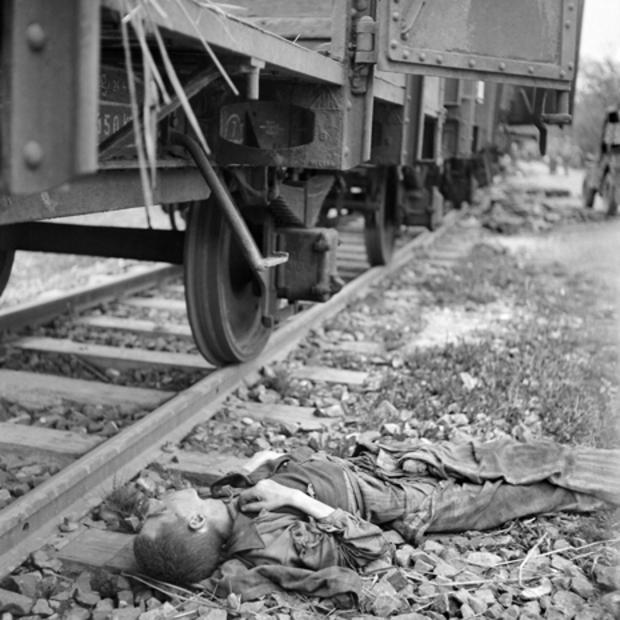
The corpse of a prisoner of the Dachau concentration camp, April 18, 1945.
Eric Schwab/AFP/Getty Images
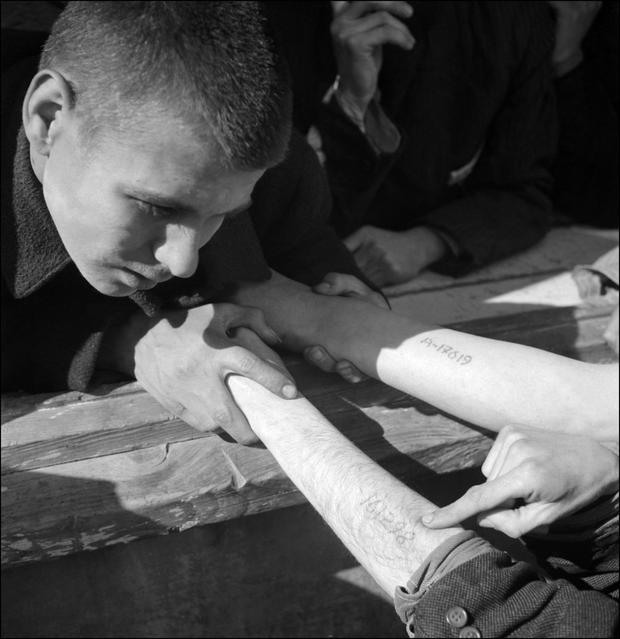
A young man checks numbers tattooed on the arms of Jewish Polish prisoners coming from Auschwitz at the Dachau concentration camp, April 1945.
United States Holocaust Memorial Museum, courtesy of M. Hershenson
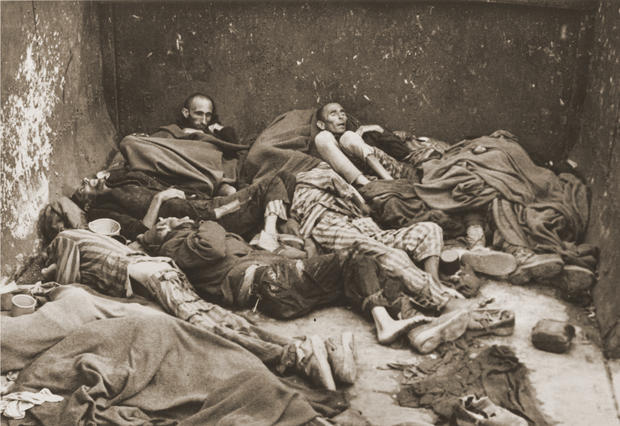
Corpses lie in one of the open railcars of the Dachau death train.
The train consisted of nearly 40 rail cars containing the bodies of between 2,000 and 3,000 prisoners who were evacuated from Buchenwald on April 7, 1945. The train arrived in Dachau on the afternoon of April 28.
United States Holocaust Memorial Museum, courtesy of K. L. Rabinoff-Goldman
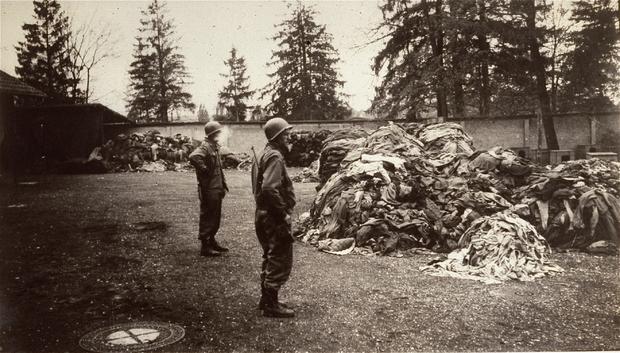
American soldiers examine piles of prisoners' clothing found near the crematorium at Dachau.
United States Holocaust Memorial Museum courtesy of Francis Robert Arzt
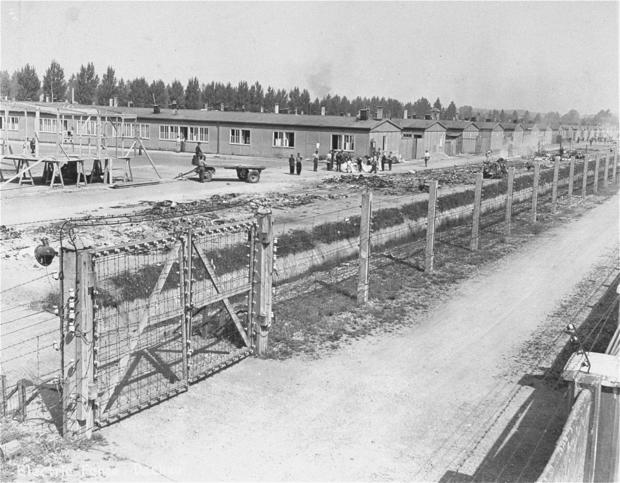
A section of the Dachau concentration camp.
United States Holocaust Memorial Museum courtesy of Frank Manucci
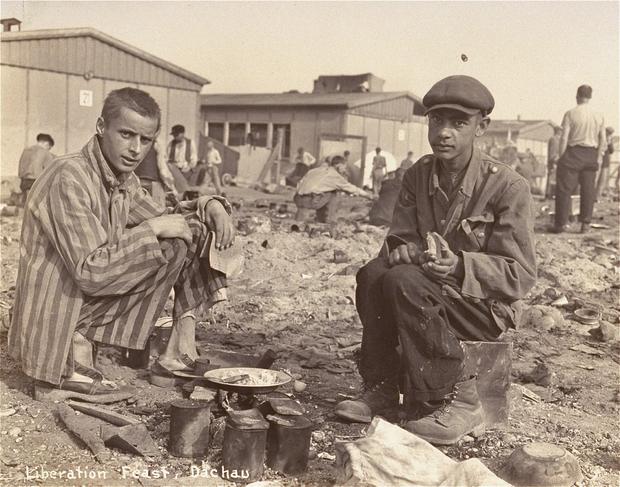
Two survivors prepare food outside the barracks. The man on the right, presumably, is Jean (Johnny) Voste, born in Belgian Congo, who was the only black prisoner in Dachau.
United States Holocaust Memorial Museum, courtesy of William and Dorothy McLaughlin
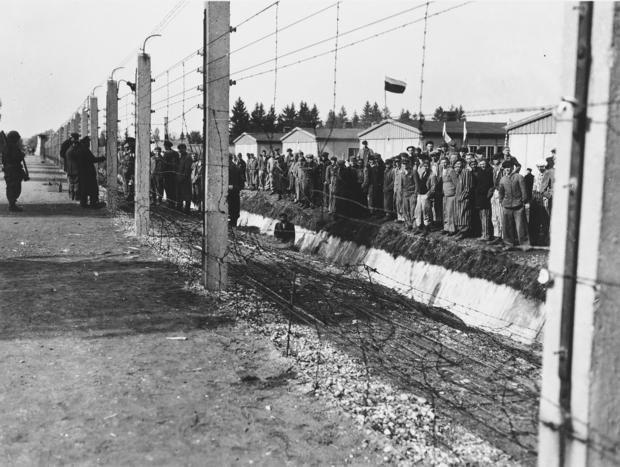
Survivors congregate next to the barbed wire fence surrounding the Dachau concentration camp, April 1945.
United States Holocaust Memorial Museum, courtesy of National Archives and Records Administration, College Park
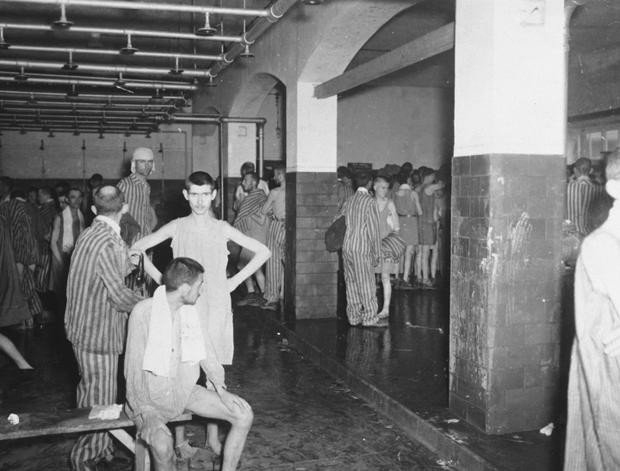
Survivors in the shower barracks after liberation, April 29, 1945 - May 1945.
United States Holocaust Memorial Museum, courtesy of Maria Seidenberger
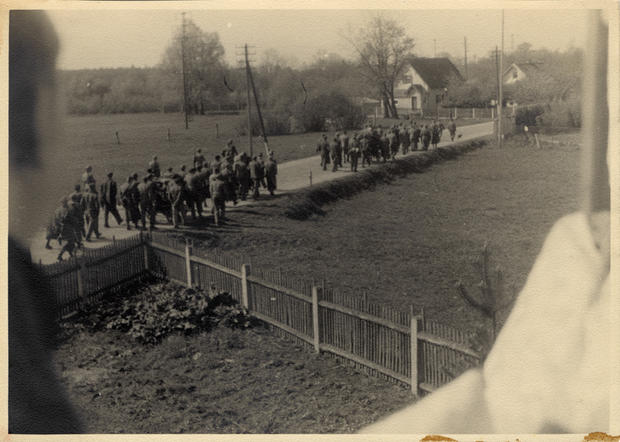
A clandestine photograph of prisoners marching to Dachau. Maria Seidenberger took the photo from the second floor window of her family's home while her mother stood outside and gave potatoes to the prisoners.
Himmler ordered the commanders of camps to evacuate prisoners alive as enemy troops approached. Many were marched to Dachau, which was located in the center of what was left of the Reich territory.
United States Holocaust Memorial Museum, courtesy of Maria Seidenberger
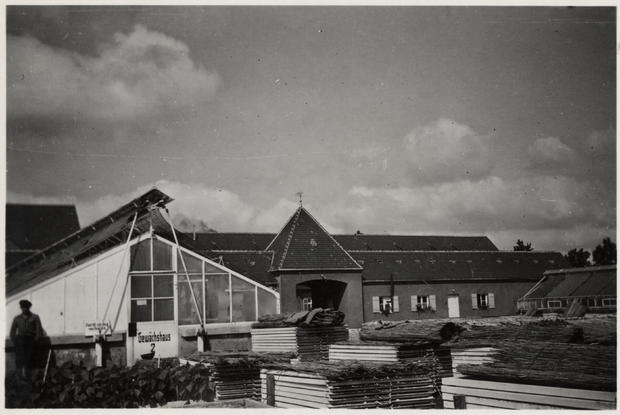
View of the gardens and greenhouse of the Dachau concentration camp.
It was not unusual for prisoners to be assigned as gardeners or groundskeepers for the benefit of the SS who lived on the grounds.
United States Holocaust Memorial Museum, courtesy of William and Dorothy McLaughlin
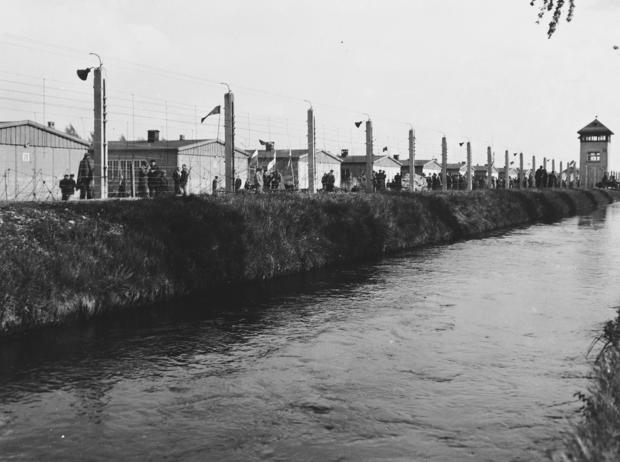
View of the moat in front of the barbed wire fence surrounding the Dachau concentration camp.
Moats and fencing were used to prevent prisoners from leaving and any unwanted outsiders from approaching the camp.
United States Holocaust Memorial Museum, courtesy of Colonel Alexander Zabin
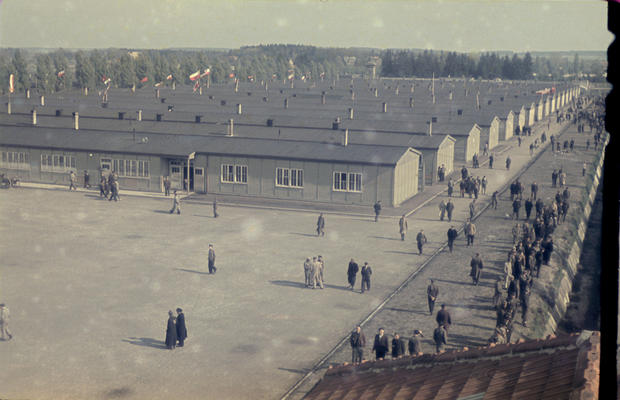
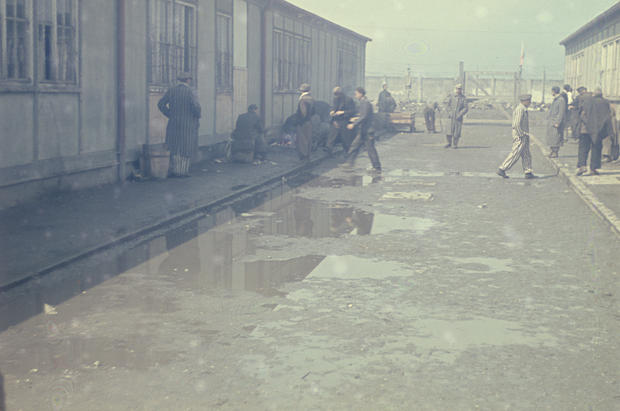
Former prisoners walking along the main street of the newly liberated Dachau concentration camp, May 1945.
United States Holocaust Memorial Museum, courtesy of Colonel Alexander Zabin
Former prisoners walk between two rows of barracks in the newly liberated Dachau concentration camp, May 1945.
United States Holocaust Memorial Museum, courtesy of William O. McWorkman
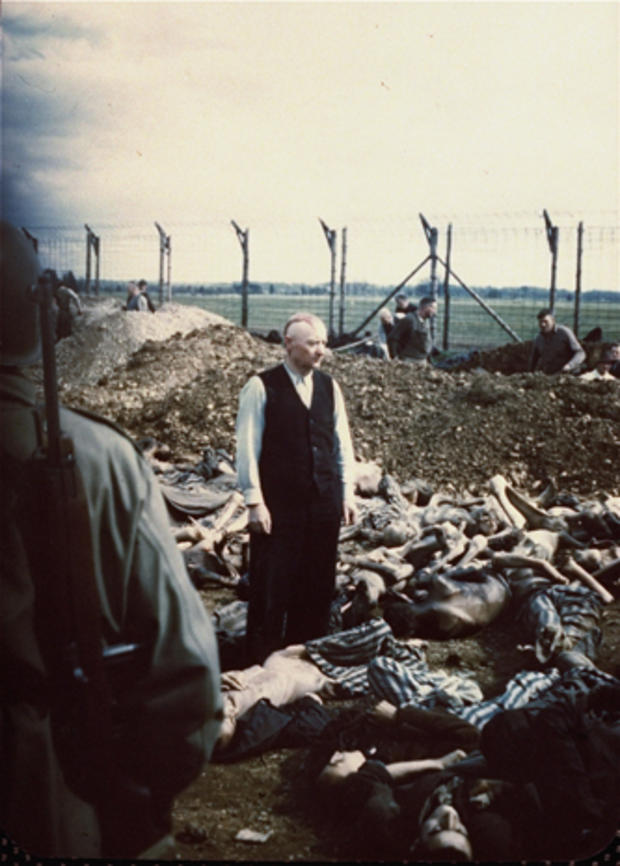
SS officer Eichelsdoerfer, the commandant of Kaufering IV, a sub-camp of Dachau, stands in civilian clothes amidst the corpses of prisoners killed in his camp. A burial party of Germans conscripted from the surrounding area works in the background, April 27, 1945 - April 30, 1945.
Eichelsdoerfer was later convicted during the The Dachau Trials, held on the grounds of the camp after liberation, and was executed May 29, 1946.
United States Holocaust Memorial Museum, courtesy of Dana Upton
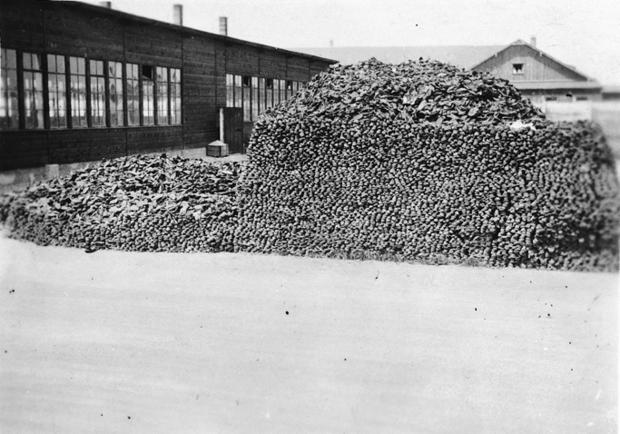
A large pile of victims' shoes piled up outside barracks in the Dachau concentration camp, May 1945.