Mario Tama/Getty Images
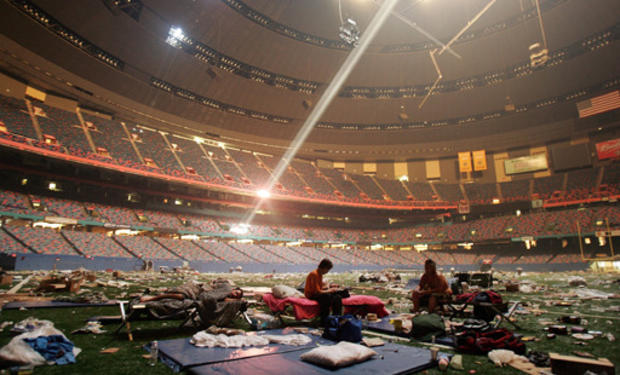
Photographer Mario Tama forged a special bond with the people of New Orleans while covering the disaster of Hurricane Katrina. "As a photojournalist I've been through a lot of dire circumstances in a lot of countries," Tama said on CBS' "The Early Show." "But to witness my own citizens in my own country abandoned by my own government was the most shocking thing I had seen."
Mario Tama/Getty Images
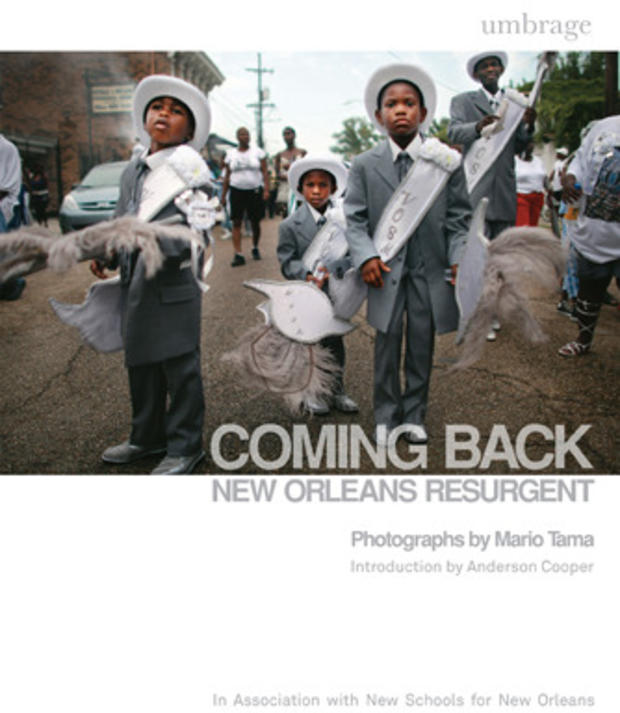
"But even more inspiring was after the storm, to witness these people who had lost everything, to pick themselves up by their boot straps," Tama said. "The spirit, the determination, the resilience to come back and rebuild, a lot of times without any governmental assistance, was incredibly inspiring to me." That spirit is evident in the haunting images of his book, "Coming Back: New Orleans Resurgent" (Getty Images/Umbrage Editions).
Mario Tama/Getty Images
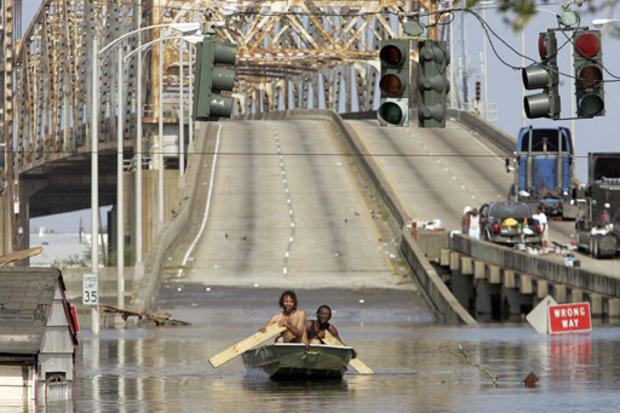
Tama recalled the story behind this photograph of New Orleans residents he spotted in a paddleboat: "First of all, just getting to that scene was very challenging. I was in another boat paddling through the Ninth Ward. As we headed down to that area where the paddleboat was, we got stuck on something. We looked down, we were stuck on someone's roof. We freed ourselves off the roof and made it down to where the photo was taken. They had ridden out the storm on the bridge behind them and they were just searching for food and water. This is two or three days after the storm."
Mario Tama/Getty Images
When asked why he wanted to do the book, Tama said, "I met so many people who all wanted their stories to be told. In the end I felt like the best way to get all their stories out there was to compile it in one book. Because this is such a large storm — it affected an area the size of Great Britain — there's no way you can tell the story in three or four photographs. You have to compile it all in a narrative over five years."
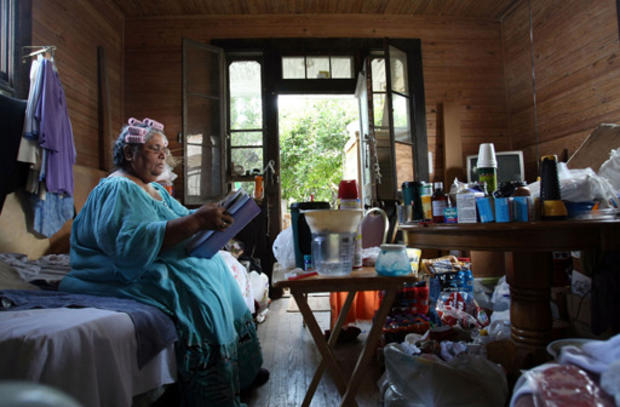
One such story was that of New Orleans couple Rita & Hazzert Gillett, who rode out the storm in the Lower Ninth Ward: "They are people of faith. Rita was put up in a hammock. Basically, they never left. I met them two years later and they had no electricity, no gas. They said the faith in the Lord would overcome and carry them through."
Mario Tama/Getty Images
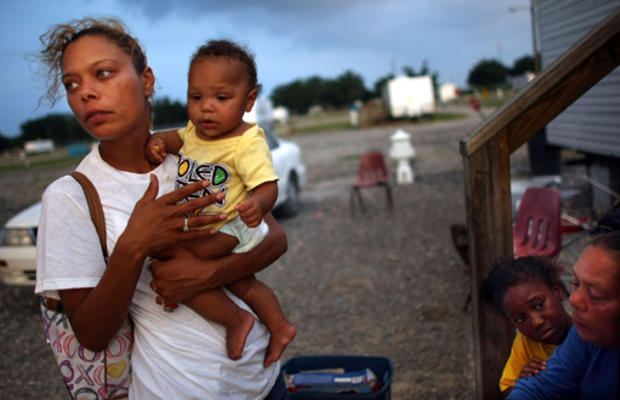
This image of Shelly Parker was taken three years after the storm. Tama said she was still living in a dilapidated trailer, determined to raise her four kids in the area where she grew up. He said he was surprised that the government still hadn't figured out a way to get her and others like her out of these terrible living conditions where diseases and illnesses were being spread left and right. Tama also said Parker epitomized turning life following after a disaster: she is now on her way to attending college and lives with her kids in a "proper" trailer.
Mario Tama/Getty Images
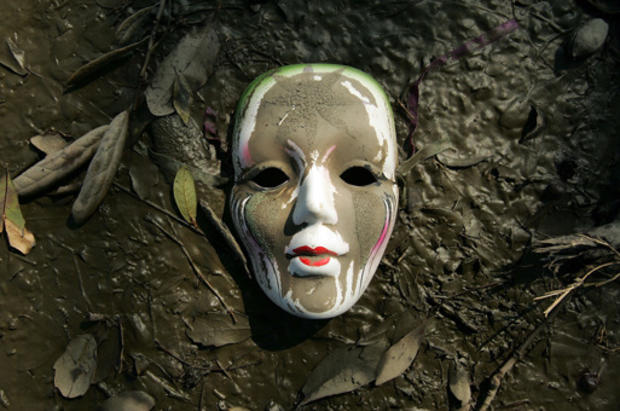
Tama came across a mask divulged in mud as he was walking through the Lower Ninth Ward — he almost crushed it by stepping on it. He felt it was a symbolic representation of what had happened in New Orleans ... the tradition and joyousness that is Mardi Gras and essentially New Orleans, was now tainted and masked by devastation.
Mario Tama/Getty Images
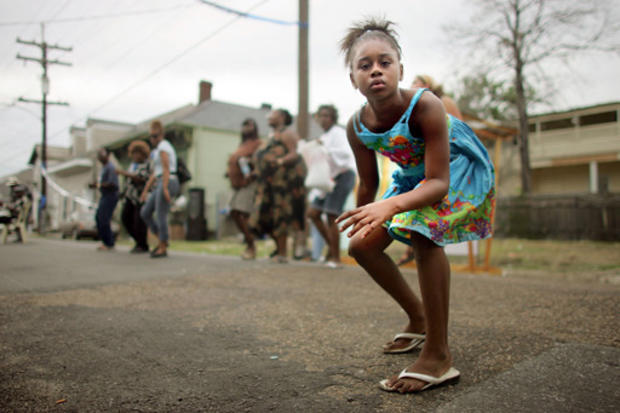
"This is the moment when I realized New Orleans was coming back," Tama said of this image called "Girl in a Blue Dress." "It was nine months after the storm, and I was searching for signs of resurgence. I heard about a second line parade, which is a local tradition. And I went to the formerly flooded street. It looked like it was almost abandoned. But all of a sudden in the distance I heard this beat and this rhythm and all of a sudden this band came pounding down the street. People were dancing and singing and joyous and flying through the air. It was a ballet, a moving street party. It swept me up almost off my feet and I just flowed along with them and was photographing them. I knew the spirit of New Orleans was going to overcome."