Close-up: Clues of briny water on Mars
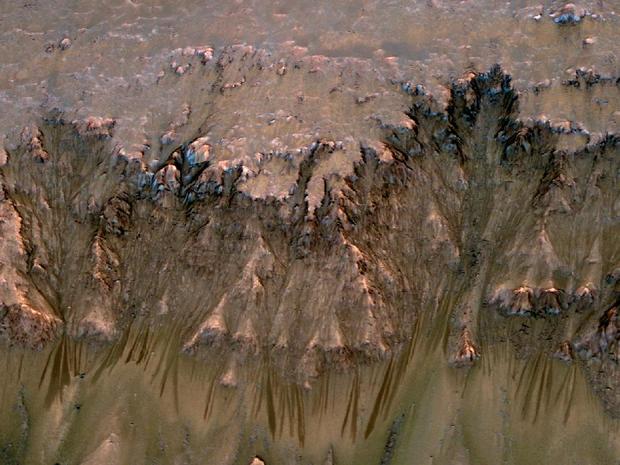
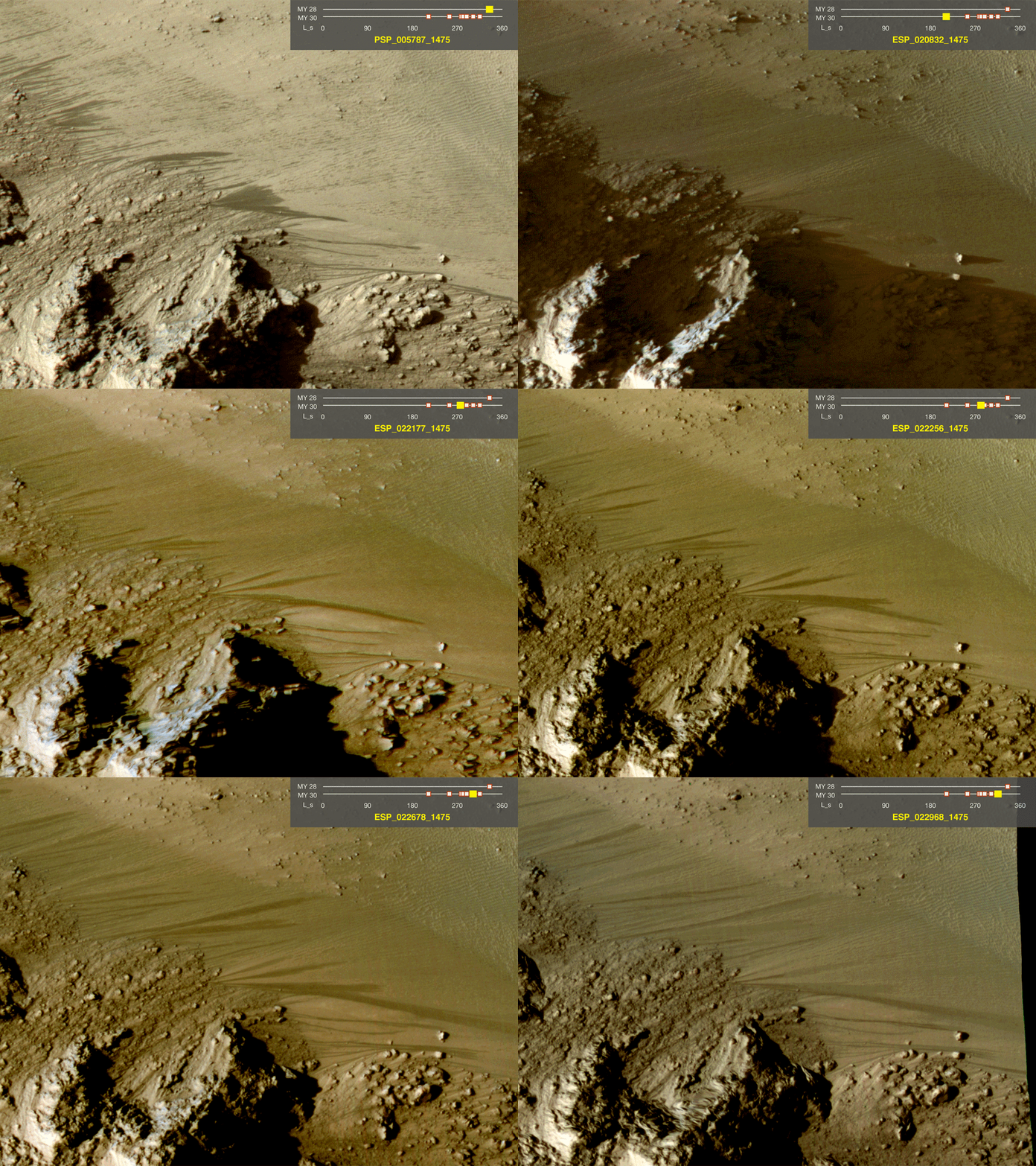
Dark spines of what scientists believe may be salt water has been repeatedly seen flowing down the steep slopes of middle latitudes of Mars' southern hemisphere.
"The best explanation for these observations so far is the flow of briny water," said Alfred McEwen of the University of Arizona.
This series of orbital imagery combined with 3D modeling shows warm-season features that might be evidence of salty liquid water active on Mars today.
Ice, salt, and warm-season flows

Shallow subsurface water ice found by the Gamma Ray Spectrometer and Neutron Spectrometer on NASA's Mars Odyssey orbiter is depicted in colors signifying concentrations.
The presence of hydrogen, shown in blue, signifies higher concentrations of water ice.
The white squares mark locations of impact craters in the northern hemisphere which exposed water ice close to the surface. Red squares mark locations where the Thermal Emission Imaging System on Mars Odyssey has found deposits of chlorite may have resulted from evaporation of salty water.
Unfrozen brine in cryopegs
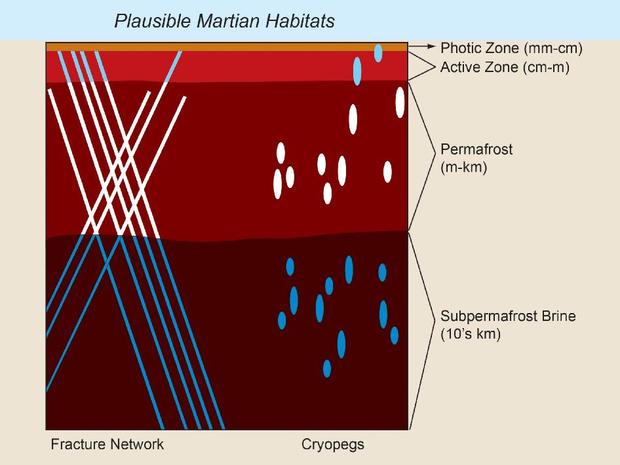
Cryopegs are isolated pockets of highly saline, liquid water that is permanently subzero (Celsius) in temperature due to chilling by the surrounding permafrost.
In this graphic, mm-cm refers to depths below the ground surface of millimeters to centimeters in vertical scale (fractions of an inch); cm-m refers to depths of centimeters to meters scale (half an inch to several yards); m-km refers to depths of meters to kilometers scale (a yard to a few miles); and 10's km refers to depth of tens of kilometers (several miles or more).
Warm-season flows on slope

During warm seasons, small dark features, called recurring slope lineae, appear and incrementally grow during warm seasons and fade in cold seasons, extend downslope possibly signifying the presence of liquid water.
However, "The flows are not dark because of being wet," said Alfred McEwen of the University of Arizona. "They are dark for some other reason."
More warm-season flows
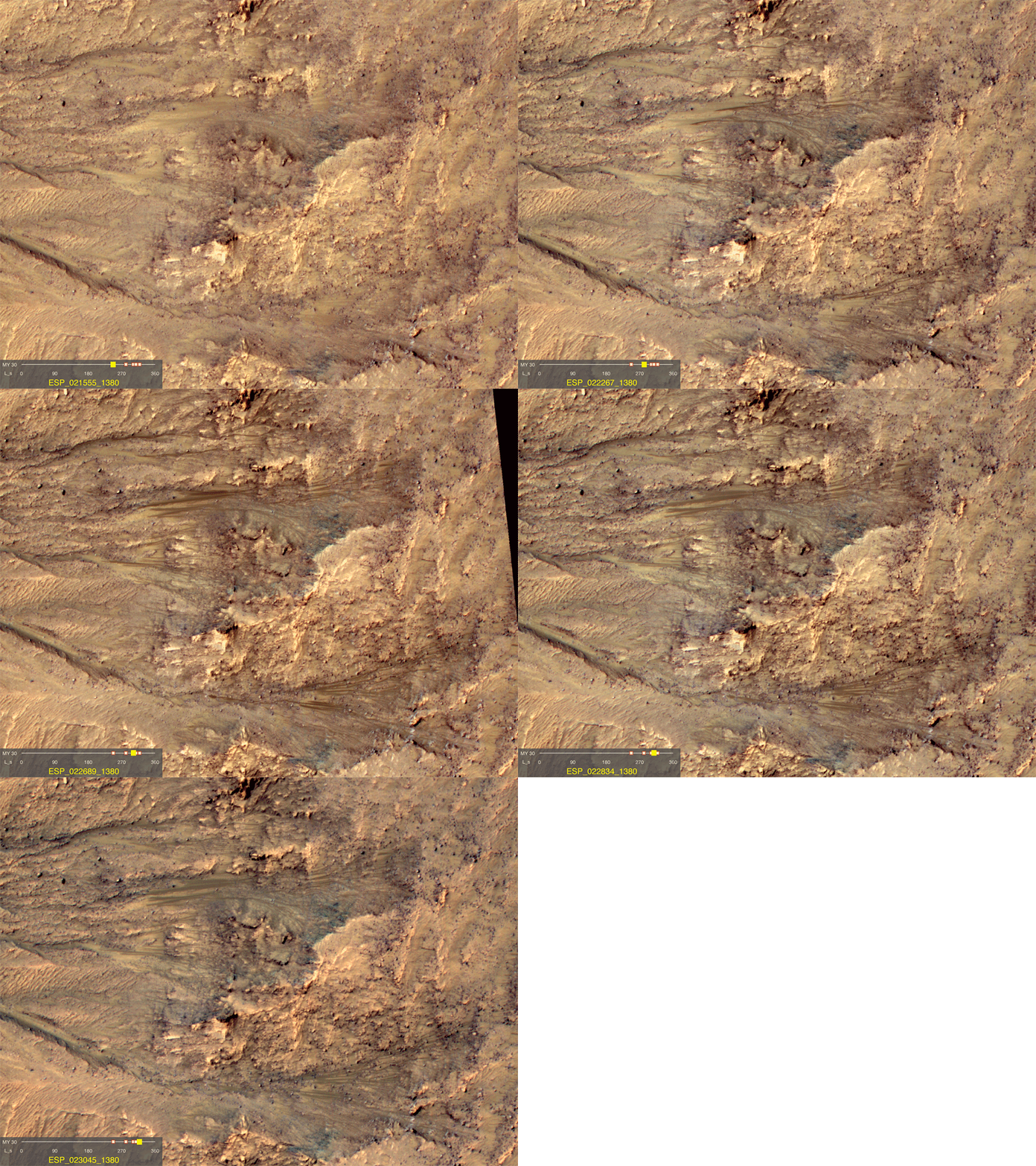
Dark flows in Newton Crater
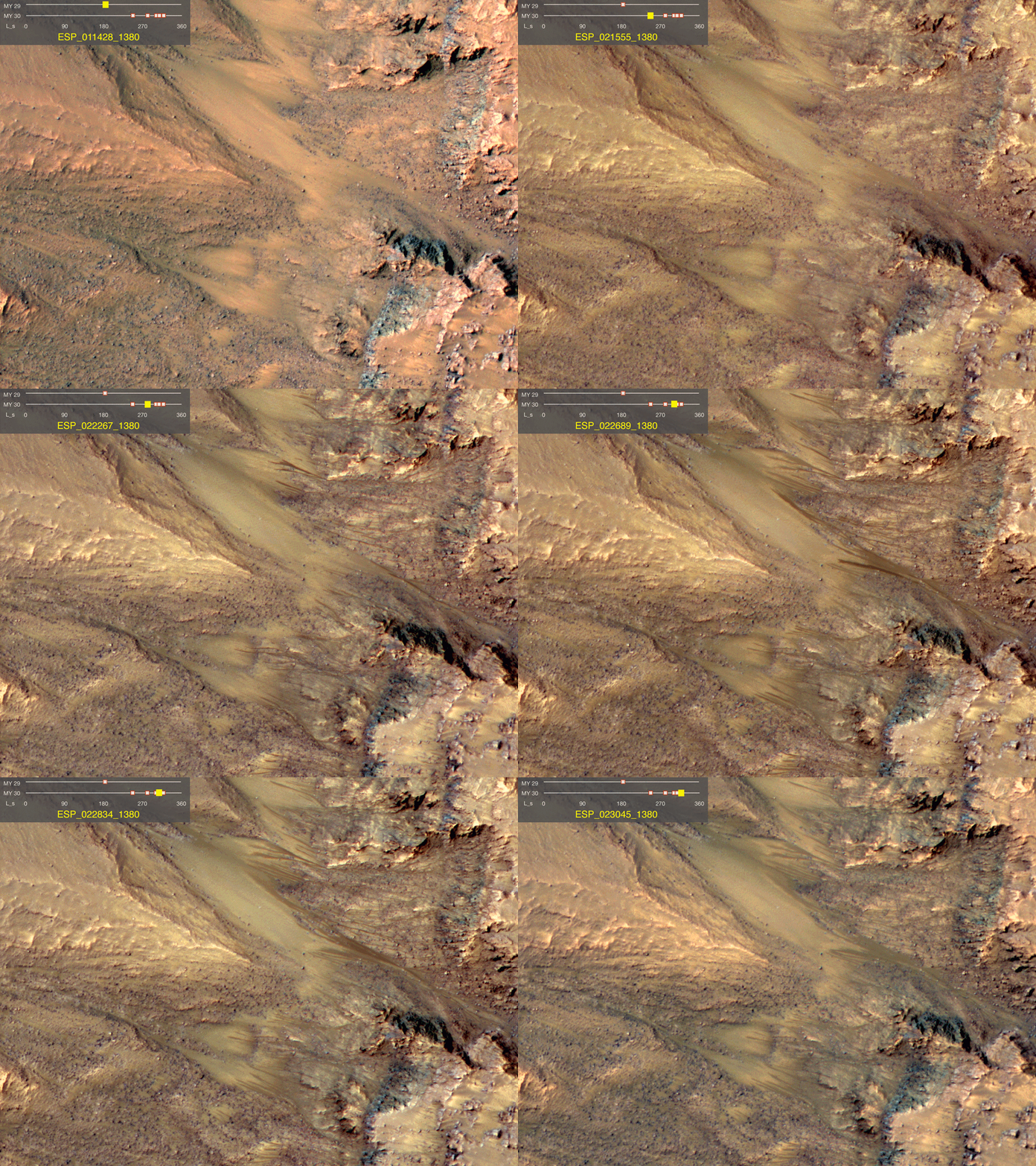
Warm-season flows in Horowitz Crater
Salt deposits over much of Mars indicate brines were abundant in Mars' past. These recent observations suggest brines still may form near the surface today in limited times and places.
When these slopes were checked with the orbiter's Compact Reconnaissance Imaging Spectrometer for Mars (CRISM), no sign of water appeared, which means the features may either quickly dry on the surface or could be shallow subsurface flows.