AP Photo/Efrem Lukatsky
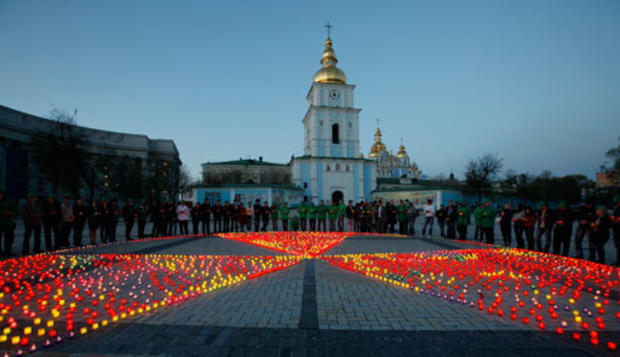
People light candles placed in the form of a radioactive symbol next to the Mikhaylivsky Cathedral in Ukraine's capital Kiev, Monday, April 26, 2010. On Monday, Ukraine marks the 24th anniversary of the Chernobyl nuclear disaster, which spread radiation over much of northern Europe.
AP Photo/Efrem Lukatsky
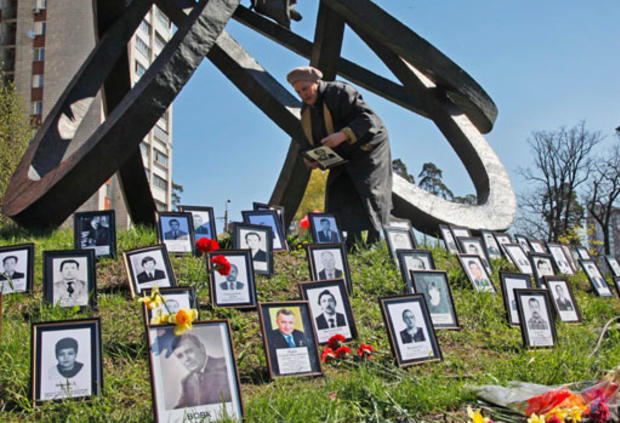
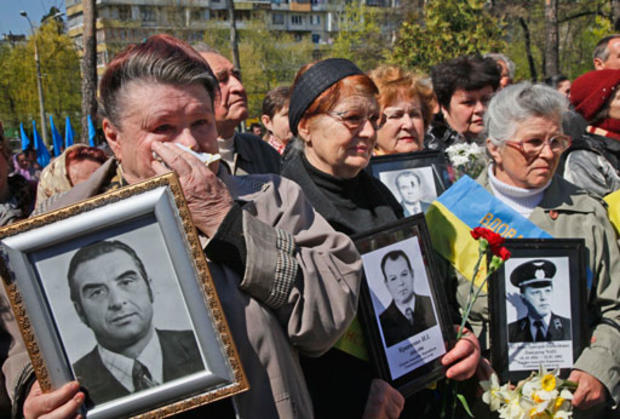
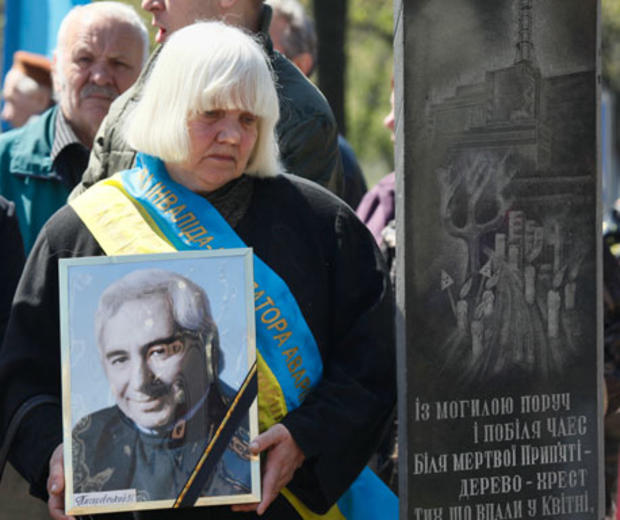
A relative of a victim of the Chernobyl disaster holds a picture during commemorations to mark the 24th anniversary of the disaster, at the monument to Chernobyl victims in Ukraine's capital Kiev, Monday, April 26, 2010.
The 1986 explosion of the fourth reactor at the plant in Ukraine spread radiation over much of Europe, forcing evacuation of swaths of countryside.
Thirty-one people died of radiation illnesses in the first two months after the blast, and there is debate over how many eventually will fall victim.
AP Photo/Efrem Lukatsky
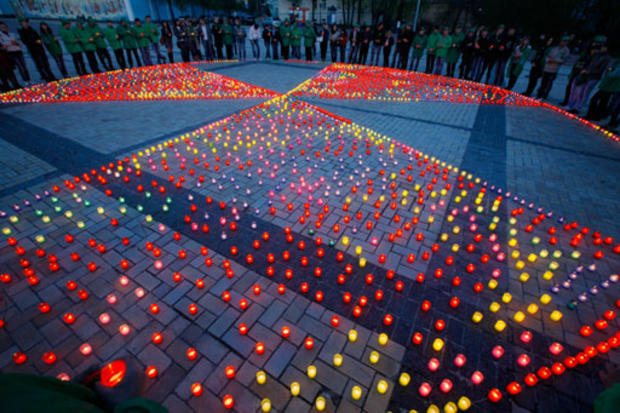
People light candles placed in the form of a radioactive symbol in Ukraine's capital Kiev, Monday, April 26, 2010. On Monday, Ukraine marks the 24th anniversary of the Chernobyl nuclear disaster, which spread radiation over much of northern Europe.
AP Photo/Sergei Chuzavkov
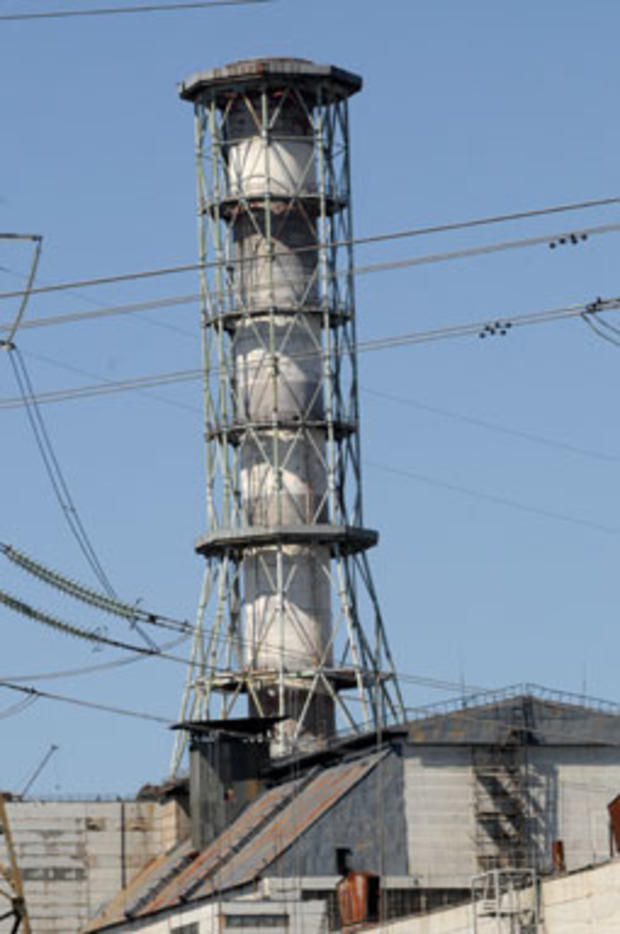
The sheltered reactor No. 4 of the Chernobyl nuclear power plant is shown in Ukraine, Monday, April 26, 2010.
Ukraine's president warned Monday on the anniversary of the world's worst atomic accident that the Chernobyl nuclear reactor remains a serious threat to Europe. The 1986 reactor explosion sent a cloud of radiation over much of Europe and severe health problems persist a quarter-century later.
Ukrainian President Viktor Yanukovych says some 2 million people suffer illnesses caused by the radiation.
AP Photo/Efrem Lukatsky
Relatives of Chernobyl victims stand near the monument to Chernobyl victims during a ceremony to commemorate the 24th anniversary of the Chernobyl nuclear disaster in Kiev, Ukraine, Monday, April 26, 2010. On Monday, Ukraine marks the 24th anniversary of the Chernobyl nuclear disaster, which spread radiation over much of northern Europe.
AP Photo/Efrem Lukatsky
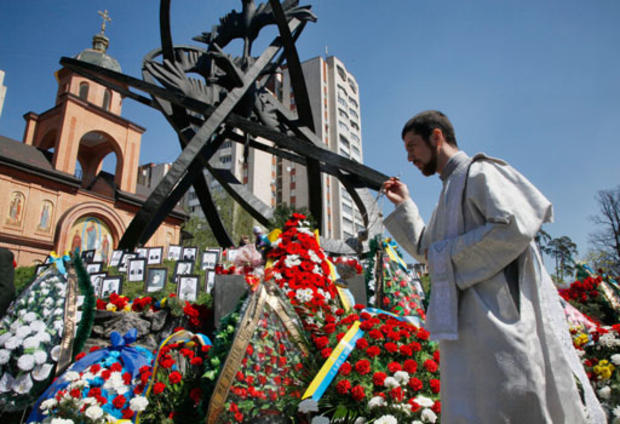
An orthodox priest prays at the monument to Chernobyl victims in Ukraine's capital Kiev, Monday, April 26, 2010. On Monday, Ukraine marks the 24th anniversary of the Chernobyl nuclear disaster, which spread radiation over much of northern Europe.
AP Photo/Mikhail Metzel
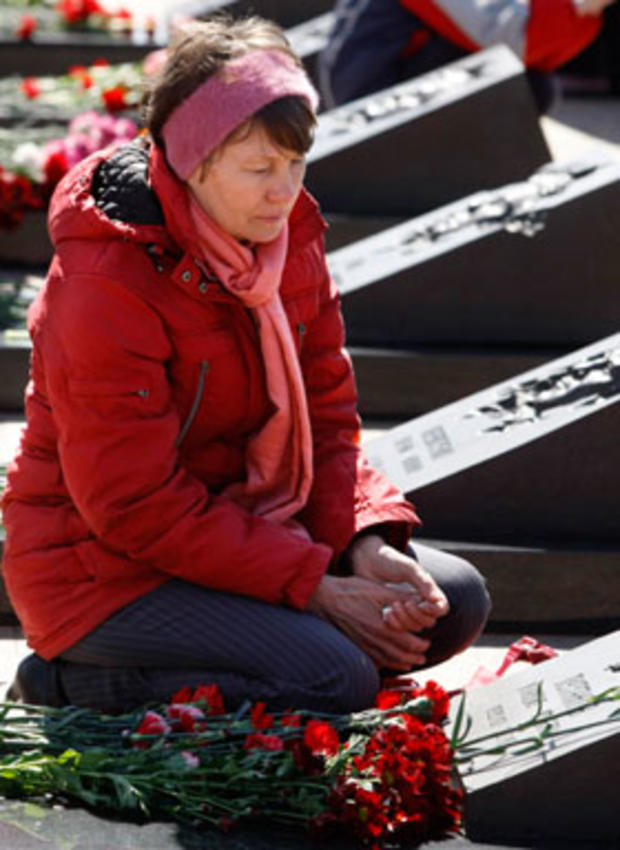
An unknown relative of Klavdia Luzganova, who died at the Reactor No. 4 of the Chernobyl nuclear plant when it exploded on April 26, 1986, mourns over her grave at Mitino cemetery in Moscow, Monday, April 26, 2010.
Hundreds of people came to Mitino cemetery, where those who died in the Chernobyl catastrophe are buried, to pay tribute to loved ones who perished in the world's worst nuclear accident 24 years ago.
AP Photo/Sergei Chuzavkov
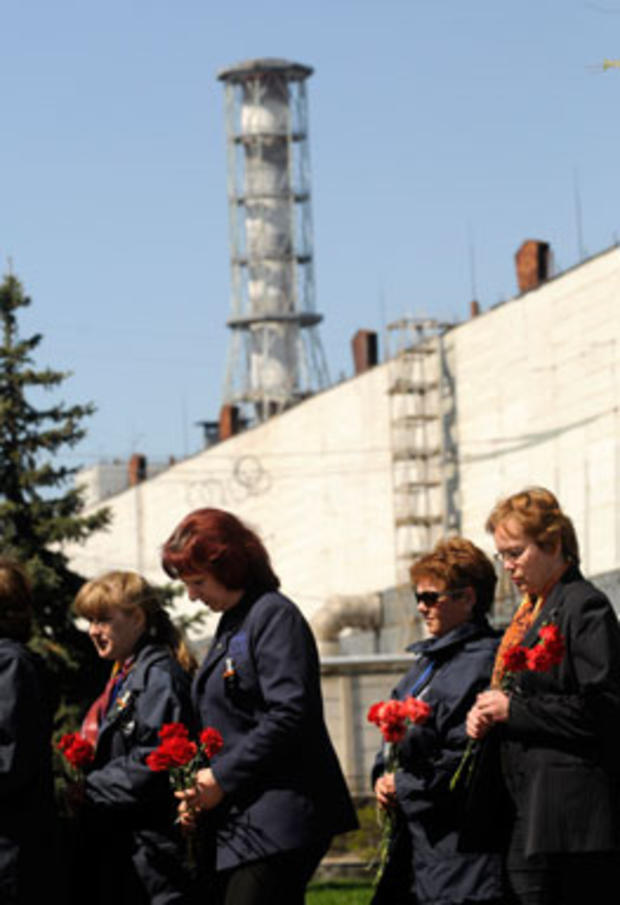
Workers lay flowers at a monument to the victims of the Chernobyl tragedy outside the nuclear power plant in Ukraine, Monday, April 26, 2010.
Ukraine's president warned Monday on the anniversary of the world's worst atomic accident that the Chernobyl nuclear reactor remains a serious threat to Europe. The 1986 reactor explosion sent a cloud of radiation over much of Europe and severe health problems persist a quarter-century later.
Ukrainian President Viktor Yanukovych says some 2 million people suffer illnesses caused by the radiation.
AP Photo/Mikhail Metzel
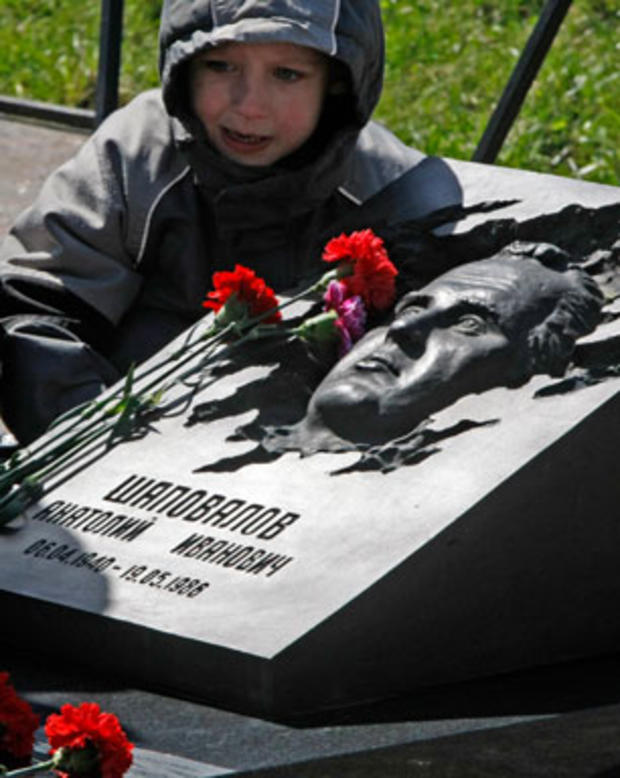
Andrei Shapovalov grieves at the tomb of his grandfather, Anatoly Shapovalov, an engineer at the Reactor No. 4 of the Chernobyl nuclear plant, who died after the April 26, 1986 catastrophe, at the Mitino cemetery in Moscow, Monday, April 26, 2010.
Hundreds of people came to Mitino cemetery, where those who died in the Chernobyl catastrophe are buried, to pay tribute to loved ones who perished in the world's worst nuclear accident 24 years ago.
AP Photo/Efrem Lukatsky
Alehandra Lihova, the sister of a victim of the Chernobyl disaster, holds a picture during commemorations to mark the 24th anniversary of the disaster, at the monument to Chernobyl victims in Ukraine's capital Kiev, Monday, April 26, 2010.
The 1986 explosion of the fourth reactor at the plant in Ukraine spread radiation over much of Europe, forcing evacuation of swaths of countryside. Thirty-one people died of radiation illnesses in the first two months after the blast, and there is debate over how many eventually will fall victim.
AP Photo/Heribert Proepper
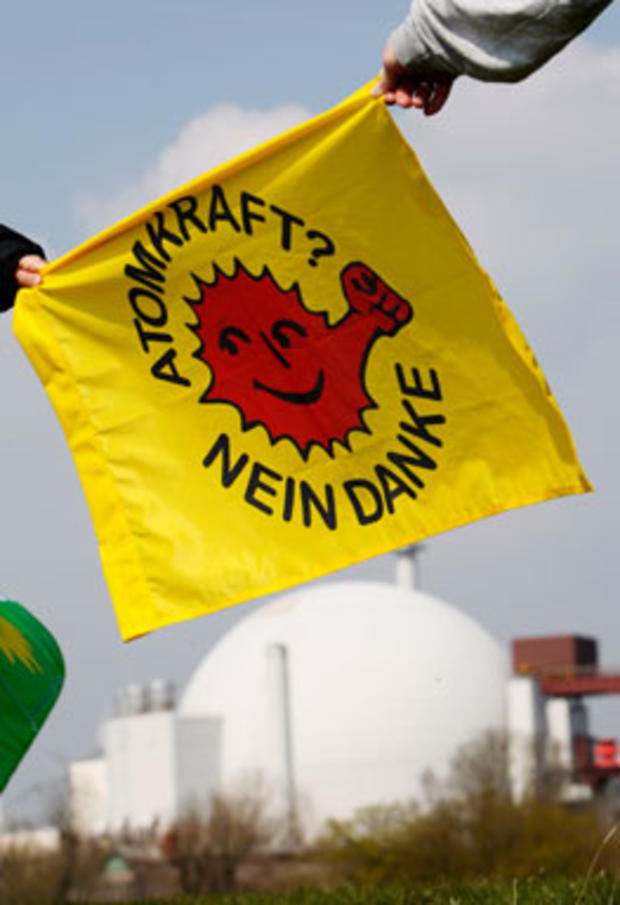
Supporters and activists of the anti-nuclear power movement line up for a human chain in front of the nuclear power plant in Brokdorf, northern Germany, on Saturday, April 24, 2010.
According to the organization, some 120,000 demonstrators staged a human chain along the Elbe River passing the nuclear power plants in Brunsbuettel, Brokdorf and Kruemmel in Geesthacht. The action commemorates the 24th anniversary of the Chernobyl nuclear reactor disaster on April 26, 1986. Banner reads "Nuclear power? - No, thanks".
AP Photo / Angelo Carconi
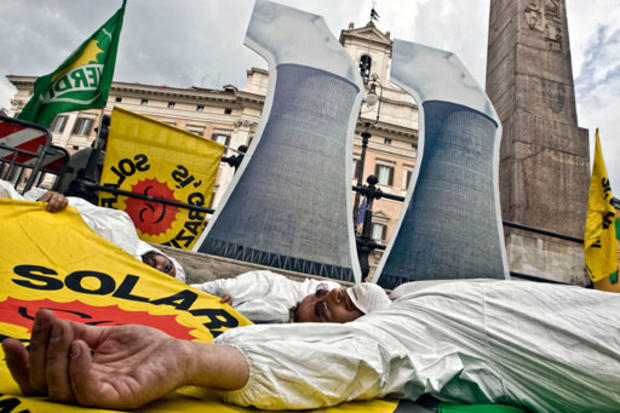
Italian Green Party activists lie on the ground as they stage an anti-nuclear protest in front of the Italian Lower Chamber palace in Rome, Monday, April 26, 2010 on the anniversary of the Chernobyl accident. The 1986 reactor explosion sent a cloud of radiation over much of Europe.
AP Photo/Dita Alangkara
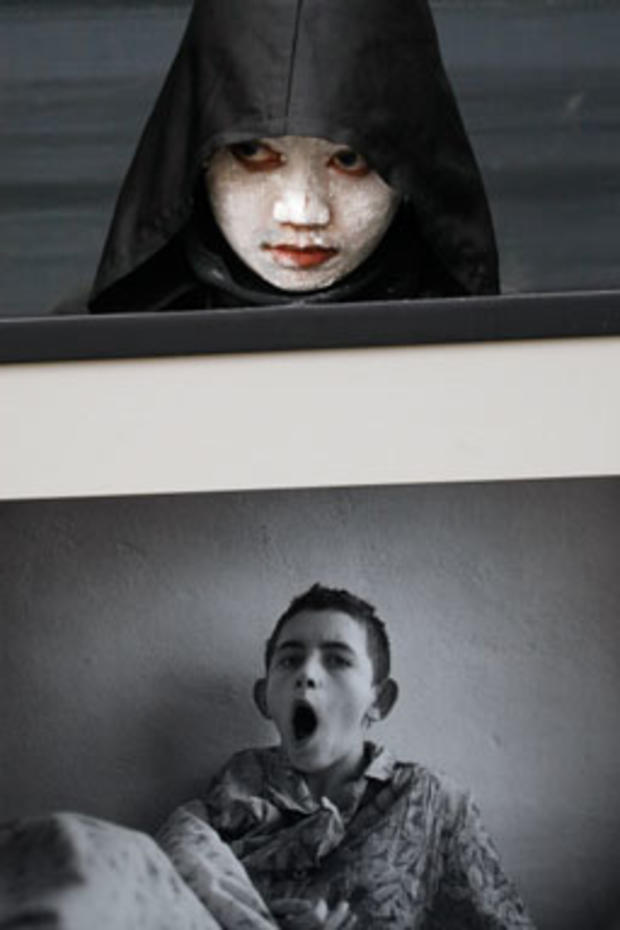
An Indonesian environmental activist holds a portrait of a victim of the Chernobyl nuclear disaster during an anti-nuclear protest marking its 24th anniversary outside of The Ministry of Energy and Mineral Resources in Jakarta, Indonesia, Monday, April 26, 2010.
AP Photo/Dita Alangkara
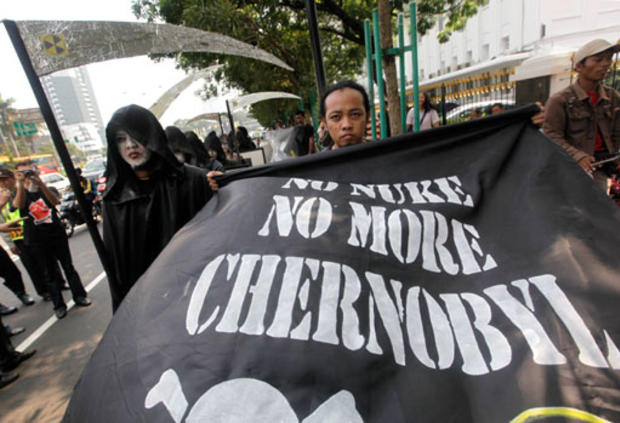
Indonesian environmental activists hold a banner during an anti-nuclear protest marking the 24th anniversary of the Chernobyl nuclear disaster outside The Ministry of Energy and Mineral Resources in Jakarta, Indonesia, Monday, April 26, 2010.
AP Photo/Sergei Grits
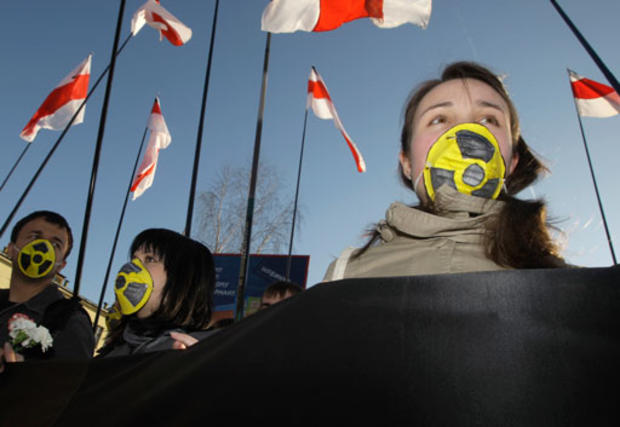
A young Belarusian protester takes part in a rally to commemorate the Chernobyl nuclear disaster in Minsk, Belarus, Monday, April 26, 2010.
In Minsk's heavily policed central square, about 2,000 demonstrators held aloft opposition flags bearing slogans such as "Dictatorship is like another Chernobyl," and "You cannot stop radiation with decrees."