istockphoto
Regular exercise is just as important in space as it is on Earth - maybe even more important.
In the absence of gravity, astronauts can become dangerously frail because muscles and bones don't have to work very hard.
To keep spacemen and women at peak form, NASA scientists have developed special exercises - and special high-tech workout gear - for use aboard the International Space Station.
Here's what a zero gravity workout looks like...
NASA
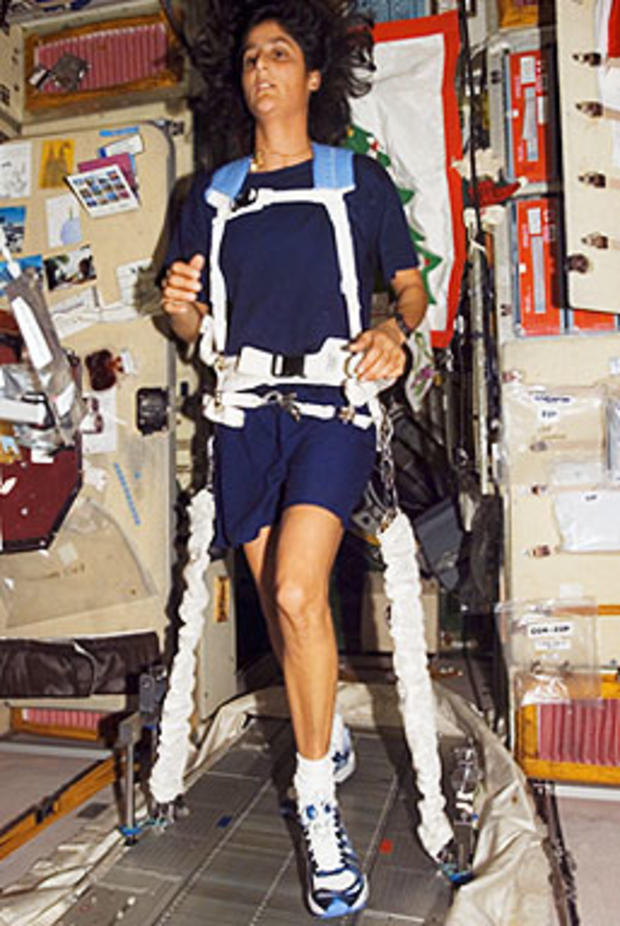
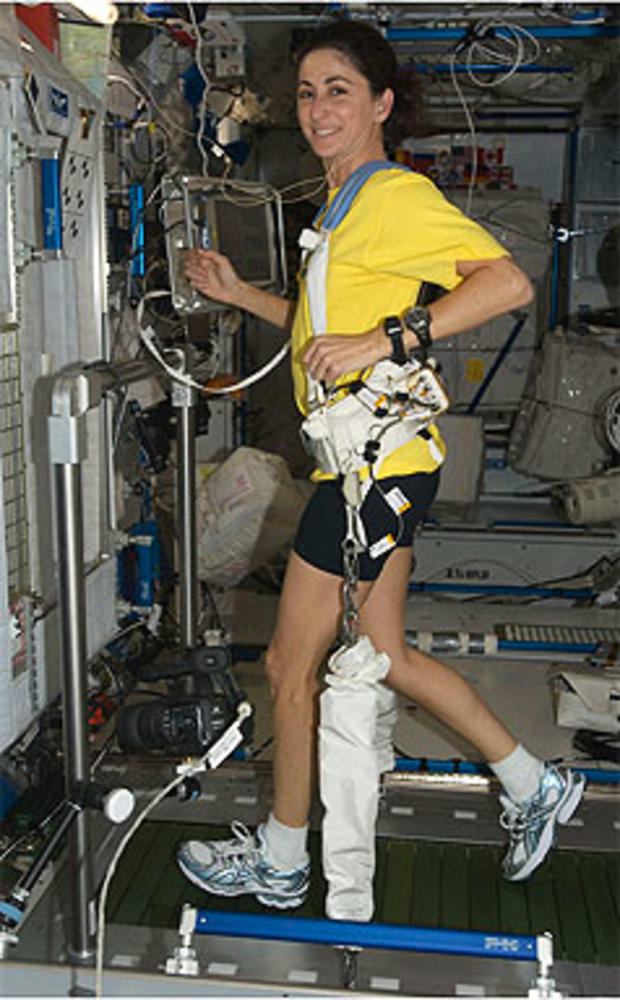
On the space station, there's no gravity to hold you down as you run - so NASA engineers have come up with a "bungee harness" that keeps an astronaut's running shoes firmly planted.
Here, Sunita L. Williams takes a turn on what NASA calls the TVIS, a.k.a. Treadmill Vibration Isolation System, in December, 2006.
NASA
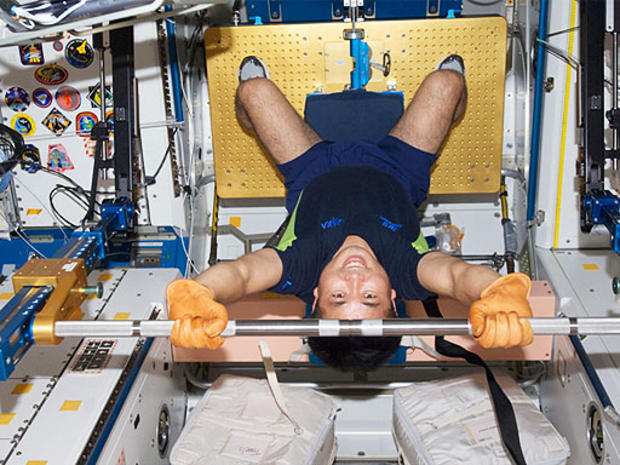
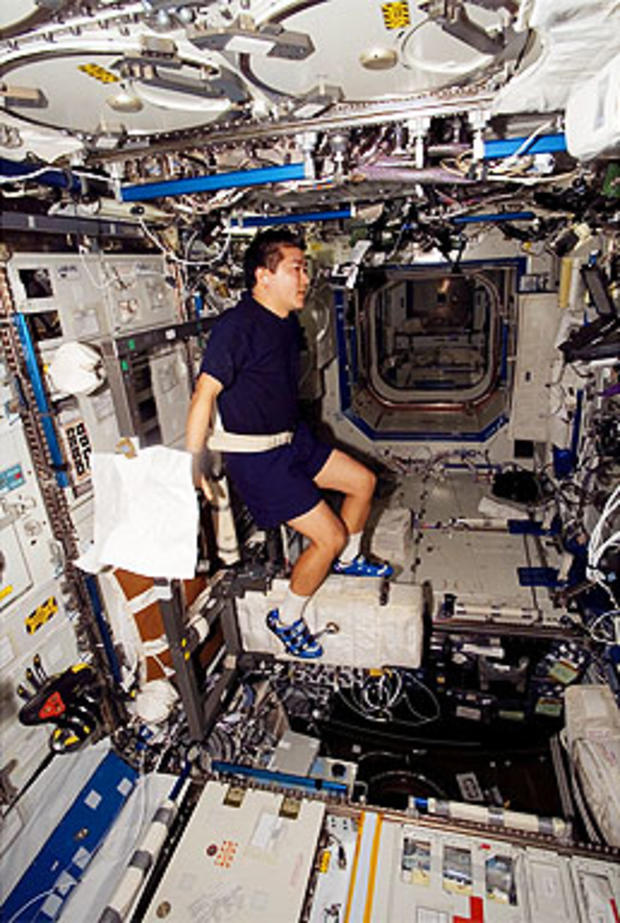
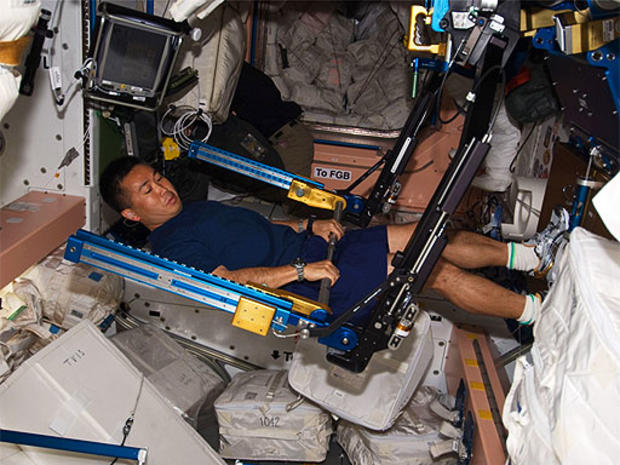
There's no up or down in space, but Koichi Wakata keeps his feet planted firmly on the "ground" while working out with the aRED apparatus in April, 2009. The astronauts do a range of resistive exercises, including curls, presses, and dead lifts.
NASA
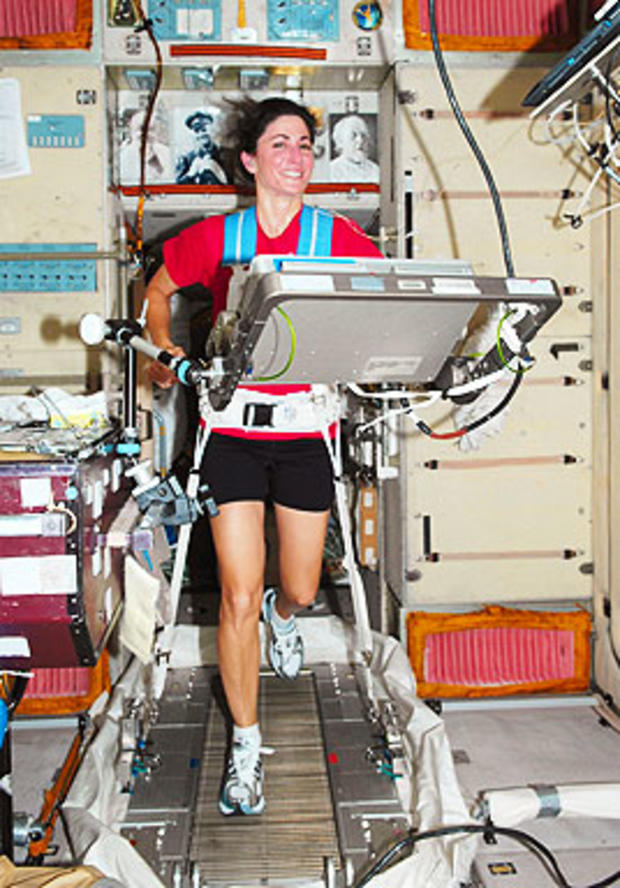
Nicole Stott, a flight engineer who flew on the space station in September, 2009, runs on the TVIS treadmill. In addition to keeping orbiting bodies in good cardiovascular shape, the runs help astronauts preserve bone mass.
Loss of bone is a big worry for astronauts, as bones can quickly weaken in the low-gravity environment.
NASA
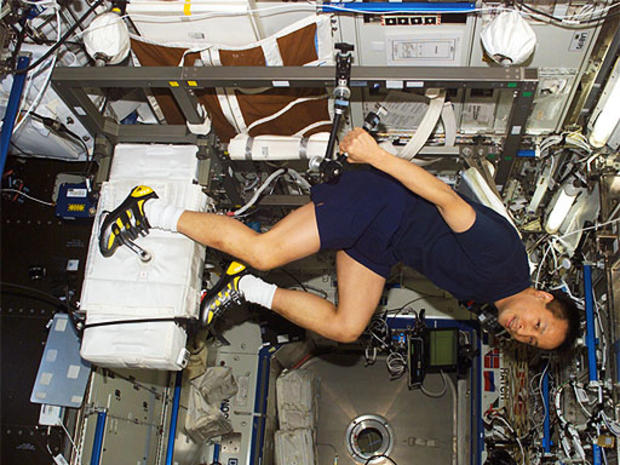
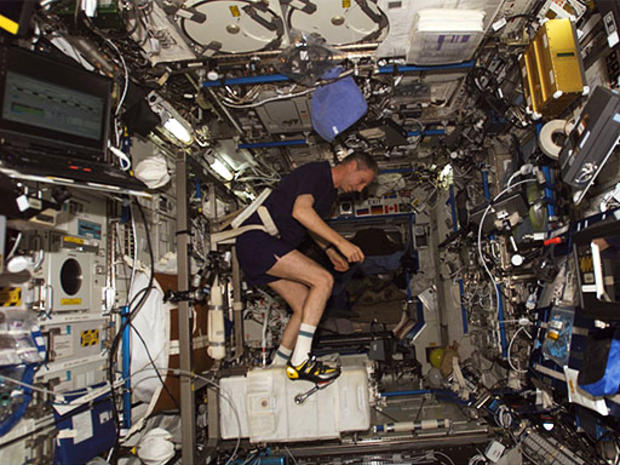
Running isn't the only exercise astronauts get on the space station. They also pedal a stationary bicycle. But what the earthbound call an exercise bike gets a special name on the space station: the Cycle Ergometer with Vibration Isolate System (CEVIS).
Here, Edward T. Lu, a science officer and flight engineer, gives CEVIS a spin in July, 2003.
NASA
Astronauts hop aboard their space treadmill up to six times each week, typically for 30 minutes at a time. The workouts are especially critical during the latter part of a flight, as the astronauts prepare to return to Earth and gravity - and don't want to be carried off in a heap.
Here, flight engineer Nicole Stott uses the treadmill in October, 2009.
NASA
Cycling in space helps keep astronauts fit, sure. But it also helps them prepare for space walks. Here Thomas Reiter, a flight engineer, pedals away on CEVIS in November, 2006.
NASA
There's no welcome mat for slackers aboard the International Space Station. Astronauts are required to spin for 30 minutes three or four times a week - and the bike is good for speeds up to 120 rpm.
Here, flight engineer Daniel Tani works out aboard the station in February, 2008.
NASA
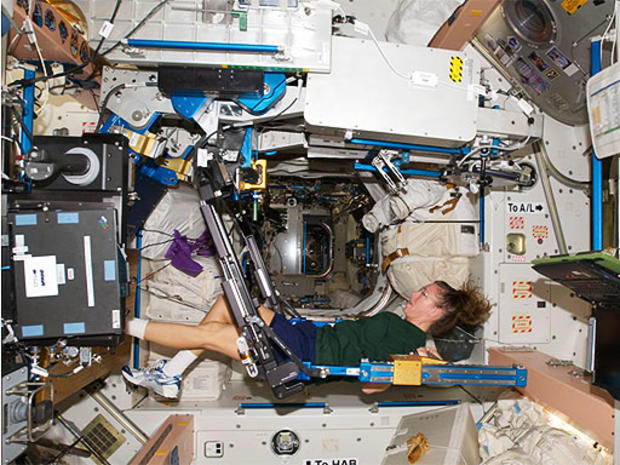
Conventional weights don't work in space - because, well, they don't weigh. So NASA created a special "resistive" exercise system that simulates terrestrial weight-lifting.
Here, flight engineer Sandra Magnus rocks the aRED, a.k.a. the advanced Resistive Exercise Device - in February 2009.
NASA
The aRED weight-lifting device helps keep astronauts' muscles strong in the zero-gravity environment. It can simulate weights up to 600 pounds, so there's little danger that astronauts will max out the equipment.
Here, Koichi Wakata, an astronaut with the Japanese Aerospace Exploration Agency, gets ready for a session in March, 2009.