Schalk van Zuydam/AP
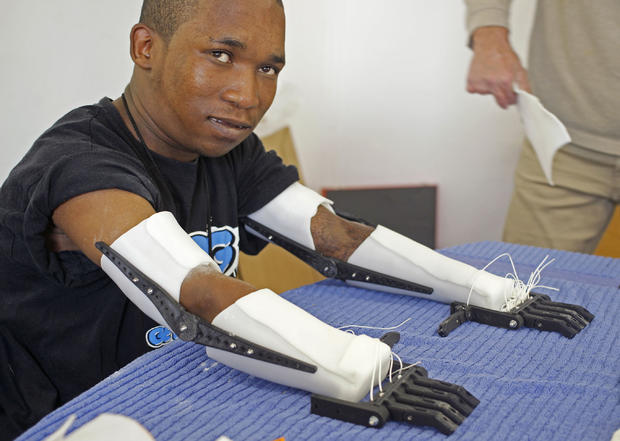
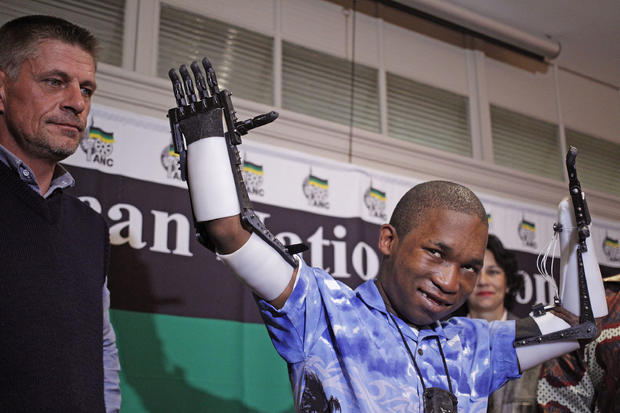
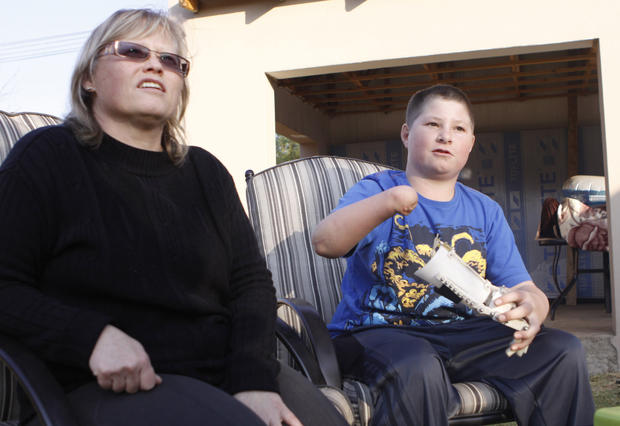
Flippie Engelbrecht, shows his Robohands after being fitted by carpenter Richard van As, unseen, in Cape Town, South Africa, Aug. 16, 2013.
Van As, a South African carpenter, developed the plastic hands after losing four fingers to a circular saw two years ago.
Denis Farrell/AP
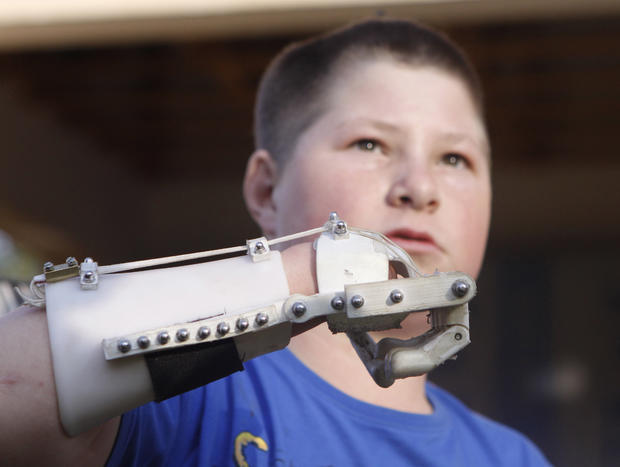
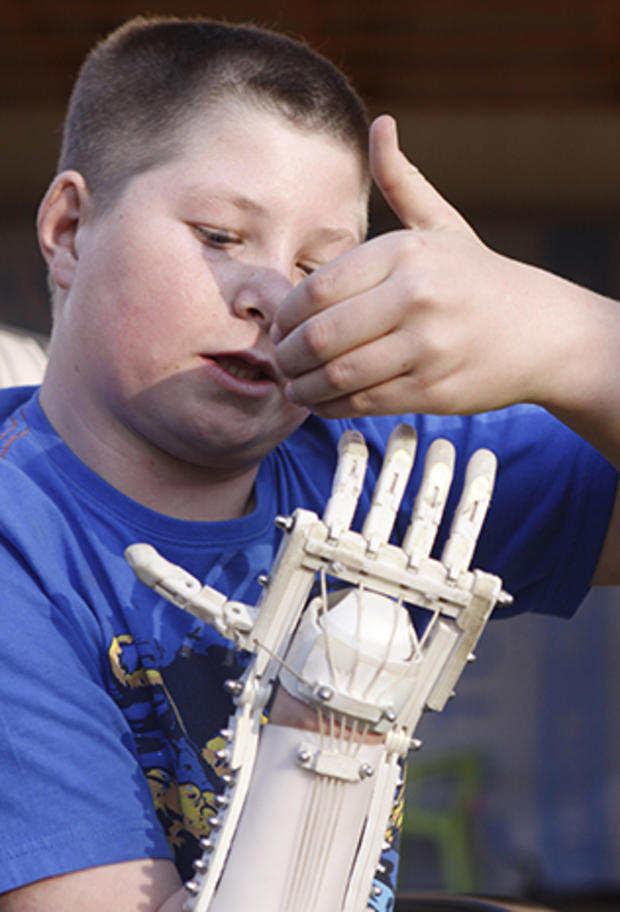
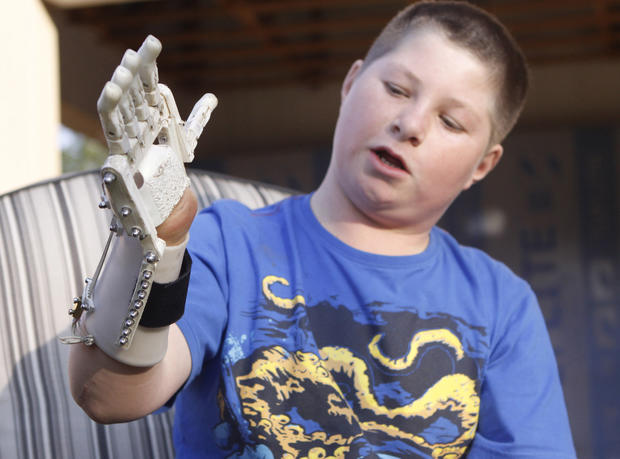
Dylan Laas shows how his Robohand works during an interview with the Associated Press in Johannesburg, Aug. 23, 2013.
Laas who was born with amniotic band syndrome, got his hand from carpenter, Richard van As, who lost four fingers to a circular saw two years ago and started working on building the Robohand after seeing a video posted online of a mechanical hand made for a theater costume.
Since then van As has fitted Robohands on about 170 people, from toddlers to adults.
Denis Farrell/AP
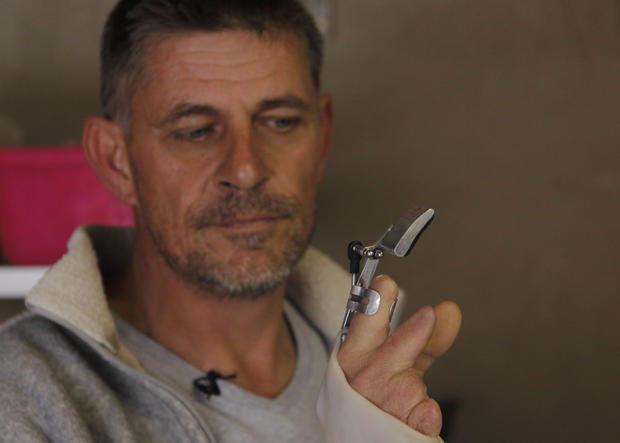
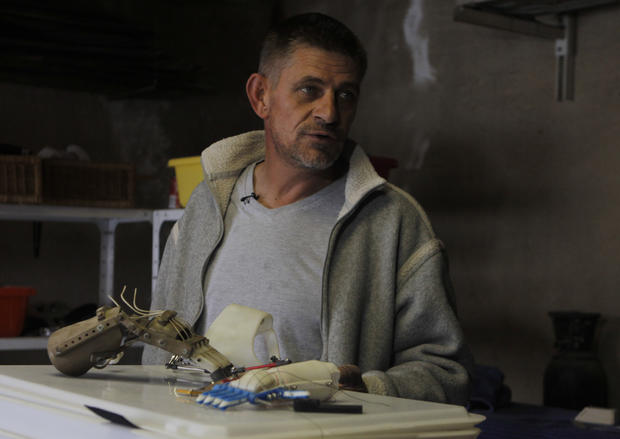
Robohand inventor Richard van As, shows a functioning robotic finger that he built for himself after losing four fingers to a circular saw two years ago, Aug. 20, 2013.
Denis Farrell/AP
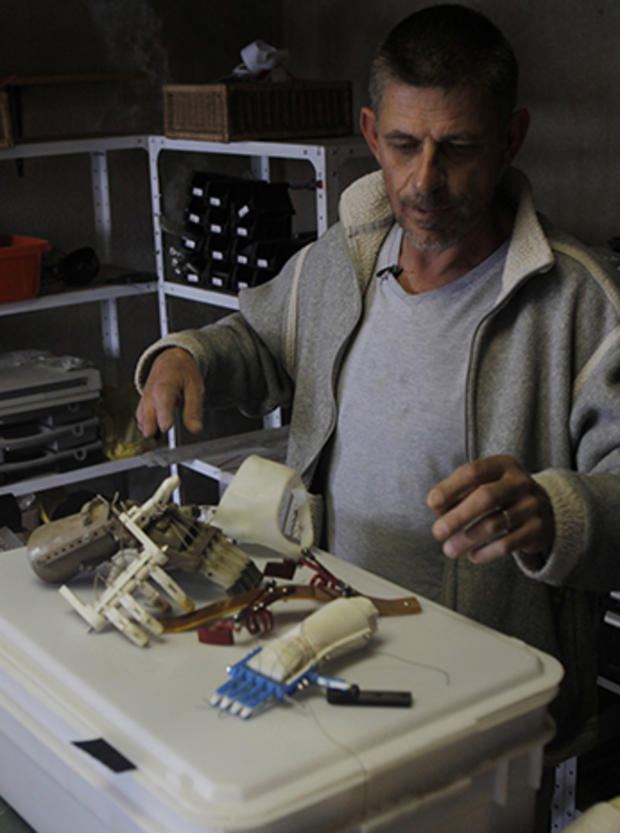
Richard van As, shows hands that he has made for people in his workshop at his home, Aug. 20, 2013.
Van As decided to build his own hand after seeing a video posted online of a mechanical hand made for a costume in a theater production by designer Ivan Owen in Seattle.
Van As and Owen invented the Robohand that uses cables, 3D printing, screws and thermoplastic.
Denis Farrell/AP
Dylan Laas shows how his Robohand works on Aug. 23, 2013.
Denis Farrell/AP
Dylan Laas shows more motions with his Robohand -- the device uses the rotation of a joint to enable five plastic digits to grasp.
Schalk van Zuydam/AP
Carpenter Richard van As, left, stands with Flippie Engelbrecht, right, after fitting Engelbrecht with Robohands, in Cape Town, South Africa, Aug. 16, 2013.
Denis Farrell/AP
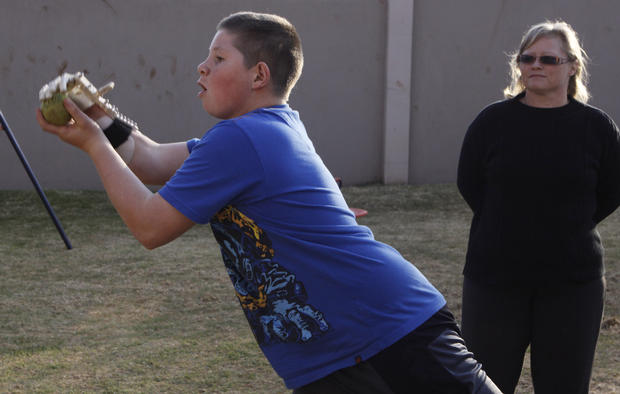
Dylan Laas shows how he is able to catch a ball with his Robohand during an interview with the Associated Press in Johannesburg, Aug. 23, 2013.
Denis Farrell/AP
Dylan Laas, right, shows how his Robohand works during an interview with the Associated Press in Johannesburg, Aug. 23, 2013. At $500, a Robohand is significantly cheaper than a conventional below-the-elbow prosthesis which can cost between $10,000 and $15,000.
Denis Farrell/AP
Robohand inventor Richard van As, shows hands that he has made for people in his workshop at his home in Johannesburg. Aug. 20, 2013.