AP
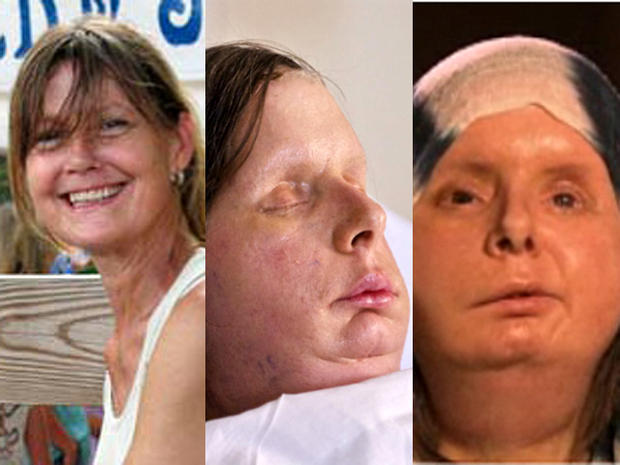
A whole lot happened in the world of health in 2011. Some of the most provocative stories of the past year looked at amazing new medical procedures - like the full face transplant of Dallas Wiens (pictured) - or new research that challenged conventional medical advice. Other stories put the spotlight on rare diseases or avoidable health ailments, letting Americans know how to reduce their risk. Some stories were just plain weird - and raised eyebrows while also spreading awareness.
Keep clicking, as CBS News invites you to take a look back at some of the top health stories of 2011.
AP/KCBS TV
What caused KCBS 2 Los Angeles reporter Serene Branson to trip up her words during a Grammy Awards broadcast in February? Branson started her report saying, "A very heavy burtation tonight" - until her speech was unrecognizable, shocking viewers around the country and leading doctors to speculate that she suffered a stroke.
Doctors eventually said a migraine, which can mimic symptoms of a stroke including numbness and speech difficulty, likely caused the episode. Branson continues to report for KCBS.
Getty Images
Evidence has mounted that repeated head blows pro athletes suffer may cause chronic traumatic encephalopathy (CTE), a degenerative brain disease marked by depression, dementia, and other Alzheimer's-like symptoms.
The link was spotlighted in February, when 50-year-old ex-Chicago Bear safety Dave Duerson (pictured) committed suicide, leaving a note that read "Please, see that my brain is given to the NFL's brain bank." In May, researchers at Boston University's Center for Traumatic Encephalopathy found "indisputable evidence" of CTE in Duerson's brain.
Pro-hockey players Bob Probert, 45, and Derek Boogaard, 28, also showed evidence of the disease following their 2011 deaths.
FriendsofCharlaNash.com / Brigham & Women's Hospital / TODAY
In March, surgeons at Brigham and Women's Hospital in Boston performed the first full face transplant in the U.S. on Dallas Wiens, a 26-year-old Texas man who accidentally struck a power line when painting a church. Less than a month later, surgeons at BWH performed a full face transplant on 30-year-old Mitch Hunter of Indiana, who was disfigured after an auto accident. Then Charla Nash (pictured), who made headlines when her neighbor's chimpanzee mauled her in 2009, underwent the procedure at the hospital in May. All three are well on their way to recovery.
"I've had people tell me I'm beautiful," Nash (pictured) said. "And they were not telling me I was beautiful before."
AP
Is circumcision a valuable tradition with important health benefits or a way to inflict suffering on little boys? San Francisco voters were set to weigh in on the issue after an anti-circumcision group obtained enough signatures in May to get a proposed ban on the November ballot. The law would have prohibited circumcision in males under 18, punishable by a $1,000 fine or a year in jail.
In July, a judge struck down the controversial measure, saying while "there is legitimate debate on the benefits and harms of circumcision," the proposed law would violate state and constitutional freedoms.
FDA
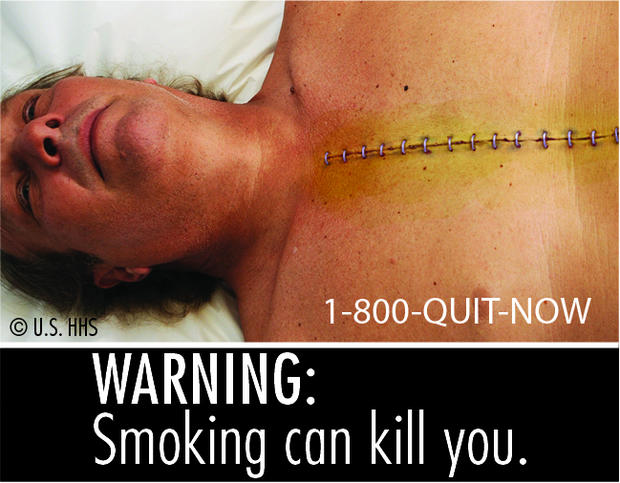
In June, the FDA unveiled nine graphic labels the agency would require cigarette manufacturers to place on half of the front and back of each pack beginning in Fall 2012. Labels included phrases like "Smoking can kill you" and "Cigarettes cause cancer" and images of a corpse of a smoker (pictured), diseased lungs, and a mother holding her baby surrounded in smoke.
Big tobacco sued to block the move, and in November a judge sided with cigarette manufacturers, saying the labels went beyond free speech and veered into advocacy. The case is currently tied up in court.
iStockphoto
In May the International Agency for Research on Cancer released a report which gave cellphones a "2B" classification - meaning they are possibly carcinogenic. The group gave the same rating for the pesticide DDT and car engine exhaust.
Six months later in October, a British Medical Journal study of 350,000 people - the largest ever conducted on the cellphone and cancer link - found that there was no difference in cancer rates between people who had used cellphones for more than 10 years and people who hadn't.
istockphoto
In June, the Environmental Working Group studied 53 types of produce to find out how much pesticide residue was on common fruits and veggies. The group found apples were the most contaminated, with 92 percent of samples testing positive for at least two pesticides. Celery, strawberries, peaches, spinach and nectarines rounded out the top half of the groups' "Dirty Dozen" list. The produce items least covered in pesticides? Fruits and veggies encased in a peel such as onions, sweet corn, and pineapples.
istockphoto
After almost two decades, the government's familiar pyramid was replaced in June by a food "plate" that experts hoped would clarify what and how much to eat. The new plate showed Americans to make half their plate fruits and vegetables, eat lots of whole grains, and avoid oversized portions.
The switch cost more than $2 million for design and promotion.
istockphoto
Should morbidly obese children be taken from their families and placed into foster care? That controversial question was raised by obesity specialist Dr. David Ludwig in a July commentary published in JAMA. Ludwig said the point isn't to blame parents, but act in the best interest of the child who may develop type 2 diabetes, breathing difficulties, liver problems, or die by age 30 if no action is taken, he said.
The controversy jumped out of the journal's pages into real life, when a 200-pound third grader from Ohio was taken from his family in November. "They are trying to make it seem like I am unfit, like I don't love my child," the boy's mother said. "Of course I want him to lose weight. It is very hard, but I am trying." The boy is currently in his uncle's custody.
WFTV
In August, 9-year-old Christian Alexander Strickland from Henrico County, Va. died from amoebic meningoencephalitis, a disease caused by the Naegleria fowleri "brain-eating amoeba" that's found in warm bodies of freshwater. Christian contracted the disease after attending a fishing day camp. "He went from playing video games to being brain dead," his mom Amber said. Christian was the first to die from the infection since 1965.
Within two weeks, 16-year-old Fla. native Courtney Nash (pictured) died from the disease after swimming in a lake. A third unidentified person died in Kansas at the end of August after swimming in a lake. The rare deaths prompted warnings that swimmers should hold their nose or use plugs when swimming outside of pools. 2011: Year in Review
Institute of Medicine clears vaccines of autism risk
istockphoto
Do vaccines cause autism? The question has worried parents for years, since Dr. Andrew Wakefield's since-debunked 1998 study suggested a link. In August, the Institute of Medicine announced in the first comprehensive safety review of vaccines in more than 17 years that there was no evidence of a link between vaccines and autism. The report also showed vaccines weren't perfect - in rare cases they caused serious side effects including infections, meningitis, and seizures.
The authors were hopeful that "it will allay some people's concerns." Whether or not parents were swayed by the report, remains to be seen.
World Pediatric Project
Several sets of conjoined twins underwent separation surgery in 2011. In August, Memphis doctors separated Joshua and Jacob Spates, conjoined twins joined at the back and lower spine, in a 13-hour procedure. A month later Rital and Ritag Gaboura, 11-month-olds from Sudan, were separated in a risky, four-stage operation at a London hospital. In November, 2-year-old twins Angelica and Angelina Sabuco were separated at a California hospital during a nine-hour operation involving 40 hospital staffers. A week later 19-month-old conjoined twins Maria and Teresa Tapia (pictured) were separated in Virginia after a 20-hour surgery involving 45 specialists - and fashion students who made outfits for the girls. All the children were expected to recover.
To close out the year, 10-month-old twins Maria Paz and Maria Jose Paredes Navarrete were separated during a 20-hour surgery in Chile in December. Sadly, Maria Jose died from organ failure a week after surgery.
istockphoto
America's obesity problem grew in 2011, but a shocking report in the Aug. 26 issue of the Lancet found that by 2030, more than half of Americans will be obese. The study suggested that uptick will lead to almost 8 million new cases of diabetes, 7 million new cases of coronary heart disease and stroke, and more than 500,000 new cancer cases.
But the study's authors said if Americans collectively reduced their body mass index (BMI) by as little as 1 percent, up to 2 million heart attacks and strokes could be prevented.
AP Photo/Jeff Chiu
Republican presidential candidate Michele Bachmann caused an uproar following her Sept. 12 debate when she went on television and relayed a story from a mother who told Bachmann that her daughter became mentally retarded after receiving the HPV vaccine. "It can have very dangerous side effects," she said on NBC's Today. "This is the very real concern, and people have to draw their own conclusions."
Medical organizations such as the American Academy of Pediatrics immediately slammed the congresswoman over her "false statements," and bioethicist Dr. Arthur Caplan bet Bachmann $10,000 that she couldn't produce solid evidence.
AP
In September the CDC announced an outbreak from Listeria monocytogenes bacteria found in Jensen Farms' cantaloupes (pictured) grown in the Rocky Ford region of Colorado. Nearly 150 people across 28 states were sickened with listeriosis, an infection that primarily strikes older adults, pregnant women, or people with weakened immune systems. Thirty people died and one woman who was pregnant had a miscarriage. The outbreak was officially declared over on December 9th.
American Society of Plastic Surgeons
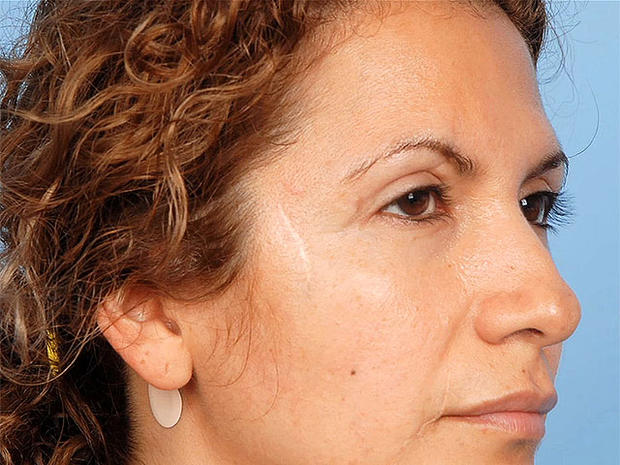
In September, the American Society of Plastic Surgeons warned prospective patients to do their homework and find a board-certified surgeon, because most doctors can legally perform plastic surgery without training. To illustrate its point, the society told the story of 40-year-old Dinora Rodriguez, a woman referred by a friend to a surgeon for breast implants. When Rodriguez woke up, she was shocked to find her implants had fused together and that the doctor had taken it upon himself to operate on a scar near her eye without consent, also botching that procedure (pictured). The society said the surgeon made basic mistakes any board-certified surgeon would have known.
Steve Jobs' death spotlights rare pancreatic cancer
CNET
Apple's visionary founder and CEO Steve Jobs died on October 5, 2011. The 56-year-old had been battling a rare, slow-growing type of pancreatic cancer called an islet cell neuroendocrine tumor for more than seven years. Jobs underwent a liver transplant in 2009 while on medical leave from Apple, fueling speculation his cancer had spread. Jobs appeared noticeably thinner following the procedure. He stepped down as Apple's CEO in August.
istockphoto
In October, California became the first state to pass a bill banning indoor tanning for all teens. The bill goes into effect on Jan. 1, 2012. Thirty other states already have age restrictions and Texas bans children under 16, but California's outright ban had some critics crying foul that the state's health police had run amok.
Wikimedia Commons / Getty Images
In September, talk show host Dr. Mehmet Oz created a stir when he conducted a study that found apple juice contains potentially dangerous levels of inorganic arsenic, a known carcinogen. The FDA immediately released a statement discrediting the report and some doctors called him a fear monger.
Then in November, Consumer Reports conducted its own apple juice tests, and found 10 percent of juices contained high arsenic levels. That led the FDA to announce it was considering tighter apple juice restrictions while it conducted its own research. Was Oz right all along?Regardless of chemical concerns, many doctors said kids shouldn't drink much apple juice anyway - because it's loaded in sugar and calories.
istockphoto
Is taking a daily multivitamin an easy way to stay healthy? In 2011, two large studies flipped that conventional wisdom on its head. In March, one study found no change in heart disease, cancer, or deaths among daily multivitamin takers compared with people who don't take vitamins. Another study published in October suggested that multivitamins and other supplements, particularly iron, might actually increase the odds a woman dies early.
istockphoto
Many men over 50 have undergone prostate-specific antigen (PSA) tests that check the blood for signs of prostate cancer. But in October, the U.S. Preventive Services Task Force, a non-federal panel of medical experts, said most healthy men should skip the test - because it could do more harm than good.
The task force said high PSA levels only sometimes signal prostate cancer, so men might undergo biopsies and surgeries that could cause impotence, incontinence, infections and even death while their tumors may be too slow-growing to ever cause a problem.
In 2010, an FDA panel said it wasn't convinced that the cancer drug Avastin was effective at treating breast cancer, much to the dismay of some patients who claimed it extended their lives. By November 2011, Avastin's approval for treating breast cancer was revoked, meaning some women taking the drug may have to pay $100,000 for a year's supply if insurers stopped coverage. Some Avastin-takers called the ruling a "death sentence."
"I did not come to this decision lightly," FDA commissioner Dr. Margaret Hamburg said at the time. "Sometimes despite the hopes of investigators, patients, industry and even the FDA itself, the results of rigorous testing can be disappointing."
AP Graphics
In November, the Campaign for Safe Cosmetics sent Johnson & Johnson a letter signed by 25 environmental and medical groups asking to remove two chemicals from its popular "no more tears" baby shampoos that released the carcinogen formaldehyde. J &J responded by saying federal regulators had approved the chemicals, but it would gradually phase them out of baby products anyway.
AP
The morning-after pill Plan B One-Step was set to be sold over-the-counter in December after the FDA decided to lift its age restriction. Then at the eleventh hour, Health and Human Services Secretary Kathleen Sebelius pulled the plug on Plan B's ready availability, saying she wasn't convinced 11-year-old girls could understand how to use this product without parental help. Medical experts slammed the decision as "stunning," and "not based on science." Conservative groups applauded the move, and President Obama backed it as "common sense."