Trump threatens tariffs on countries that sell oil to Cuba
President Trump on Thursday signed an executive order that would impose a tariff on any goods from countries that sell or provide oil to Cuba, a move that could further cripple an island plagued by a deepening energy crisis.
The order would primarily put pressure on Mexico, a government that has acted as an oil lifeline for Cuba and has constantly voiced solidarity for the U.S. adversary, even as President Claudia Sheinbaum has sought to build a strong relationship with Mr. Trump.
This week has been marked by speculation that Mexico would slash oil shipments to Cuba under mounting pressure by Mr. Trump to distance itself from the Cuban government.
In its deepening energy and economic crisis — fueled in part by strict economic sanctions by the U.S. — Cuba has relied heavily on foreign assistance and oil shipments from allies like Mexico, Russia and Venezuela, before a U.S. military operation ousted former Venezuelan President Nicolás Maduro.
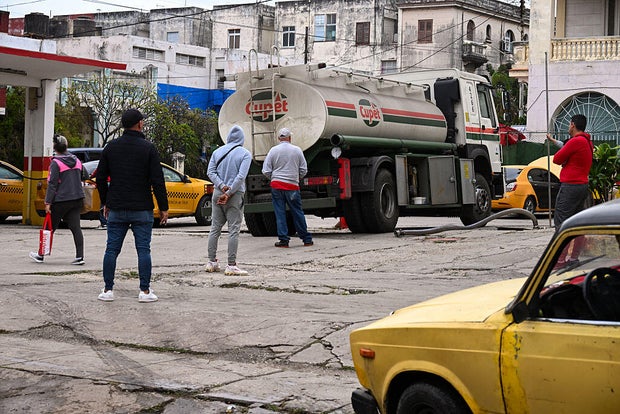
Since the Venezuela operation, Mr. Trump has said that no more Venezuelan oil will go to Cuba and that the Cuban government is "ready to fall."
On Jan. 11, Mr. Trump wrote on social media that "there will be no more oil or money going to Cuba — zero."
At the time, a U.S. official told CBS News the U.S. does not seek to trigger a collapse of the Cuban government, but rather to negotiate with Havana to transition away from its authoritarian communist system.
In its most recent report, Mexico's state oil company, Pemex, said it shipped nearly 20,000 barrels of oil per day to Cuba from January through Sept. 30, 2025. That month, U.S. Secretary of State Marco Rubio visited Mexico City. Afterward, Jorge Piñon, an expert at the University of Texas Energy Institute who tracks shipments using satellite technology, said the figure had fallen to about 7,000 barrels.
Sheinbaum has been incredibly vague about where her country stood, and this week has given roundabout and ambiguous answers to inquiries about the shipments, and dodged reporters' questions in her morning press briefings.
On Tuesday, Sheinbaum said that Pemex had at least temporarily paused some oil shipments to Cuba, but struck an ambiguous tone, saying the pause was part of general fluctuations in oil supplies and that it was a "sovereign decision" not made under pressure from the U.S. Sheinbaum has said that Mexico would continue to show solidarity with Havana, but didn't clarify what kind of support Mexico would offer.
On Wednesday, the Latin American leader claimed she never said that Mexico has completely "suspended" shipments and that "humanitarian aid" to Cuba would continue, and that decisions about shipments to Cuba were determined by Pemex contracts.
"So the contract determines when shipments are sent and when they are not sent," Sheinbaum said.
The lack of clarity from the leader has underscored the extreme pressure Mexico and other Latin American nations are under as Mr. Trump has grown more confrontational following the Venezuelan operation.
It remains unclear what the Thursday order by Mr. Trump will mean for Cuba, which has been roiled by crisis for years and a U.S. embargo. Anxieties were already simmering on the Caribbean island as many drivers sat in long lines this week for gasoline, many unsure of what would come next.