Stinky feet may fight malaria, scientists discover
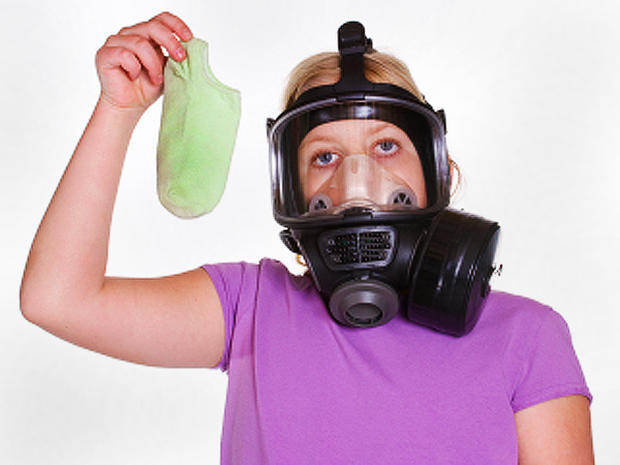
(CBS/AP) Throw your stinky socks in the washer? Not so fast.
Scientists think they've found a use for smelly feet - fighting deadly malaria. And now funds are pouring in to put their work into action.
How did foot odor become a prime candidate for preventing a potentially lethal infectious disease?
Dutch scientist Dr. Bart Knols first discovered that mosquitoes were attracted to smelly feet when he was standing naked in a dark room examining his bug bites, said Dr. Fredros Okumu, head of the research project at Tanzania's Ifakara Health Institute.
Cut to 15 years later - researchers still didn't know how to put this knowledge to use. Until Okumu replicated the stinky smell using eight chemicals and placed it in a mosquito trap where they can be poisoned. The traps attracted four times as many mosquitoes as a human volunteer can, said Okumu, and the poison killed up to 95 percent of the mosquitoes.
Although the global infection rate of malaria, a mosquito-borne disease, is going down, there
are still more than 220 million new cases of malaria each year. The U.N.
says almost 800,000 of those people die - mostly African children.
Bed nets and indoor spraying have already substantially reduced the number of fatal malaria cases, but so far scientists have not come up with a good way to help combat mosquitoes outdoors.
"This is the first time that we are focusing on controlling mosquitoes outside of homes," said Okumu, a Kenyan who has been ill with the disease himself several times. "The global goal of eradication of malaria will not be possible without new technologies."
Now Okumu, who received an initial grant of $100,000 to help start his trap research two years ago, has been awarded an additional $775,000 by the Bill and Melinda Gates Foundation and Grand Challenges Canada to conduct more research on the traps and whether he can make them cheap.
Okumu said more research was needed to find the right place to put the traps - too close would attract mosquitoes near the humans and expose them to greater risk of bites, but too far and the devices are rendered useless.
"It's African innovation for an African problem being developed in Africa," said Dr. Peter A. Singer, the head of Grand Challenges Canada. "It's bold, it's innovative and it has the potential for big impact...who would have thought that a lifesaving technology was lurking in your laundry basket?"
But not everyone is convinced the traps will put an end to the deadly disease.
"There is no magic bullet," said Richard Tren, the director of health advocacy group Africa Fighting Malaria. "We are going to need a lot of different tools to fight malaria. Certainly we need to solve the problems of insecticide resistance and preserve the effectiveness of malaria drugs that we have at the moment."