Smallpox virus stockpiles won't be destroyed - yet
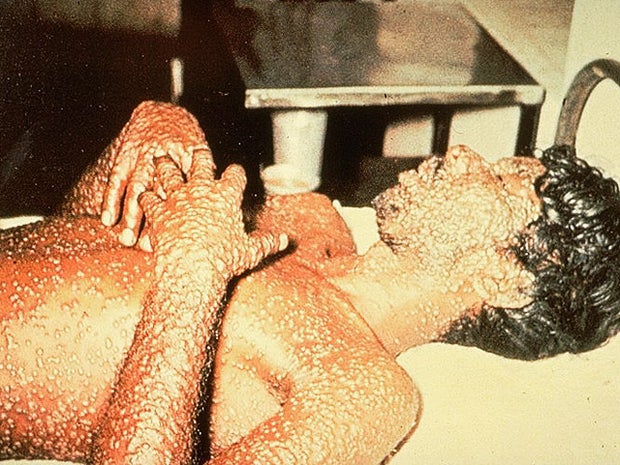
(CBS/AP) The deadly smallpox virus has gotten a new lease on life.
Health ministers meeting in Geneva agreed on Tuesday to delay setting a deadline to destroy the last remaining stockpiles of the smallpox (variola) virus. The ministers - representing the 193-nation World Health Assembly - voted to review the decision in 2014.
The U.S. had proposed a five-year extension to destroying the U.S. and Russian stockpiles, saying more research was needed and the stockpiles could help prevent one of the world's deadliest pathogens from being used as a biological weapon. But many ministers said they saw little reason to keep the stockpiles, and objected to the delay.
The assembly declared smallpox officially eradicated in 1980, and health experts have been discussing whether to destroy the virus since 1986 - and no wonder. For centuries smallpox - an illness that causes rashes, high fevers, and elevated pustules on the skin - killed about one-third of the people it struck. The last known case in the U.S. occurred in 1949, and the last known in the world was in Somalia in 1977.
In addition to samples of the smallpox virus being held by the World Health Organization, 451 samples of smallpox virus are being held by the CDC in Atlanta, and 120 are stored in a remote Siberian town in Russia.
The Centers for Disease Control and Prevention has more on smallpox.