Senate GOP kills war powers effort to limit Trump on Venezuela, with Vance breaking tie
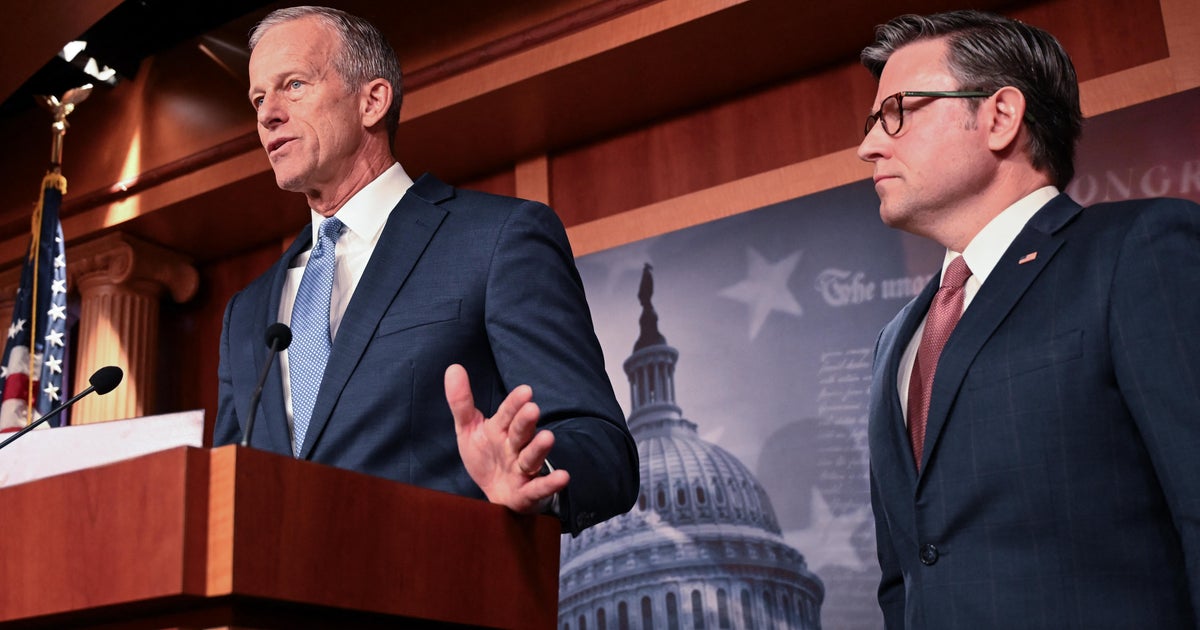
Washington — Senate Republicans killed a war powers resolution to limit President Trump's ability to further strike Venezuela after the White House put pressure on a handful of GOP senators who supported it.
Republican Sens. Josh Hawley of Missouri and Todd Young of Indiana flipped their support Wednesday after initially voting to advance it. Vice President JD Vance had to step in to break the 50-50 tie.
Republicans used a procedural maneuver to block the measure, arguing that the resolution should no longer be "privileged" — which gives it priority on the floor — because the U.S. is not currently engaged in "hostilities" with Venezuela.
Senate Majority Leader John Thune, a South Dakota Republican, previewed the argument in floor remarks Wednesday morning.
"Today, we expect a vote on a resolution to direct the removal of U.S. forces from hostilities in or against Venezuela, even though the U.S. is not currently engaged in hostilities in or against Venezuela," Thune said. "We have no troops on the ground in Venezuela. We're not currently conducting military operations there."
Senators advanced the resolution, introduced by Democratic Sen. Tim Kaine of Virginia, last week after the U.S. captured Venezuelan leader Nicolás Maduro and his wife and Mr. Trump asserted the U.S. is now in charge of the country.
Five Republicans joined all Democrats in support of the measure, pushing it forward after two previous failed attempts in the upper chamber to advance similar resolutions to rein in Mr. Trump's military action in the region.
The GOP senators who voted with Democrats to advance the measure were Hawley, Young, Lisa Murkowski of Alaska, Susan Collins of Maine and Rand Paul of Kentucky.
Murkowski, Collins and Paul voted against the GOP effort to kill the resolution Wednesday.
Kaine said Wednesday night he was disappointed in the outcome but saw it "as a growing set of cracks" in the GOP's willingness to stick with Mr. Trump on the issue.
Last week, Mr. Trump quickly lashed out at the Republicans, saying they "should never be elected to office again." He again criticized the senators on Tuesday during a speech at the Detroit Economic Club, calling them "real losers."
Some of the senators said they received calls from Mr. Trump and Secretary of State Marco Rubio ahead of Wednesday's action.
Hawley said Rubio had addressed his concerns about U.S. troops in Venezuela.
He said Rubio confirmed the U.S. "has no ground troops currently in Venezuela" and that if the administration plans to put troops in Venezuela, "they would abide by the War Powers Act and they would come to Congress for congressional authorization."
"The secretary told me directly that the administration will not put ground troops in Venezuela," Hawley said.
Young pushed back on criticism that he caved to pressure from the president, telling reporters that senators had "secured some valuable reassurances and deliverables" from the White House on Venezuela.
"I think we played our hand well," Young said, contending that the resolution was heading for a presidential veto if it eventually did make it through both chambers. Both the House and Senate would have needed a two-thirds majority to overcome a veto, which was unlikely.
The switch-up appeared to come as a surprise to Kaine, who said Wednesday morning that he expected all five Republicans to stick with Democrats.
Before Maduro's ouster, lawmakers said they had received insufficient answers from the Trump administration about whether its end goals in Venezuela included regime change, as the U.S. ramped up strikes against alleged drug-smuggling boats, imposed an oil blockade and Mr. Trump threatened land strikes.
Republicans who voted last week to advance the resolution cited Mr. Trump's comments about running Venezuela and the potential for U.S. forces to be deployed there as reasons for the measure gaining their support.
A day after the initial Senate vote, Mr. Trump announced he had called off a "second wave" of attacks against Venezuela, claiming the two countries "are working well together." But, he said, U.S. naval forces in the region would "stay in place for safety and security purposes."
Kaine attributed Mr. Trump's decision to cancel more strikes to the war powers vote. CBS News did not receive a response from the White House regarding Kaine's assertion.