Senate Republicans push for progress on funding package this week, with another shutdown possible in new year
Washington — Senate Republicans are aiming to move forward on a new package of funding bills before leaving town for the holidays, with just weeks to go before the next deadline to avoid another government shutdown.
Congress approved an initial tranche of funding legislation in November as the longest shutdown in history came to an end. But progress has been stalled on additional measures since then. When lawmakers return in the new year, they will have just four weeks to fund the government, or risk a partial shutdown in February.
After approving three of the 12 annual appropriations bills in November, Senate GOP leaders and appropriators were eager to get moving on the next batch of bills. The new package, dubbed a "minibus," is made up of five bills. It would include funding through September for the Department of Defense; Labor, Health and Human Services and Education; Transportation, Housing and Urban Development; Commerce, Justice and Science; and Interior and Environment. But issues remain.
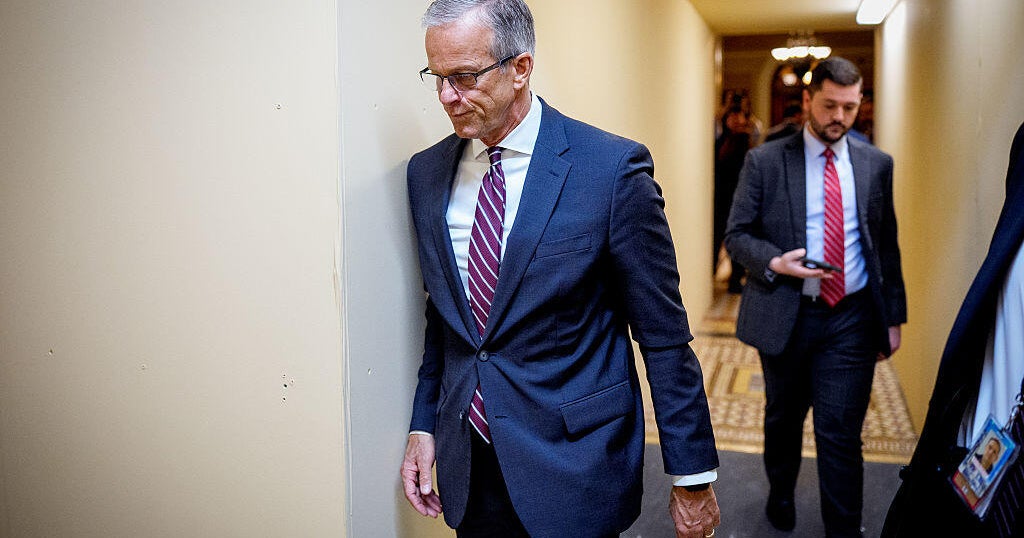
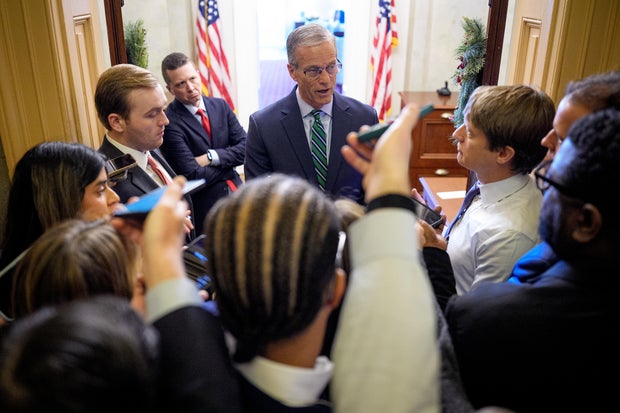
"We're still working it," Senate Majority Leader John Thune told reporters Tuesday morning. "Not there yet."
The minibus package, a smaller version of massive "omnibus" government funding legislation, comes as Republicans have sought to return to passing individual spending bills through regular order, rather than through a large end-of-year package. This year, leaders in Congress also opted not to impose a pre-holiday deadline to fund the government, which often raises pressure on lawmakers to agree to a deal before leaving town for the winter recess.
Still, Senate GOP leaders have sought to make progress on the funding package before the chamber breaks later this week.
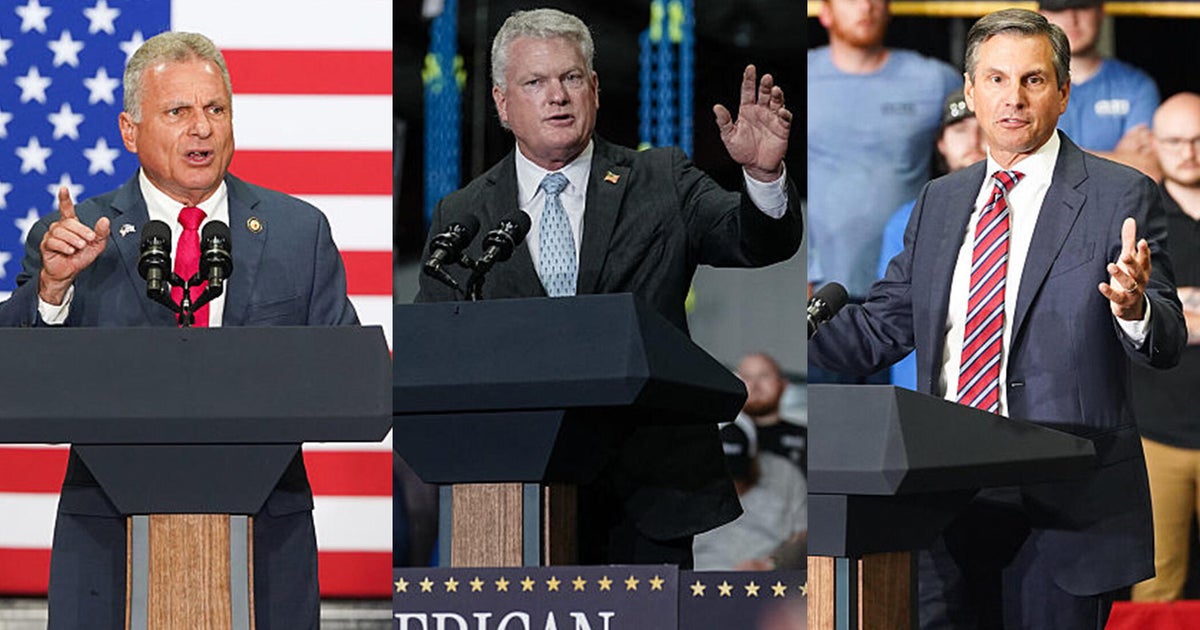
Asked whether action on the minibus this week is realistic, Thune told reporters "we'll see." Leaders have been working to resolve disagreements with a handful of Senate Republicans who have put "holds" on the package, including Sens. Rick Scott of Florida, Mike Lee of Utah, Ron Johnson of Wisconsin and John Kennedy of Louisiana. Holds allow individual senators to signal their objections to legislation in its current form.
"My hope is at least that these, all of these holds that currently exist on the bill on our side at least, are starting to be dealt with in a way that hopefully will get them lifted," Thune said. "But we're not 100% there yet."
Kennedy told reporters after Senate Republicans gathered for lunch Tuesday that his and Johnson's holds are the two that remain. Johnson has advocated for the inclusion of his measure to pay federal employees who work during government shutdowns. He told CBS News that he is "not interested in amendment votes — I want a result, and we should be able to get a result."
"One thing I've learned about here, when leadership wants to get something done, they get it done," Johnson added.
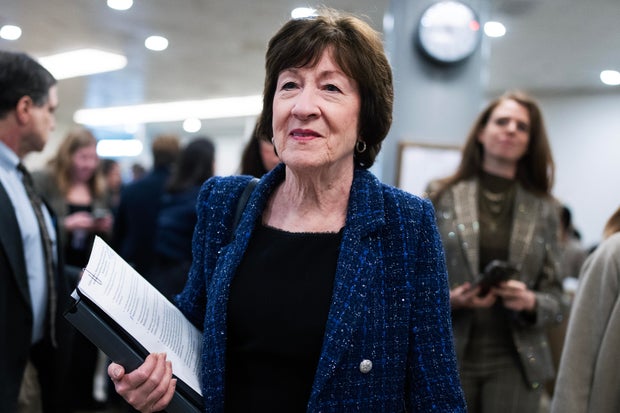
GOP Sen. Susan Collins of Maine, the top appropriator in the Senate, told CBS News that the current objections are "soft holds that I think we can work out."
"I'm hopeful that we'll be on the package tomorrow," Collins said.
Should progress stall on the minibus this week, the Senate will face a tight timeline to fund the remaining agencies and government programs upon their return next month. The deal to end the government shutdown earlier this year extended funding until Jan. 30.
The initial batch of funding bills included funding for military construction and the Department of Veterans Affairs; the Department of Agriculture and FDA; and operations for the legislative branch. The package funded the relevant agencies and programs through September 2026, meaning the agencies would still be funded even if lawmakers fail to fund other areas of the government by the end of January.
Thune, asked whether he's concerned about a shutdown in the new year, told reporters that the threat is "always out there."
"I think that's why it's really important that we do everything we can to consolidate support for getting on the bills and trying to, you know, transact the funding of the government in a way that would prevent that from happening," he added.
Part of the calculus for Democrats will likely be the same as in the last shutdown, which became the longest in history at 43 days. The issue at the center of that fight was health care, particularly the expiration of the enhanced Affordable Care Act tax credits. But that issue remains unresolved, even after the two parties put forward dueling health care proposals for votes last week. On health care, Thune said he thinks there's a "potential pathway in January."
Amid the effort to pass another package of funding measures, Thune said he and Senate Minority Leader Chuck Schumer spoke briefly Tuesday morning and there are "conversations going all the time."
"We're working with the Dems, the hotlines have been running on both sides, and trying to figure out how do we, you know, fund the government in a way that I think reflects the views of this United States Senate and not a continuing resolution," Thune said. "And I think both sides see the value in doing that. So I'm still hopeful that there will be a convergence around getting on the bills and moving them in a way that would prevent us having to deal, at the end of January, with another shutdown."