Inside the very tense, very wet secret mission to get María Corina Machado out of Venezuela
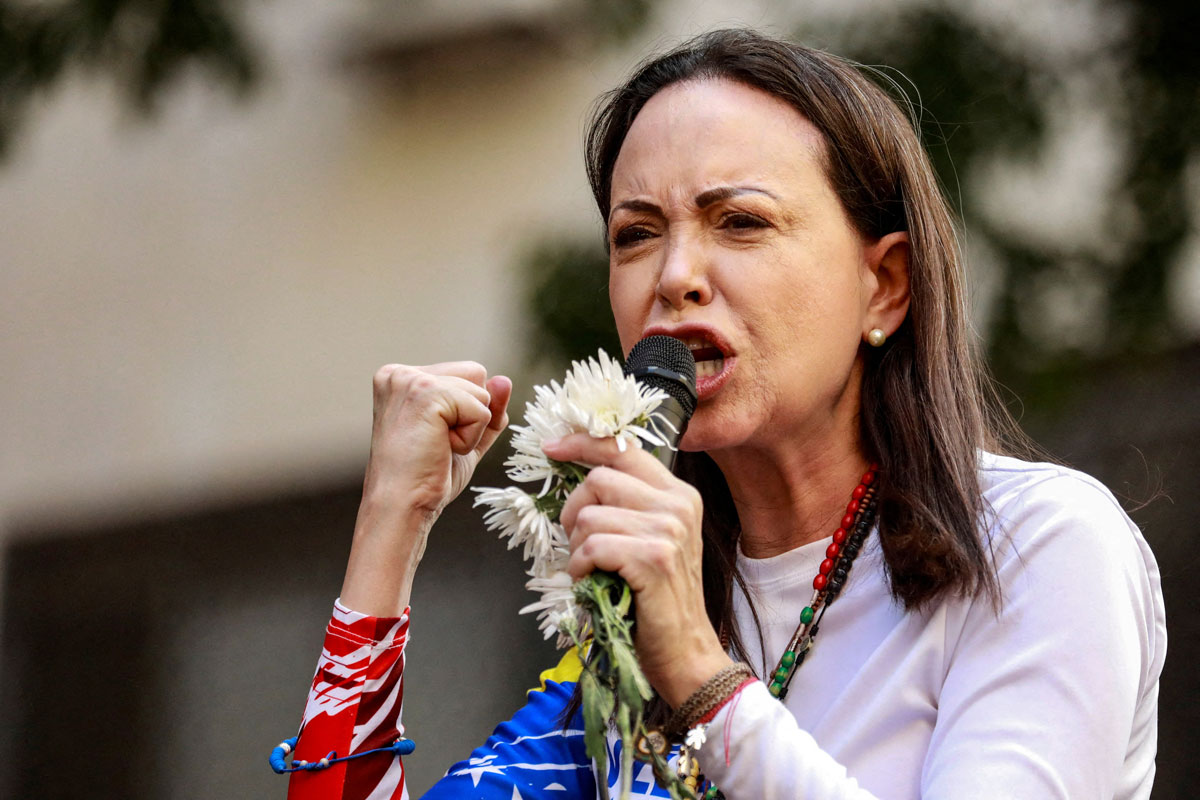
It took an American private rescue team 15 to 16 hours to get Venezuelan opposition leader María Corina Machado out of her country and safely on her way to Norway to collect her Nobel Peace Prize, and to be reunited with her family on Wednesday. The vast majority of that time was spent in rough seas, and the man who led the operation and met Machado on a boat told CBS News, "no one was enjoying that ride, especially Maria!"
"No one's blood pressure was low, throughout any phase of this operation, including mine," said Bryan Stern, a U.S. special forces veteran who heads the Grey Bull Rescue Foundation. "It was dangerous. It was scary. The sea conditions were ideal for us, but certainly not water that you would want to be on ... the higher the waves, the harder it is for radar to see. That's how it works."
In an interview Wednesday with CBS News, Stern gave some insight into the complex operation his organization undertook to get Machado out of Venezuela and on a plane to Norway, where she was reunited with her children for the first time in about two years. A representative for Machado confirmed to CBS News on Thursday that Grey Bull was behind the rescue operation that began on Tuesday.
Of the hundreds of rescues his organization has carried out, he said this was both one of the most challenging and the most rewarding. Machado has lived in hiding in her own country for almost a year, fearing persecution by the regime of President Nicolas Maduro, who is under increasing pressure from President Trump amid a U.S. military buildup off his shores.
"She has a very large target on her back," Stern said of Machado. "This is not a random shopkeeper who doesn't wanna be in Venezuela anymore. This is moving around a rock star."
"She's the first Nobel Prize winner that we've ever rescued, you know? She's the first person that we've ever rescued that has billboards with her face all over it in a country, where there's protests in her favor. We've never rescued anybody with her status, with her stature," he said.
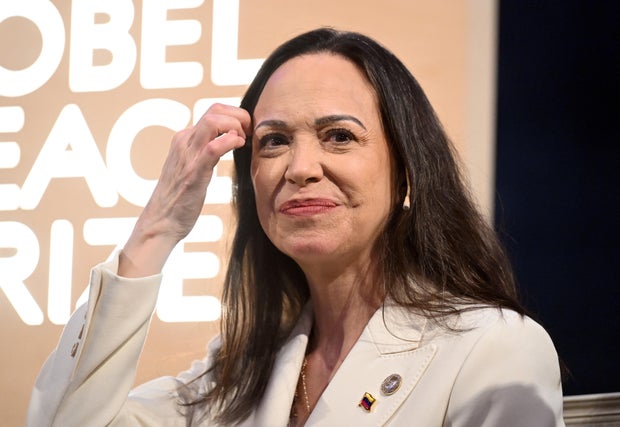
Her high profile, combined with the Maduro regime taking "a very defensive posture because of the American military buildup," meant huge risks for the operation, and Stern was reluctant to divulge much detail about the operation on land, "because we still have other work to do in Venezuela, and we don't want to put sources and methods and people who worked on this at risk."
But once Machado had been spirited off Venezuelan soil onto a boat, she was ferried to a rendezvous at sea, and Stern was there himself to welcome her onto his boat for a 13-14 hour journey to an undisclosed location where she caught her flight to Oslo.
He said around two dozen people were involved directly within his team, but many more played a role - from providing intelligence to translation and logistics - including some who may never even know that they helped.
Stern and Grey Bull were in charge of the land and maritime portion of the extraction, which he said had to be planned in only about four days, though his organization has been preparing for operations in Venezuela for months.
He said the operation was funded by "a few generous donors," none of whom – to his knowledge – were U.S. government officials.
"The U.S. government did not contribute a single penny to this operation, at least not that I know of," Stern said.
He acknowledged that he and his organization did "unofficially collaborate" with the U.S. military about positioning and plans, largely to avoid being targeted inadvertently.
Asked about reports that a private extractions specialist contracted by the Trump administration had met Machado in the small Caribbean island nation of Curaçao, Stern told CBS News: "I'm the contractor who specializes in extractions, and I've never been hired by Donald Trump."
"I did not meet her in Curaçao. I met her somewhere else. I met her really far away from Curacao. Extremely far," he said.
The moment when Machado climbed onto his boat was among the "moments of transition" that present the most risk for any rescue operation, he said.
Stern wouldn't say where exactly that happened, beyond it being on a boat in the Caribbean, but he did say the nighttime rendezvous, and the conversation he had with the Venezuelan "freedom fighter" in the ensuing hours, made an impression on him.
"Personally, I was starstruck. She's a hero of mine," said Stern. "When I got to see her for the first time and validate that it was her, my heart skipped a beat."
The rough seas and dark skies on Tuesday night were perfect for operating covertly, he said, but they didn't make for an enjoyable ride.
"The maritime domain is the most unforgiving domain. This was in the middle of the night - very little moon, a little bit of cloud cover, very hard to see, boats have no lights."
By the time she climbed aboard, "all of us were pretty wet. My team and I were soaked to the gills. She was pretty cold and wet, too. She had a very arduous journey."
"She was very happy. She was very excited. She was very tired," he said.
Asked about the fact that Machado eventually arrived in Oslo too late to attend Wednesday's Nobel Prize ceremony in person, Stern said "nothing went wrong, it just took time."
"From my perspective at least, her life was the most important aspect of this. A ceremony is great, but I don't look at this operation as getting Maria to a ceremony on time," he said. "I look at this operation as saving a freedom fighter's life, as saving a mother's life."
"We talked about her seeing her children for the first time in two years and I almost cried," Stern told CBS News. "She's a tough-as-nails, hard-as-woodpecker-lips woman, person, but she's still a mom, and she talked about how excited she was to see her children. It's been two long years."
He said being able to facilitate that reunion "truly was a blessing. We could not feel more privileged or honored to support this operation. She truly is a hero of mine. I've looked at her as an inspirational defender of freedom as long as I've known of her. So to be asked to support this, to conduct this operation, truly was a huge honor, a privilege for us."
Machado and her daughter, who accepted the Nobel Peace Prize on her mother's behalf Wednesday, said the opposition leader intended to return to Venezuela. Stern said he advised her point-blank against it.
"I think she's crazy. She's such a tough — you know, they call her the iron lady for a reason. I told her, 'Don't go back.'"
Asked if Grey Bull would help her get back into the country, Stern told CBS News, "we've never done an infil, we've only done exfil. So, I don't think so … That's for her to determine and for her to decide. But I think she should not go back. But she wants to. Maria is truly inspirational."