Replacement crew docks at International Space Station, boosts numbers back to 7
A SpaceX Crew Dragon capsule with a crew of four glided in for a Valentine's Day docking at the International Space Station Saturday, boosting the lab's crew back to a full complement of seven one month after four other fliers came home early because of a medical issue.
The Crew Dragon docked at the space-facing port of the lab's forward Harmony module at 3:15 p.m. Eastern Time, 34 hours after launch Friday from the Kennedy Space Center atop a Falcon 9 rocket.
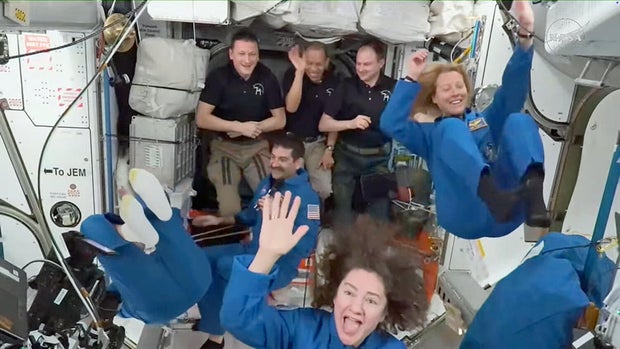
"Grateful to be on board, and we're ready to get to work," radioed Crew 12 commander Jessica Meir, making her second long-duration stay aboard the space station.
Joined by veteran Russian cosmonaut Andrey Fedyaev and two space rookies, astronaut Jack Hathaway and European Space Agency astronaut Sophie Adenot, the Crew 12 fliers opened the Crew Dragon's hatch and floated into the station two hours after docking.
Amid hugs and handshakes, they were welcomed aboard by space station commander Sergey Kud-Sverchkov, Sergey Mikaev and NASA astronaut Chris Williams. Those three were launched to the outpost last November aboard a Russian Soyuz spacecraft.
"Welcome to Crew 12," Kud-Sverchkov said in a brief ceremony. "We are happy they all arrived safe and sound, we've been waiting for this moment for a very long time. We're really happy and proud to work as a team here."
Meir replied, "It is so wonderful to be back up here...You look around, the crew up here, and it's really a testament to everything we do, we have so many countries represented, so many backgrounds, so many disciplines, we are so excited to be here."
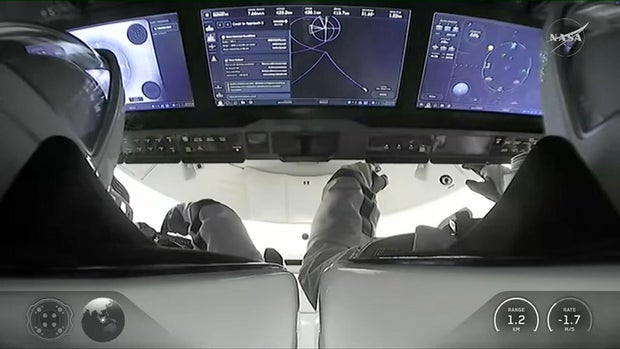
As for the trip up, Adenot, a veteran French air force helicopter test pilot, sky diver and SCUBA expert, said SpaceX gave the crew "quite a ride, very fun!"
"The first time we looked at the Earth was, wow, mind blowing," Adenot said. "The Earth is so beautiful from up (here). We see no lines, no borders, it was a very big moment for us, for Jack and me, to see that for the first time."
Meir and her crewmates are replacing Crew 11 commander Zena Cardman, Mike Fincke, Japanese astronaut Kimiya Yui and cosmonaut Oleg Platonov, whose early departure last month left the station with just three occupants: Kud-Sverchkov, Mikaev and Williams.
While the outpost can be safely operated by a crew of three, a single NASA astronaut cannot carry out a full range of NASA and partner agency research as well as required maintenance.
In addition, spacewalks, which require two astronauts using a buddy system, are ruled out.
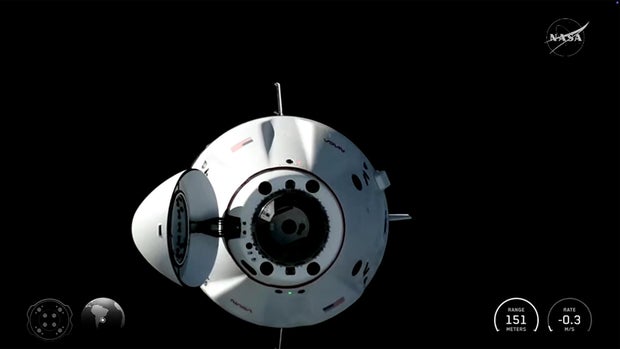
NASA managers attempted to move up Crew 12's launch by about four days to as early as Feb. 11 to shave off some of the time Williams would be the sole operator of systems in the U.S. segment of the space station.
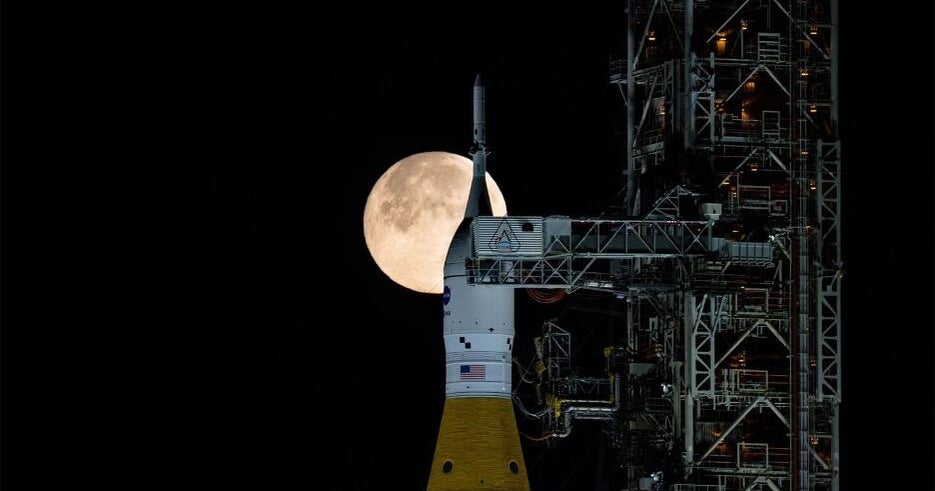
But because of conflicts with work to ready NASA's Artemis II moon mission for launch, along with high winds earlier this week along the Crew Dragon's ascent trajectory, Meir and company ended up launching Friday.
With the addition of Crew 12, research in the U.S. segment can resume its normal pace and spacewalks can be staged as needed.
"Crew 12 is honored to join our Expedition 74 friends and colleagues...to add our chapter to the story of the International Space Station," Hathaway radioed.
The rendezvous went off without a hitch. But earlier in the day, the crew held a private medical conference, or PMC, and said they might need a follow-on PMC after docking. They later confirmed they wanted a post-docking medical conference.
"We're going to go forward with that plan, so if you could just have the (flight) surgeon ready for us after we get all docked we would appreciate that," Hathaway radioed. Mission control replied: "We'll be ready to support."
Under strictly enforced medical privacy guidelines, NASA does not discuss astronaut health issues, and it wasn't known what sort of issue might have prompted the request for a post-docking PMC.
About half the men and women who fly in space suffer nausea and related symptoms during their initial adaptation to weightlessness, but the discomfort typically abates after a few days in space.