Read the full transcript of Major Garrett's interview with Israeli Prime Minister Benjamin Netanyahu here
MAJOR GARRETT: Mr. Prime Minister, good to see you.
PRIME MINISTER BENJAMIN NETANYAHU: Good to be with you.
MAJOR GARRETT: Is the war with Iran over? And if it isn't, who will decide when it is?
PRIME MINISTER BENJAMIN NETANYAHU: I think it accomplished a great deal, but it's not over, because there's still nuclear material, enriched-- uranium that has to be taken out of-- Iran. There are still-- enrichment sites that have to be dismantled. There are still proxies that-- Iran supports. There are ballistic missiles that they still-- want to produce. Now, we've degraded a lot of it. But all that is still there, and there's work to be done. President Trump—(OVERTALK)
MAJOR GARRETT: So this war-- this war cannot end until all those things are eliminated?
PRIME MINISTER BENJAMIN NETANYAHU: Well, certainly we want to get the nuclear material out. We certainly want to get the enrichment sites-- dismantled. We've curbed a lot. We've degraded a lot of the missile production sites. But the agreement should cover all these areas, including the proxies.
Can it end with, as President Trump has-- has-- led, now, a blockade, an economic pressure on them to do it with non-military means? Fine. If it can be accomplished, why not? But if not-- both the United States and Israel, we both agree, President Trump and I, that if necessary, we can reengage them militarily, if it's necessary.
MAJOR GARRETT: If it's necessary. How do you envision the highly enriched uranium will be removed from Iran?
PRIME MINISTER BENJAMIN NETANYAHU: You go in, and you take (LAUGH) it out.
MAJOR GARRETT: With what? Special Forces from Israel, Special Forces from the United States working in tandem under international supervision? How?
PRIME MINISTER BENJAMIN NETANYAHU: Well, I'm not gonna talk about military means, but the pres-- what President Trump has said to me, "I want to go in there." I mean, he's said that publicly. He's said it-- and I think he's right. He's very committed to this. And-- and I think it can be done physically. That's not the problem. If you have an agreement, and you go in, and you take it out, why not? That's the best way.
MAJOR GARRETT: What if there isn't an agreement? Can it be taken out by force?
PRIME MINISTER BENJAMIN NETANYAHU: Well, you're gonna ask me these questions. I'm gonna dodge them, so you can ask me that second time, third time, and I'll dodge it second time, third time.
MAJOR GARRETT: Uh-huh (AFFIRM).
PRIME MINISTER BENJAMIN NETANYAHU: Because I'm not gonna talk about our-- our military-- possibilities, plans, or anything of the kind. And I think you understand that.
MAJOR GARRETT: I do understand that. But it's of great concern to the American people and the people of Israel how long this will take. And absent an agreement, what kind of things should they prepare for?
PRIME MINISTER BENJAMIN NETANYAHU: I think the most important thing for people to understand in America (and in Israel, I think they do understand it) but, for-- in the world, in Europe, you have to understand. Iran, that declares not merely death to Israel but death to America, that's what they want to achieve.
They don't-- not only want to kill Americans, which they have killed and wounded them by the thousands, burned up your embassies-- killed your Marines, burned your flags, tried to assassinate-- the president of the United States and your-- and some of your chief-- officials several times.
They're committed to destroy America. They say that, okay? Their commitment involved their-- plans over the years to build nuclear bombs and the means to deliver them to the United States. They were very close to developing a nuclear bomb, okay? Very close.
In fact, if we hadn't done the two military operations that we did, they'd have a bomb within-- now or within a month or two. Now, you don't want a fanatic regime like that, that hates America, that is-- has no compunction of murdering its own citizen-- murdering and wounding tens of thousands of its own citizens, you don't want them to have nuclear weapons. That's what prompted President Trump -- and me to go out and stop them, prevent them from having them.
MAJOR GARRETT: And I'm just tryin' to get at, "How long is it going to take to achieve that aim?"
PRIME MINISTER BENJAMIN NETANYAHU: I'm not gonna give a timetable to it, but I'm gonna say that's a terrifically important mission, because you don't want Iran to have ballistic missiles to reach any city in the United States with nuclear warheads, because no American would be safe.
And I think President Trump understood that from the start. I don't think. I know that he understood that from years of discussion with this, you know? I came to-- the United States in 2000-- 2016, right-- right before the elections, because I-- I made it a habit to meet with the candidates from both parties--
MAJOR GARRETT: Uh-huh (AFFIRM). Sure.
PRIME MINISTER BENJAMIN NETANYAHU: --either in America or here. So I go to 2016. It was right before the elections. And I meet with-- Hillary Clinton. And then I meet with Donald Trump in New York. The first thing he says to me in Trump Tower is, "We can't let Iran have nuclear weapons. I'm gonna walk out of the terrible Iran Deal."
Jump forward eight years later, there's another election. I meet President Biden and Kamala Harris in Washington. And then I go and meet Donald Trump in Mar-a-Lago. And the first thing he says to me, even before I sit down, he says, "You know, Bibi, we cannot let Iran have nuclear weapons. I'm not gonna let it happen." So he's infused with this mission.
MAJOR GARRETT: What do you think changed from the first term to the second term? Because it was a phrase he spoke to you in 2016. It's action he took with your government now.
PRIME MINISTER BENJAMIN NETANYAHU: Well, I think-- in the first term, he believed-- as did-- I, that we could f-- enforce sanctions, a sanctions regime, which he did. And-- and basically bring Iran to--
MAJOR GARRETT: Its knees, which is a phrase he used.
PRIME MINISTER BENJAMIN NETANYAHU: Yeah. Well-- they stopped-- exporting oil and-- and-- you know, and just reduced it completely. He hoped that that would-- work, and it did for a while, but it didn't really stop them. It-- it-- I would say it slowed them down, but it didn't stop them.
They-- they went back to enrichment. They went back to full-- their full efforts on nuclear-- to develop a nuclear weapon. And what changed is that they were very close to achieving it. That's what prompted the action. And it amazes me, frankly, you know, when you talk about it, you say-- people ask, "What is the purpose of this war? What's the point?"
The point is not to let a regime committed to the destruction of the United States and Israel-- they call us the Little Satan. They call you the Big Satan. What do you do with the Big Satan? You have to remove it from the world. That's their doctrine. Not to let such a regime-- have nuclear weapons, because it's-- it's very different if, I don't know, let me pick a country. If Holland has nuclear weapons, it's not the same as the--
MAJOR GARRETT: Right.
PRIME MINISTER BENJAMIN NETANYAHU: --ayatollah regime that calls for your destruction having nuclear weapons. So that's what prompted this-- military--
(OVERTALK)
MAJOR GARRETT: --from your--
PRIME MINISTER BENJAMIN NETANYAHU: --operations--
MAJOR GARRETT: Mr. Prime Minister, what is your evaluation of the state of the Iranian regime today? Is it just as well composed, well organized, and fanatical as you just described?
PRIME MINISTER BENJAMIN NETANYAHU: I think it's at the weakest point it's been since the-- since it-- hijacked the Iranian people--
(OVERTALK)
MAJOR GARRETT: Since 1979?
PRIME MINISTER BENJAMIN NETANYAHU: Yeah, absolutely. It's the weakest its been. The hard-liners are just as hard-line as they were before. But there are fissures in the-- in the regime. I mean, there are-- there are cracks in it because they're-- you know, they've been hit very hard by-- our joint efforts, our joint military efforts.
We destroyed a lot of their-- the money machine, their petrochemical plants, their steel plants in which they produce these-- the raw material for these rockets, and-- and-- and ballistic missiles, and other things. We-- we hit them very hard.
But-- and so it causes now a debate within this-- with this regime. Some say, you know, "Let's keep on, you know-- let's keep on trucking," and others are saying, "You know, if we do, our economy will collapse and the people will rise." That's their real fear, the people will rise, 'cause they're really afraid of the Iranian people. So they are-- you know, there-- there's-- there's a debate. They're weak. They're certainly weaker than they were before. But it's not over, and the jury's still out. I'm the first one to say it.
MAJOR GARRETT: What do you believe is the physical condition and operational influence of the current supreme leader?
PRIME MINISTER BENJAMIN NETANYAHU: Yeah, if you ask me what his condition is, first of all, if you ask me his-- if he's alive, I think he is alive. What his condition is, it's hard to say, you know? He's holed up in some bunker or in some-- secret place. And he's-- I-- I think he's trying to-- exert his authority.
I don't think he has the same authority that the-- his father, the Ayatollah Khamenei, had. I don't think so. That's also creating the-- the disruptions in that regime. And I-- I don't think it's a bad thing, but I think the real question is not als-- not so much what they do. It's what we do.
You know, do we keep them in check? Do we keep up the pressure? And I think the answer is we should and we are. And President Trump has been leading this effort, I think quite-- in quite unexpected ways, the blockade on them, when they were blockading the Gulf, has actually turned the tables on them. And-- but-- you know, it's an ongoing thing.
MAJOR GARRETT: With the fractures and fissures you've described, do you have a genuine sense of who can negotiate a deal that is durable on the Iranian side?
PRIME MINISTER BENJAMIN NETANYAHU: I have my opinions.
MAJOR GARRETT: Please share them.
PRIME MINISTER BENJAMIN NETANYAHU: I share them with the president.
MAJOR GARRETT: Okay. Any guidance on what those opinions are?
PRIME MINISTER BENJAMIN NETANYAHU: I have opinions on my opinions too, (LAUGH) but I'm not gonna share them here, either.
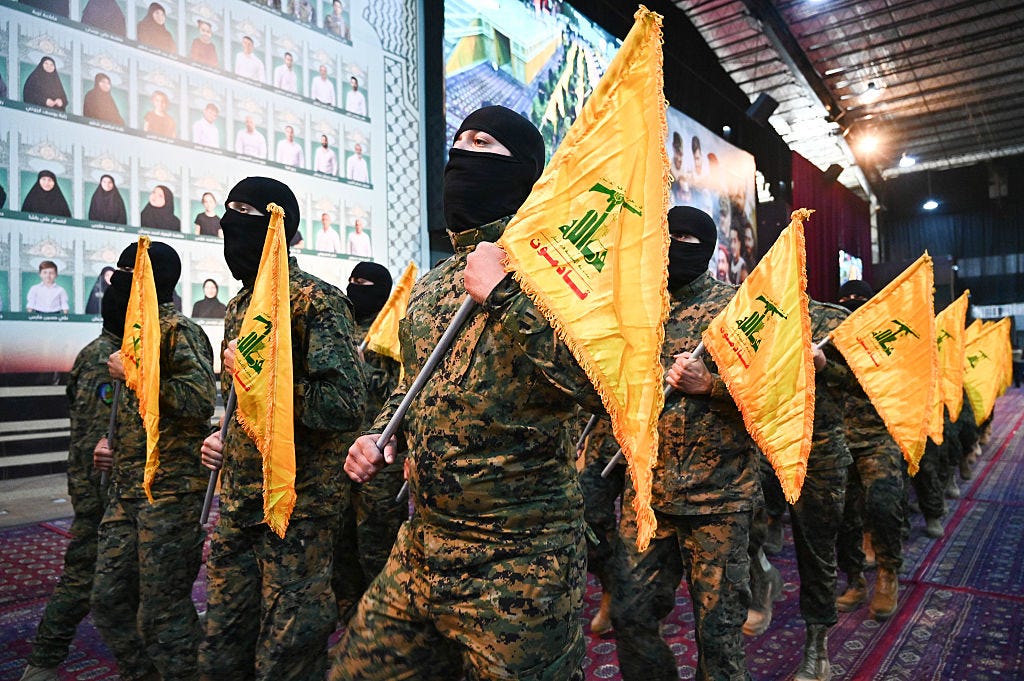
MAJOR GARRETT: Understood. Understood. What about the second front of this conflict, which is Lebanon but not Lebanon, it's Hezbollah?
PRIME MINISTER BENJAMIN NETANYAHU: Mmm.
MAJOR GARRETT: Is that near the-- an end? Is that a war that is nearing an end? And has Israel achieved its strategic and tactical goals against Hezbollah?
PRIME MINISTER BENJAMIN NETANYAHU: Hezbollah had 150,000 ballistic missiles and rockets before the war. 150,000. That's the densest concentration of these projectiles on the planet, and they were all aimed to destroy our cities. Not only to harass the north of the country--
MAJOR GARRETT: Right.
PRIME MINISTER BENJAMIN NETANYAHU: --with rockets, but to destroy our cities-- Tel Aviv, Jerusalem, Haifa, you name it, with ballistic missiles that come raining down. You know, each one has half a ton or a ton of-- explosives, and they come down, it's like a bus coming down with amazing speed, and the destruction is terrible.
We destroyed the bulk of that. We destroyed about 90-- more than 90% of that. But that still leaves them with thousands of-- of rockets and-- and some ballistic missiles. And that's still a big issue. They still hold Lebanon hostage. Leb-- Hezbollah is basically a proxy of Iran. Iran holds Lebanon. We have no quarrel with Lebanon. We could make peace with Lebanon and want to make peace with them tomorrow, no, yesterday. But you have this foreign body, this-- this-- Ira-- Iranian-backed terrorist organization that hijacked the country.
MAJOR GARRETT: Right. And the Lebanese government has a history of being in-- incapacitated or unable.
PRIME MINISTER BENJAMIN NETANYAHU: Right.
MAJOR GARRETT: So when you're negotiating with the Lebanese government, many people are confused, "How does that solve the Hezbollah problem?"
PRIME MINISTER BENJAMIN NETANYAHU: Well, it doesn't. Not yet. So we've had to go into Lebanon to prevent a repeat of the invasion we had in Gaza. You know, October 7th, Hamas invaded us, butchered our-- our men, beheaded-- our men, raped our women and then killed them, burnt our babies, did the worst massacre against the Jewish people since the Holocaust.
And guess what? On the other border, Hezbollah from Lebanon was planning to do even more. They had 5,000-- Radwan Force terrorists ready to invade the Galilee. So we pushed them back. We've got a security belt now that prevents 'em from doing that or shooting anti-tank missiles into our kitchens, into our living rooms. But it's not over yet. We have-- we still have-- missiles. We have drones, killer drones. We have to deal with that. Now, if we are-- let me tell you, the Lebanese would like us to do that. Many, you know? They talk--
MAJOR GARRETT: Eradicate Hezbollah?
PRIME MINISTER BENJAMIN NETANYAHU: Oh, yeah. Because they want freedom. Who'd want a country to be taken over by these killers and these murderers? Of course they want to be free. But they've not shown yet the capacity to fight them. What we're talking to them about is, "How do we work together to militarily and politically, possibly splitting up the work, to get rid of Hezbollah?" It's not yet been done. It has to be done as well.
MAJOR GARRETT: Is it possible, Mr. Prime Minister, that the war with Iran could end but the war with Hezbollah could continue? That these would be separate--
PRIME MINISTER BENJAMIN NETANYAHU: If we--
(OVERTALK)
MAJOR GARRETT: --and divergent battlefields--
PRIME MINISTER BENJAMIN NETANYAHU: Well, they should be. They should be. B- what Iran would like to do is to say, "No, you know, if we achieve a ceasefire here, we want a ceasefire there--"
MAJOR GARRETT: They do.
PRIME MINISTER BENJAMIN NETANYAHU: Yeah.
MAJOR GARRETT: Clearly.
PRIME MINISTER BENJAMIN NETANYAHU: You know why? Because they want Hezbollah to stay there and continue to torture Lebanon, continue to hold its people hostage, and continue--
MAJOR GARRETT: Will you accept that?
PRIME MINISTER BENJAMIN NETANYAHU: No. No, we've said--
MAJOR GARRETT: Even if President Trump asks you to?
PRIME MINISTER BENJAMIN NETANYAHU: Well, look, he understands what I'm saying. I mean, we are-- we want to get rid of that danger to our communities, to our cities. They rocket our cities all the time. They rocket our communities. And of course he-- would you want to live like that? I mean, would you like to live-- where-- where do you live-- Major?
MAJOR GARRETT: I live in Washington, D.C., Mr. Prime Minister--
PRIME MINISTER BENJAMIN NETANYAHU: Yeah, so-- okay, so in Bethesda, you've (LAUGH) got--
MAJOR GARRETT: I live right downtown. (LAUGH)
PRIME MINISTER BENJAMIN NETANYAHU: Okay, you've got in Bethesda-- in Bethesda-- (OVERTALK)
MAJOR GARRETT: Right near the White House.
PRIME MINISTER BENJAMIN NETANYAHU: --that's the-- that's about the d-- the distance.
MAJOR GARRETT: Yeah.
PRIME MINISTER BENJAMIN NETANYAHU: In Bethesda--
MAJOR GARRETT: In my conversations here--
PRIME MINISTER BENJAMIN NETANYAHU: --you would have a terrorist organization that claims they want to destroy the United States and destroy Washington, and they have the-- you know, the missiles and the drones to do that right across your border-- your municipal line. Would you accept that? Of course not. You wouldn't do that.
MAJOR GARRETT: Right. So this could go on?
PRIME MINISTER BENJAMIN NETANYAHU: Yeah, but I--
MAJOR GARRETT: Even if Iran is solved?
PRIME MINISTER BENJAMIN NETANYAHU: I hope-- I-- no. If Iran-- if this regime is indeed weakened or possibly toppled, I think it's the end of Hezbollah, it's the end of Hamas, it's probably the end of the Houthis, because the whole scaffolding of the terrorist proxy network that Iran built collapses if the regime in Iran collapses. Now, that's not guaranteed. But the weakening of that regime weakens the proxies as well. Still a long haul. You know, it's not something that's gonna be done tomorrow.
MAJOR GARRETT: Do you believe it is possible to topple the Iranian regime?
PRIME MINISTER BENJAMIN NETANYAHU: I think that you can't predict when that happen. Is it possible? Yes. Is it guaranteed? No. But I can tell you, it's like bankruptcy, you know? It proceeds-- what is it? Proceeds gradually, and then it falls, you know--
MAJOR GARRETT: Right.
PRIME MINISTER BENJAMIN NETANYAHU: --like that. You couldn't predict the fall of the Soviet Union. You couldn't predict the fall of the-- Ceaușescu-- dictatorship in Romania.
MAJOR GARRETT: Very few people predicted the fall of Syria.
PRIME MINISTER BENJAMIN NETANYAHU: Correct. And it happens. Now, is it-- what precedes it? There has to be a weakening of the regime. The regime has been weakened. But it's not-- it's not guaranteed.
MAJOR GARRETT: There are few places on Earth where the Israeli intelligence operatives know more about than the internal dynamics of Iran. What are they telling you?
PRIME MINISTER BENJAMIN NETANYAHU: Just what I told you. They've been weakened. They have internal fights. They're worried. But-- I can't tell you-- I-- I can tell you one thing. When did the-- when did the uprisings, when did the revolt in the street happen in Iran? It happened after our first operation-- after-- Rising Lion, after-- Midnight Hammer, the two names that we have for that.
And then, you know, they came out to the streets because-- because their condition-- economic conditions were bad, were getting worse. But also because they saw that Iran is not this overwhelming, you know, neighborhood bully that nobody could-- resist.
We resisted them. We fought them. Our-- our planes controlled the skies over Tehran, which was unthinkable before that. And then they went out to the streets. They were mauled. They were massacred. They were wounded and maimed by the tens of thousands. And so, you know--
MAJOR GARRETT: That memory has to linger.
PRIME MINISTER BENJAMIN NETANYAHU: The memory lingers, and I think it's something else. I think they also-- the legitimacy is gone, because they understand that it's just brute force that is keeping them. So would that rise up again? Could that happen again? My view is it probably c-- could, but you can't guarantee it.
And contrary to what people said, I didn't go to the White House and said to-- Donald Trump-- "You know, it's guaranteed it can be done." I said-- I didn't-- really have to tell him. He knew that we were approaching a situation where Iran could produce a nuclear weapon.
He knew that we were approaching a situation where Iran's ballistic missile capability after Rising Lion was gonna be reconstructed, and Khamenei-- wanted to put it underground. The factories underground. Not the missiles. The factories underground to produce more, and more, and more ballistic missiles and to do the same with his nuclear-- industry. Put them underground, under a heavy mountain where even B-2s couldn't reach it. So he knew that we have to take-- action. And he did.
MAJOR GARRETT: I wanna get to that point you just made in a second. If someone were to ask you, as I'm going to, Mr. Prime Minister, the capabilities of Israeli intelligence within Iran allowed you to pinpoint the location of supreme leader and others. That is a kind of granular intelligence that is borderline miraculous in the modern world. Why wasn't it sufficient to also foment a revolution?
PRIME MINISTER BENJAMIN NETANYAHU: I think it could be a necessary condition, but I'm not sure that it's a sufficient condition. But you're quite right about our granular capability for surgical attacks. It's funny-- (OVERTALK)
MAJOR GARRETT: Why can't they also set in motion a revolution that could topple the regime, your operatives--
PRIME MINISTER BENJAMIN NETANYAHU: Because-- because you need many things. You not only need the-- you know, to attack the leadership. There's still a lot of people there. You know, one out of-- a hundred Iranians is in the-- secret police, you know? And (LAUGH) they're-- as they showed, they're quite ready to just butcher the people.
So it's not that simple, because it's terror. It's basically the application of terror. This is the preeminent terrorist regime in the world, okay? They send terrorism to every country but first to their own people. So they terrorize them. But we-- you know, we have been accused of-- indiscriminate attacks.
We're the most discriminating military on the planet in history. You know, remember the beepers? We knocked out-- we didn't kill-- 2,500 people, but we impaired them, knocked them out with surgical precision, no collateral damage, with the beepers, you know?
And that's what we proceeded to do against their key scientists, against their key commanders, against their leaders. But-- it's a component. It doesn't guarantee. It doesn't guarantee the-- success of a revolt. But it could-- help it-- happen.
MAJOR GARRETT: So you referred to this a minute ago. I want to put the question directly to you, because the New York Times on April 7th reported the following about a fateful meeting February 11th in the White House. And the New York Times reports as follows.
Quote, "In the Situation Room on February 11th, Mr. Netanyahu made a hard sell, suggesting that Iran was ripe for regime change and expressing the belief that a joint U.S.-Israeli mission could finally bring an end to the Iranian-- to the Islamic Republic." Is that correct?
PRIME MINISTER BENJAMIN NETANYAHU: No. That's actually incorrect, because--
MAJOR GARRETT: In what ways is it incorrect?
PRIME MINISTER BENJAMIN NETANYAHU: It's incorrect in the sense that I said, "Oh, well, it's guaranteed we can do it," and so on. I didn't say that. We both understood that we have little time to act, because otherwise they'll get nuclear weapons. We both understood that we have little time to act, because otherwise they'll bury underground their-- ballistic missile capabilities. But while we were-- we said that part of the action would be the removal of the leadership and other measures. There was uncertainty. And we said it. All this, you know, is uncertain. If you ever-- you know, engage in military--
MAJOR GARRETT: In the confines of that conversation--
PRIME MINISTER BENJAMIN NETANYAHU: Oh, yeah.
(OVERTALK)
MAJOR GARRETT: --you noted the uncertainty?
PRIME MINISTER BENJAMIN NETANYAHU: Not only did I note it. We both agreed, you know, that there was both uncertainty and risk involved. And I remember that we-- I said, and he said that the danger-- there's danger in action, in taking action. But there's greater danger in not taking action. So there was no certainty there. There was no guarantee. It wasn't pie in the sky the way-- people describe it. It was, I think-- a very-- truthful presentation of the possibilities and the risks.
MAJOR GARRETT: Picking up on that point that you just made and continuing what the New York Times reported, quote, Mr. Netanyahu and his team outlined conditions they portrayed as pointing to certain victory, adding "the regime would be so weakened that it could not choke off the Strait of Hormuz, and the likelihood that Iran would land blows against U.S. interests in the neighboring countries was assessed as minimal." Is that factually incorrect?
PRIME MINISTER BENJAMIN NETANYAHU: I don't think we could quantify it exactly, but I think that-- the-- the problem of-- the Hormuz Strait was-- was understood as the fighting went on. I think that's--
MAJOR GARRETT: It became understood?
PRIME MINISTER BENJAMIN NETANYAHU: It became understood.
MAJOR GARRETT: Was it misread at the beginning?
PRIME MINISTER BENJAMIN NETANYAHU: I think-- I'm not sure it was misread. But the-- you know, there's a-- great risk for Iran to do it. And it took a while for them to understand how big that risk is, which they understand now.
MAJOR GARRETT: Because of the blockade?
PRIME MINISTER BENJAMIN NETANYAHU: Because of the blockade. And that's-- that's actually a (LAUGH) brilliant move by the president. I think it's-- it's very smart. And you-- I-- I don't think they calculated, A), that-- that the-- well, I think they didn't calculate the response that this would have.
Yes, they could cause a global-- dislocation of markets-- trying to take over an international maritime route. They could do that, but they should have understood that that would eventually cause-- you know, a reaction that was very powerful and that is now collapsing their economy.
So did people understand that-- we understand that, yeah, they could do it, but then they wouldn't do it because they understood what would happen if they did do it? Yeah, no, I-- I don't claim-- perfect foresight, and nobody had perfect foresight. Neither did the Iranians. They should have figured out that that's what's coming.
MAJOR GARRETT: Did you say that most of these risks would be minimal?
PRIME MINISTER BENJAMIN NETANYAHU: I don't remember using that language. And I-- I don't think--
(OVERTALK)
MAJOR GARRETT: Would that be a fair interpretation?
PRIME MINISTER BENJAMIN NETANYAHU: No. I would say-- I would say that-- the overall conception was that this would elicit a problem or a response that they probably would not shoulder. But they did shoulder it, and now the respond-- they're attacking. They're being attacked accordingly.
MAJOR GARRETT: In those moments, was the precipitating factor the intelligence that was gathered and then-- by the Israelis and confirmed by the U.S. about the location of the supreme leader and the opportunity that presented? Or was it the imminent threat? Which was more important--
PRIME MINISTER BENJAMIN NETANYAHU: It starts with the threat. Starts with the threat.
MAJOR GARRETT: But--
PRIME MINISTER BENJAMIN NETANYAHU: And again-- again, you have to understand this. The president talked to me. The two meetings that I described to you were among many. But he said, "We cannot let Iran get a nuclear weapon, because that's enormously dangerous to the United States."
And the president first thinks about America, and then he thinks also about the world. You can't let it happen. So we knew it was gonna happen. It would have happened already if we hadn't done it. So that was the first thing. Everything else flows from that. That's exactly how it happened.
MAJOR GARRETT: There's a-- quote that's frequently misattributed to Winston Churchill. "History is written by the victors." He didn't say it. Lots of people said it. He didn't say it.
PRIME MINISTER BENJAMIN NETANYAHU: No, he said, "I don't worry about it, because I'll write it myself." (LAUGH)
MAJOR GARRETT: But that idea that victors write the history, what will the-- history the state of Israel will write about this conflict with Iran? And when will you know it's been victorious?
PRIME MINISTER BENJAMIN NETANYAHU: I think we already achieved great things. Remember, Iran was surrounding us with a noose of death of simultaneous invasions from Gaza, from Hamas, and from-- from Lebanon by Hezbollah. We were gonna be rocketed and pelleted with ballistic missiles that would destroy our cities. Iran would have--
MAJOR GARRETT: So that's what--
PRIME MINISTER BENJAMIN NETANYAHU: --atomic weapons to destroy us. We smashed the terror axis. It's not finished. We have still work to do.
MAJOR GARRETT: All right.
PRIME MINISTER BENJAMIN NETANYAHU: But it's clear that Israel has emerged as the most powerful country in the Middle East. We have a partnership with the U.S. that is second to none. The national security memorandum that was issued-- a few months ago described Israel as the "model ally," not the ally, the "model ally" of the United States.
So we've changed our position from being on the verge of being exterminated, being annihilated to a position where we knocked back the annihilators and-- and become a very forceful element, a very forceful country in the Middle East. Now, all power is relative. You know that. All power is relative.
MAJOR GARRETT: Yes.
PRIME MINISTER BENJAMIN NETANYAHU: So you never-- Iran hasn't disappeared.
MAJOR GARRETT: Hezbollah hasn't--
PRIME MINISTER BENJAMIN NETANYAHU: Hezbollah hasn't disappeared. Hamas hasn't disappeared--
MAJOR GARRETT: Hamas hasn't.
PRIME MINISTER BENJAMIN NETANYAHU: But they're in many ways, in some cases a shadow of their former selves. They certainly don't threaten us now with annihilation. They try to kill our people. They occasionally succeed, but there's no question that the relative power of Israel has changed.
And, you know, that's been our-- our situation. We-- when we-- we started out, we were 600,000 people on a beach here. And we were-- attacked by seven ar-- armies, and we survived by the skin of our teeth. And as we got stronger, we made peace with the Arab states.
I myself, along with President Trump, we made the Abraham Accords peace with four Arab countries. I now see the possibility of the expansion of those agreements-- and the expansion and the deepening of the agreements we do have to alliances with Arab states of the kind that we never even dreamed of.
MAJOR GARRETT: (OVERTALK)
PRIME MINISTER BENJAMIN NETANYAHU: And that's the result of the change in the relative power of Israel. The fact that we face down this-- this neighborhood bully that these-- this killer regime in Iran, that's brought quite a few of the Arab countries closer together with Israel. That's good for peace.
MAJOR GARRETT: It's interesting you mention that, Mr. Prime Minister, 'cause I just read a Wall Street Journal story that said there is concern among the Gulf States right now that if the Iranian regime hangs on and there is a peace deal that deals with nuclear and ballistic but does not deal with shorter-range conventional missiles and the allied militias, an angry Iran will present a greater danger to these Gulf States than it did before this conflict began, point one. Point two, also it said that there is concern rising among the Gulf monarchies that it will not allow and does not want Israel to exercise strategic dominance over the Middle East. So has any of this been jeopardized?
PRIME MINISTER BENJAMIN NETANYAHU: You know, I'm hearing different things.
MAJOR GARRETT: Please--
PRIME MINISTER BENJAMIN NETANYAHU: I'm hearing-- I'm hearing different things. I'm hearing the fact from Arab countries, which I won't get into, they'll say--
MAJOR GARRETT: All of them?
PRIME MINISTER BENJAMIN NETANYAHU: No. But some of them, and I never heard that before. "Let's strengthen our alliance with Israel," because that in fact, deters Iran. Let's strengthen our alliance with Israel, because we can work up our defenses as a result of it. Let's strengthen our alliance with Israel because we can do amazing things with Israel. We can have—(OVERTALK)
MAJOR GARRETT: That was clearly the trajectory before this conflict.
PRIME MINISTER BENJAMIN NETANYAHU: It's more than you think now in ways that I cannot-- I guess will become public, although, you know, I can't give everything to 60 Minutes or to you in one shot. But I'm telling you that the degree of economic cooperation on energy, on AI, on quantum, the-- the areas where Israel is so strong, that's how we're so strong.
I mean, we're a tiny country, right? But we're a gigantic country. We may have 10 million people and tiny territory but gigantic talent. And they see the possibility now of sharing-- the fruits of this-- of these capabilities with them. And-- and that's happening right now. So, yes, of course, there'll still be a challenge through-- from Iran, but the partnership with Israel in fact helps-- deter that and helped them defend themselves and protect their future.
MAJOR GARRETT: When you talked to my colleague, Tony Dokoupil in October of 2025, you said something that really has been ringing in my ear. It's near the end of the interview. You said, "The most important thing in destroying fanaticism is to destroy a certain hope."
PRIME MINISTER BENJAMIN NETANYAHU: Right.
MAJOR GARRETT: "When Israel is too strong, that prepares the ground for a change of heart."
PRIME MINISTER BENJAMIN NETANYAHU: Right.
MAJOR GARRETT: Has that happened?
PRIME MINISTER BENJAMIN NETANYAHU: It's already happened with the Arab world, you know, after successive wars and they saw that Israel is not destroyed and Israel is there—
MAJOR GARRETT: But I mean, in this current context with Hezbollah, with Iran-- (OVERTALK)
PRIME MINISTER BENJAMIN NETANYAHU: With Iran, it's--
MAJOR GARRETT: --Hamas--
PRIME MINISTER BENJAMIN NETANYAHU: --I think the fanaticism. You're dealing here with fanatic regimes, you know. They're-- they're fanatics. That's why they're willing to do horrible things to their own people, murder their citizens in Iran, murder their citizens in Lebanon, murder their citizens and just execute them on the spot, in Hamas in Gaza.
They're not easily persuadable, so s-- you may need more staying power, more resolve-- to roll them back and finally to defeat them. It's not something that happens overnight. But you, the-- the-- do democracies have the staying power? Do they have the resolve to stop these fanatics?
Well, you think, "Well, it's none of our business." It is your business, because if Iran were to develop nuclear weapons and the means to deliver them to every American city, it's just a question of time. You know, they've just developed a missile to reach Diego Garcia.
That's 26-hun-- 2,400 miles. To reach the United States is a little over 6,000 miles. So if you don't take this action, if we hadn't taken this action, if we don't continue the pressure, then one day you'll be faced with such a regime. And then the question is, will you be able to deter them?
Well, it's not obvious. Look at what they're doing now without nuclear weapons. They're attacking everybody in sight. They're jamming up this international waterway and causing a crisis in the world economy. And they're butchering their own citizens. You think they'll be, you know, they'll spare you, they'll be nice to you?
MAJOR GARRETT: But you still have that belief-- (OVERTALK)
PRIME MINISTER BENJAMIN NETANYAHU: So we still have that-- we still have, yes, I-- I believe--
MAJOR GARRETT: This is your philosophy, this is your core philosophy.
PRIME MINISTER BENJAMIN NETANYAHU: Yes. I believe that free societies have to be strong against--
MAJOR GARRETT: And that you can force a change of heart-- (OVERTALK)
PRIME MINISTER BENJAMIN NETANYAHU: --murderous dictators.
MAJOR GARRETT: --within fanatical entities in the region.
PRIME MINISTER BENJAMIN NETANYAHU: It's already happened. It's happened in some places also in the Gulf, but it is-- you know, it's not guaranteed. History doesn't guarantee the victory of free civilization. It's-- it has to be purchased. Freedom is precious. Survival is precious. It's not-- it's not guaranteed by hope alone.
MAJOR GARRETT: Understood.
PRIME MINISTER BENJAMIN NETANYAHU: It is guaranteed by the force of will and if necessary the force of arms. Now this is-- this is not-- you know, this is not a popular belief these days, because in the digital age we live where people just scroll and scroll and scroll, you know, the sense of history becomes the enemy, you know. You're lucky in some cases if it goes back to breakfast.
MAJOR GARRETT: Transient.
PRIME MINISTER BENJAMIN NETANYAHU: Yeah. There--
MAJOR GARRETT: Ephemeral.
PRIME MINISTER BENJAMIN NETANYAHU: Very ephemeral, and-- and people don't understand the-- always understand what I think is important, that our free civilization is both precious but also vulnerable. And if societies don't have the will to defend themselves, they'll be overtaken by the Barbarians.
I read this by-- (LAUGH) in my favorite author, one of my favorite authors, Will Durant, a great-- great American historian, who wrote, you know, History of Civilization. (LAUGH) And basically, he wrote a, you know, a compendium at the end, 100-page book, Lessons of History. I gather you read it.
MAJOR GARRETT: I have, indeed.
PRIME MINISTER BENJAMIN NETANYAHU: Okay, and so he says, you know, he basically says this. "Nothing is guaranteed. Good doesn't triumph over evil. It's not guaranteed unless good is willing to fight." And what is happening in some parts of Western society, it's looks like it's taken over a lot of Western Europe and some parts of the United States, fighting the bad people is bad. Because fighting is bad, war is horrible. I've been in it. I've myself experienced it. You know, I-- I lost a fellow soldier who died in my arms when he was 18. My brother died--
MAJOR GARRETT: Your brother.
PRIME MINISTER BENJAMIN NETANYAHU: --rescuing hostages. I myself was wounded in a hostage release. And I've seen the horrors of war. I've seen my parents grieve for their oldest son. I've seen other parents grieve. I know the cost of war, and I know the pain of war. War is hell, exactly as described.
And you do everything you can to prevent civilian casualties on the other side. Israel has gone to unbelievable lengths. But sometimes you have no choice. And if you get to the point where people say, "No. Under no circumstances will we fight," then you'll have to fight under the worst of circumstances.
MAJOR GARRETT: You mentioned this a moment ago, but I want to probe it a little bit. This idea that a younger generation are on social media or scrolling. Do you believe Israel is at risk of losing this war on that social media front? Meaning, what is being portrayed, what is being said, and this is particularly I believe important in America for younger Americans, Republican and Democrat, who have hardened their selves against Israel scrolling through images which tell them that there is something not as you describe, but uncivilized. And they would use words like barbaric in Gaza and in Lebanon.
PRIME MINISTER BENJAMIN NETANYAHU: Well, first let me--
MAJOR GARRETT: Are you losing that space?
PRIME MINISTER BENJAMIN NETANYAHU: Yeah. Let me-- let me talk about that in a second, but first, let me say something that your audience probably doesn't know, that, as I said a minute ago, Israel has gone to unbelievable lengths to get innocent civilians out of harm's way.
We text message millions of text messages to them-- make millions of phone calls to them, pamphlets, leaflets, you name it, okay? And whereas, Hamas and Hezbollah go out of their way to keep their own people in harm's way, they shoot them.
In Gaza, they actually shoot civilians who wanted to leave the neighborhoods that we said to them, "Please vacate those neighborhoods." So obviously, we end up with civilian casualties, but the-- the proportion of civilian casualties, noncombatants to combatants is one of the lowest in the history of modern urban warfare.
So Israel is given a bum rap. One of the ways you can measure genocide is to see the ratio of combatants to noncombatants, and it's probably the lowest that it's been in modern urban warfare because of the efforts that we make. Now, all of that is washed away because of what you said, exactly what you said, Major.
In other words, we have seen the deterioration of the support for Israel in the United States almost-- I would say, it correlates almost 100% with the geometric rise of social media. And that by itself is not what caused it. And I-- I don't believe in, you know, in censoring them or anything.
But I'll tell you what happened. We have several countries that basically manipulated social media with the bot farms with fake addresses, to break the American sympathy to Israel, to break the American-Israeli alliance, because they think it's in their interest.
And they do it in a clever way. You know, it's like-- you hear a text message, "I'm a, you know, red-blooded Texan. I always supported Israel. But I can't stand what they're doing. I'm turning against Israel." And then you trace the address to some basement in Pakistan, you know.
And that's-- that's something that has hurt us badly. While we were fighting the physical, military battle on seven battlefields, seven front of war, we were completely exposed on the eighth front, the media war and really the-- the social media war.
And, you know, we've been busy, so we-- we haven't seen that while they're attacking us with the equivalent of F-35, we're trying to fight them with a Polish cavalry. It's, like, (LAUGH) it's almost what happened in World War II. So I think we have to engage on that front, not by censorship but by finding ways that are applicable to democracies.
We can't do what these authoritarian regimes do, but finding ways to fight the battle for the hearts and minds of young Americans on the social media. And that we have to do, absolutely. We have a problem. I recognize it. And we have to-- get our act together.
MAJOR GARRETT: Do you in any way consider yourself responsible for that problem?
PRIME MINISTER BENJAMIN NETANYAHU: No, because I don't think-- they're not only attacking Israel. They're attacking America. They're attacking America. They're trying to create ruptures within America, not only between America and Israel, between Americans and Americans. They're trying to say you--
MAJOR GARRETT: Foreign operation bot farms.
PRIME MINISTER BENJAMIN NETANYAHU: Enormous ones. And also getting to your universities, getting to your academic curricula, doing all sorts of things.
MAJOR GARRETT: That is-- a true-- a true scenario, but do you believe that's the only explanation? Or is it possible that some Americans have come to a different sense of Israel--
PRIME MINISTER BENJAMIN NETANYAHU: Yes.
MAJOR GARRETT: --because of the last two or three years organically--
PRIME MINISTER BENJAMIN NETANYAHU: Well, there's no question. (OVERTALK)
MAJOR GARRETT: --and through their own inquiry--
PRIME MINISTER BENJAMIN NETANYAHU: You can track it. You can track it, actually. No, I think what they see is so many falsifications and vilifications that are unfounded. But they don't know, because they just get it, you know, they just get the last-- reel in the movie. They don't see the entire movie.
But I'll tell you what happens. We saw that several years before the-- you know, be-- before the-- the-- the Gaza war, which definitely caused us a lot of damage because it was mis-presented. But I'll tell you what. It was, like, the Gaza war was pouring-- kerosene on a fire that was already there. We could see that happening.
We didn't understand it initially. We didn't see when it started going down. We didn't understand why is it going down? What's happening here? Before the Gaza war. But now we know-- we know a lot. We know a lot. And there's that eighth front.
But it's not only our front. It's also your front. You know, so many of Americans, young people say they're not proud to be Americans. I think they should be proud. I-- I mean, without America, we wouldn't have this generation of freedom. We wouldn't have the free societies that we have and free civilization that we have. And, you know-- I think that this is a challenge that not only faces the American-Israeli relationship, it challenges the way America sees itself.
MAJOR GARRETT: On that point, looking forward, Mr. Prime Minister, do you believe it's time for the state of Israel to reexamine and possibly reset its financial relationship to the United States? Meaning, what the United States provides to Israel on an annual basis.
PRIME MINISTER BENJAMIN NETANYAHU: Absolutely. And I've said this to President Trump. I've said it in-- to our own people. Their jaws drop, but I said, "Look."
MAJOR GARRETT: What do you mean? What are you saying?
PRIME MINISTER BENJAMIN NETANYAHU: What I'm saying is that I want to draw down to zero the American financial support, the financial component of the military cooperation that we have. Because we receive-- we received $3.8 billion a year. Now, it's true you spent trillions of dollars or hundreds of billions and billions of dollars in Afghanistan and so on.
And one of-- one of your Senators said, "Hell, if we had an Israel instead of Afghanistan, you know-- you know, over there, we wouldn't have to spend a trillion dollars. We wouldn't. It'd be a lot cheaper." But I'm saying it's gonna be a lot cheaper, because I want to draw down the American support for Israel to zero. We've come of age.
We have-- a booming economy. After three years of war, you know, our currency's the strongest it's ever been in the last 50 years, maybe more. Our stock market is one of the leading stock markets in the world. It's because we have this-- this very high-tech juggernaut economy, one of the two-- centers of cross-discipline-- breaking, breaking technologies just changing the world.
And we have a lot of talent here, which we share with our American friends. And we're gonna share it with our Arab friends too. And I-- I think that it's time that we weaned ourselves from the remaining-- military support and go from aid to partnership.
So I want to draw down, and then I want to suggest projects, joint projects for intel, for weapons, for missile defense. Israel I think has, you know, is a leader in this in the world. Many countries come to us for it. I'd like to share it with the United States. We put an exact amount of money. You put the same. We share the fruits exactly. Now, I'm not just speaking here, because I did this. We had financial aid when I first came in in 90-- 1996.
MAJOR GARRETT: Yes.
PRIME MINISTER BENJAMIN NETANYAHU: First time I became Prime Minister, and I-- I was invited by the U.S. Congress for a joint session, you know, one of four such sessions. And I-- I was a young prime minister at the time, so I said, "You know, you-- you give us financial aid and you give us military aid, which also costs money. So I think we're gonna change Israel to be a free market, high-tech juggernaut, and as a result of that, I'm saying that we can wean ourselves of the financial aid that you are giving."
And all my advisors said, "What is he doing? What is he doing for a headline? He's giving up su-- such an important part to the Congress?" I said, "No, it's not a headline. We are gonna make this free market revolution," which I led and we did. And Israel indeed became a preeminent and really a gigantic force in--
MAJOR GARRETT: Right.
PRIME MINISTER BENJAMIN NETANYAHU: 4 --in econ-- what we did for the, on the economic side, I'm now gonna do on the military side. And basically have no American financial aid even on the military side for Israel.
MAJOR GARRETT: Can you give me a time table?
PRIME MINISTER BENJAMIN NETANYAHU: I said, let's start now and do it over the next decade, over the next ten years, but I want to start now. I don't want to wait for the next Congress. I want to start now. And-- you know, it could go down very fast, could go down very fast. But the most important thing, you know, General Keane, who was head of one of your intelligence-- services said, "Of what Israel gave to the United States just on intel," he said, "it's worth five CIAs."
Now, I don't know if it's worth five CIAs or one CIA. I respect the CIA a lot. But intangible matters. Israel is your best ally. It's the only one that really provides you with gems of intelligence, shares our incredible technology, appreciates every penny that you gave us, deeply appreciates it.
You know, if you go in Israel today, it's not like other countries. Like, everybody's pro-American because we appreciate what America stands for. We appreciate the aid that was given. We appreciate what is happening now. We share-- we appreciate President Trump's resolute stand, and the fact that the American military is performing so miraculously and so bravely alongside our brave people, our brave pilots and soldiers. We appreciate all that. But I want, I think it's time that we-- end it over time, an agreed schedule-- American military aid, and move from aid to partnership.
MAJOR GARRETT: The British Ambassador earlier this year said privately, it's since come out, that Britain does not have a special relationship with the United States anymore. He said, "If there's a special relationship, it's between Israel and the United States." From your vantage point, is that correct?
PRIME MINISTER BENJAMIN NETANYAHU: I don't always find myself in agreement with British ambassadors, but-- I'll have to agree on this one.
MAJOR GARRETT: I'd like to ask you about what you know, 'cause in our conversations here the last couple of days, we picked up some interesting suggestions about this, about China providing materially valuable military support to what remains of the Iranian regime. True?
PRIME MINISTER BENJAMIN NETANYAHU: China gave certain amount of support and particular components of-- missile manufacturing. But I can't say-- more than that.
MAJOR GARRETT: Does that disturb you?
PRIME MINISTER BENJAMIN NETANYAHU: Well, I didn't like it, but I-- I-- I think that-- I think that if China weighs its interests, does it really want to have Iran controlling the waterways that supply the energy that China needs? Would it not prefer to have open waterways that are not subjected to this kind of violent blackmail?
You know, not everything is a zero sum game. Just as-- you know, if you look about, you think about it, you know, I'm talking about the brilliant future of AI, but there's dangers in AI. A lot of (LAUGH) dangers. It's not-- it's not just a simple proposition.
So you have to advance the benefits and contain the dangers. Would it not make sense, and I'm sure it will, for President Trump and President Xi in their upcoming meeting to talk about advancing humanity's benefits out of AI but jointly controlling the dangers that could be quite frightening?
So, you know, it's not everything is a zero sum game, and I don't think everything is a zero sum game when it comes to-- to Iran. Do you really want to have a fanatic regime with nuclear weapons that is committed to Islamist Revolutionary Revolutions? That's what Iran's constitution says. We're committed to exports of--
MAJOR GARRETT: Right. So China should reconsider—(OVERTALK)
PRIME MINISTER BENJAMIN NETANYAHU: So China I think should-- should think about.
MAJOR GARRETT: Cause it's apparently doing it right now.
PRIME MINISTER BENJAMIN NETANYAHU: Could be. Could be. I don't want to speak for China. I don't want to speak also--
MAJOR GARRETT: But you have eyes and ears on this-- (OVERTALK)
PRIME MINISTER BENJAMIN NETANYAHU: --for President.
PRIME MINISTER BENJAMIN NETANYAHU: Yeah, well, you know-- but I also have a closed mouth when necessary.
MAJOR GARRETT: When you talked to my colleague, Lesley Stahl, in 2016, you mentioned having a conversation with President Putin about Syria, saying, "We don't want an inadvertent clash between Israel and Russia." And you worked it out. You said so in that interview.
How do you regard Russia's support for Iran now, materially and otherwise? Is that something that could create an inadvertent clash between Israel and Russia over Iran? Because if it's exec-- existentially important to Israel, might it get to that stage?
PRIME MINISTER BENJAMIN NETANYAHU: I-- I think there was a lot of cooperation between them in the beginning-- phases of the Ukraine war, because Iran was supplying-- supplying drones to--
MAJOR GARRETT: Right, but I mean, Russian support for Iran now.
PRIME MINISTER BENJAMIN NETANYAHU: But-- I have to tell you, there's not been that much support. I don't think it's because of us. I think it's because Iran-- or rather-- Russia maybe thinks that some of the things that Iran does is not necessarily to its favor. But it's a mixed bag, you know. It's-- it's not a direct black and white-- (OVERTALK)
MAJOR GARRETT: So you detect--
PRIME MINISTER BENJAMIN NETANYAHU: You know, sometimes they have mixed interests, so they support them on some things and don't support them on other things.
MAJOR GARRETT: So you detect minimal support from Russia in this conflict.
PRIME MINISTER BENJAMIN NETANYAHU: You mean military support.
MAJOR GARRETT: Yes.
PRIME MINISTER BENJAMIN NETANYAHU: Direct military support, that's not been a big issue.
MAJOR GARRETT: How about intelligence support?
PRIME MINISTER BENJAMIN NETANYAHU: Let me leave it-- to what I said.
MAJOR GARRETT: Let's go to Gaza real quick. Again, when you talked to Tony Dokoupil back in 2025, this was right after the Board of Peace, you said, "We have a chance aft-- we're gonna give che-- we're gonna give peace a chance." Subsequently, well, "We would have subsequently both the demilitarization and disarmament of Hamas. Hamas has to give up its arms. You must make sure that there are no weapons factories inside Gaza and there's no smuggling of weapons into Gaza." So four things. Disarmament, achieved?
PRIME MINISTER BENJAMIN NETANYAHU: No.
MAJOR GARRETT: Okay. Demilitarization?
PRIME MINISTER BENJAMIN NETANYAHU: No.
MAJOR GARRETT: Weapons factories?
PRIME MINISTER BENJAMIN NETANYAHU: Reduced a lot, yeah.
MAJOR GARRETT: Smuggling into Gaza to refit Hamas?
PRIME MINISTER BENJAMIN NETANYAHU: That's really been curtailed, because we envelope Hamas now, you know, in Gaza. We envelope and we cut off their supply route, which was the Philadelphia Corridor.
MAJOR GARRETT: Uh-huh (AFFIRM).
PRIME MINISTER BENJAMIN NETANYAHU: To the Sinai and the, you know, everybody was smuggling those weapons. So two out of two-- two out of four--
MAJOR GARRETT: Two out of four.
PRIME MINISTER BENJAMIN NETANYAHU: --largely achieved. But the first two was supposed to be-- done by Hamas--
MAJOR GARRETT: That's-- that's--(OVERTALK)
PRIME MINISTER BENJAMIN NETANYAHU: That was part of Trump--
MAJOR GARRETT: That's part of the 20-point deal.
PRIME MINISTER BENJAMIN NETANYAHU: Right.
MAJOR GARRETT: Unachieved.
PRIME MINISTER BENJAMIN NETANYAHU: Well, Hamas promised to do it and reneged. They, you know, violated the deal.
MAJOR GARRETT: Now what?
PRIME MINISTER BENJAMIN NETANYAHU: So somebody has to disarm them. Somebody has to then-- demilitarize Gaza. I would say, disarm, demilitarize, deradicalize, because you don't want these fanatics there.
MAJOR GARRETT: Is that Israel's obligation? Or is that the international community's obligation through the Board of Peace in some sort of--
PRIME MINISTER BENJAMIN NETANYAHU: Major, Major, find me the countries who would do it. I said this to our American friends. I said, you know, bring me, it's okay. Bring me countries that are sending their troops that are gonna come into Gaza and say to these killers, "Give up your arms."
And you know what those arms are? It's not, you know, tanks or artillery. It's Kalashnikov rifles, AK-47s, with which they terrorize their people and extort money from them for inflated prices of goods, which they took over. So who's gonna do that, you know?
You know, if it comes down to us, then we'll have to do it, but we'll choose the time and the circumstances in which to do it because, you know, we've got a few other things. But we are not going to let Hamas-- ever threaten Israel again.
And, by the way, their threat from Gaza has been reduced. Still have a problem in Lebanon with those rockets, but Hamas is not able to, I mean, pose a threat to Israel now. But you're right, the disarmament and the demilitarization of Hamas has not been done.
Hamas has violated its promise to do so, to voluntarily do so. It'll have to be done. Could be done the hard way, could be done the easy way. I always prefer the easy way, because unlike my-- caricature image, having been to war, having seen the-- the tragedy of war, having experienced it in my own family-- you don't readily dispatch people, young men--
MAJOR GARRETT: (OVERTALK)
PRIME MINISTER BENJAMIN NETANYAHU: --and sometimes young women into the battlefield. So if we have a way to do it, we'll look at other ways as well.
MAJOR GARRETT: You know, though, Mr. Prime Minister, there is an impression about you that is not exactly the opposite but that there's a hunger that people perceive in you for conflict.
PRIME MINISTER BENJAMIN NETANYAHU: That's funny, you know, because for years, I was considered, right, before the October 7th, I was considered perhaps the most restrained prime minister in Israel's history. I did embark on three major operations in Gaza, but I didn't send our soldiers in there, except to come up some tunnels.
But I didn't want to send them in there because of what I told you. So I was conceived as being, you know, politically tough but militarily very restrained. Obviously, it changed on October 7th, because they were gonna annihilate us. I didn't think it was just an attack by Hamas.
I saw it as it was, an attack by the Iran axis to try to annihilate us through a noose of death. So I knew we had to tackle Hamas and then Hezbollah and then the Assad regime, which we helped bring down, and then Iran itself. And the Houthis, that came later.
And I said in the second day of the war, I said, "We're going to change the Middle East." We're going to change this condition where they're ganging up on us thinking they're going to wipe out the one and only Jewish state, wipe out 3,500 years of Jewish history. It's not gonna happen, not on my watch.
And I said to the Israeli citizens, "Not on your watch." They're so brave. The soldiers are so brave. The people are so brave, that they said, that they-- they went with this, and we were able to perform miracles because of the strength of the people.
MAJOR GARRETT: Uh-huh (AFFIRM).
PRIME MINISTER BENJAMIN NETANYAHU: Because of their sense of history and understanding the history and the Almighty was not gonna give the Jewish people another chain, another chance. We came back from the dead, from endless pogroms, expulsions, massacres, and the Holocaust. We came back.
Are we gonna yield to the Ayatollahs and their murderous proxies? No. And this tiny country emerged like a giant, you know, to-- to fight for its life but not only for our life. Major, I want you to know that in Iran, they named streets after me. Do you know that? Well, after President Trump too, obviously, because he's leading the-- the fight.
But they have this-- I don't speak Farsi, but they have they call me Bibi-joon, beloved Bibi, Bibi-joon. They name public squares, and as soon as they put the-- the-- you know, (LAUGH) they put the signs on the arch, the Revolutionary Guards tear it down.
But they know that while we're fighting for ourselves, we're fighting for them too. They know what few of the leaders in Europe understand, that in fighting here, we're preventing militant Islam from taking over their countries, which is a process that unfortunately has proceeded quite a lot.
They understand that. So, you know, I'm-- I'm very proud of the fact that the Jewish people in Israel and the non-Jewish citizens of Israel banded together, that we put aside our differences. There are many. We're a boisterous country.
MAJOR GARRETT: Right, right. (OVERTALK)
PRIME MINISTER BENJAMIN NETANYAHU: We have divisions and so on, but at the moment of truth and in the moments of truth, we stood up together against these barbarians, and we're fighting the battle of civilization against the barbarians, who couldn't give a hoot about human rights and who not only behead women but tear out the hearts.
I just saw this in Syria by these-- Islamists, they tear out the heart of a Druze-- that's a non-Islamist sect-- of a Druze man lying out and they-- eat the heart out while the man is still twitching. And you could say, "Well, okay, everything's relative."
No, it's not. This is evil, pure evil. And if we don't muster the will, the resolve to stand up to this evil, then we don't have a future. Now, if people accuse me of being militant in fighting this evil, yes, I'm militant in that sense. But I don't seek wars. I've been through them. I've been in battle. I've seen friends die in battle.
MAJOR GARRETT: And you would reject any characterization-- (OVERTALK)
PRIME MINISTER BENJAMIN NETANYAHU: I've seen-- I've seen-- I've seen grief--
MAJOR GARRETT: --of the--
PRIME MINISTER BENJAMIN NETANYAHU: Well, I can't do very much about that, because you can get into the cell phones and you can repeat again and again that I'm a warmonger. Remember what--
MAJOR GARRETT: Indiscriminate, is sometimes used.
PRIME MINISTER BENJAMIN NETANYAHU: Yeah, indiscriminate. We're as discriminating and surgical as any army has ever been in history, not only with the beepers and not only with those leaders in Iran and not only in--
MAJOR GARRETT: But in Lebanon and in Gaza.
PRIME MINISTER BENJAMIN NETANYAHU: In Lebanon in Gaza, yes. We do everything we can to avoid it. We've killed 2,000 terrorists now-- since the beginning of the-- of this-- of the Roaring Lion, Epic Fury. And we've been very careful to target them. But it's, you know, if people say that you're a warmonger and then they repeat it ad nauseam, you know, it assumes the cache of self-evident truth.
And that's what's happening. You get into their cell phone. You get-- you-- you get the bots to repeat it. You show a picture here, a picture there of a tragedy. For us in Israel, every civilian death is a tragedy. For our enemies, it's a strategy.
They implant themselves among civilians, you know, so that they have civilian casualties and they can put it on the tube or in your cell phone. So, yes, I mean, I don't know how to fight it. I mean, Churchill, without cell phones and without digital campaigns and farm bots was labeled a warmonger in the 1930s because he said, "You have to stand up to Hitler."
MAJOR GARRETT: Hitler, right.
PRIME MINISTER BENJAMIN NETANYAHU: And they accused him of being a warmonger. And Hitler didn't even say "death to America, death to Britain," you know. I-- I think he might have planned it, but he didn't say it. And still they accused him of that.
MAJOR GARRETT: And he won the war and lost the reelection.
PRIME MINISTER BENJAMIN NETANYAHU: He lost-- it happens, could happen. You know, there's no guarantee. I mean, I'm, you know, when people they say to me, "Oh, you know, I go on the streets and-- and, you know, people," I have a lotta support here, (LAUGH) contrary to what people describe.
And they tell me, "Bibi, you're a king." And I said-- "You are, you're a king." And I said, "I'm not a king. I have to get elected. Kings don't have to be elected. I have to be elected. Can I have your vote?" (LAUGH) But-- but that's the reality.
You know, you're-- you're maligned. I think the difference for the Jewish people is this. We've been maligned. Antisemitism, which has shown its ugly head recently, you see it in America, you see it in Europe, you see it in Australia. We have these horrible attacks, including in the United States. You know, Jews come down, saw this beautiful couple in-- working for our embassy in Washington--
MAJOR GARRETT: Washington.
PRIME MINISTER BENJAMIN NETANYAHU: --gunned down right next to the entrance of the Holocaust Museum in Washington. And they ask me, "What is this resurgence of antisemitism?" And I-- I tell them, "That's exactly what it is. It's a resurgence. For the 2 millennia in which we were flung to the far corners of the Earth, the Jewish people, we suffered expulsion, massacre in one country after the other.
We left one country, were massacred, and then left for another. And always these massacres were preceded by vilification, by slanders. You know, we were spreading vermin. We were, you know, I think probably the, you know, the people that-- Jewish people has a lot of hygienic codes, so to accuse us of spreading vermin, of poisoning the wells, all that stuff. And that always preceded the-- the-- you know, the-- the massacres. Now, what has happened since the rebirth of the Jewish state is that antisemitism, this-- this vile vilification of the Jews, took-- a reprieve after the Holocaust--
MAJOR GARRETT: Very, very definitely.
PRIME MINISTER BENJAMIN NETANYAHU: Took a reprieve, took 80 years. You know, it wasn't fashionable to be antisemitic, so you didn't say these things in polite society. But it's come back. It's almost like it accompanies us throughout our history--
MAJOR GARRETT: What is that about, Mr. Prime Minister?
PRIME MINISTER BENJAMIN NETANYAHU: I-- I think--
MAJOR GARRETT: Because I want to talk-- stop you right there, because in my career, which started in 1990 in Washington up until very recently, it was an established fact in Congress, established fact, Republicans and Democrats had a default proposition favorable to Israel. Not always, not universally, but a default proposition that began with, yes. That's not true anymore. That's less true than in any other time I've covered Washington. That has to be reflective of something else.
PRIME MINISTER BENJAMIN NETANYAHU: Yes, it is. It-- well, these are historical cycles which my fa--
MAJOR GARRETT: So we're in a historical cycle?
PRIME MINISTER BENJAMIN NETANYAHU: Yes, we are. I mean, antisemitism is--
MAJOR GARRETT: Ebbed and flowed, yes.
PRIME MINISTER BENJAMIN NETANYAHU: But, yeah, but ebbed and flowed, but it flowed throughout our-- our history. And-- and the reason, you know--
MAJOR GARRETT: But America's not a place where things like that tend to come back.
PRIME MINISTER BENJAMIN NETANYAHU: Well, they c-- can come back. They were there in the 1930s.
MAJOR GARRETT: Yes.
PRIME MINISTER BENJAMIN NETANYAHU:Father Coughlin and they ebbed because of the war--
MAJOR GARRETT: Yes.
PRIME MINISTER BENJAMIN NETANYAHU: But it's come back. What is it? I think-- I think-- it's an interesting question of why this happens, and I think-- I think there's a natural human tendency between people and also between peoples, collective groups. It's called jealousy, and jealousy often-- you know, if somebody's very successful, you can be appreciative of them, especially if it's say a very successful and strong country, then you temper your jealousy and you go to respect. But if you're--
MAJOR GARRETT: So these are the embers of envy.
PRIME MINISTER BENJAMIN NETANYAHU: I think it's part of it. I don't think it explains all of it, but I think it-- I think one thing I can say is that there are many explanations for the-- for the phenomenon and the durability of antisemitism over the ages. My father was a great historian of this.
And-- and you-- you can-- we can have-- a separate discussion on it, but here's the difference. Difference is, it seems to be an enduring flow, which sometimes ebbs as it did in the last 80 years since the Holocaust, and it comes back.
Even in the best of societies, okay, it comes back. And the difference now is that whereas before, every time it came, it was accompanied by physical massacre, vilification, then massacre, now when they vilify the Jewish state, we don't let the massacre happen. We have the capacity to fight back. We have valiant soldiers and rogue soldiers, who are willing to protect the people that are standing up to rocket attacks, ballistic missile attacks.
MAJOR GARRETT: Does that intensify the envy then?
PRIME MINISTER BENJAMIN NETANYAHU: I think it elicits respect, actually, because that's what happens. And I see that with some of our Arab neighbors.
MAJOR GARRETT: Cause that goes back to what we were saying, this philosophy that you have that when Israel is strong it extinguishes the sense that it can be eliminated.
PRIME MINISTER BENJAMIN NETANYAHU: You know, you might think that we have this disrespect and this antagonism all over the world, but that's not true. We had a visit here-- first of all, many Americans support Israel, respect Israel, have not succumbed to the slanderous--
MAJOR GARRETT: But the numbers are out of balance in ways they simply haven't been-- (OVERTALK)
PRIME MINISTER BENJAMIN NETANYAHU: And for the reason I told you. Because I think there's been a concerted effort by several states-- to-- to basically vilify Israel-- in the-- soc-- primarily in the social media. And the standard media, too, but that's less effective.
The effective thing is in the social media. And we have-- we've not fought back yet. So we will have to do that. But there are places in the world where Israel elicits enormous respect. One of them is India. India has only a billion point four people. It's a billion point four. (LAUGH)
A billion and a half people almost. And Israel is very popular in India. Very popular. Prime Minister Modi came here, and he was, you know, greeted with-- great affection. But you should see-- I was there with my wife Sara. We visited. It was a love fest.
And there are other countries, too. And let me tell you where that's happening. It's happening in some parts of the Arab world now. And people don't know that because, you know-- what does the New York Times say? It says, "All the news that's fit to print."
They just don't print the news that doesn't fit. That's what happens. So, you know-- and they're not the only ones. I mean, but that's the story. Yes, you have to tough it out. Yes, you have to fight the information war. Yes, you have to speak about the justice of our cause.
Yes, you have to-- puncture the lies that are told about us. But ultimately you have to have the self-confidence to continue to develop your country, to continue to seek peace through strength with your neighbors, to work with America, to work with-- President Trump for his vision of ending this thing with Iran, which I think will create a tremendous wave of-- positive wave.
But all these things require a continuous effort. You don't just-- you know, I mean, the Bible talks about, you know-- the days will come. You'll each sit under your-- grapevine. Every-- everybody will-- you know-- scuttle their-- you know, their swords and so on. And-- the Messiah will arrive.
Well, perhaps. But it's not gonna happen next Thursday, right? So until that happens, (LAUGH) until that happy day reaches us, we have to be-- free societies have to be strong and have to withstand a lot of attacks, including--
MAJOR GARRETT: (OVERTALK)
PRIME MINISTER BENJAMIN NETANYAHU: --slanderous and political attacks.
MAJOR GARRETT: You mentioned October 7th. Nearly all the decision makers in charge of security that day have either been fired or left. Defense minister, head of the military, head of the intelligence, head of the Israeli Secret Service, head of the Israeli Air Force. Next month, the head of the Mossad. The only one left is you. What is your level of accountability or responsibility for October 7th?
PRIME MINISTER BENJAMIN NETANYAHU: Well, some of them left because their term is up. One or two claimed they took responsibility, but it's not clear what-- what does that mean, you know? What is their responsibility? Let's look at the political echelon, military echelon, the security echelon.
Let's look down at everyone, and everybody bears some responsibility. Yeah, from the top, from the prime minister down. Now, let's establish an independent commission—and I proposed a bipartisan commission—like the one created after 9/11, after you had your horrible day.
And let's have this bipartisan commission produce any witness, any evidence, anything they want. That's how you get the truth out in a nonpolitical way. That's my s-- proposal, and I think-- I'll be the first one to go there. But I think the-- the real issue is, okay, that's October-- up to October 7th.
What about since October 7th? It was clearly my responsibility to get Israel out of this horrible noose of death that the Iranians put on us. And we did, systematically, very-- resolutely go from one of these-- each one of these seven fronts, one after the other, and roll back the tide of terror.
And I'll tell you what our greatest accomplishment was. And I can count the-- the degradation of their nuclear program, the degradation of their ballistic missile program, the degradation of their military industries, the knocking out of their-- of their-- military command and political command.
If I had to cite two things, one on the operational level and one on the broader level. On the operational level, I think the most pointed success is knocking out 20 top nuclear scientists who were working on the atomic bombs to be used against Israel, America, and anyone else.
And 12 were knocked out in the first minute of Operation Roaring Lion-- Rising Lion. First minute. And another eight were knocked out in-- now, in the present operation. And I think taking out that amount of know-how doesn't eliminate the know-how, but it sets them back.
Doesn't mean that they can't produce a device, they can't, you know-- no. But it means that if they planned this arsenal of nuclear atomic bombs that they thought they'd have by now, that's gone. That's been pushed back-- and it's important.
They don't have an atomic arsenal, but they would've had it and we would've faced certain death. So the greatest accomplishment is we're alive. They didn't destroy us, and they're not gonna destroy us next month because we didn't take that action a year ago and in the-- in the intermittent operation.
And that's true for you too. They don't have the ability to destroy us now. We were saved. You know, people say, "How many people were killed in this or that operation?" Israel is a country of 10 million. You know-- one of the-- Iranian leaders said it's a one-bomb country.
We're not gonna let them have that one bomb. That's a tremendous accomplishment. But the other one is this. The other one is that we broke the barrier of fear. For 47 years Iran has bull-- been bullying everybody in sight. They've been murdering people-- across the swath of the Middle East and beyond.
They've been sending terror everywhere. They've been attacking us and so many others. And they seem to be with im-- im-- immunity. They can-- immunity and impunity. They can go on doing this because it was clear. Everybody understood you cannot fight Iran on Iran's territory. That was a given.
And we changed it. And we had our brave pilots and your brave pilots over the skies of Tehran, over the skies of Iran. That changed. That broke that mask of invincibility. And once that happens, once that happens, that regime I think their days are numbered. But it could take a lot of days. I grant you that. And if you say, "How long would it take, this war?" I think a lot has been accomplished in a very short time. It's not gonna take years. It may not take months.
MAJOR GARRETT: It better not take months?
PRIME MINISTER BENJAMIN NETANYAHU: It may not take months. It depends. You know-- it depends a lot. I don't want to put-- a schedule on it. I think there's a mission schedule. There are goals to be achieved. But so far, I think an enormous amount has been done in a very short time.
MAJOR GARRETT: I want to ask you about some developments recently here. Cardinal Pizzaballa faced obstacles to pray on Easter. There was a defacement of a crucifix in Lebanon. There was an assault on a nun in Jerusalem. This appears to the eyes of some as a trend line of hostility to Christians. How do you respond to that? What is your attitude about it? What are you gonna do about it?
PRIME MINISTER BENJAMIN NETANYAHU: It's the complete opposite. It's one of those incredible fabrications. If you look at the Middle East, the only place where the communit-- the Christian community has not really survived but thrived, grew, it's in Israel. And every other Arab-- country surrounding us, they've been-- you know, they've been squished, squashed, sometimes massacred. But their numbers have increased—(OVERTALK)
MAJOR GARRETT: These are anomalies? These things are--
PRIME MINISTER BENJAMIN NETANYAHU: These are not only anomalies. These are things that go contrary to our ethos, to our respect for Christianity. After all, this is-- this country is the birthplace of Christianity, which-- obviously emerged from-- Judeo-Christian roots. You know that.
I know that intimately because I know the history. And my father's great historian-- teacher was-- a man who wrote two seminal books, Jesus of Nazareth and From Jesus to Paul. But when that happens, okay, that guy-- that-- soldier who did that, who-- you know-- violated-- not violated but tore down a crucifix, he's in jail. That guy who attacked a nun, he's on trial. That-- the p-- the cardinal--
MAJOR GARRETT: The cardinal?
PRIME MINISTER BENJAMIN NETANYAHU: The first thing I heard about it, a policeman was saying, "I don't want to have anybody on any site"-- our holy sites, the Jewish sites, the Christian sites, and the Muslim sites-- when we were being attacked by missiles, we knew that Iran attacked the-- near the Temple-- n-- near the-- Temple Mount where all these sites are there. We didn't want people to die.
So this guy, you know, said, "Oh, we're not letting people in." I said, "Well, you know, you can make an exception for the third-ranking man in the Catholic Church." So I intervened immediately and opened the doors. So, you know-- a policeman trying to do his duty. Wrong. A soldier doing something that he shouldn't have done. He's in jail. And the same thing in the other case. Israel--
MAJOR GARRETT: Bad things happen?
PRIME MINISTER BENJAMIN NETANYAHU: Yeah, but they're so opposite of what we have. I just met with some 50 young Christian soldiers, men and women in the army of Israel, serving to defend. You know, they-- they volunteer. They're heroes. And they fight along their Jewish comrades.
Why do they do it? Because they know what I've just said is so true. And they say, "How can people say that about Israel? It's the one country that values and protects Christianity." You know, there's a town in Bethlehem, the birthplace of Jesus. When we controlled it, it was 80% Christian.
When we did the Oslo Accords, we handed over Bethlehem to the Palestinian Authority, so we no longer control it. Guess what happened in the intervening years? It went from 80% Christian to 20% Christian, 80% Muslim right now, because the Christians have basically been driven out.
Israel is the one country in the Middle East that protects Christians, that values Christians, that-- embraces Christianity. We have common roots. We appreciate them. There's an attempt not only to falsify our common history but also to falsify current events, to seize on these-- you know, these aberrations and pre-- pretend that this is Israeli policy. That's ridiculous.
MAJOR GARRETT: Before I let you go-- (BACKGROUND VOICE) one last thing. Because we talked a lot about this. The bots, the social media. Is it your belief, Mr. Prime Minister, that nothing that Israel has done tactically or strategically has made no mistakes either in Gaza or the West Bank that have in their own way contributed to this negative impression of Israel, whether it's on social media or someplace else?
PRIME MINISTER BENJAMIN NETANYAHU: No, of course not. Look, it's war. And in war, armies sometimes miss and civilians die. And these are mistakes. These are not deliberate things that happen. But I can say this: Every-- in every battle, your forces in Fallujah, or in-- Afghanistan, or in other places, they've had-- encountered similar things and often much greater casualties in proportion.
But I can say that we have gone to incredible efforts, the Israeli army has done incredible efforts, to be as surgical as possible. But that doesn't mean that we don't make mistakes. Of course we do. I mean, I've been in battle. I've seen this-- myself.
And you try, but you don't always succeed. So, no, the answer is of course we've made mistakes. But we seek to minimize civilian casualties as no other army has done in history. No other army. It's part of our value. It's part of our convictions. It's part of our training. It's what we impart to our soldiers. And, you know, it pains me to see that Israel that-- goes to these lengths is vilified in this sense too. But, again, you can say anything because it's this-- this is yours, right? (holds phone)
MAJOR GARRETT: Uh-huh
PRIME MINISTER BENJAMIN NETANYAHU: You're not immune either. Because you can penetrate this machine. You can penetrate this-- this little instrument. And you can say about Major Garrett anything you want. And I can paint you as a monster. And if I say it often enough, enough people will believe it.
I am-- am not bemoaning this. I'm stating this as a fact. Israel is besieged on the media front, on the propaganda front, and we've not done well on the propaganda war. We have to fight back against these lies, this propaganda with the only weapon we have. It's the truth. I'm trying to do that now and will try to do that in a much greater effort because we've left the battlefield to our enemies. And, boy, do they lie all the time.
MAJOR GARRETT: Mr. Prime Minister, it's been a pleasure.
PRIME MINISTER BENJAMIN NETANYAHU: Thank you. Thank you.
MAJOR GARRETT: Thank you very much.
PRIME MINISTER BENJAMIN NETANYAHU: Thank you.