Qaddafi's deserted missiles prompt looting fears
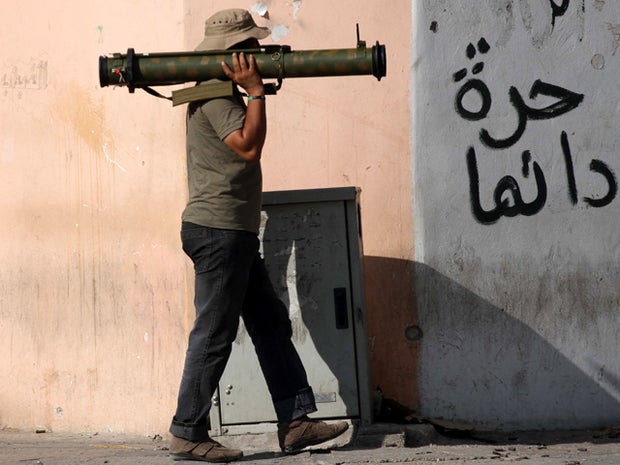
The withdrawal of Muammar Qaddafi's troops from various weapons caches around Libya has reportedly left vulnerable the regime's supply of surface-to-air missiles, not just to the increasingly powerful rebels but also to looters looking to sell the weapons on the black market.
CNN recently explored an abandoned storage facility with Human Rights Watch in the capital city of Tripoli, finding emptied crates for shoulder-launched missiles. Peter Bouckaert, the organization's emergencies director, told the cable news network that the missiles can be worth thousands of dollars.
Special Section: Anger in the Arab World
Qaddafi surrounded, Libya fighters say
Qaddafi's softer side comes out in family video
"We are talking about some 20,000 surface-to-air missiles in all of Libya, and I've seen cars packed with them," Bouckaert told CNN. "They could turn all of North Africa into a no-fly zone."
Chad and Niger, which sit along Libya's southern border, told the network that smugglers have already moved Libyan weapons into their countries with the final destination being al Qaeda terrorists. (Niger's the country where Qaddafi's security chief and a group of his troops fled Tuesday.)
The abandoned warehouses have prompted Western officials to worry that enemies like Iran will get their hands on Qaddafi's missiles, CNN reports. Powerful mobile weapons have proven to be deadly against coalition forces in Afghanistan, such as, for example, when a rocket-propelled grenade shot down a helicopter last month, killing 30 Americans and eight Afghans.
Witness: Copter on fire at time of Afghan crash
Remains of U.S. troops arrive home in secrecy
Fallen in Afghan crash remembered as heroes
As for Qaddafi's chemical weapons that were the focus of international inspectors until February, when Libya became too dangerous for them to stay in the country, authorities have said they've been secured.
Ahmet Uzumcu, director general of the Organization for the Prohibition of Chemical Weapons, told The Associated Press Wednesday that his sources said the stockpiles were secure. Uzumcu also said his inspectors would return to Libya "when the conditions will allow us."
