Philippine hotel in Davao City says Bondi Beach suspects stayed for a month and were there every night
Authorities investigating the Bondi Beach terrorist attack have been looking into a month-long trip taken by the suspects, father and son Sajid and Naveed Akram, to the Philippines, where there's been a decades-long Islamist insurgency in the south of the country.
Australian Prime Minister Anthony Albanese said this week that the attack was inspired by ISIS, and there is an ISIS-affiliated militant group operating in a remote area of the Philippines.
But a receptionist at a hotel in Davao City said the attackers never left their room for more than a day.
Jojo, who works at at the GV Hotel in Davao, told CBS News on Thursday that Sajid and Naveed Akram, the elder of whom was killed during the Sunday attack, checked into the hotel on Nov. 1 and then left on Nov. 28.
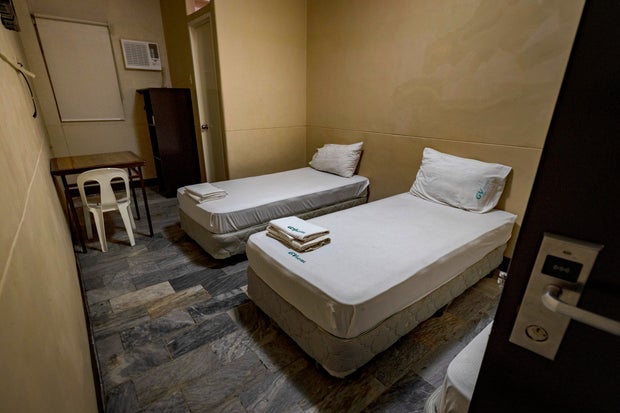
He said they extended their stay week by week and paid in cash, and that they would go out during the day, but return to the hotel every night, often bringing food back to eat in their room.
He said there was nothing particularly suspicious about the father and son, who had one piece of luggage and one backpack between them.
Australian public broadcaster ABC previously reported that the Bondi Beach attackers had undergone "military-style training" in the Philippines, citing security sources.
But on Wednesday, Philippine presidential spokesperson Claire Castro, quoting a National Security Council statement, said there was "no validated report or confirmation that individuals involved in the Bondi Beach incident received any form of training in the Philippines," according to French news agency AFP.

The government "strongly rejects the sweeping statement and the misleading characterization of the Philippines as the ISIS training hotspot," Castro said.
There has been an Islamist insurgency in the southern Philippines for many years, but the two main militant groups involved are not affiliated with ISIS, Tom Smith, the academic director of the Royal Air Force College, who studies security and terrorism in the Philippines and Southeast Asia, told CBS News earlier this week.
There is a relatively small splinter group called Abu Sayyaf based on a remote archipelago that is affiliated with ISIS, but Smith said it would be very difficult for foreigners to receive weapons training from the group.
"They would stick out like a sore thumb," Smith said. "When I go there, you know, I'm there with military support. I have a Ph.D. in the area, and even I stick out like a sore thumb."
He said there are "plenty of armed people in Mindanao, in the Philippines, for them to go and practice, you know, firing rifles and what have you. But it's a long way to say that that equals a terrorist camp."
Australian and Indian authorities have confirmed that Sajid Akram, 50, who was killed during the attack, traveled on an India passport, while his son, born in Australia, used an Australian passport.
Naveed Akram, 24, was wounded during the attack, but woke up from a coma earlier this week and was quickly charged with 59 individual offenses, including 15 murder charges.