Morningstar Conference Update: Investment Experts Share Bleak Outlook
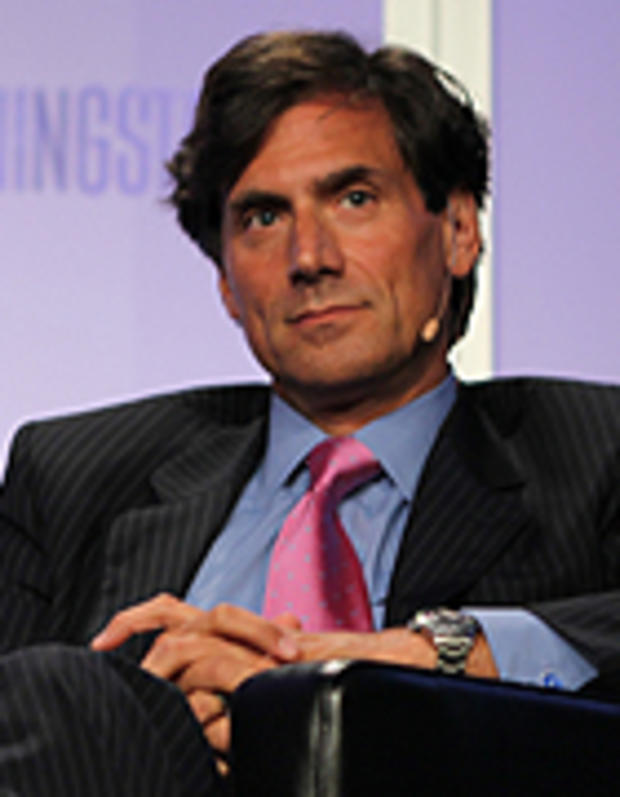
Fund manager Steve Romick (Photo: Jack Otter/CBS)
As 1,300 investors and financial advisors meet in Chicago to share investment ideas at the annual Morningstar Investment Conference, the overarching question seems to be: "What now for the financial markets?" And more than a few respected money managers have fairly pessimistic answers to that question.
Steve Romick, manager of the FPA Crescent Fund (FPACX), put it rather bluntly: “You got a rock? Hide under it.”
Romick may have been half joking, and he does believe the economy will “muddle through” its problems. But there’s broad agreement that those problems are serious.
Topping the list: government debt. The dot-com bubble a decade ago has been replaced by a “dot-gov bubble,” says Rudolph-Riad Younes, head of international equities at Artio Global Investors and manager of the Artio International Equity fund (JIEIX).
In a keynote address opening the conference, Jeffrey Gundlach warned of the possibility of a double-dip recession. Perhaps the only good news, Gundlach says, is that for the moment, the U.S. is seen by the rest of the world as the safe place to be, and therefore money will continue to flow into government bonds — keeping interest rates (and Uncle Sam’s borrowing costs) low. Gundlach, the outspoken founder of mutual fund company DoubleLine Capital, has serious cred with the Morningstar crowd; in a speech at the 2007 Conference he described the subprime mortgage market as a “total, unmitigated disaster.” He got that one right.
So what does this mean for your portfolio? Despite their gloomy projections, the managers see investment opportunities. Though nearly half of Romick’s fund (which has averaged an impressive 11 percent a year over the past decade) is in cash, he made the case for energy stocks. He thinks energy will benefit because supply is restricted, and because it will gain if the dollar loses value or inflation returns.
Younes likes gold, which he thinks will increase in value as long as governments continue to struggle with indebtedness. And Gundlach not only likes U.S. Treasury bonds, but also sees value in the same mortgage bonds he disparaged three years ago. They have fallen so far that they are now priced as if we are headed for a depression. “It’s a classic case of buying low,” he said.
The tone of the conference this year is notably different from 2009, when managers, though stung by their losses in the crash, saw opportunity in beaten-down stocks and corporate bonds. Their optimism proved well founded. But now bulls and bears debate whether the economy will continue a sluggish recovery or stumble again, resulting in the much-discussed double dip.
Morningstar analysts believe the stock market is “fully valued,” which means that while stocks may not be in bubble territory, they aren’t a bargain. But are Treasury notes “safer”? With yields at historic lows, government bonds offer little more than a promise to return your capital. And if you believe inflation is a problem, that’s not much of a promise. As the famously dour (and famously insightful) market watcher James Grant puts it, Treasury bonds offer “return-free risk.”

Keynote speaker Jeffrey Gundlach (Photo: Jack Otter/CBS)
Gundlach disagrees with Grant, at least in the near term, arguing that bonds will benefit as frightened investors pile in. That’s certainly been the case recently: Over the past 18 months investors have poured in a net $390 billion into taxable bond funds, while pulling out $45 billion from U.S. stock funds, according to Morningstar.
Despite his near-term confidence, Gundlach sketched a troubling long-term picture of the U.S. financial situation. Displaying a chart that would shock the anti-tax crowd, he showed that the individual income taxes have stayed stable at 40 percent of all government tax receipts since World War II. Meanwhile, corporate taxes have plummeted. “What’s taken their place,” he said, “is the debt bomb.” By that he meant that Medicare and social security taxes have filled the gap, but instead of being saved to pay for those future obligations, they’ve already been spent. Starting around 1980, the government started spending way more than it was taking in through taxes, and borrowing to make up the difference. Going cold turkey on borrowing would be a painful solution: Taking the stimulus away, he says, would result in a double-dip recession.
But continuing on our current path is unsustainable: “If you go out 20 years, we just can’t afford to cover the debt service,” he says.
So what’s the end game? Younes says the most optimistic scenario would involve small tax increases, small spending cuts, economic growth and strong demand from emerging markets.
In other words, a lot of “ifs.”
More on MoneyWatch: