Mitt Romney's challenges to the nomination pile up
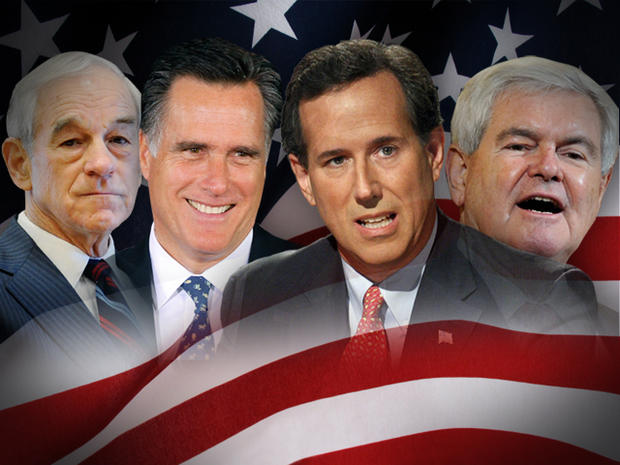
In the race for delegates, Tuesday night's Republican primary contests were not the most delegate-rich contests. Colorado and Minnesota have 37 delegates to offer, and Missouri offered none, but the race still mattered. Here's why:
"A breakthrough night for Rick Santorum," "Santorum Delivers a GOP Stunner," and "Rick Santorum sweeps Tuesday contests with Colorado win," are Wednesday morning headlines from The Washington Post, The Wall Street Journal and Los Angeles Times.
Rick Santorum worked hard for his three-state sweep. He spoke to his socially and religiously conservative base and campaigned in all three states, and was rewarded with large-font, bold-faced headlines Wednesday.
In short, he changed the narrative.
Despite his (late to be acknowledged) win in Iowa and some strong debate performances, he has not been considered the main contender for the not-Romney crowd. The race in recent contests has mostly been between former House Speaker Newt Gingrich and former Massachusetts governor Mitt Romney.
With his wins Tuesday, Santorum now has more delegates than Gingrich. And his claims to be the true conservative alternative to Romney are a lot more convincing.
As important as that new-found status for Santorum is the fact that Romney's climb just became a little steeper. Romney must now contend with both Santorum and former House speaker Newt Gingrich nipping at his candidacy.
And Santorum's win is a reminder of just how unpopular Romney is among conservatives, who do not trust the candidate who has his headquarters in Massachusetts.
"When he spends money he can medicate that problem by making his opponents seem unpalatable and by working to turn out his vote," noted CBS News political director John Dickerson, but "when he doesn't spend the money the virus returns."
Romney did not spend any time in Missouri, Colorado or Minnesota, nor did he run advertisements, demonstrating that Romney cannot rest on his past wins to wrap up the nomination, a notion he acknowledged in a brief question-and-answer session with reporters Wednesday.
"It's not easy to be elected president," Romney said. "There's no such thing as coronation."
If Romney's climb is steep, Santorum's is steeper. Romney has the organization, money and resources for a long protracted fight and if Gingrich and Santorum continue to fight to be the conservative alternative, Romney benefits.
He is prepared to contest many more states and the former Massachusetts governor is looking ahead to future contests. On March 6, known as "Super Tuesday," ten states and 491 delegates will be decided.
"Ours is the only campaign to be active in all of these states," Romney spokesperson Andrea Saul wrote in a memo the morning after Santorum's three-state sweep.
Meanwhile Santorum and Gingrich are forced to build campaign infrastructure state by state after they receive enough of a push in support and fundraising to continue.
If the winner was awarded by the number of states won, Santorum would be in the lead. He has won four of the eight nominating contests - Iowa, Colorado, Minnesota and Missouri, more than Mitt Romney's three wins in New Hampshire, Florida and Nevada and more than Gingrich's only win in South Carolina. But what matters more than the number of states won is the number of delegates won. The Republican contender needs 1144 delegates to be the nominee, and that's where Mitt Romney continues to have an advantage.
CBS News estimates that Romney is ahead with 103 delegates, Santorum is in a distant second with 44, followed by Newt Gingrich with 30 delegates, and Ron Paul has four delegates.
The race also shows that it's a difficult race for all four of the candidates, including former House speaker Newt Gingrich and Rep. Ron Paul.
Newt Gingrich wasn't expecting to do well in Tuesday's contests. He skipped campaigning in Minnesota and Colorado and wasn't on the ballot in Missouri. But Santorum's surge could prove more complicated for Gingrich than it does for Romney. Santrorum's strategy has been to stay in the race longer than Gingrich and collect his conservative votes. Santorum's strategy is working, so far.
Meanwhile, Rep. Paul is focusing on the small caucus states and he contested both Colorado and Minnesota heavily. In Minnesota he placed second behind Rick Santorum but far behind him with 27 percent of the vote to Santorum's 45 percent. Paul came in fourth in Colorado with 12 percent.
A theme that continues through out the Republican nomination is low voter turnout. In Colorado, 65,000 caucus-goers participated, which is fewer than in 2008 and only accounts for about 8 percent of the Republican vote. In Minnesota, less than 5 percent participated in Tuesday's caucus. In Minnesota, Missouri and Colorado combined, only 88,000 people voted for Romney, about 152,000 fewer than voted for him four years ago, when he was the conservative alternative to Arizona Sen. John McCain.
Romney told reporters Wednesday that he "didn't devote a lot of money and time" into those states this year and instead focused his attention on Nevada and Florida.
Nevada and Florida also saw lower voter turnout than in 2008, despite having more registered Republican voters than four years ago.
Low voter turnout can mean that voters are not thrilled about the candidates they have to chose from, and that could be the biggest problem facing Mitt Romney.