Mike Fincke reveals he was the astronaut who had medical issue aboard the International Space Station last month
NASA astronaut Mike Fincke, the commander of the International Space Station, revealed that he was the crew member whose medical issue required a group of space station fliers to cut short their mission and return early to Earth in January.
Fincke, 58, did not provide details about the medical issue, but wrote on LinkedIn that a "full range of terrestrial imaging and diagnostic evaluations — capabilities available only here on Earth — have been completed," and he is "grateful to share that the results are very reassuring and that I'm firmly on the path to a complete recovery." In an earlier statement, he called out his colleagues and others involved in his care for their "professionalism and dedication," which "ensured a positive outcome" for him.
"On Jan. 7, while aboard the International Space Station, I experienced a medical event that required immediate attention from my incredible crewmates. Thanks to their quick response and the guidance of our NASA flight surgeons, my status quickly stabilized," Fincke said in a statement, which NASA shared on Wednesday.
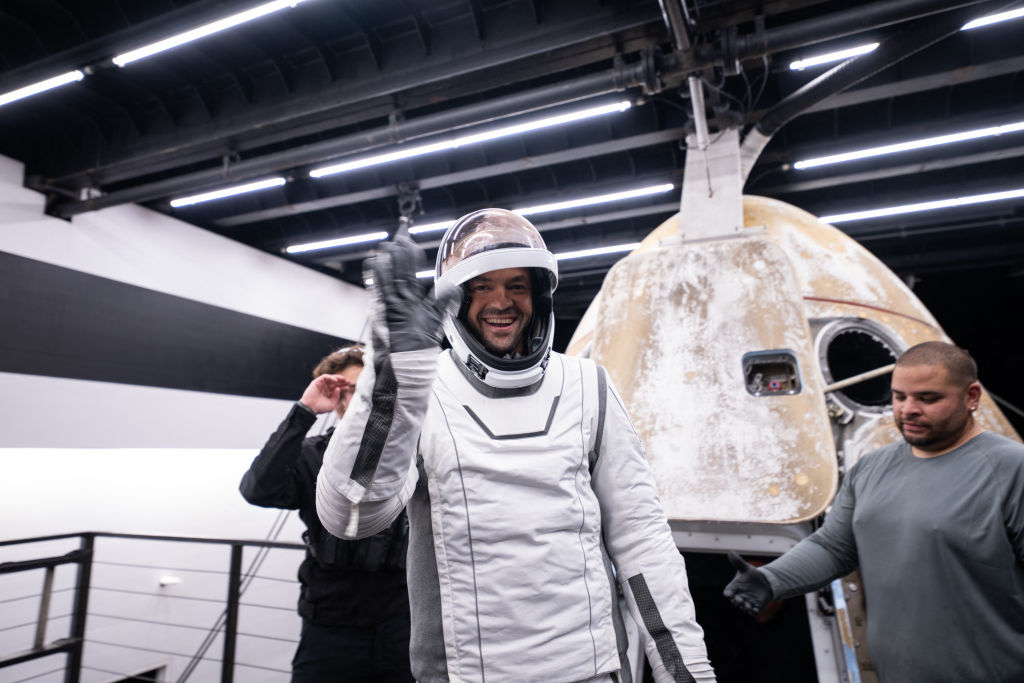
"After further evaluation, NASA determined the safest course was an early return for Crew-11 — not an emergency, but a carefully coordinated plan to be able to take advantage of advanced medical imaging not available on the space station," Fincke added. He and three other members of Crew 11 landed in a splashdown Jan. 15 off the coast of San Diego, concluding what he described as "an amazing five-and-a-half-month mission."
"Reentry was unforgettable — 10½ hours from undock to splashdown," Fincke wrote on LinkedIn. "Plasma streaming past the windows, nearly five g's after months of weightlessness, parachutes blooming overhead, and the Pacific rocking us gently back into Earth's embrace. It was humbling. It was beautiful. A reminder that exploration always carries risk — and always carries wonder."
Fincke expressed gratitude for his fellow crew, including commander Zena Cardman, Japanese astronaut Kimiya Yui and Russian cosmonaut Oleg Platonov, who returned with him, and Chris Williams, Sergey Kud-Sverchkov and Sergei Mikayev, who did not. He also thanked NASA, SpaceX, which operated the recovery ship where the four of them received medical checks after landing, as well as Scripps Memorial Hospital La Jolla, where he had additional treatment.
"The response from NASA's flight surgeons, engineers, mission controllers, and leadership teams across the globe was extraordinary. Watching experts coordinate across time zones and disciplines — seamlessly connecting on-orbit monitoring with Earth-based medicine — reminded me how much NASA truly cares about its people," he wrote on LinkedIn.
"I'm doing very well and continuing standard post-flight reconditioning at NASA's Johnson Space Center in Houston," Fincke said in the statement shared by NASA, adding: "Spaceflight is an incredible privilege, and sometimes it reminds us just how human we are. Thank you all for your support."