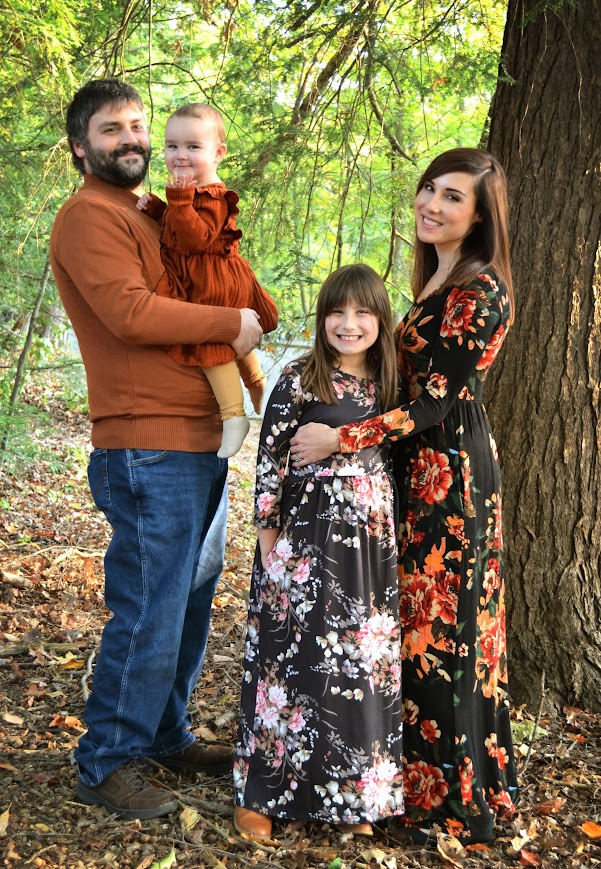
She gave up on a dream of growing her family after a terminal diagnosis. Then her husband "flipped a light switch."
Maralee Lellio was surprised to be diagnosed with Stage II breast cancer at 29, but she knew what her next steps would be. Her disease was treatable. Her oncologist recommended chemotherapy and surgery.
The treatment was unpleasant, but through it all, she focused on a future goal: welcoming a second child. Lellio dreamed of giving her firstborn daughter, then 2, a sibling. Lellio and her husband froze embryos before she began chemotherapy. She also underwent a double mastectomy. Once she finished treatment and was declared cancer-free in September 2019, the couple started IVF.
Everything seemed to be falling into place. Then the headaches and dizziness started.
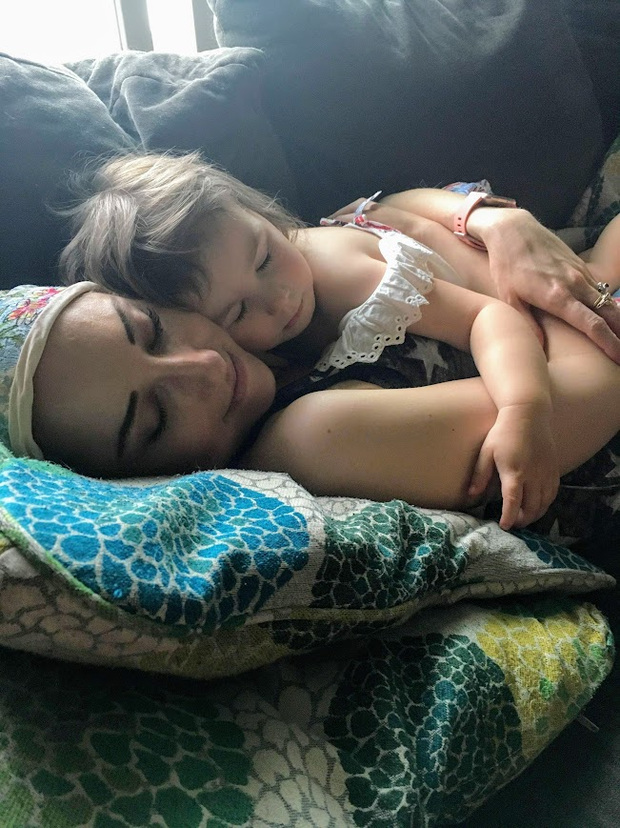
Lellio, now 30, told her oncologist about it. A CT scan didn't show anything abnormal. Lellio tried not to worry, thinking the pain might be a side effect of IVF medications. But the headaches intensified, and eventually became "incapacitating." In the summer of 2020, Lellio scheduled a telehealth appointment. The doctor she spoke to recommended she go to the emergency room. There, she received an MRI — and devastating news.
"They came back into the room where I was, and said 'We found a very large brain tumor ... and there's no cure, sorry,'" Lellio recalled. "And just left us. That's how I found out I had terminal cancer. It was awful."
"I just accepted that I was dying"
Lellio's initial disease had recurred as Stage IV breast cancer that had spread to her brain. Only about 1 in 3 patients with Stage IV breast cancer survive more than five years, according to the National Breast Cancer Foundation. It is considered incurable.
Lellio underwent a craniotomy with the hopes it would remove the tumor, but the disease quickly grew back larger than before. Running out of options, Lellio's original oncologist recommended the Cleveland Clinic. Lellio transferred her care there and began receiving radiation. The treatment was difficult, causing seizures and leaving her unable to walk, and Lellio found herself depressed and believing the worst.
"I just accepted that I was dying and I wasn't going to get to see my daughter grow up, I wasn't going to ever get to have the second baby I'd always dreamed of, and that was it. That I could only hope for a couple of good years before I inevitably died," Lellio said.
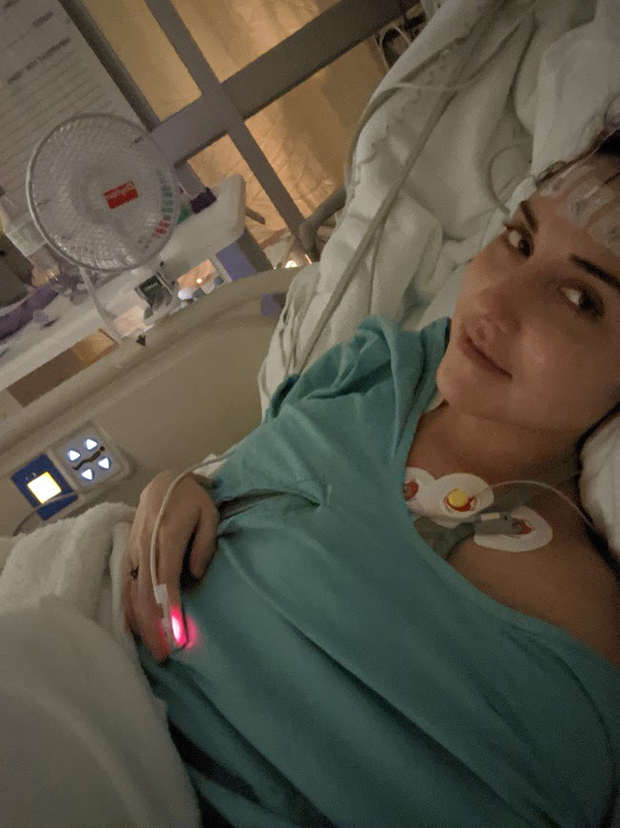
One day, she shared those thoughts with a friend during a phone call. Her husband overheard.
"He said, 'You know, Maralee, it really makes me sad when you tell people and when you accept that you only have a couple of years left, because I think that you could survive this. We've seen stories of other people doing it. We know that it can happen, that there are unicorns out there, and I think that could be you,'" Lellio recalled. "It sounds so not special. I don't know the word for it. It was like somebody flipped a light switch on in my brain. So it was at that point I decided, 'I have to at least try.'"
A cutting-edge treatment
Lellio's Cleveland Clinic oncologist retired in spring 2021, and her care was transferred to Dr. Halle Moore. Lellio was sure to bring her optimistic attitude to their first meeting in July 2021.
"As soon as I met Dr. Moore, I told her 'I understand that this is a very bad diagnosis, but I believe I'm going to live.' And she just said 'OK,'" Lellio said. She also shared her desire to have another child. Moore "supported me, no argument," Lellio said.
Scans showed the radiation had shrunk Lellios brain tumor down "to almost nothing." Now, it was a matter of making sure the cancer didn't metastasize again.
Moore put Lellio on a medication called a PARP inhibitor, a cutting-edge treatment for people whose cancer has genetic mutations. The treatment essentially keeps cancer cells from being able to repair themselves and grow. Lellio's cancer was BRCA-1 positive, which Moore said PARP inhibitors respond particularly well to.
Lellio remained on the inhibitor for two years. During that time, she remained "free of any evidence of active cancer," Moore said. One day, Lellio asked Moore if she could safely go off the treatment and try to get pregnant. Moore agreed. Lellio would have to undergo counseling and wait one year, but she was thrilled to have something to look forward to.
"I was ready to move on and see if I could be cancer-free and have a baby," Lellio said.
"Messy, and stressful, and perfect"
After waiting one year, Lellio and her husband began trying to have another child. She became pregnant without IVF, and in July 2024, the couple welcomed their second daughter. Since then, life has been "messy, and stressful, and perfect," Lellio said.
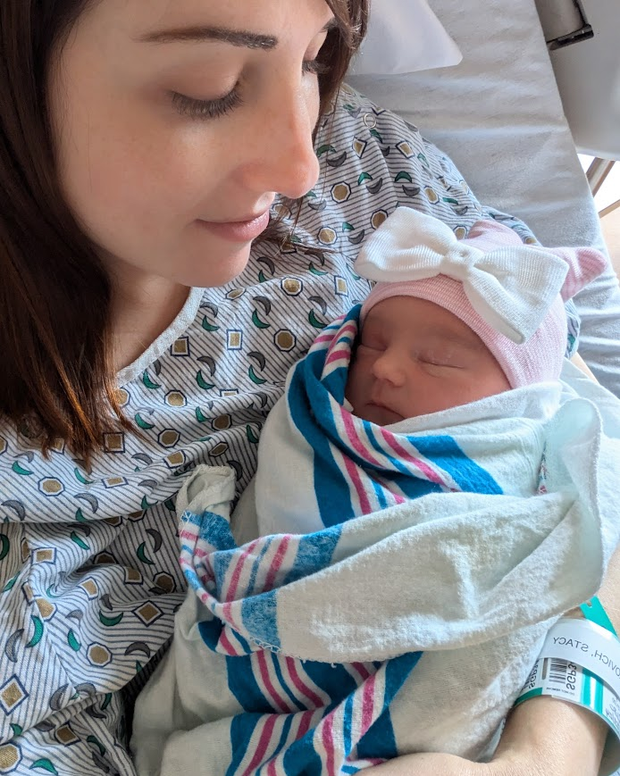
"I absolutely love it," Lellio said. "I am so grateful. It just feels like gushing. I hold her when we're going to bed at night, and I just thank God. I thank everything. I'm so beyond grateful to have my two beautiful girls."
Lellio continues to see Moore for frequent scans. She is also scheduled to receive a hysterectomy in the near future to limit the chance of another cancer occurring. Moore said the case is an example that "cancer doesn't always read the textbooks," and that a person with a "dire prognosis" can end up "doing extraordinarily well," especially as innovative treatments are developed.
In addition to spending time with her family, Lellio is back to work as a teacher. For Mother's Day. Lellio said she will celebrate "that I was able to do all of this, because it just seemed impossible."
"It just feels like nothing could be more perfect," Lellio said. "I think I'm more grateful for life and all the little stresses and the little things now than I ever would have been if I hadn't had to fight for my life back."