A mom's headaches and nausea were dismissed as pregnancy symptoms. She had a brain tumor.
Jenney Bitner always looked forward to her family's annual trip to see her mother in San Diego. For her three kids, it was a two-week vacation at their grandmother's house. For Bitner and her husband, it meant some relaxing time in the sun while their Washington home battled wet February weather.
In 2020, the trip was even more welcome than usual: Bitner was 22 weeks pregnant, and she looked forward to the family time amid the second half of her pregnancy. But after one day, Bitner felt too sick to get out of bed. Her head ached, she was nauseous and vomiting, and she felt unsteady on her feet.
Two urgent cares suggested she was just dealing with pregnancy symptoms. That didn't feel right to Bitner, but she figured an upcoming appointment with her obstetrician would provide answers. But when the family got home from San Diego, Bitner fell twice. Her husband insisted on bringing her to the emergency room.
An MRI revealed a "giant tumor" in her brain. Doctors scheduled an operation to remove as much of the tumor as possible. Tests on the mass revealed Bitner had Stage 4 melanoma that had spread to her brain. It was a shock: melanoma usually presents with a mark or lesion, and Bitner had never seen one. When the disease has spread this far, patients have a five-year survival rate of about 35%, according to the American Cancer Society.
"I had just turned 38, and I was pregnant with my fourth kid. I was thinking, 'I'm too young for this to be happening,'" Bitner recalled. "I was thinking, 'There's no way I'm going to make it through this. I'm never going to see this baby survive to a year old.' I was terrified."
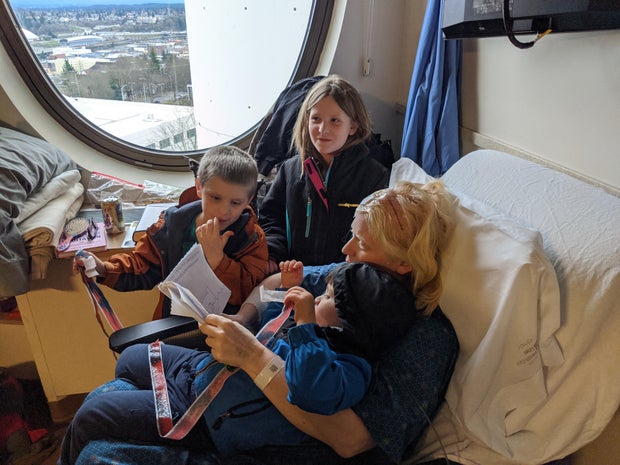
Treating cancer during pregnancy
Bitner's doctors recommended aggressive treatment. The first surgery had removed most of the tumor, but her neurosurgeon hadn't been able to take out the entire mass without causing permanent brain damage. Further testing also found a cancerous nodule in Bitner's back that was so large it could be felt through her skin.
Bitner needed immunotherapy, but that wasn't safe for her unborn child. Doctors said the baby would likely need to be delivered early so treatment could begin. After several weeks of close monitoring, the decision was made to deliver Bitner's child via C-section at 34 weeks.
Days before the scheduled delivery, Bitner again experienced nausea and headaches. A scan showed that her tumor had grown back to its full size in just weeks. On top of immunotherapy, she would need another brain surgery.
"I had these three and a half children, and my thought was, 'I'm not going to see them grow up,'" Bitner said. "I started writing them letters, like, all these things that I was going to want to say to them, because I didn't think I'd be there to say it to them."
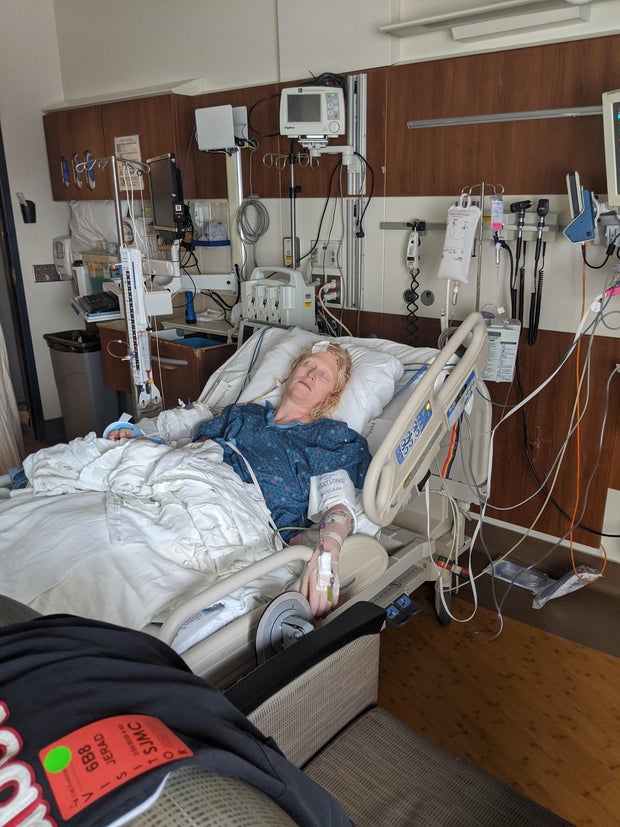
On May 4, Bitner's son was born. They named him Marcus, after her neurosurgeon. He weighed 3 pounds 12 ounces and needed some time in the NICU, but in a journal entry shared online, Bitner's husband described him as "a fighter" who was "feisty already."
One week later, Bitner had the second brain surgery. This time, her surgeon was able to remove the entire tumor. She spent another week recovering. Both mother and son were deemed fit to go home on the same day. In another journal entry, Bitner's husband said having his entire family together at last was "joyous." The older kids were thrilled to meet their baby brother, he wrote.
"And so begins the sleepless nights. I'll take 'em," he wrote.
A "pretty remarkable" recovery
In early June 2020, Bitner began immunotherapy. The goal of the medication was to boost her immune system so her white blood cells could attack the cancerous cells in her body and brain. Tests had shown new areas of concern near Bitner's lung, thigh and brain, leaving her anxious about how the treatment would go.
But within days, Bitner's husband noted that he couldn't feel the cancerous spot on her back. Soon, other lumps on her skin shrank. Scans confirmed her "pretty remarkable" progress. By her final immunotherapy session, Bitner felt well enough to drive herself there.
She suffered rare side effects, including an allergic reaction and a bout of encephalitis. Both incidents left her hospitalized. But it all felt worth it, she said, when her oncologist said in October 2020 that she had no evidence of disease.
Dr. Alicia Zhou, the CEO of the Cancer Research Institute, a non-profit that supports immunotherapy research, said Bitner is one of many patients who have been helped by cutting-edge immunotherapies. The treatments are "a phase shift in the field," she said, and give patients like Bitner a chance to not just survive, but thrive.
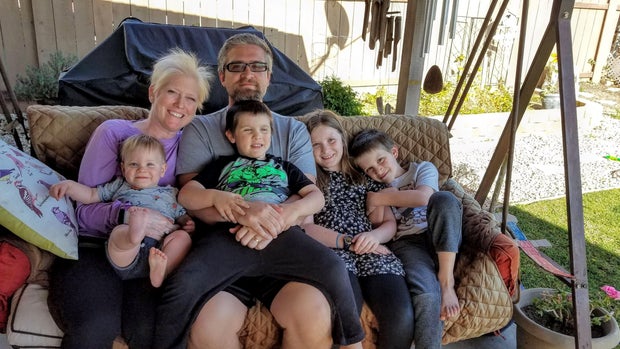
"Before immunoncology, we weren't really able to say the word 'cure' for these patients who were suffering from Stage 4 metastatic disease, and now we can," Zhou said. "It's really, truly transformational for these patients."
Nearly six years, Bitner is proud to have beat the odds and is focused on raising awareness for new immunotherapy research and spending time with her family.
"I feel like every day I've had since all this has happened has been a gift. I shouldn't have had all this time, and so I take every day as something precious," Bitner said. "It's chaos in my house all the time. And there was a time I would have dreaded it ... but now those are sounds I didn't think I was going to get to hear, so they're music to my ears. The messy house is a pain, but it's a messy house I didn't think I was ever going to have."