Journey back to Japan's quake zone
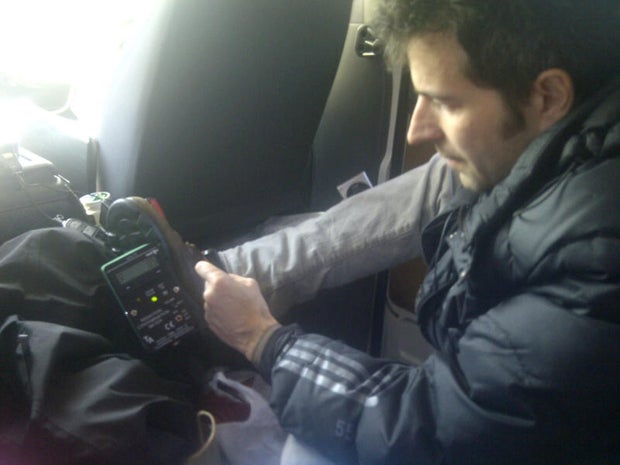
Armed with a radiation detection device and potassium iodide tablets, correspondent Lucy Craft, photographer Randy Schmidt and I headed north from Tokyo. We wanted to return to the quake's epicenter sooner, but given the threat of radiation had to wait until supplies arrived that would make our journey safer. Now that they had come, we could go.
Complete coverage: Disaster in Japan
Latest developments: Japan disaster
We got a later start than any of us had hoped, courtesy of a dead car battery and a frantic search to find another van. Our replacement vehicle ended up being a box van -- a bumpy, impractical vehicle for long distance travel given its non-existent shocks and one bench-like seat for passengers. It wouldn't be a comfortable ride, but at least we would return to a place where we could report on the continuing human toll of the triple disasters.
We drove for several hours through the night, past the troubled city of Fukushima, until our driver, Hitoshi (whose name means "Happy Mountain"), started swerving across lanes -- a function of his fatigue. In Sendai, we decided to stop and rest for a few hours rather than risk forging ahead with a sleepy driver. All the traditional hotels were sold out, so we found a "love hotel" -- with rooms that you pay for by the hour -- that would take us in for a few hours of shut-eye.
In Japan, love hotels are everywhere. I'm told every community has at least one since most people, especially in rural areas, live with their parents until they get married. Since few people want to have the shadow of a parent's judgmental eye clouding their amorous adventures, they seek out these refuges. While I didn't quite understand the list of costumes -- like "Strawberry Maid" -- that the staff offered to enhance our stay, the room was clean and warm.
After a 2.5 hour nap, we got back on the road... only to find ourselves stuck for another 45 minutes in a line for gas. Like most other things in Japan, it was well organized. Nobody tried to cut the line or yell at the people directing traffic. Everyone just patiently waited in their cars until it was their turn.
While we waited in line, Randy pulled out the radiation detector. The staff had tested it out earlier in the office. At that point, the highest levels of radiation came from Bill Whitaker's coat, a reading of 0.3 mSv/h. In the car, as we tested the coat I had worn in Minamisanriku last week with Harry Smith and Randy, we got a reading of 0.6 mSv/h. Then we put it up to the bottom of Randy's shoe -- and got a reading as high as 1.2 mSv/h.
To put those numbers in perspective, a chest X-ray emits about 0.2 mSv, so we had exceeded that level. But a brain scan exposes patients to about 50 mSv. Neither X-rays nor brain scans are thought to do any permanent harm.
Near the damaged nuclear reactors in Fukushima, Japanese officials said radiation levels have been up in some places to about 400 mSv. But even those reported numbers, if I'm reading the data correctly (because I'm no expert and nor do I claim to be), wouldn't seem to do immediate harm. According to the World Nuclear Association, anything above 6,000 mSv would be fatal if not treated and anything above 10,000 in a single dose would lead to death within a few weeks.
So, the good news seems to be Randy's shoes and my coat are not lethal. The bad news is I may have to throw out my coat before I try and get on a plane to fly home. Still, as we begin the descent into an entire valley wiped out by the tsunami, the loss of a coat hardly seems to matter.