Iran claims shopkeeper Erfan Soltani, detained during protests, was never facing execution
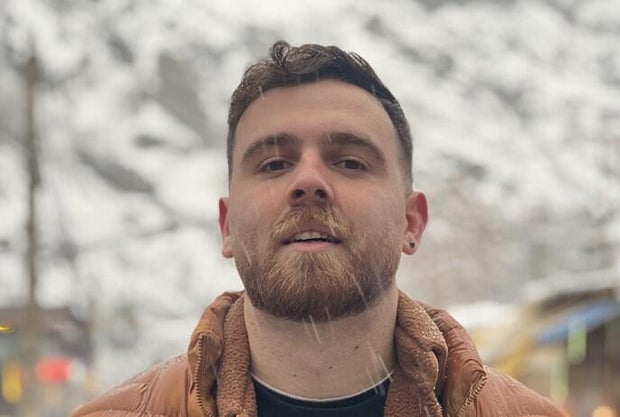
Iranian authorities claimed Thursday that 26-year-old shopkeeper Erfan Soltani is not facing execution and could only be sentenced to prison if convicted of the charges he's facing. Soltani's uncertain fate garnered international attention after activists said his family had been told he would be executed for involvement in the anti-government protests that swept across the Islamic Republic in early January.
Human rights group Hengaw, which has been in contact with Soltani's family, told CBS News this week that he had been convicted of participating in the protests and sentenced to death, but as the regime in Tehran came under intense pressure from Washington, a Hengaw representative told CBS News on Wednesday night that it had been informed the execution was postponed. The family had been told earlier in the week that Soltani would be executed on Wednesday, according to Hengaw.
On Thursday morning, the semi-official Tasnim news agency, which is associated with Iran's powerful Revolutionary Guard Corps, cited the government's Judiciary Media Center as denying that Soltani was ever sentenced to death.
The center dismissed the reports as fabricated and misleading and said Soltani, who was arrested on January 8 during the height of the protests, had been charged with assembly and collusion against national internal security, as well as engaging in propaganda activities against the system. It acknowledged that he was being held at the Karaj Central Prison, outside Tehran, but said the charges against him only carry a possible prison sentence, not execution.
Hengaw, which monitors events in Iran via a network of contacts inside the country, had told CBS News on Wednesday evening that Soltani's execution "has not been implemented and has been postponed."
An ongoing internet blackout in Iran was making it difficult for Hengaw to provide timely updates on the case and for CBS News and other organizations to get a clear picture of the events in the country more broadly.
The uncertainty over Solanti's fate on Wednesday came on the heels of President Trump threatening "strong action" against Iran if it hanged people detained during the protests. Mr. Trump then told reporters Wednesday in the Oval Office that he had heard on "good authority" that the "killing in Iran is stopping" and "there's no plan for executions."
Hengaw representative Awyar Shekhi told CBS News on Tuesday that Iranian officials had informed the family that Soltani "was arrested because of the protest, but we don't know if actually he participated in the protest because there is absolutely no information about that or evidence."
Soltani is a clothing seller whose family lives near Tehran, according to Shekhi, who added that Soltani's family has said he was not a political activist but was opposed to the current situation in the country.
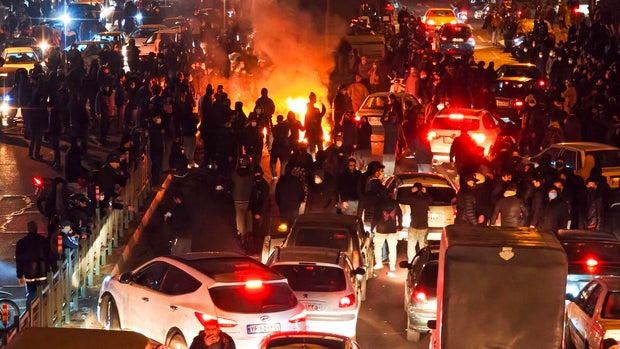
Iranian security forces launched a brutal crackdown to end the widespread anti-government protests, which sources inside the country say may have resulted in the deaths of some 12,000 people, and potentially many more. More than 2,600 people were detained amid the unrest that began on Dec. 28, according to rights groups.
There had been fear that many of those in detention could be executed. On Thursday, Iranian officials had yet to clearly confirm or deny Mr. Trump's statement that there would be no executions.
Shekhi told CBS News that from the time of his detention, Soltani had been "deprived from all of his basic rights to contact his family, to have a lawyer."
Four days later, "the family got information that their son has received [a death] sentence, and without declaring what was the charges [or] when the trial took place."
Soltani's family was not told how his planned execution would be carried out, but the most common method in Iran is hanging, Hengaw told CBS News.
Soltani's sister is a lawyer and was pursuing all available legal avenues to defend her brother, "but the authorities have told [her] there's no case to review and we are not allowing that," Shekhi said earlier this week.
The activist told CBS News the family was informed they'd be allowed to have a final meeting with Soltani — a procedure normally reserved for the families of those being executed. Hengaw said it had no confirmation that the meeting had taken place, but a source close to the family told the group that some of Soltani's relatives had been heading to the massive Ghezel Hesar prison in Karaj late Tuesday night.
"If we want to do a job, we should do it now. If we want to do something, we have to do it quickly," Iran's judiciary chief Gholamhossein Mohseni-Ejei said Wednesday in a video aired on state television, showing part of a discussion he had with other judiciary officials about the handling of detained protesters' cases. "If it becomes late, two months, three months later, it doesn't have the same effect. If we want to do something, we have to do that fast."
Mr. Trump told CBS News' Tony Dokoupil on Tuesday that the U.S. would act if the Iranian regime begins hanging protesters.
When asked to clarify what that action could be, Mr. Trump said: "Well — let's define it in Venezuela. Let's define it with [ISIS leader] al-Baghdadi. He was wiped out. Let's define it with [Iranian military commander] Soleimani. And let's define it in Iran, where — (we) wiped out their Iran nuclear threat in a period of about 15 minutes once the B-2s got there. And that was a complete obliteration as it turns out, which is what I said initially. Then some questioned it, and they said, 'You know, Trump was right.' So we've been right about everything. We don't want to see what's happening in Iran happen. And, you know, if they want to have protests, that's one thing. When they start killing thousands of people and now you're telling me about hanging - we'll see how that works out for them. It's not gonna work out good."