As Iran's exiled crown prince calls for Iranians to seize protest momentum, could it be a tipping point?
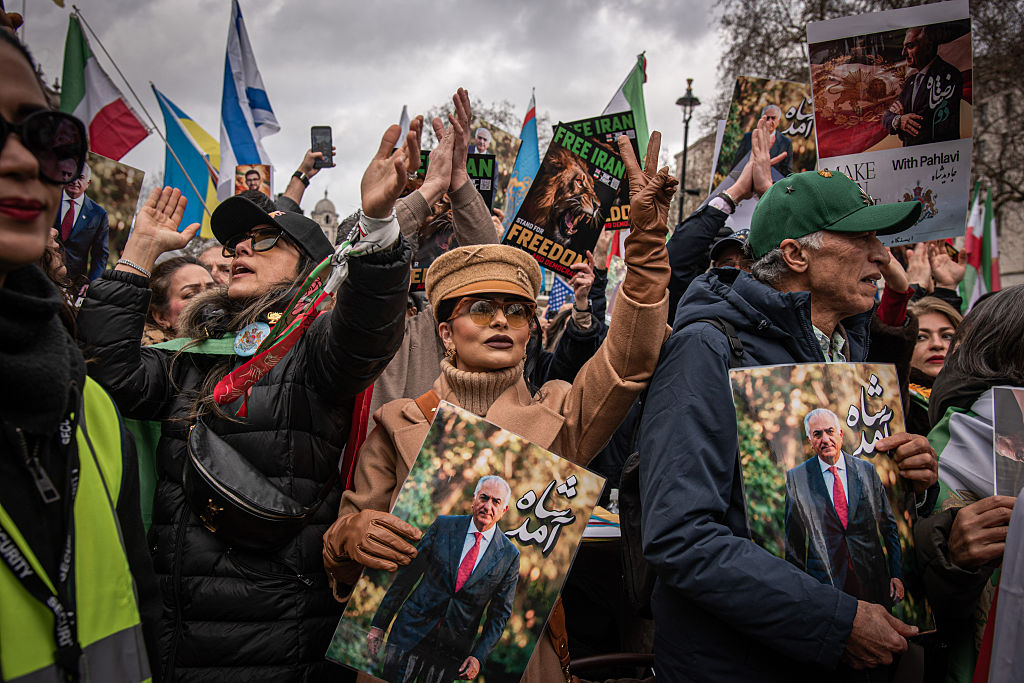
Exiled Iranian Crown Prince Reza Pahlavi, the son of the former U.S.-backed shah, has called for Iranians to chant together against the country's leadership at 8 p.m. local time (noon Eastern) on Thursday and Friday. Whether a significant number of people answer his call could determine whether deadly, 12-day-old protests fizzle out as previous rounds of unrest have, or grow into a major challenge to the government, and provoke a possible wider crackdown.
"My dear compatriots, over the last week I have watched your demonstrations closely, particularly those that are taking place today in the bazaars of Tehran," Pahlavi said in a video posted Tuesday on social media.
"Despite the regime's ongoing violent crackdown, you are resisting, and it is inspiring," Pahlavi said. "You have certainly noticed and seen that larger crowds have repeatedly led regime forces to flee and have even increased defections to the side of the people. Therefore, it is critical to keep these demonstrations disciplined, and as large as possible. This Thursday and Friday, January 8th and 9th, starting precisely at 8 pm, wherever you are, whether in the streets or even from your own homes, I call on you to begin chanting exactly at this time. Based on your response, I will announce the next calls to action."
Some analysts and Iranian insiders believe it could be a crucial moment.
"It seems as though his call for people to come out in masses today and tomorrow could be a turning point," Mona Yacoubian, Director and Senior Adviser of the Middle East Program at the Center for Strategic and International Studies think tank, told CBS News on Thursday. "This is a regime that is not afraid to use lethal force. But the question is, to what extent, if they become overwhelmed, if the protests become overwhelmingly large and if there are elements in security forces, police, and so forth, kind of at that local level, who themselves are suffering the effects of this economic crisis and who decide not to shoot at people: These are the kinds of questions I think that we need to watch."
Another longtime observer of the regime inside the country, referring to Pahlavi's call, said in written comments to CBS News on Thursday that, "the moment we're all waiting for is 8pm this evening ... If there is widespread participation — impossible to ignore — it could be a turning point."
"If the chanting at 8 o'clock is really loud — ear-deafening, and in chorus, and eye-catching [ie impossible for authorities to ignore], then from Friday on it will be assumed the protests are a real force and they will gain momentum — and then we are heading for the unknown," they said.
Yacoubian said the current protests in Iran were different to the last widescale demonstrations that swept the country, over the 2022 death in police custody of a young woman accused of violating strict rules on attire, because they are focused on economic woes.
"In 2022, the regime could respond more directly to the demands of the protesters by simply addressing their complaints about women's veiling and so forth," Yacoubian said. "There was a lot of violence that was undertaken. Many people were killed. But you actually have seen a very significant relaxing of those kinds of social strictures in Iran."
Despite that relaxation of some rules governing people's daily behavior, the intense economic woes in sanctions-wracked Iran was enough to spark the current wave of unrest, which, despite a number of measures aimed at placating demonstrators, has continued to spread around the country.
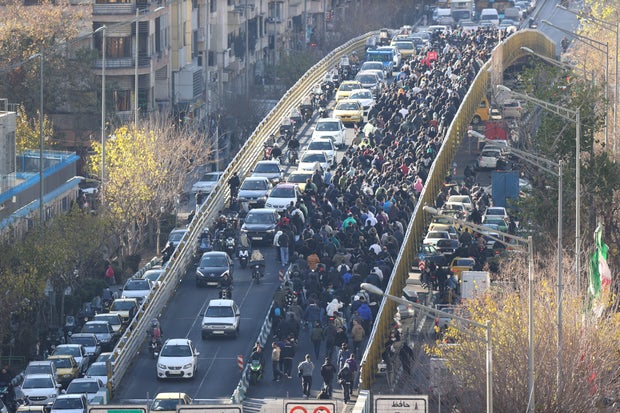
Yacoubian said the Iranian government did not have any meaningful way to assuage the concerns of the current demonstrators over Iran's economy.
"In the case of these economically driven protests, there's really nothing (the regime) can do to address the concerns and the kind of the drivers of public disaffection, because it's driven by an economy that has utterly failed and is collapsing," Yacoubian said.
Another potential factor is Israeli Prime Minister Benjamin Netanyahu's potential interest in further targeting Iran's ballistic missile program at a moment of perceived weakness for the regime in Tehran.
"That's a completely different dynamic that has nothing to do with these protests, but that actually, frankly, even if there had been no protests and you were asking me, I'd say, look, I think it's very possible that we're going to see a second round of conflict between Israel and Iran," Yacoubian said.
Iran's leaders, "certainly have, I'm sure, a very clear understanding of all the pressure points, both domestic and foreign, and it could be that's why they're so off their footing, is they actually are reading, probably well, the situation and don't really seem to have a good plan as to how to manage the unrest."