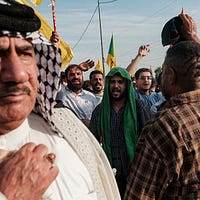
Iranian protests rage as deaths mount and Trump renews warning of possible U.S. intervention
Protests in Iran continued in the Islamic Republic, online videos purported to show, despite threats from the country's theocracy to crack down on demonstrators after shutting down the internet and cutting telephone lines off to the world.
An external rights group that relies on information from contacts inside Iran said Saturday that at least 116 people have been killed in the protests, which began in Tehran in late December as anger over Iran's ailing economy, but quickly spread and morphed into the most significant challenge to the government in years.
The protesters appeared to be taking encouragement from repeated declarations of support by the Trump administration, and by the country's exiled crown prince, who called on them to try and overwhelm security forces and seize towns and cities.
Supreme Leader Ayatollah Ali Khamenei accused President Trump of having hands "stained with the blood of Iranians" in remarks aired Friday on Iranian state TV, as supporters gathered before him shouted "Death to America!"
Protesters are "ruining their own streets ... in order to please the president of the United States," the 86-year-old Khamenei said to the crowd at his compound in Tehran. "Because he said that he would come to their aid. He should pay attention to the state of his own country instead."
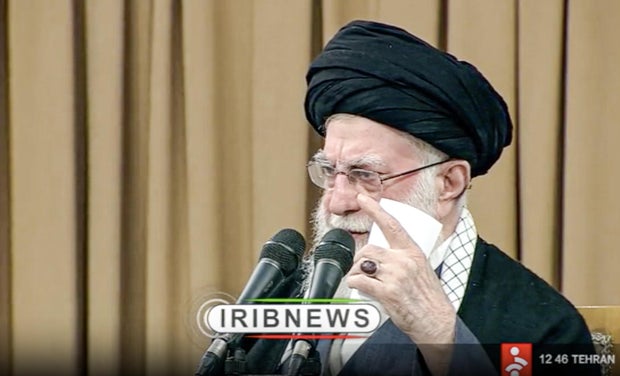
Iranian state TV is reporting on security force casualties while portraying control over the nation, without discussing dead demonstrators, whom it increasingly refers to as "terrorists." However, it also acknowledged protests went on into Sunday morning, with demonstrations in Tehran and in the holy city of Mashhad to the northeast.
Khamenei has signaled a coming clampdown, despite U.S. warnings. Tehran escalated its threats Saturday, with the Iran's attorney general, Mohammad Movahedi Azad, warning that anyone taking part in protests will be considered an "enemy of God," a death-penalty charge. The statement carried by Iranian state television said even those who "helped rioters" would face the charge.
"Prosecutors must carefully and without delay, by issuing indictments, prepare the grounds for the trial and decisive confrontation with those who, by betraying the nation and creating insecurity, seek foreign domination over the country," the statement read. "Proceedings must be conducted without leniency, compassion or indulgence."
Trump issues fresh warnings to Iran's leaders
Mr. Trump has repeatedly pledged to strike Iran if protesters are killed, a threat that has taken on greater significance after the U.S. military raid that seized Venezuela's former President Nicolás Maduro. He issued a message of support to protestors on Saturday afternoon.
"Iran is looking at FREEDOM, perhaps like never before. The USA stands ready to help!!! President DONALD J. TRUMP," he wrote on Truth Social.
A day earlier, Mr. Trump said that any possible American strike wouldn't "mean boots on the ground but that means hitting them very, very hard where it hurts."
"Iran's in big trouble," Mr. Trump said. "It looks to me that the people are taking over certain cities that nobody thought were really possible just a few weeks ago."
He added, "I tell the Iranian leaders you better not start shooting because we'll start shooting too."
In a brief social media post published in the very early hours of Saturday morning in Washington, Secretary of State Marco Rubio said "the United States supports the brave people of Iran."
Iranian regime warns protesters will be punished "without any legal leniency"
Iran's judiciary chief Gholamhossein Mohseni-Ejei separately vowed that punishment for protesters "will be decisive, maximum and without any legal leniency."
According to the Washington D.C.-based Human Rights Activists News Agency, which was founded by anti-regime activists, as of Saturday, the 14th day of unrest in Iran, at least 116 people had been killed, including at least 37 members of the security forces. More than 2,600 people had been arrested, and protests were recorded in at least 185 cities.
The agency found that those who were killed died by live ammunition or pellet gunfire, predominantly from close range.
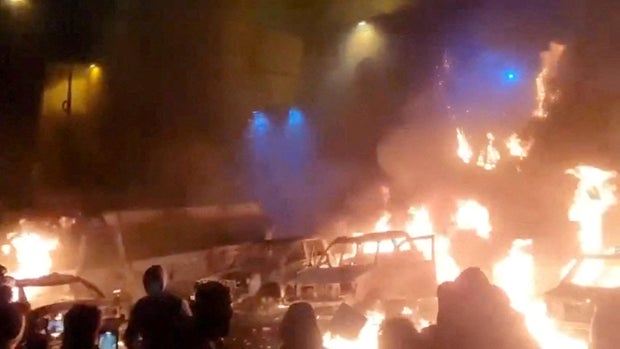
Iranian authorities shut down the internet on Thursday night as protests escalated sharply, seemingly as people heeded a call by the exiled crown prince, a vocal opposition figure, for Iranians to raise their voices against the regime. Iranian state media has shown only pro-government demonstrations. But the few social media videos that have made it through the internet blockade tell a different story.
According to an update posted online Sunday morning local time by the monitoring organization NetBlocks, stated that the blackout "is now past the 60 hour mark as national connectivity levels continue to flatline around 1% of ordinary levels. The censorship measure presents a direct threat to the safety and wellbeing of Iranians at a key moment for the country's future."
That communications blackout has made it incredibly difficult to gain a clear picture of the scale of the protests overall — and the Iranian authorities' response to it. Some other reports put the death toll from unrest much higher, with TIME citing a doctor in Tehran as saying at least 217 people had been killed, for instance.
Staff at three Iranian hospitals told CBS News partner BBC News that their facilities were overwhelmed by the number of dead and injured patients.
BBC Persian verified that about 70 bodies were brought to Poursina Hospital in Rasht Friday night local time, but because the morgue was at full capacity, the bodies had to be taken away.
A hospital worker in Tehran told BBC News there were so many wounded patients brought in that staff did not have time to perform CPR.
Iranian authorities have acknowledged a few deaths, but usually only those of security forces.
A doctor and medic at two hospitals in Iran told CBS News partner BBC News that their facilities were overwhelmed with injuries. The doctor said a Tehran eye hospital had gone into crisis mode, while the BBC also obtained a message from a medic in another hospital who said the facility did not have enough surgeons to handle the influx of patients. The medic claimed many of the wounded had gunshot injuries to the head and eyes.
Asked by CBS News how seriously he believes Iran's autocratic rulers are taking the warnings from Mr. Trump not to kill protesters, Maziar Bahari, editor of the IranWire news website, said he was certain it had "really scared many Iranian officials, and may have affected their actions in terms of how to confront the protestors."
"But at the same time ... it has inspired many protesters to come out, because they know that the leader of the world's main superpower is supporting their cause," said Bahari, who spent months in Iranian prisons after being arrested during a previous round of massive unrest in 2009.
"Many people have called what is happening in Iran right now a revolution," Bahari told CBS News' Haley Ott. "And we can see different signs of revolution in Iran at the movement. But a revolution usually needs a leader for the revolution. But we don't have that leader."
But while decades of draconian control over the media and the deliberate sidelining of dissident voices in the country have deprived Iran of a clear opposition figurehead inside the country's borders, many in the vast Iranian diaspora hope the nation's ousted royal family could stage a comeback.
Online videos contradict state media
Saturday marks the start of the work week in Iran, but many schools and universities reportedly held online classes, Iranian state TV reported. Internal Iranian government websites are believed to be functioning.
State TV repeatedly played a driving, martial orchestral arrangement from the "Epic of Khorramshahr" by Iranian composer Majid Entezami, while showing pro-government demonstrations. The song, aired repeatedly during the 12-day war between Israel and Iran last year, honors Iran's 1982 liberation of the city of Khorramshahr during the Iran-Iraq war. It has been used in videos of protesting women cutting away their hair to protest the 2022 death of Mahsa Amini as well.
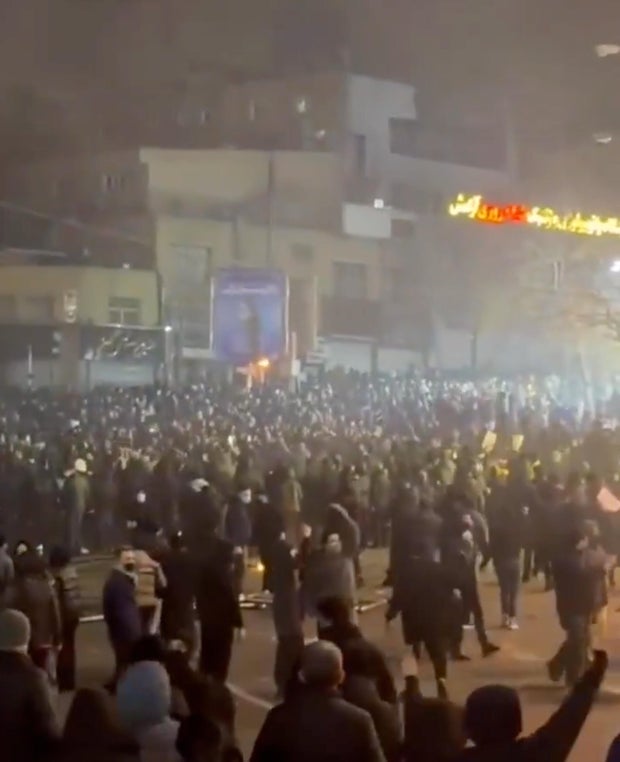
Meanwhile, state television reported that "peace prevailed in most cities of the country" overnight, with "no news of any gathering or chaos in Tehran and most provinces." That was directly contradicted by an online video verified by the Associated Press that showed demonstrations in Tehran's Saadat Abad area. Thousands gathered in the street, and one man could be heard chanting "Death to Khamenei!"
The semiofficial Fars news agency, believed to be close to Iran's paramilitary Revolutionary Guard and one of the few media outlets able to publish to the outside world, released surveillance camera footage of what it said came from demonstrations in Isfahan. In it, a protester appeared to fire a long gun, while others set fires and threw gasoline bombs at what appeared to be a government compound.
The Young Journalists' Club, associated with state TV, reported that protesters killed three members of the Guard's all-volunteer Basij force in the city of Gachsaran. It also reported a security official was stabbed to death in Hamadan province, a police officer was killed in the port city of Bandar Abbas, and another in Gilan, as well as one person was slain in Mashhad.
State television also aired footage of a funeral service attended by hundreds in Qom, a Shiite seminary city just south of Tehran.
Iran's theocracy cut off the nation from the internet and international telephone calls on Thursday, though it allowed some state-owned and semiofficial media to publish. Qatar's state-funded Al Jazeera news network reported live from Iran, but they appeared to be the only major foreign outlet able to work.
Head of Iran's exiled royal family predicts his return is "very near"
Iran's exiled Crown Prince Reza Pahlavi has been seen by many analysts as a galvanizing force behind the momentum of this round of protests. On Saturday, he called on Iranians not only to continue coming out into the streets, but to try to seize control of towns and cities from the authorities by overwhelming them.
"Our goal is no longer just to take to the streets. The goal is to prepare to seize and hold city centers," Pahlavi said in his latest video message posted on social media, calling for more demonstrations on Saturday and Sunday."
Striking an optimistic tone, Pahlavi declared that he was "preparing to return to my homeland," suggesting the day on which he would be able to do so was "very near."
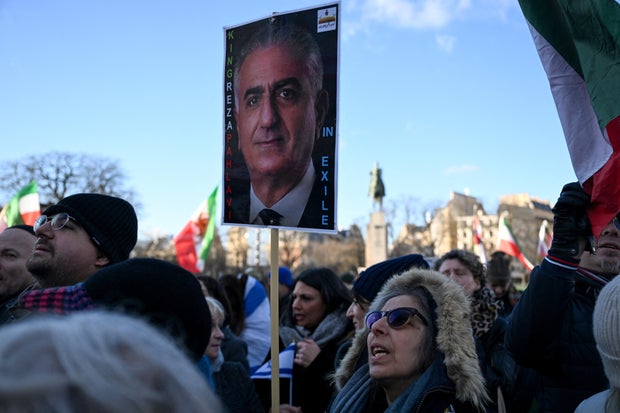
But Pahlavi has lived in exile for nearly 50 years, and while he has long sought to position himself as a leader-in-waiting, it's far from clear how much real support he has inside the country.
His father, Iran's Shah Mohammad Reza Pahlavi, was widely despised inside Iran when he fled into exile himself amid street protests in 1979, as the Islamic Revolution that brought the current regime to power took hold. Demonstrators have shouted in support of the shah in some protests, but it isn't clear whether that's support for Pahlavi himself or a desire to return to a time before the 1979 Islamic Revolution.