In Wael Ghonim's Apartment, Revolution over Dinner
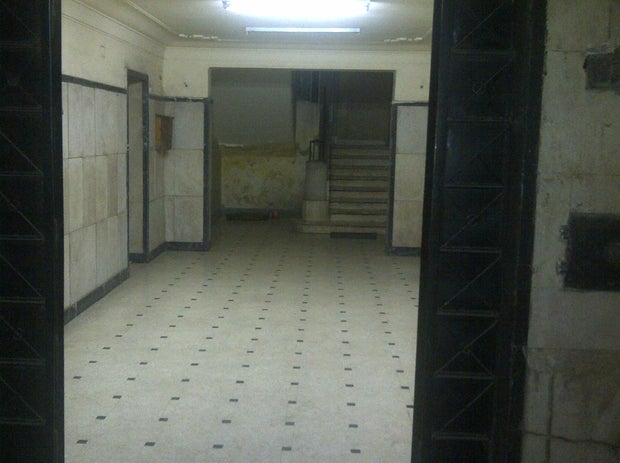
Six flights up these stairs is an apartment that belongs to the family of Wael Ghonim. Ghonim is the Google executive who was held by Egyptian authorities for 12 days during the protests which brought down the Mubarak government.
Ghonim neither desires nor courts fame or a position of power. But he - and scores of other brilliant young idealists - are indeed the authors and engineers of a revolution. When I took the picture less than 24 hours after the celebrations in Tahrir Square had begun, Wael and his friends were here eating dinner and discussing what needed to happen next.
Complete Coverage: Anger in the Arab World
The picture is important because of what is not in it. There are no body guards. There is no security, no "muscle." No former commandos with "AKs" making sure the "revolutionary council" is protected.
Because this was a revolution the likes of which had never been seen before. Ghonim calls it revolution 2.0.
"It's like Wikipedia, okay? Everyone is contributing content," he said. "Revolution 2.0 was exactly the same. Everyone was contributing small pieces. And in that picture, no one was the hero. But, everyone was the hero."
The revolution was purposely nonviolent. The movement had an ethos of respect, of treating others as they would want to be treated. Except for the two days when pro-Mubarak forces entered the square, it might have been carried out with little or no bloodshed.
I asked Ghonim if he was a 21st century Gandhi.
He said, "You know. I watched the movie like three times. I downloaded it just to learn more." He cut and pasted parts of it onto his computer so he could show others how the revolution could be done.
"Like when he was telling them not to do any violence. Even if they do violence. We're not going to do violence," Ghonim continued. "This is our value. I'm not saying don't fight them. Fight them with ... with the power of, you know. Make them respect themselves."
Going forward, online activists are already imagining not just Egypt's political future but its ethical future as well. Ghonim told me about something they are calling an ethical constitution. "That has nothing to do with a political constitution. What should every Egyptian be? What is the ideal Egyptian?"
Perhaps that will be part of Revolution 3.0.
Harry Smith reports from Cairo on Wael Ghonim: