In Phone Call, Hillary Clinton Pledges Support to Burmese Opposition Leader Aung San Suu Kyi
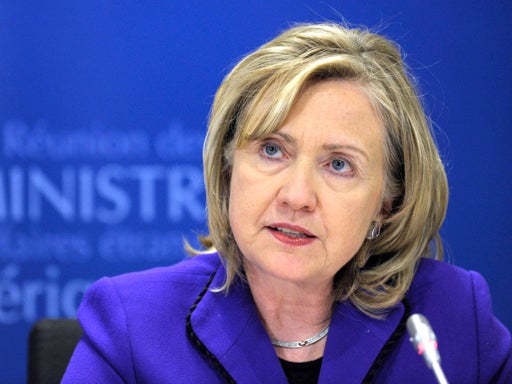
In a telephone call with Burmese opposition leader Aung San Suu Kyi on Wednesday, Secretary of State Hillary Clinton pledged to support Suu Kyi in her efforts "to strengthen civil society and promote democracy in Burma," according to a recent Tweet by State Department spokesman P.J. Crowley.
The call marks the first such conversation between Suu Kyi, a Nobel Peace laureate, and a U.S. Cabinet-level member in 15 years, the Washington Post reports. Suu Kyi, a leader of the democratic opposition to Burma's military regime, spent 15 of the last 21 years under house arrest as a political prisoner. She was released in November 2010, after a widely-disputed election that solidified the power of a military junta.
According to Crowley, Clinton and Suu Kyi spoke about forging a relationship for the future. "They talked briefly about what Aung San Suu Kyi has been doing since her release," he said in an e-mail to reporters. "The Secretary indicated that, both through the Embassy in Rangoon and from Washington, we would have further conversations on specific ideas."
Human rights groups have long cried out against apparent abuses by the Burmese army toward civilians - particularly among ethnic and religious minorities - and human rights advocates have recently stepped up calls for the investigation into and prosecution of such violations in the International Criminal Court.
According a recent report by the AFP, more than 2,100 political prisoners - most of whom are less prominent than Suu Kyi - are currently being held in Burma.
In the past, U.S. Assistant Secretary of State for East Asian and Pacific Affairs Kurt Campbell has been the primary intermediary between Suu Kyi and the United States: According to the Washington Post, Campbell met with the Burmese leader in 2009 and again last year.
According to the Post, Campbell was President Obama's point person in a recent attempt to open up a conversation about opening up democracy in the nation. But the dialogue was seen as largely unsuccessful.
Tom Malinowski, director of the Human Rights Watch office in Washington, said Clinton's outreach was a good first step - but that ultimately, a phone call was not enough.
"I'm very glad that Secretary Clinton reached out to Aung San Suu Kyi. It's a good way of showing American solidarity with her," he told the Washington Post. "But ultimately, what Suu Kyi needs from the U.S. is action."