Gluten-Free Eating: Is the New "It" Diet Really Better for You?
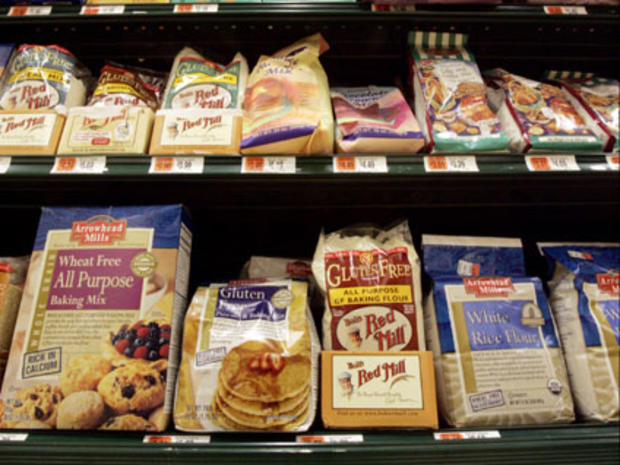
(CBS/AP) America has gone ga-ga over gluten-free eating.
Gwyneth Paltrow gushes over it. So does the new Old Spice guy, Isaiah Mustufa. Chelsea Clinton's wedding cake was baked without gluten, and grocery store shelves are lined with gluten-free pasta, cereals, crackers, and beer.
Why is gluten-free suddenly the "it" diet?
For people with celiac disease, taking gluten off the menu is a must. They suffer an immune reaction if they eat food with gluten, a protein found in wheat, barley, and rye.
But countless healthy people have hopped on the gluten-free bandwagon - despite clear evidence that there are any health benefits. No wonder U.S. sales of gluten-free food have more than doubled since 2005, to more than $1.5 billion, according to market research company Packaged Facts.
Some people insist that going gluten-free makes them feel more energetic.
"I feel better when I don't do it," Silvana Nardone, former editor-in-chief of "Every Day with Rachel Ray" magazine, says of eating gluten. "If I go out to a restaurant with friends and I have a beer and a plate of pasta, I'm going to feel it the next day. No one wants a gluten hangover."
Dr. Brian Bosworth, director of the gastroenterology fellowship program at New York Presbyterian Hospital/Weill Cornell Medical Center, notes that while gluten can certainly be an irritant to some people, he wouldn't make a blanket statement that it's harder to digest for everyone.
"I don't think that, in general, that there's a reason to strictly avoid it," says Bosworth, who has celiac disease.
And Dee Sandquist, a spokeswoman for the American Dietic Association, says eating gluten-free doesn't mean you're going to lose weight. She says, "There are just as many calories, if not more, depending on the food choices."