Federal Reserve meets Wednesday for its first interest rate decision of 2026. Here's what to expect.
President Trump has pressed the Federal Reserve to lower interest rates, but central bank officials are unlikely to deliver a first cut of 2026 when they announce their next policy move on Wednesday.
The Fed is expected to keep the federal funds rate — what banks charge each other for short-term loans — in its current range of 3.5% to 3.75%, according to economists polled by financial data firm FactSet. The pause would come after the Fed lowered its benchmark rate at three consecutive meetings late last year.
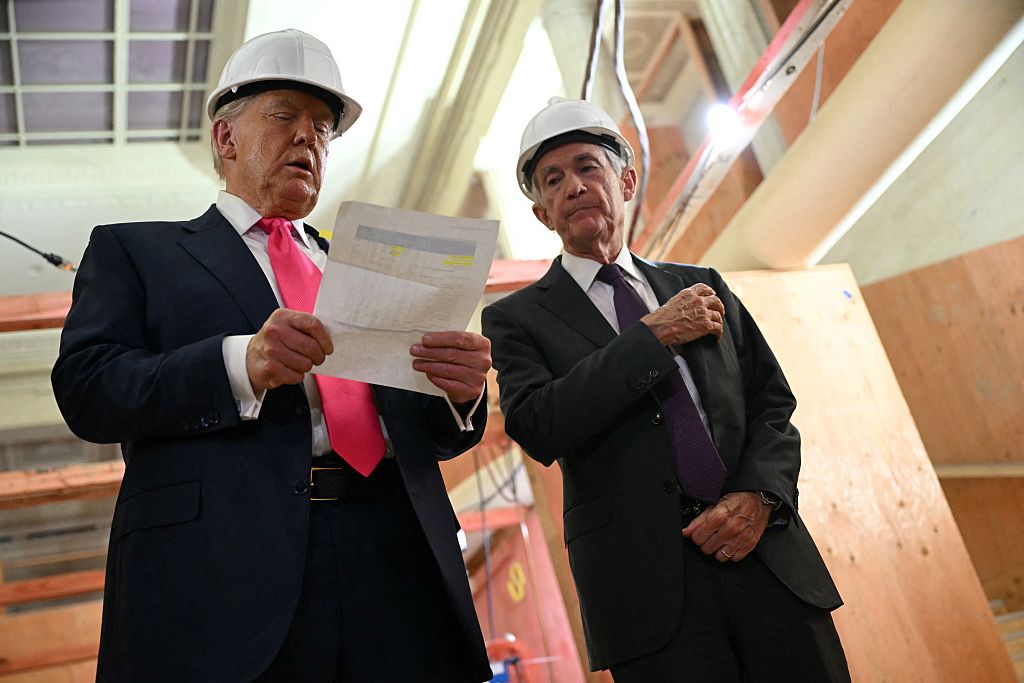
The meeting also comes amid weeks of turmoil involving the Fed. The Department of Justice earlier this month opened an investigation into Fed Chair Jerome Powell related to the central bank's renovation of its historic buildings, a probe that Powell said is a pretext for weakening the Fed's independence.
The Supreme Court is also currently weighing whether to allow Fed Governor Lisa Cook to keep her job after Mr. Trump sought to fire her.
Mr. Trump, who has assailed Powell for failing to deliver deeper rate cuts, is also soon expected to name a successor to Powell, whose term as Fed chief expires in May.
Against that backdrop, the Fed will make its rate decision while weighing two potentially troubling economic trends: A weakening labor market and an inflation rate that remains well above the central bank's annual target of 2%.
"It's appropriate that they take a little bit of a beat to digest the information and try to set the stage for 2026," Stephen Kates, a financial analyst at Bankrate, told CBS News. "It probably would have been a sleepy meeting if it weren't for the Supreme Court hearing about Lisa Cook, the [Justice Department] investigation into the renovation and the search for the replacement for the Fed chair."
On Wednesday, Powell will have to pivot from the political drama around his tenure at the Fed to explaining the economic rationale behind the central bank's latest monetary calculus. The Fed chief has repeatedly stated that the Fed's policy moves are determined by data, not by political pressure from the White House.
When is the Fed's interest rate decision?
The Federal Reserve will announce its rate decision at 2 p.m. Eastern Time on Jan. 28, followed by a 2:30 p.m. press conference with Fed Chair Jerome Powell.
The press conference, which typically lasts for 45 minutes, provides the Fed chair with an opportunity to discuss the thinking behind the interest-rate decisions made by the Federal Open Market Committee, the central bank's rate-setting committee.
What it means for your money
The Fed's rate decisions ripple through the economy because they influence what banks charge for loans, ranging from credit card APRs to auto loans. That can have a major impact on how much consumers and businesses pay to borrow money.
If the Fed keeps rates steady, as economists expect, consumers may not feel much of an impact. A single 0.25 percentage-point rate cut, the Fed's typical reduction, doesn't do much to alter borrowing costs, Bankrate's Kates said.
Even so, the Trump administration is seeking to convince voters that it is tackling affordability, an issue for many Americans who are feeling strained after several years of above-average inflation. As part of that effort, Mr. Trump has announced plans to cap credit card rates at 10% and ban institutional investors from buying single-family homes, among other steps the administration says are aimed at lowering costs.
Meanwhile, borrowing costs have already eased for many types of products following last year's multiple rate cuts, noted LendingTree chief consumer finance analyst Matt Schulz.
"Rates on several types of loans are at their lowest levels in years and should keep drifting down for a little while longer," Schulz said in an email. "That's a relief at a time when affordability is still a real struggle for many families."
Candidates for the next Fed leader
Mr. Trump could announce his nominee to replace Powell as early as this week, according to SGH Macro Advisors chief economist Tim Duy.
Among the top candidates for the role are National Economic Council Director Kevin Hassett, Federal Reserve Governor Christopher Waller and former Federal Reserve Governor Kevin Warsh. Rick Rieder, the chief investment officer of financial services firm BlackRock, has also more recently emerged as a leading contender, according to the betting markets, Duy noted.
"It's a little surprising to see Rick Rieder coming out as a frontrunner — he's someone who was not really talked about four weeks ago," Kates said. "He doesn't come from the traditional feeder program for the Fed chair — it would be a little bit of an out-of-left-field choice, but that's something this administration has tried to make a habit of."
Appointing a new Fed chair who is amenable to Mr. Trump's wish for lower interest rates may not be enough to move the needle. As a member of the Federal Open Market Committee, the Fed chair is only one of 12 officials whose majority vote determines whether the Fed cuts, raises or holds interest rates steady.
Powell is likely to stress the importance of the Fed's independence at Wednesday's meeting, experts said.
"We expect that Powell will use his platform to provide an erudite but accessible defense of central bank independence," said RSM Chief Economist Joe Brusuelas in a report. "This news conference, following a tumultuous two weeks, will be the next step in defining Powell's legacy.