FDA approves new pancreatic cancer drug that could extend patients' lives
The Food and Drug Administration on Wednesday approved a groundbreaking new drug for advanced pancreatic cancer, offering U.S. patients a more effective treatment against one of the deadliest types of cancer.
FDA officials gave expedited approval to the first-of-a-kind pill, called daraxonrasib, which blocks a mutated protein that fuels tumor growth in more than 90% of pancreatic cancer cases. It's an approach that previously eluded drugmakers for decades.
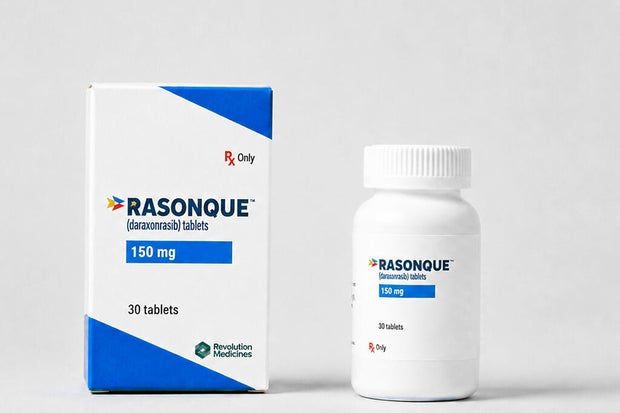
The daily pills will be sold by Revolution Medicines under the brand name Rasonque. A one-month supply would cost approximately $39,800, the company announced.
Patients taking the drug nearly doubled their survival time, with fewer severe side effects, in a study that randomly assigned them to receive the experimental treatment or more chemotherapy. The company-funded study enrolled 500 patients whose metastatic, or spreading, cancer had quit responding to prior treatment.
"Most patients get the diagnosis of pancreatic cancer quite late, at which point its already metastatic, it's already spread," said Dr. Céline Gounder, CBS News medical correspondent. "… This is a pill that blocks a protein called RAS, and mutations in RAS drive around 90% of all pancreatic cancers. Scientists have been calling RAS 'undruggable' for the last 40 years, and now finally, we have a drug for it."
Patients getting the new treatment lived for a median of 13.2 months compared with 6.7 months for chemotherapy recipients. Side effects included skin rash, mouth sores, diarrhea and other digestive issues.
"This is one of the most anticipated approvals I can think of," said Dr. Andrew Coveler of the Fred Hutch Cancer Center. "This medicine is not a cure but a significant improvement."
Pancreatic cancer is among the most deadly forms in large part because it is hard to detect before it starts spreading to other organs. The American Cancer Society estimates about 67,000 new cases will be diagnosed in the United States this year and more than 52,000 people will die from the disease. The five-year overall survival rate is 13%.
Former Sen. Ben Sasse of Nebraska, who was diagnosed with stage-four pancreatic cancer last December, told "60 Minutes" in April that he was part of the clinical trial for daraxonrasib. Sasse said the drug had been extremely effective for him, describing it as a "miracle drug."
"I have much, much less pain than I had four months ago when I was diagnosed, and I have a massive 76% reduction in tumor volume over the last four months," Sasse told "60 Minutes."
Sasse said that when he was diagnosed in December, doctors had given him a "three- to four-month life expectancy."
"I am on extended time already," he said.
FDA regulators noted on Wednesday that they approved the drug more than six months ahead of their target date.
"It is our fundamental duty to deliver more cures and meaningful treatments to patients as quickly as possible," the FDA's acting commissioner, Kyle Diamantas, said in a statement.
Unlike with other cancers that have benefited from a variety of chemotherapy alternatives, pancreatic cancer has been harder to tackle.
The new drug targets mutations in the RAS gene family that normally regulates cell growth. What are known as KRAS mutations are especially critical in fueling pancreatic cancer. But a structure that made it hard for drugs to stick to the mutated proteins meant this cancer driver was long considered "undruggable."
Doctors who treat pancreatic cancer hope the drug may usher in more new options for other forms of cancer, with scores of experimental drugs in development.
"I think this has opened doors for many other companies," said Dr. Pashtoon Kasi of City of Hope Orange County, a California-based cancer center. "Downstream I think there are going to be a lot more trials looking at this approach in other tumor types."
Revolution Medicines' drug uses what's essentially a molecular glue to bind with multiple KRAS subtypes. The Redwood City, California-based drugmaker is studying its technology for several other forms of cancer, including lung cancer.