Sidelining of DOJ's Civil Rights Division in ICE shooting is unusual, legal experts say

In the week since the fatal shooting of Renee Good by a federal immigration agent, a dozen Justice Department prosecutors and career officials have left their positions — some of whom have expressed frustration over the department's handling of the case.
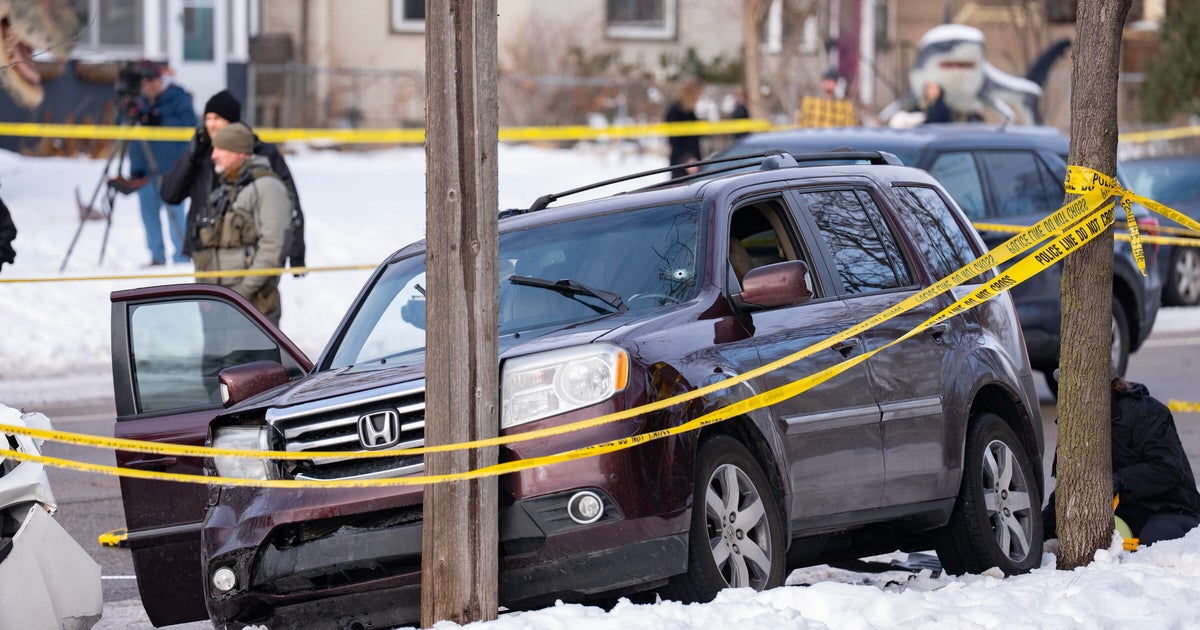
Senior U.S. Justice Department leaders have ordered federal prosecutors who specialize in probing civil rights crimes not to pursue an investigation into Good's shooting death in Minneapolis last week.
The sidelining of the Civil Rights Division's criminal section is highly unusual, and appears to break with the Justice Department's own manual, which calls for its involvement in cases that are designated as being in the "national interest."
Deputy Attorney General Todd Blanche told CBS News in a statement that there's "no basis" for a criminal civil rights probe in this case.
But numerous legal experts who spoke with CBS News disagreed, saying that the lack of involvement by the Civil Rights Division in a fatal officer-involved shooting like the one in Minneapolis is unheard of and deeply concerning.
Six career officials in the Civil Rights Division's criminal section announced they will be departing, telling colleagues in a meeting that the handling of the shooting in Minneapolis marks the latest in a series of troubling actions to pull back on criminal civil rights enforcement in America by the department.
At least six federal prosecutors in the U.S. Attorney's office in Minnesota have also quit, after they were pressured to investigate the wife of Renee Good and to treat the case as an assault on a federal officer.
What does the Civil Rights Division's Criminal Section do?
The criminal section of the Civil Rights Division is one of the Justice Department's oldest offices, dating back to the post-Civil War Reconstruction Era.
In addition to prosecuting hate crimes, the section also handles cases involving local, state or federal law enforcement misconduct, which can include the use of excessive force and sexual misconduct.
The use of excessive force by a law enforcement officer is typically prosecuted under 18 USC 242, a statute which makes it a crime for anyone acting "under color of law," such as a police officer, to willfully deprive a person of their constitutional rights.
The law can be used to prosecute a variety of misconduct allegations, from physical or sexual abuse, to making false arrests or failing to protect people in custody from having their rights violated by others.
A violation of the statute is a misdemeanor, though if prosecutors can prove certain aggravating factors such as kidnapping, sexual abuse or death, they can seek life in prison or even the death penalty.
There is no statute of limitations on cases involving excessive force that lead to death. In theory, the next administration could still pursue a federal color-under-law criminal case down the road, as long as the target has not received a presidential pardon.
Cases in the national interest
The Justice Department's Justice Manual calls for coordination between the assistant attorney general of the Civil Rights Division and the local U.S. Attorney's office in cases that are deemed to be in the "national interest."
As a general matter, cases deemed to be in the national interest may involve novel issues of law or have important public policy considerations.
A case like the one in Minneapolis, however, would automatically be deemed to be a "national interest" case under the Justice Manual because it involves an alleged violation of federal criminal civil rights laws that resulted in death.
In national interest cases, the assistant attorney general for Civil Rights is supposed to make staffing decisions, and can choose whether to pursue the case jointly with a U.S. Attorney's office or as a stand-alone Civil Rights Division case.
The manual also requires the U.S. Attorney's office in the relevant district, the FBI and the Civil Rights Division to coordinate and consult before any public statements are made to the press.
U.S. Attorneys' offices must obtain prior approval from the assistant attorney general for the Civil Rights Division before seeking an indictment on a civil rights case that is deemed to be in the national interest.
Past cases involving use of force by law enforcement officer
Most of the country's high-profile cases involving use of force by a law enforcement officer have involved the Civil Rights Division's criminal section.
In Minnesota, the division prosecuted former Minneapolis Police officer Derek Chauvin for violating George Floyd's rights, resulting in his death.
The federal case was pursued in addition to state charges against Chauvin. He was convicted of murder in the state trial and pleaded guilty in the federal civil rights case.
The division also pursued federal charges against the Louisville Police Department officers involved in the shooting death of Breonna Taylor, after they entered her apartment with a no-knock warrant. Former Kentucky police detective Brett Hankison was convicted of using excessive force in Taylor's death and sentenced to almost three years in prison. Another former Louisville officer, Kelly Goodlett, pleaded guilty to one count of conspiracy for helping obtain the warrant. Two other Louisville officers, former detective Joshua Jaynes and former Sgt. Kyle Meany, also face charges over Taylor's death. Jaynes and Meany are charged with federal civil rights offenses and obstruction of justice for their involvement in the preparing and authorizing of an affidavit for the search warrant that ultimately led to the shooting.
In one notable case, the Civil Rights Division's criminal section investigated and declined to bring charges against a Ferguson, Missouri, police officer in the 2014 shooting death of Michael Brown.