Democrats switch to offense with Tuesday N.Y. House race win
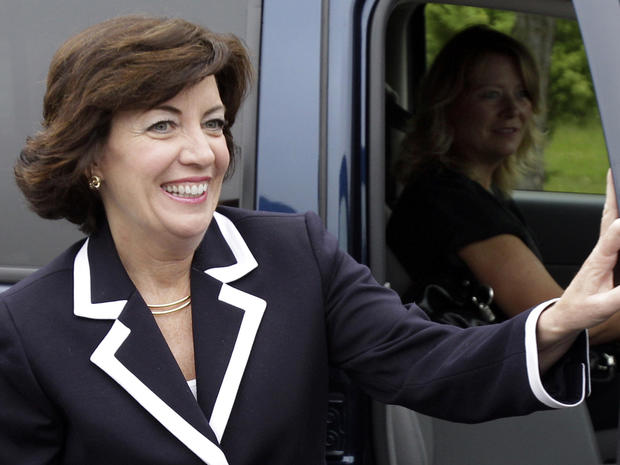
The Democratic victory in Tuesday's special congressional election in upstate New York may not be the start of a trend, but it marks the first time President Obama's party has been on the offensive since they lost control of the House of Representatives last year.
In the last few special elections, Democrats did fairly well, but only one of those outcomes predicted a trend. November 2009 saw a Democrat win the special election in New York's 23rd congressional district because a third party conservative candidate split the Republican vote.
And in May of 2010, a Democrat won the special election in Pennsylvania's 12th district, running as the legacy to his former boss and long time Representative John Murtha. The last special election that foreshadowed later results was the special election for the Massachusetts Senate seat long held by Ted Kennedy. The winner of that race was a Republican, Scott Brown, who ran on one issue: Health care.
Like Brown running to be the 41st vote against the Obama health care plan, yesterday's special election saw the Democrats and their allies turn the race into a referendum on the Representative Paul Ryan's Medicare plan.
In the 2010 mid-terms, a horrible outcome for Democrats, the party in power had a very hard time running on their accomplishments. Health care and the overhaul of Wall Street regulation were seen by many as too much of an intrusion of the government into the economy, still struggling from near collapse in 2008.
The primary change six months on is the strong Republican support for Ryan's Medicare plan. But like the president's health reform plan, opposition to the changes is stronger than support.
"The election last night showed that Democrats have the keys to drive the budget debate and play offense in 2012," said Senator Patty Murray, the chair of the Democratic Senatorial Campaign Committee. She has the difficult job of keeping the Democrat's hold on the Senate. With only a six seat majority, the Democrats have 23 seats to defend against the Republican's 10 in the 2012 elections. But the key word in the Murray statement is "offense."
"The implications of this election extend to Senate races in battleground states and red states across the country. The results provide clear evidence that Democratic senators and Senate candidates will be able to play offense across the country by remaining focused on the Republican effort to end Medicare and force seniors to pay thousands more for health care costs," she said.
With the 2012 Presidential contenders struggling to define their support for the Medicare plan, and in some cases, apologizing for maligning it, Medicare is the issue of the political future. Representative Ryan showed courage in putting out a bold plan that he believes is necessary to containing the nation's looming debt. But for many, the changes to Medicare are not appetizing and are not easily understood. After Democrats were hit in 2010 for their votes in the Obama health care reform plan to cut payments to Medicare providers, they are more than eager to attack the GOP for a plan that makes significant, they say drastic, changes to the Medicare program.
And just as many House Democrats lost their seats because of their votes for health reform, the all but four House Republicans who voted for the Ryan plan may fear that that vote could come back to haunt them as the Democrats have found an issue to bring to the fight.