Dementia researchers develop blood test for Alzheimer's
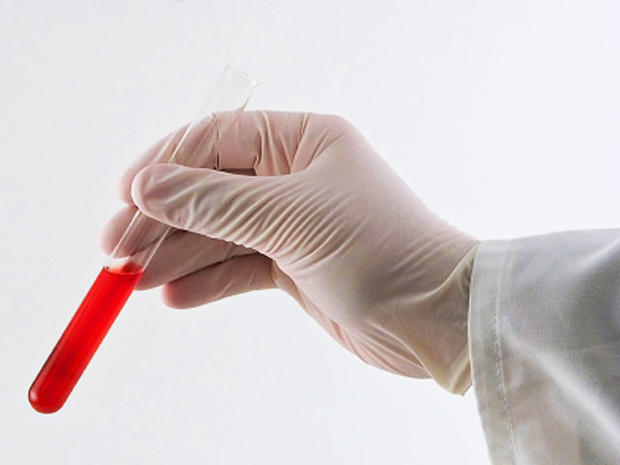
(CBS/AP) Can a simple blood test detect Alzheimer's disease?
PICTURES: Alzheimer's disease: 7 things that raise your risk
Australian scientists say they're closing in on one. Their test measures plaque is in people's brains - a telltale marker for Alzheimer's. And they hope if it proves reliable in even more studies, that one day it can give people with memory problems a clear idea whether they have the disease.
Other Alzheimer's blood tests are in development and a few are even used in research settings. But only the Australian test has been validated against brain scans and other diagnostic tests, said Maria Carrillo, senior director of medical and scientific relations for the Alzheimer's Association.
She said the results, reported Wednesday at the Alzheimer's Association International Conference in Paris, "give us hope that we may be able to use a blood test in the near future." But she cautions that doesn't mean next year.
More than 5.4 million Americans and 35 million people worldwide have Alzheimer's, the most common form of dementia. The disease has no cure and drugs only ease symptoms temporarily. But a test can mean finding Alzheimer's early enough for patients and their families to prepare, and ruling it out could lead to diagnosing a more treatable cause of symptoms, such as sleep problems.
Brain scans show the sticky protein plaques called beta amyloid more than a decade before it causes memory and thinking problems, but scans are too expensive and impractical for routine use. Doctors and patients need simple ways to screen people for Alzheimer's.
Samantha Burnham and colleagues at Australia's national science agency, CSIRO, worked with several universities, to run a long-term study of more than 1,100 people - some healthy, some impaired - to develop the blood test.
They started with blood samples from 273 study participants and identified nine hormones and proteins that seemed most predictive of amyloid plaque levels in the brain, and set a cutoff level they considered high.
"The belief is that people above that point will go on to get Alzheimer's disease, and the lag is about 8 to 10 years," Burnham said.
When scientists used the nine-marker blood test on these same participants, they found that it distinguished healthy people from those with mild cognitive impairment or Alzheimer's as verified by their brain scans. How accurate was it? The blood test identified 83 percent of people with high amyloid levels and correctly ruled out 85 percent of people without this condition.
"That's pretty high," Carrillo said of the test's accuracy. More important, she said, the scientists validated the test's accuracy in two additional groups: the other 817 people in the Australian study and 74 people in a U.S.-led study aimed at finding new Alzheimer's disease markers.
The test also performed well in those situations, Burnham added.
CSIRO is talking with major companies about making the test commercially available.
What's next? Scientists need to test it more to ensure it can be standardized to give reliable results regardless of what lab or doctor would use it, he said.