Beijing braces for economic impact as Iran war threatens Chinese oil: "A manmade crisis"


Beijing — China is bracing for the full economic impact of the U.S. and Israeli war with Iran as its energy supplies are severely disrupted. China is the largest importer of energy in the world, and the disruption to oil imports caused by the conflict could be a potential Achilles' heel for Beijing, just weeks before President Trump's highly anticipated state visit to China.
China imports 70% of its oil and gas overall and a majority of its energy comes from the Persian Gulf, according to analysis from Det Norske Veritas, an independent global assurance and risk management provider.
Henry Wang, president of the Centre for China & Globalization, told CBS News Tuesday that China's supply line will be seriously impacted by what he calls a "manmade crisis."
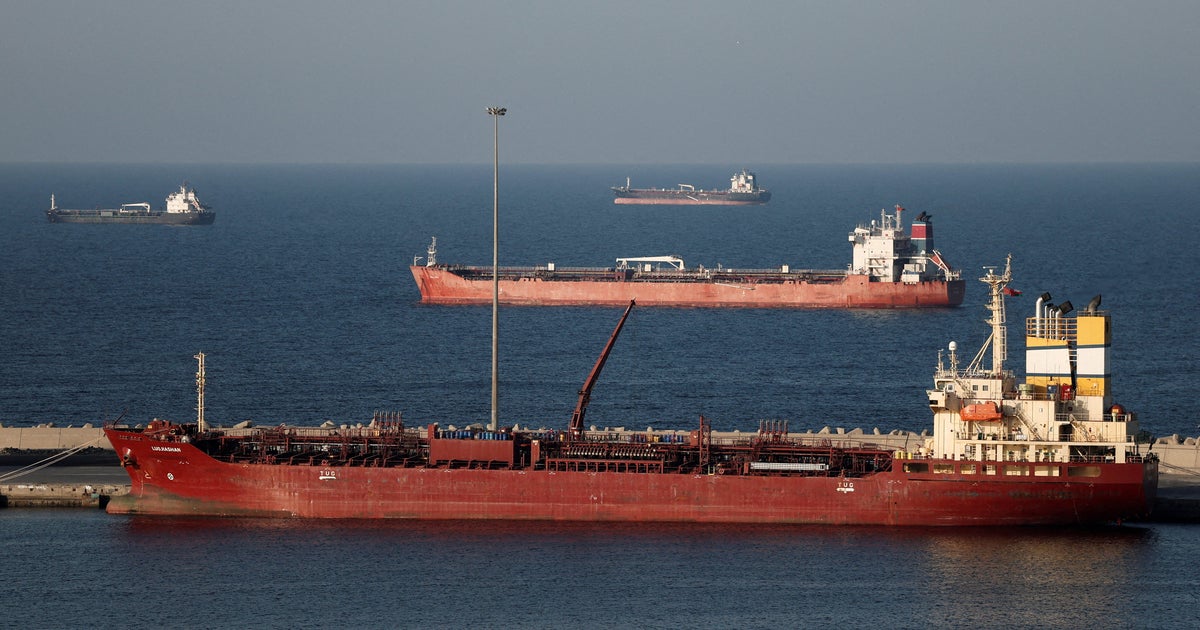
"I think this will certainly hurt China, but not just limited to China, I think the whole world will be hurt. The Strait of Hormuz has been blocked and it's going to impact not only China, but also Asia, Europe, Latin America, even the U.S.," Wang said.
On Sunday, China's top diplomat Wang Yi condemned the war, accusing the U.S. of assassinating a sovereign leader, violating international laws, and pushing the region "to the brink of a dangerous abyss."
China and Iran's diplomatic relationship dates back more than five decades. After U.S. sanctions were reimposed on Tehran over its nuclear weapons program following the first Trump administration's withdrawal from the Iran nuclear agreement in 2018, Iran has sold up to 80% of its oil to China, according to 2025 data from analytics firm Kpler.
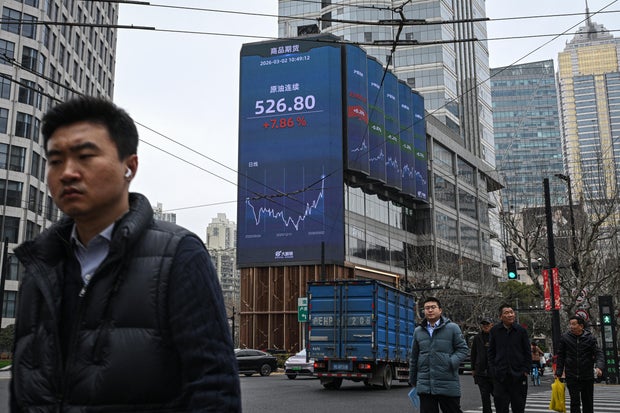
Some experts believe Beijing has propped up the regime with its purchase of Iranian oil. Last year, China bought 1.38 million barrels per day of Iranian oil, data from Kpler shows.
But Wang told CBS News that it's merely transactional for Beijing and an unfair representation of how China sees the relationship.
"I just think that is a normal trade," Wang said. "Just like we see the Russian war with Ukraine and we see all the BRICS countries like India buying from Russia. So just because one country doesn't like Iran, you cannot really ask the rest of the world that you cannot buy its oil."
While Beijing is rolling out renewables and nuclear energy at a pace its government has called the fastest growing green economy in the world, the Chinese demand for oil continues to rise.
"I think even though China does have a lot of green power now and has greatly enhanced its capability in alternative energy sources, 50% of China's energy still depends on petroleum and many other natural gas and other sources," Wang told CBS News.
Last year, off the coast of Malaysia in the Riau Archipelago, CBS News witnessed a shadow fleet transporting Iranian oil and conducting ship-to-ship transfers with Chinese tankers — a supply route that will abruptly halt if the war drags on. Wang says China has petroleum reserves of up to four to five months in the event of prolonged conflict.
Many analysts believe the U.S.-led strikes on Iran are part of a White House strategy to contain China by targeting its energy supplies. Wang said that while there is no denying the effect this will have on China's supplies, it could also cripple the U.S and its allies.
"I think President Trump is doing self-harm. It hurts European countries, it hurts G7 countries, and it hurts the U.S. as well. Not just China. The whole global economy. We're not living in an isolated environment. It's all intertwined," he said.
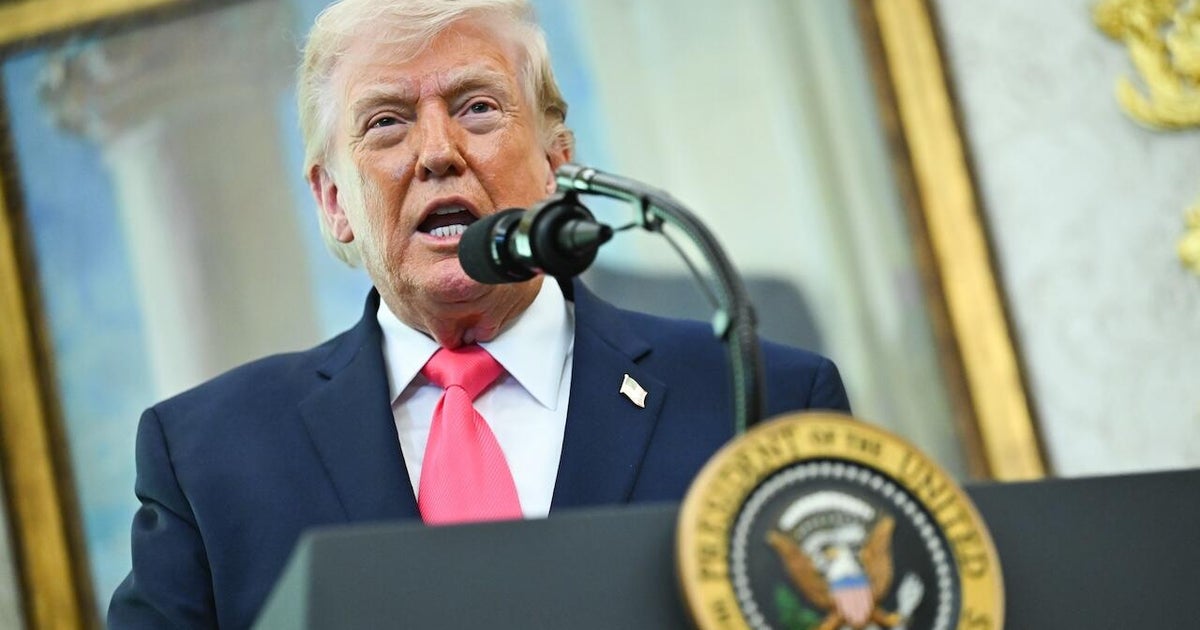
Mr. Trump will travel to China for a summit with President Xi Jinping at the end of the month. The two leaders last spoke on the phone in February when the issue of Taiwan and U.S. arms sales to the island were raised in the conversation.
Last year, the U.S. and China were also engaged in an escalating tariff war before they reached a fragile détente. But the war in Iran and events in the Middle East will only add another level of tension to the relationship between the world's two superpowers.