Chile Miners Rescue: Will Euphoria Give Way to Despair?
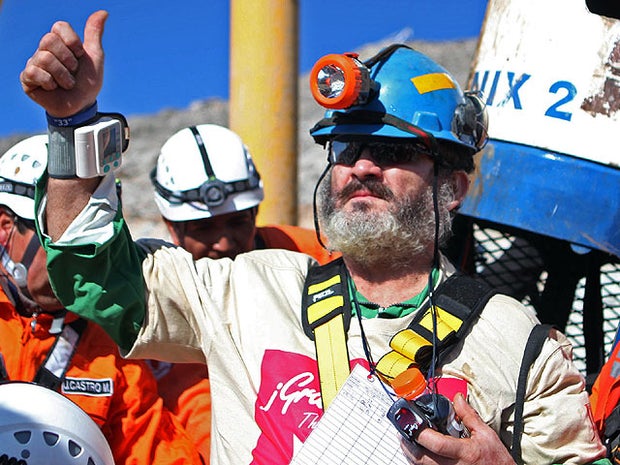
(CBS) For the Chilean miners being carried, one by one, into the light from the depths of the collapsed mine over 2,000 feet below, it's no surprise they seem overwhelmed with relief and joy.
But how long will the euphoria last? Experts say the miners may face emotional problems as they readjust to life on the surface.
On possible threat is post-traumatic stress disorder (PTSD), an anxiety illness that can develop after a person's safety or life has been threatened. Symptoms can include depression, flashbacks, nightmares, and hallucinations. Memory trouble is another common problem for sufferers, as are irritability and hyper-vigilance.
Dr. Robert Hogan, a south Florida psychologist who has worked with the U.S. Navy on how people react when forced to live in isolation, says some miners will suffer long after their rescue.
Others, he says, will not need psychological services at all. "They will just want to be with their families, go to a bar, and will go on as usual," he says.
Basic personality differences account for the disparity, according to research conducted by NASA and the U.S. Navy, he adds.
"Extroverts suffer the most - those who need a lot of stimulation and human contact. When it gets to the point when no one wants to talk with them, they get depressed," says Hogan. Other miners at higher risk for difficulties include those who were already psychologically fragile or very angry.
"Anger might be related to what is perceived as the cause of the entrapment - was the company negligent in its safety precautions," Dr. Howard Zonana of the department of psychiatry at Yale University School of Medicine tells CBS News in an email. "There is always more that one could have done - especially in retrospect. Some of the anger may be appropriate. Sometimes it can be exaggerated."
But the major stress factor that has likely affected the miners is lack of control over their environment. Hogan points to people confined to nursing homes as an example: Studies show they do much better when they are able to regulate their own environment - turn off their own lights at night, for example. The miners have had little control over their lives for over two months.
What's very likely - for some at least - is that their imaginations have placed them at risk for an uncomfortable period of adjustment, he says.
MORE HEALTH CONTENT FROM CBS NEWS:
