Bunch of Saps: Thieves stealing the sticky stuff out of Maine's maple trees
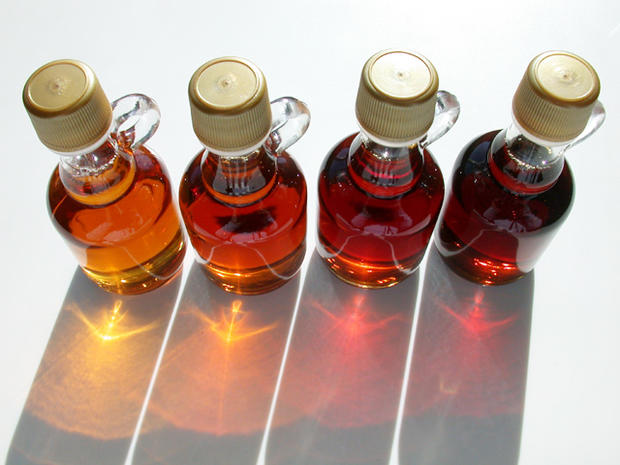
(CBS/AP) PORTLAND, Maine - Maine's maple trees might be all tapped out if some sticky-fingered thieves keep having their way.
With little more than a spout-like tap and a bucket, people are stealing the sap out of trees on private property and hauling it away to be converted into sweet maple syrup.
There's been an increase in reported sap thefts the past couple of years, but Maine Forest Service rangers aren't sure why.
"It could be that landowners are more willing to contact us. But it also may be that more people are venturing out into the woods to try their hand at this," Ranger Thomas Liba said.
Syrup is big business in Maine between late February and mid-April, when conditions are just right for sugar makers to extract sap from maples and boil it down to syrup over wood fires.
The state last year produced 360,000 gallons, tying it with New York as the No. 2 syrup-producing state. Vermont, the top state, produced 750,000 gallons.
At $50 a gallon or more on the retail level, Maine-made syrup is pricey, selling for 13 times the price of gasoline. The price varies slightly from year to year, but it has not been showing an upward trend in recent years.
Syrup-related thefts are nothing new. Just this week, a Vermont syrup-maker reported the theft of equipment from his sugarhouse.
And Maine's sap thefts are small potatoes compared with syrup heists that have been reported elsewhere. Thieves last fall stole nearly $20 million worth of syrup from a Quebec warehouse that stocked thousands of barrels of the amber liquid.
Still, the thefts raise the hackles of rangers and landowners alike: The sweet-toothed swindlers aren't just trespassing, they're damaging valuable trees.
Violators often use drill bits that are 7/8 of an inch, nearly triple the industry standard of 5/16 of an inch, to drill holes for the taps, Liba said. They're also using PVC piping that gouges the trees, and putting four taps in trees that should have only two, thereby creating undue stress on the trees.
With gouges and large holes, the trees are more susceptible to decay and disease. And they also carry less value in the marketplace as wood used in making cabinets and furniture, or as logs that are suitable for processing at a sawmill. But when the trees are damaged they're only suitable for less-profitable uses, such as pulpwood for pulp plants or for biomass plants.
"If you're talking dozens of trees with illegal taps that have suddenly been lowered potentially to firewood, the impact on the landowner's wallet could be in the thousands,"said Ranger Liba.