AI artist Refik Anadol uses massive datasets and AI to create immersive works shown around the world

Refik Anadol paints with what he calls "a thinking brush"
The 40-year-old Turkish American is not an artist in the traditional sense; he uses a computer, massive amounts of data and artificial intelligence to create immersive, ever-changing visuals.
His work, where man meets machine, has been embraced by some of the world's most prestigious museums, auction houses and collectors and has made Anadol a darling of the tech world. He's teamed up with Google, MIT and Microsoft to create large, public installations. Supporters call his work revolutionary. But critics question whether art created with AI can truly have meaning, arguing it's devoid of human emotion, lived experience and intent.
"These are all, I think, true," Anadol said. "That's why I believe, [in] human-machine collaboration. We are really completing that bridge where I feel like most likely where we are going as humanity, and just be sure that it's done right, that it's shared right, and celebrate this new age of imagination."
What is AI art
Anyone able to hop online can generate images with AI by inputting a prompt into an AI image generator. What Anadol does is different. For more than a decade, he says he's worked to ensure his process balances human creativity and machine intelligence, driven half by man, half by machine.
"In my mind's eye I can compute, I can imagine geometrically what exactly the mind's eye is looking for," he said.
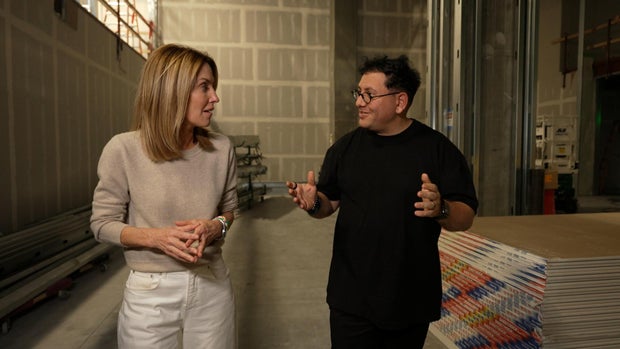
To create his work, Anadol and his team curate enormous datasets: sometimes hundreds of millions of images. For one project, he used 200 million photos of Earth, including data from NASA. For another, he curated more than 150 million images of California landscapes.
"When I think about data as a pigment, I think it doesn't need to dry. It can move in any shape, in any form, any color, and texture," he said.
The images he and his team curate are converted into data points representing color, texture and shape. They're then plotted into multi-dimensional space. The AI system learns patterns from that data, and then creates its own images.
The images, Anadol said, "only exist in the mind of a machine." He then applies algorithms to blend those outputs into his signature fluid style.
Something worthy of attention, or "a half-million-dollar screensaver?"
Some in the art world have embraced Anadol's work. His large-scale installations have been displayed on landmarks including Walt Disney Concert Hall in Los Angeles, Casa Batlló in Barcelona and the Sphere in Las Vegas. His pieces have sold for upwards of $1 million at auction. In 2022, The Museum of Modern Art in New York City, commissioned a 24-foot installation called "Unsupervised,"which filled the museum's lobby.
Visitors sat in front of "Unsupervised" for hours, transfixed by what they saw, according to recently-retired museum director Glenn Lowry.
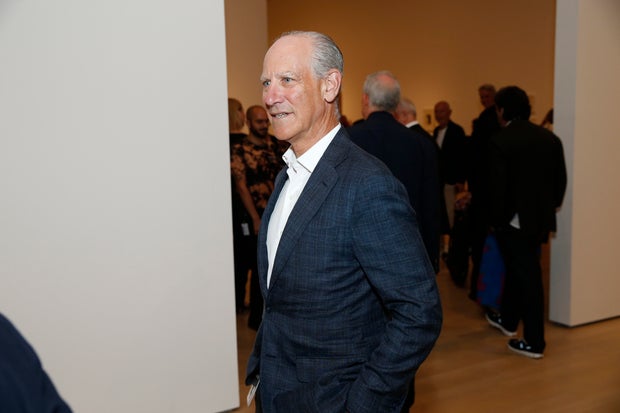
Anadol trained an AI system on publicly available metadata from the museum's entire collection He says the finished work, "Unsupervised," reimagines 200 years of art.
"He wrote some algorithms that allowed the data from one object to evolve into the data of another object to become yet a third object or a fourth object never before seen," Lowry said. "I think people found it deeply satisfying."
Museum visitors typically spend about 28 seconds looking at great works of art, studies have found. Anadol said viewers spent an average of 38 minutes looking at "Unsupervised."
Pulitzer Prize-winning art critic Jerry Saltz doesn't think the lingering crowds are evidence of artistic success. He called "Unsupervised" a "half-million-dollar screensaver."
"How long you spend with a work of art is not a sign of success so much as your willingness to get quiet within yourself, go to uncomfortable places, become comfortable in those places, asking yourself questions," Saltz said. "In front of a Refik Adanol, you sit down, go into a stupor, and you don't have to think much. You go, 'Oh, there goes a painting that looks a little like Renoir, morphing into one that looks like Picasso, morphing into an amoeba.'"
Most of it is "crap," Saltz said. But he cautioned against overreaction, noting that most art made during the Renaissance was also "crap."
AI, he says, is still in its infancy.
"AI is one day old. And we're already having conversations, 'I hate it, you love it. It's good, it's bad.' It's new, it's young."
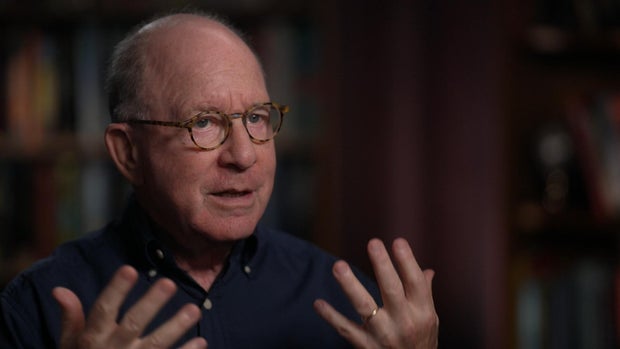
Whether AI becomes a transformative artistic medium, he said, will depend less on the machine — and more on the human using it.
Lowry, who ran the Museum of Modern Art for three decades, said skepticism around AI mirrors the reaction to the advent of photography 200 years ago.
"When suddenly the human hand is removed from the making of an image, what does that mean? And I think artificial intelligence is analogous to that. But I don't think you can stop technology," he said.
Theft allegations
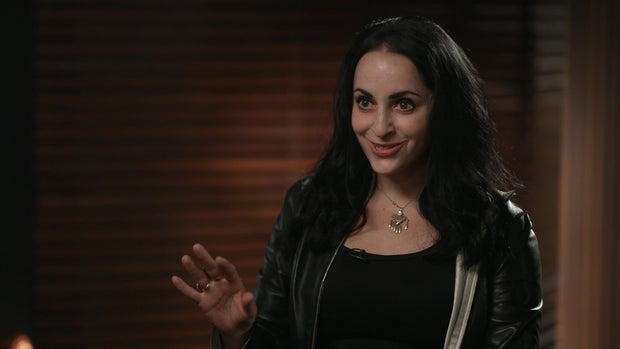
Some artists argue AI systems are built using copyrighted works without permission from the original creators. New York-based artist and author Molly Crabapple has called the training of generative AI models on copyrighted artwork "the greatest art heist in history."
"When we talk about art heists, typically, we're talking about one painting being taken from a museum, two, three [paintings.] They stole billions and billions of images," she said.
She believes museums, galleries and auction houses shouldn't buy or display AI art that's been trained on other artist's work without consent or compensation. Popular AI art generators are "corporate plagiarism bots," according to Crabapple. She said they're trained on art, including her own, scraped from the internet.
"No artist has been asked for their consent. No artist has received compensation," Crabapple said. "In fact, we don't even see credit."
AI companies have told lawmakers that what they are doing falls under fair use, a legal doctrine which allows copyrighted works to be used without permission under certain circumstances. They claim AI is studying and learning, just as a human would. But a group of artists have filed a class action lawsuit against four of the AI companies that make art generators, accusing them of copyright infringement, among other things.
Anadol said he understands his fellow artist's concerns with commercial AI image generators. Since 2020, he said he's only worked with what he calls "ethically sourced" datasets
"This is the most important part of art making with AI. It takes a lot of teamwork, a lot of thinking, research. We always start with permission, then we know exactly where information comes from," Anadol said.
What's next for AI art
Anadol is now building DATALAND, a 20,000-square-foot museum dedicated to AI art, in downtown Los Angeles.
Visitors can expect to wear devices around their necks that pump out different AI-generated scents, such as rain and flowers, to accompany what they're seeing. Anadol says eventually, another device will monitor viewers' vital statistics. That data will be used to change the art in real time.
When DATALAND opens this spring, it will be the world's first museum devoted entirely to AI arts: a massive canvas to celebrate Anadol's optimism about technology. Anadol insists AI is not a threat to art, but a tool to create works no human could create alone.