Air Force pulls sexual assault prevention brochure over questionable advice to victims
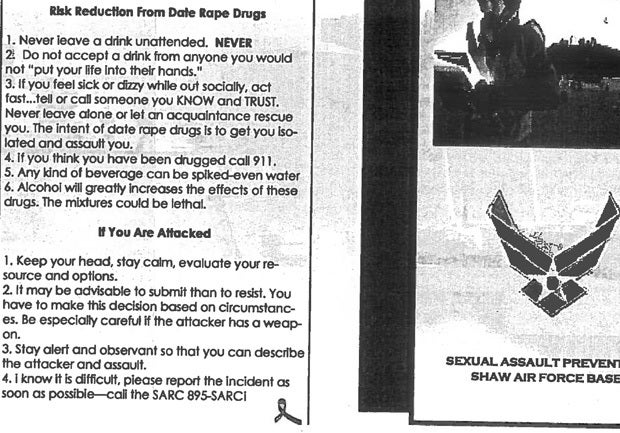
WASHINGTON The Air Force has pulled a brochure circulated at a South Carolina base after a lawmaker complained about some objectionable advice to sexual assault victims — such as submitting to an attack rather than resisting.
Rep. Louise Slaughter, D-N.Y., who had complained about the brochure in May, on Tuesday released a copy of a letter she received from the Pentagon informing her of the Air Force's decision and steps the services are taking to deal with the epidemic of sexual assault in the ranks, including reviewing its prevention material.
"We have reviewed the Shaw Air Force Base brochure you mentioned in your letter," Jessica Wright, acting undersecretary of defense, wrote to Slaughter. "We share your concerns over some of the materials presented, and the Air Force has withdrawn the brochure from circulation."
- Military sex assault "culture" needs new laws to change, lawmakers say
- Military brass vow sexual assault issue now a priority
- Military sexual assaults by the numbers
The letter was dated June 20, received by Slaughter's office during last week's congressional recess and released on Tuesday.
The brochure contained some common-sense recommendations, such as checking around a car before entering and using dead-bolt locks and peepholes when home alone. It also included advice that the congresswoman described as victim-blaming and inappropriate as the military struggles with the problem of sexual assault.
"If you are attacked, it may be advisable to submit than to resist," the brochure said. "You have to make this decision based on circumstances. Be especially careful if the attacker has a weapon."
The brochure also suggested that if an individual is accosted in a parking lot, "consider rolling underneath a nearby auto and scream loud. It is difficult to force anyone out from under a car."
The Pentagon estimated in a recent report that as many as 26,000 military members may have been sexually assaulted last year, based on an anonymous survey of military personnel. While the number of sexual assaults that members of the military actually reported rose 6 percent to 3,374 in 2012, thousands of victims were still unwilling to come forward despite new oversight and assistance programs aimed at curbing the crimes, the report said.
"No service member wearing the uniform of the United States military should ever be told `it may be advisable to submit than to resist' in the case of a sexual assault," Slaughter said in a statement. "I am cautiously optimistic about the Pentagon's agreement to review all sexual assault prevention materials. We have to change the military culture if we want to stop this epidemic of sexual assault, and this response is a step in the right direction and a small victory for victims."
Last month, Rep. Jackie Speier, D-Calif., and Sen. Kirsten Gillibrand, D-N.Y told "Face the Nation" that the military has "dropped the ball" in its handling of sexual abuse cases, touting legislation that would empower trained military prosecutors - rather than the chain of command - to investigate and adjudicate sexual assault cases.
"Typically, with the chain of command, you have someone who knows the assailant, may even be the assailant, or is also concerned about a promotion," Speier said. "And having something under your watch take place that's a violent crime may not look too good when it comes time to be promoted. So historically, what's happened is they found ways around it. Either non-judicial punishment, or saying to the victim, 'You know what? We think you have a personality disorder. So we're going to give you an honorable discharge, but you're going to leave.'"'
That system, Gillibrand argued, has created a "fear of retaliation" among victims of sexual assault who may be reluctant to report abuse.
"That's what the victims are telling us, that they have such fear of retaliation, such fear of having their careers be derailed, that they aren't reporting," she said. "And until you see justice being done, until you see accountability in the system, you will not be able to change the culture."