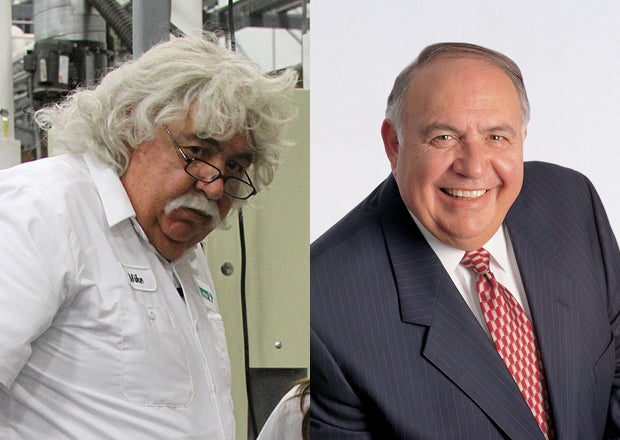
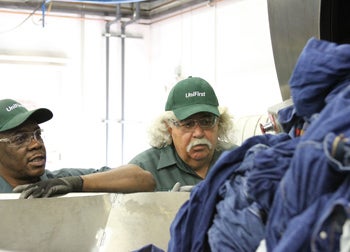
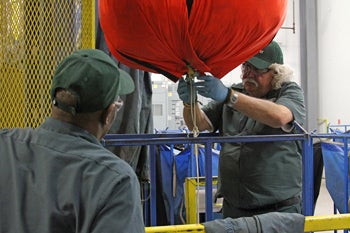
Ronald Croatti, president and CEO of UniFirst, one of the nation's largest producers of workwear and uniforms, spent plenty of time in the trenches of the business founded by his grandfather before he took over the helm. On CBS' Undercover Boss, Croatti's second tour of duty revealed he isn't as proficient as he used to be. From struggling to keep pace with the assembly line to re-learning how to operate industrial sewing and washing machines, Croatti tells BNET's Lydia Dishman what it really takes to keep the company humming.
UniFirst CEO Finds It's Tough To Go Back to the Bottom
Beyond the Dog and Pony Show
BNET: Why did you decide to go on the show?
Croatti: I think it was a great opportunity for me because when you are the CEO and go to one of the sites -- we have over 200 -- you get a dog and pony show. This was a great opportunity to see our policies and procedures first hand.
BNET: What was your disguise?
Croatti: The producers had this vision and gave me long hair and a mustache. My hair was long years ago, but not that long. I thought it was a terrific.
BNET: How well did it work?
Croatti: It worked very well, except for once or twice. When you are working in a hot environment like at the heat seal machines, the glue for [the] mustache starts coming off. I basically had to excuse myself to take a drink or a bathroom break [to stick it back on].
UniFirst CEO Finds It's Tough To Go Back to the Bottom
Still Got the Touch ... Kind Of
BNET: What jobs did you do?
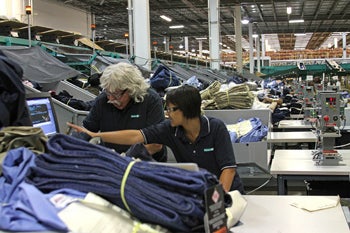
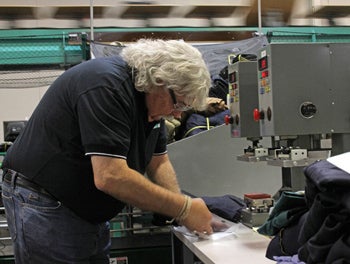
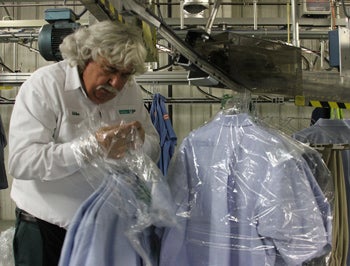
Croatti: In Kentucky, I had to put a label on the garment and sew down the name. In Oklahoma, one [job] was pressing cotton shirts, and the other was in the soil room, sorting and unloading the washer. In South Carolina, I worked sorting and shipping the clothes.
BNET: How was your performance?
Croatti: I haven't run a sewing machine in 35 years, so I had a hard time regulating the pedal. But I was in this program where two retired fellows were competing for retirement benefits and another employee would vote who did the better job. I won by a nose.
UniFirst CEO Finds It's Tough To Go Back to the Bottom
More Seeing, Less Observing
BNET: What else did you observe while you were doing the jobs?
Croatti: One of the things I saw pressing cotton shirts was that there is a top button instead of a snap [on the shirt]. It makes it harder when you are hanging clothes a certain way. When I was working with the production supervisor and another fellow in the washroom, I saw a lot of engineering mistakes. People [who] don't do the work in reality make videos to tell you how to do things, but they aren't always right.
We set up a standard flow to put poly bags [on the garments]. But people there long term, doing the job, day in and day out don't think anything of it as long as they are meeting quota. [The manager] is not really seeing how hard [the employee] is working. They're observing but not really seeing it.
UniFirst CEO Finds It's Tough To Go Back to the Bottom
Working Hard to Satisfy Customers
BNET: What did you learn about your company and employees?
Croatti: I think we have a lot of policies, procedures, systems, and benefits, but the communication down to the employee has to improve. Everyone's aware of how much they make and their health benefits but do they understand profit sharing and 401K? I was really pleased with a lot of the stuff put up -- posters about safety and benefits. All of that was being communicated.
The good news is that we have a good culture. Our people are working hard to satisfy customers. Everyone knows if they meet certain customer retention goals, they get an extra week's pay. And I always say, "If you wouldn't wear it, don't ship it." But most employees care about the quality we put out to our customers.
UniFirst CEO Finds It's Tough To Go Back to the Bottom
Getting Everyone on Board
BNET: Will you do anything differently because of this experience?
Croatti: With shipping and sorting the clothes, there are certainly some ways to make this more productive and less back breaking. It's not the what, it's the how [everyone does their job]. We have to get everyone on board to make changes. We have a couple of programs that I've asked our managers to do.
I think we are going to strengthen some of our communication and with top management, see if we can strengthen some procedures. We have a lot of technology in the company but a lot that's been the same for years. I'd like our top guys to see what we could do to improve those areas.