Cal State Long Beach Shark Lab opens for tours this weekend

It's officially Shark Week, and Cal State Long Beach is opening its Shark Lab this Saturday to share its latest research, technology, and marine life touch pools in efforts to raise funds to keep it all going.
Sharks draw both fear and fascination, and work at the Shark Lab studies their behaviors, such as when and why they strike humans, and how safe ocean recreators are amidst these often-misunderstood ocean predators.
"We have a lot of new research in how the sounds that people produce might actually tell sharks; that's a swimmer, that's a surfer, that's a paddler -- and now we think they just ignore us," CSULB Shark Lab Director, Dr. Chris Lowe, said.
The CSULB Shark Lab open house is on Saturday, July 25, from 10 a.m. to 6 p.m., during which new technology will be unveiled.
A shark detection vessel, the autonomous shark surveillance bot, just arrived last week.
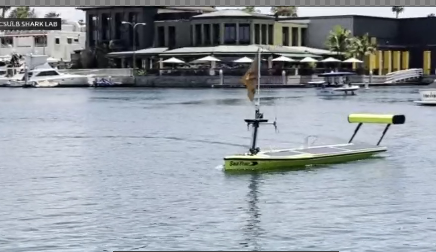
"It's got a special hydrophone underneath it, so it can listen to our tagged sharks. And when it detects them, it'll send lifeguards a text alert," Lowe explained.
It's packed with 4k cameras and transmission technology, and in a few years, they will add a shark DNA collector and a drone – in time for the Olympics.
"If we have the swimming event in Long Beach Harbor or the surfers down in San Onofre, the vessel can be swimming alongside them, providing real-time data about white shark activity. This will help keep them safe," Lowe said.
Since 2018, the Shark Lab has tracked hundreds of juvenile sharks, sending real-time data to lifeguards to prevent unnecessary beach closures.
But this year, they lost their state and federal funding, and in two months, the $1 million annual budget will run out. This means all their equipment will be removed, vital data collection will be stopped, and staff will be laid off.
Lowe said the hope is that donors will step in to fund the lab's programs so they can continue to help both beachgoers and the sharks stay safe.


